World Heritage Identification Number: 1044
World Heritage since: 2001
Category: Cultural Heritage
WHE Type: Agriculture Landscapes, Parks & Gardens
Transboundary Heritage: No
Endangered Heritage: No
Country: 🇪🇸 Spain
Continent: Europe
UNESCO World Region: Europe and North America
Map
Aranjuez Cultural Landscape: A Royal Legacy in the Heart of Spain
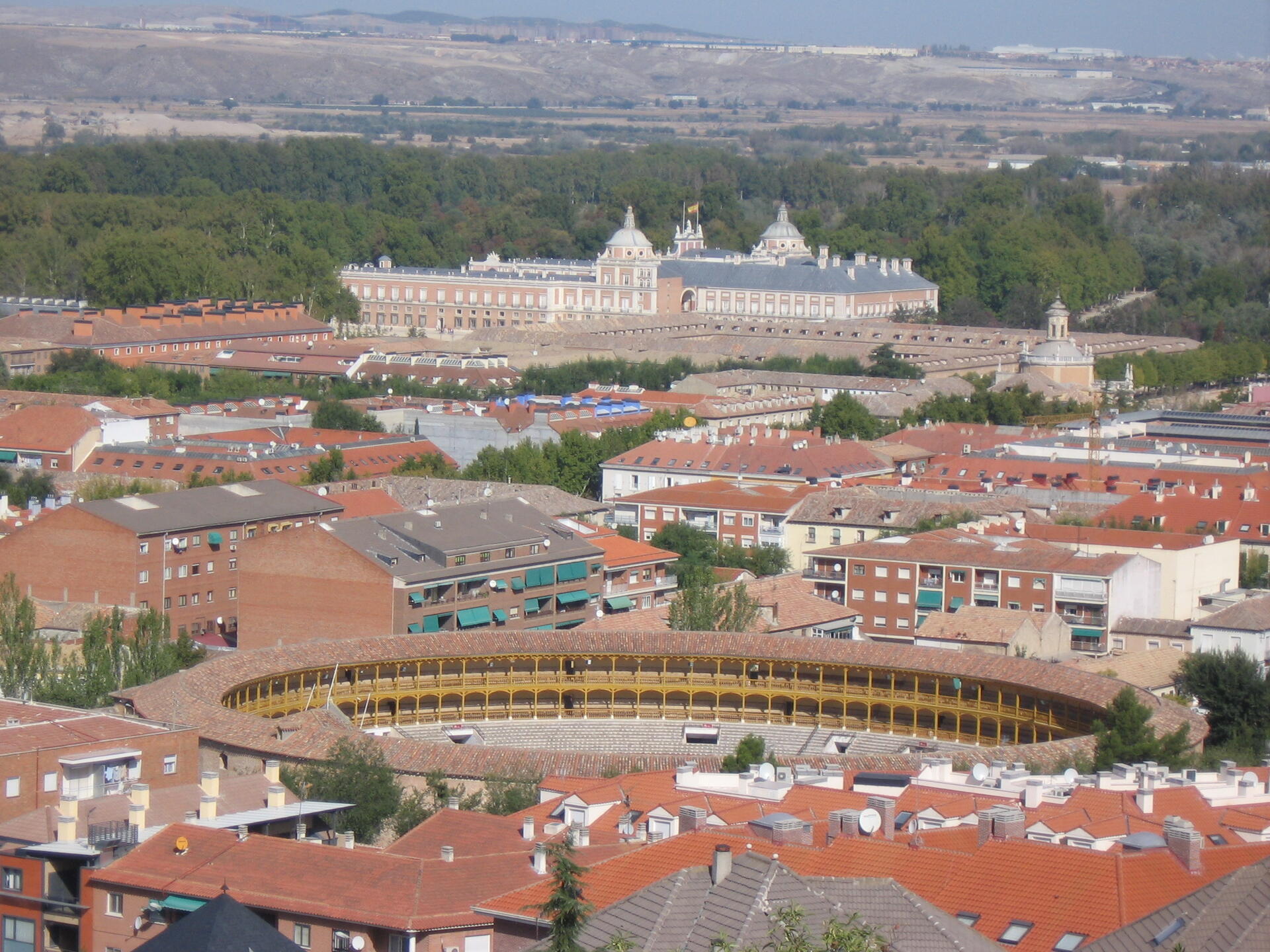
The Aranjuez Cultural Landscape, inscribed as a UNESCO World Heritage Site in 2001, is a captivating testament to the harmonious blend of nature and human ingenuity that unfolds across the verdant plains of Spain's Community of Madrid. This enchanting landscape, centered around the historic town of Aranjuez, offers a unique chronicle of three centuries of royal patronage, architectural innovation, and horticultural advancements.
More to come…UNESCO Description of the World Heritage Site
The Aranjuez cultural landscape is an entity of complex relationships: between nature and human activity, between sinuous watercourses and geometric landscape design, between the rural and the urban, between forest landscape and the delicately modulated architecture of its palatial buildings. Three hundred years of royal attention to the development and care of this landscape have seen it express an evolution of concepts from humanism and political centralization, to characteristics such as those found in its 18th century French-style Baroque garden, to the urban lifestyle which developed alongside the sciences of plant acclimatization and stock-breeding during the Age of Enlightenment.
UNESCO Justification of the World Heritage Site
Criterion (ii): Aranjuez represents the coming together of diverse cultural influences to create a cultural landscape that had a formative influence on further developments in this field.
Criterion (iv): The complex designed cultural landscape of Aranjuez, derived from a variety of sources, marks a seminal stage in the development of landscape design.
Encyclopedia Record: Aranjuez
Aranjuez is a city and municipality of Spain, part of the Community of Madrid.Additional Site Details
Area: 2,047.56 hectares
Number of Components: 1
(iv) — Outstanding example of a type of building or landscape
Coordinates: 40.03645 , -3.60934
World Heritage Research
Discover scientific research and academic studies that deepen our understanding of Aranjuez Cultural Landscape from its history and significance to its conservation, management, and contemporary challenges.
-
Unveiling Agricultural Heritage: Mapping Historical Features in Farming Landscapes
Agricultural heritage, though often overshadowed by more prominent landscapes, holds significant cultural and environmental value. This study introduces a novel methodology to assess the historical depth of agricultural features—such as roads, livestock routes, plots, buildings, and land use—in non-outstanding farming areas using historical cartography. The approach aims to recognize and preserve traditional techniques and processes that sustain cultural landscapes and gastronomic identities, even in regions lacking exceptional heritage status. Applied to Spain’s floodplains and irrigation areas near Aranjuez (Community of Madrid), the method demonstrates potential for integrating agricultural heritage into spatial decision-making, ensuring its long-term conservation.
Sánchez, M. L. (2024). Unveiling Agricultural Heritage: Mapping Historical Features in Farming Landscapes. The Historic Environment: Policy & Practice, 16(1), 122–142. https://doi.org/10.1080/17567505.2024.2419143
View Publication Record | Read Publication -
Water and Enlightened Techniques: The Azuda (Waterwheel) of Aranjuez (Spain)
Aranjuez's cultural landscape was significantly enriched by the 18th-century Azuda waterwheel, a unique blend of classical and Muslim engineering reinterpreted under Enlightenment ideals. This study reveals that the Azuda, combining wheel and aqueduct functions, served dual purposes: irrigation and recreation, while reflecting Mediterranean noria traditions. Spatial and chronological analyses of its construction process highlight its aesthetic value and functional versatility, offering new insights into how hydraulic innovations shaped UNESCO-listed cultural heritage sites during the Enlightenment era.
Romero, M. M., & Caba, V. S. (2021). Water and Enlightened Techniques: The Azuda (Waterwheel) of Aranjuez (Spain). Gardens and Landscapes of Portugal, 7(1), 18–29. https://doi.org/10.2478/glp-2021-0003
View Publication Record | Read Publication -
Paisaje Cultural de Aranjuez y Patrimonio Mundial : Seducción, Declaración y Compromiso
Aranjuez Cultural Landscape, declared a UNESCO World Heritage Site in 2001, stands as a testament to the intersection of natural beauty and human ingenuity. This study reveals that its recognition was not merely an acknowledgment of its aesthetic appeal but also a commitment to preserving its cultural significance through structured management, conservation, and protection frameworks. The research meticulously analyzes the nomination process and the definition of cultural landscapes, providing insights into how such sites are safeguarded for future generations. By examining the lines established for the management of Aranjuez, this work offers a model for other cultural landscapes seeking World Heritage status, emphasizing the importance of balancing development with heritage preservation.
Merlos Romero, M. M. (2011). Paisaje Cultural de Aranjuez y Patrimonio Mundial : Seducción, Declaración y Compromiso. Espacio Tiempo Y Forma. Serie VII, Historia Del Arte, 0(24). https://doi.org/10.5944/etfvii.24.2011.1419
View Publication Record | Read Publication