World Heritage Identification Number: 829
World Heritage since: 1997
Category: Cultural Heritage
WHE Type: Archaeological Sites
Transboundary Heritage: No
Endangered Heritage: No
Country: 🇮🇹 Italy
Continent: Europe
UNESCO World Region: Europe and North America
Map
Archaeological Areas of Pompei, Herculaneum, and Torre Annunziata: A Time Capsule of Ancient Rome
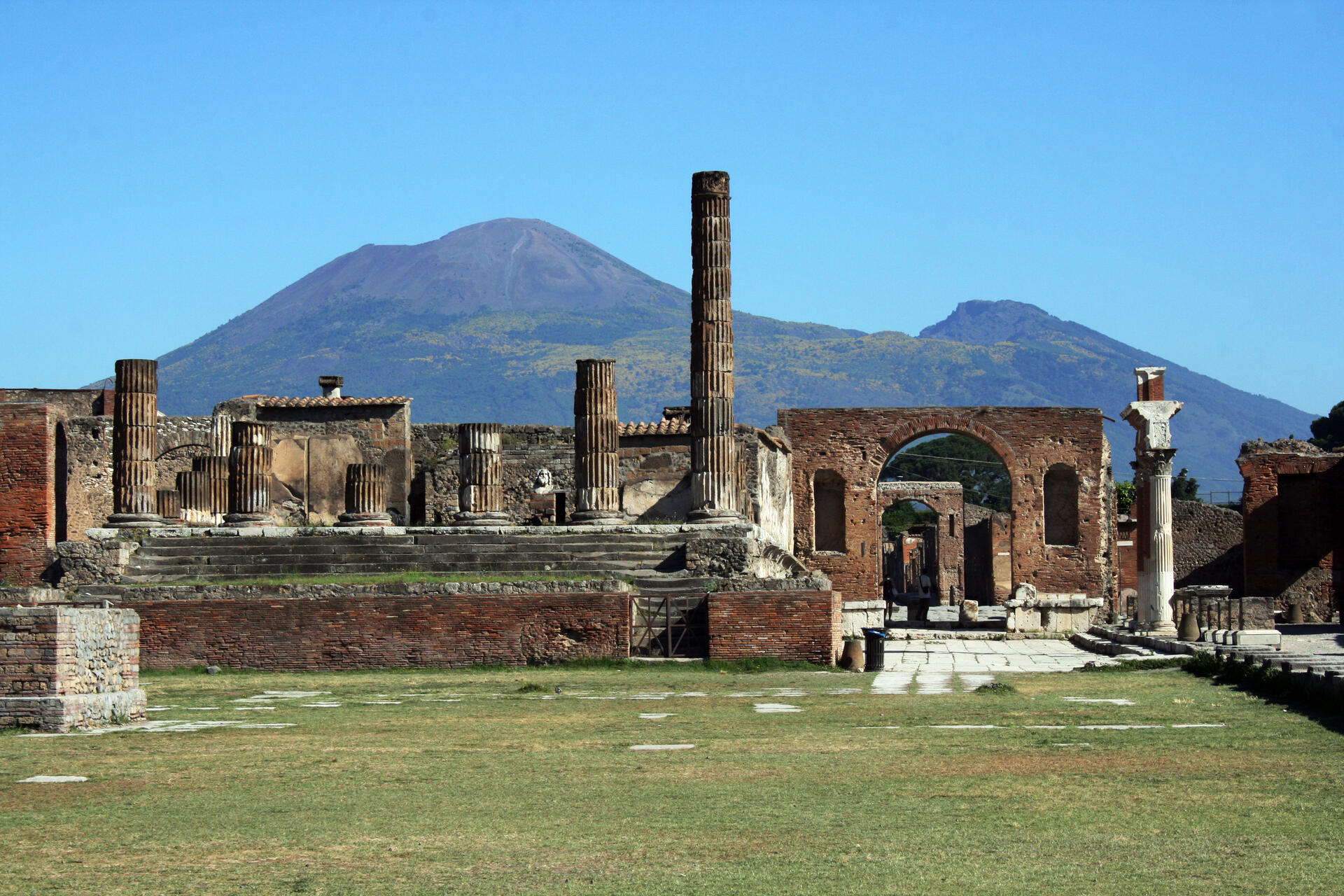
The Archaeological Areas of Pompei, Herculaneum, and Torre Annunziata constitute a unique ensemble of sites that offer a remarkable glimpse into the daily life, culture, and architecture of ancient Rome during the time of the Roman Empire. Inscribed as a UNESCO World Heritage Site in 1997, these three locations provide a wealth of information about the Roman civilization, preserved beneath layers of volcanic ash and pumice following the catastrophic eruption of Mount Vesuvius in 79 AD.
Pompeii, the most famous of the three sites, was once a thriving Roman city located near modern-day Naples. With a population of approximately 20,000 inhabitants, it served as a significant commercial center during the Roman Republic and early Empire. Today, Pompeii is one of the best-known archaeological sites in the world, attracting millions of visitors each year who come to explore its remarkably preserved streets, buildings, and artifacts.
Herculaneum, another victim of the Vesuvius eruption, offers a stark contrast to Pompeii. While Pompeii was primarily a commercial center, Herculaneum was a luxurious seaside resort for the Roman elite. The town's remains are exceptionally well-preserved due to the pyroclastic surge that covered it, resulting in a higher density of volcanic material compared to Pompeii. This has led to the preservation of wooden structures, frescoes, and even foodstuffs, offering a more intimate look at the lives of the wealthy Romans who vacationed there.
Torre Annunziata, located between Pompeii and Herculaneum, is home to the Villa Oplontis. This opulent villa belonged to Poppaea Sabina, Nero's second wife, and provides a fascinating insight into the lavish lifestyles enjoyed by the Roman aristocracy. The villa boasts stunning frescoes, intricate mosaics, and a series of bath complexes, showcasing the wealth and taste of its inhabitants.
The excavation and conservation efforts at these sites have been ongoing since the mid-18th century, with significant advancements made in recent decades. The sites are open to the public, allowing visitors to walk through the ancient streets, admire the frescoes, and imagine the lives of the people who once called these cities home.
The Archaeological Areas of Pompei, Herculaneum, and Torre Annunziata serve as a testament to the ingenuity, culture, and history of the Roman Empire, providing a valuable resource for historians, archaeologists, and anyone interested in the ancient world.
UNESCO Description of the World Heritage Site
When Vesuvius erupted on 24 August AD 79, it engulfed the two flourishing Roman towns of Pompei and Herculaneum, as well as the many wealthy villas in the area. These have been progressively excavated and made accessible to the public since the mid-18th century. The vast expanse of the commercial town of Pompei contrasts with the smaller but better-preserved remains of the holiday resort of Herculaneum, while the superb wall paintings of the Villa Oplontis at Torre Annunziata give a vivid impression of the opulent lifestyle enjoyed by the wealthier citizens of the Early Roman Empire.
UNESCO Justification of the World Heritage Site
Criterion (iii): Pompeii and Herculaneum are the only Roman cities ruins preserved in such an exceptional way and have no parallels in integrity and extent in the world. The villas in Torre Annunziata have the best preserved wall paintings of the Roman period.
Criterion (iv): The sites of Pompeii, Herculaneum and Torre Annunziata provide a full picture of Roman life from the 1st century BC to the 1st century AD through the urban, architectural, decorative and daily life aspects that have been preserved. The villa A in Torre Annunziata is the most significant example of suburban villa of the Roman period.
Criterion (v): The sites of Pompeii, Herculaneum and Torre Annunziata are outstanding examples of urban and suburban Roman settlements. They also provide a vivid and comprehensive picture of Roman life at one precise moment: the eruption of Vesuvius in 79 AD.
Encyclopedia Record: Pompeii
Pompeii was a city in what is now the municipality of Pompei, near Naples, in the Campania region of Italy. Along with Herculaneum, Stabiae, and many surrounding villas, it was buried under 4 to 6 m of volcanic ash and pumice in the eruption of Mount Vesuvius in 79 AD.Additional Site Details
Area: 98.05 hectares
Number of Components: 7
(iv) — Outstanding example of a type of building or landscape
(v) — Outstanding example of traditional human settlement
Coordinates: 40.75 , 14.48333333
World Heritage Research
Discover scientific research and academic studies that deepen our understanding of Archaeological Areas of Pompei, Herculaneum and Torre Annunziata from its history and significance to its conservation, management, and contemporary challenges.
-
Daily Life and Commerce at Oplontis B
Excavations at Oplontis B, a commercial hub near ancient Pompeii, reveal a dynamic suburban landscape thriving with daily and commercial activities up to the eruption of Mount Vesuvius in 79 CE. The site, featuring a two-story courtyard where wine was being bottled, storage areas, streets, and domestic spaces, offers unprecedented insights into the economic and social life of the region. Over 1,500 amphorae and five phases of development spanning from the mid-2nd century BCE to 79 CE were identified through systematic excavations by the Oplontis Project since 2012. This study synthesizes these findings, highlighting the commercial significance of a nearby warehouse and the evolving structure of the complex.
Graaff, I. v. d., & Muslin, J. (2026). Daily Life and Commerce at Oplontis B. The Oxford Handbook of Pompeii and Its Environs, 551–572. https://doi.org/10.1093/9780190941604.003.0034
View Publication Record | Read Publication -
The Villa of Poppaea at Oplontis
The Villa of Poppaea at Oplontis, near Pompeii, reveals a dynamic evolution of Roman elite architecture and artistry spanning 120 years. Analysis of its decorations—ranging from Second-Style frescoes (60–40 BC) to Fourth-Style additions (AD 45–79)—demonstrates how the villa adapted to changing tastes, political shifts, and economic trends. Unique features such as alabaster thresholds, monolithic columns, and a lavish entertainment complex underscore the owner's wealth and status. The study also highlights the villa's final phase of decline, marked by the stripping of marbles and capitals for sale, offering rare insights into the material culture of late Roman society.
Clarke, J. R., & Thomas, M. L. (2026). The Villa of Poppaea at Oplontis. The Oxford Handbook of Pompeii and Its Environs, 41–57. https://doi.org/10.1093/9780190941604.003.0014
View Publication Record | Read Publication -
Energy Transition of Road Infrastructures: Analysis of the Photovoltaic Potential on the A3 Napoli–Pompei–Salerno Highway
A significant photovoltaic potential of approximately 27,100 m² has been identified along the A3 Napoli–Pompei–Salerno highway, offering a concrete opportunity to harness solar energy within existing road infrastructure. This study, leveraging geographic information systems (GISs) and integrating topographical, orographic, and solar data, demonstrates that service areas, toll stations, car parks, and side sections can serve as viable locations for photovoltaic installations. Such an approach not only promotes self-production and local consumption models but also directly supports the decarbonization of road transport by powering electric vehicle charging networks, thereby contributing to emission reduction and sustainable mobility.
Piras, G., Orsini, G., & Muzi, F. (2025). Energy Transition of Road Infrastructures: Analysis of the Photovoltaic Potential on the A3 Napoli–Pompei–Salerno Highway. Energies, 18(12), 3042. https://doi.org/10.3390/en18123042
View Publication Record | Read Publication -
Retreat of the Shoreline in the Gulf of Castellammare di Stabia (Gulf of Napoli, Southern Italy)
Research reveals that longshore sediment transport along the Gulf of Napoli's coast moves from northwest to southeast, significantly impacting shoreline dynamics. The study, integrating sedimentological and geomorphological analyses, shows that since 1871, the construction of Torre Annunziata harbour has trapped sediments, causing a notable retreat of the shoreline to the southeast. This process, combined with human interventions and limited sediment input from the Sarno River, has led to a marked rotation of the shoreline towards the east and an overall trend of regression. The study highlights how anthropogenic activities have altered both emerged and submerged beach morphologies, with direct consequences on the coastal physiographic unit.
Pecoraro, G., & Pennetta, M. (2024). Retreat of the Shoreline in the Gulf of Castellammare di Stabia (Gulf of Napoli, Southern Italy). Emerging Issues in Environment, Geography and Earth Science Vol. 6, 39–64. https://doi.org/10.9734/bpi/eieges/v6/7142b
View Publication Record | Read Publication -
In villam abire – il contributo di Stabia per la conoscenza e la valorizzazione del territorio vesuviano
Ancient Stabia, though less prominent than Pompeii and Herculaneum, offers a unique lens into the cultural landscapes of the Vesuvian region. This study highlights Stabia's post-Sullan War (89 BCE) transformation, marked by a network of rural and leisure villas that provide rare insights into non-urban settlement patterns. These villas, serving as autonomous economic and social units, enrich our understanding of ancient land use and cultural dynamics between Vesuvius and the Sorrentine Peninsula. The research also underscores the need for better integration of Stabia's archaeological sites and collections into the UNESCO World Heritage Site 829, which currently includes Pompeii, Herculaneum, and Torre Annunziata. Through interdisciplinary studies, this work advances knowledge on heritage preservation and valorization strategies in the region.
Zuchtriegel, G. (2024). In villam abire – il contributo di Stabia per la conoscenza e la valorizzazione del territorio vesuviano. Quaderni Di ACMA, (1), 11–19. https://doi.org/10.69590/jzsfen71
View Publication Record | Read Publication -
La Scuola Superiore Meridionale a Pompei. Indagini lungo il Portico Orientale del Foro Triangolare: campagna di scavo 2022.
A recent excavation campaign at the Archaeological Areas of Pompeii, Herculaneum, and Torre Annunziata has uncovered significant insights into the pre-colonnade history of the Triangular Forum. The study, conducted by the Parco Archeologico di Pompei in collaboration with the Scuola Superiore Meridionale, documented a section of the portico's foundation that intersected older layers of human activity and reached proto-historic eruption deposits. This provided crucial information about the geomorphological structure of the site and the anthropogenic activities that preceded the construction of the colonnade, offering a deeper understanding of the forum's evolution from its archaic origins to its role in ancient Pompeian life.
Massimo Osanna, Daniele Alessi, & Rosanna De Candia. (2024). La Scuola Superiore Meridionale a Pompei. Indagini lungo il Portico Orientale del Foro Triangolare: campagna di scavo 2022. Quaderni Di ACMA, (2), 155–172. https://doi.org/10.69590/ey36mj59
View Publication Record | Read Publication -
Modernization and innovation in Neapolitan artillery: the contribution of Carlo Filangieri in the 19th century
Neapolitan artillery underwent significant modernization during the 19th century under Carlo Filangieri's leadership, marking a transition toward industrialized military production. This period saw the establishment and expansion of key military institutions, including the Royal Military Academy and strategic arsenals across the Kingdom of the Two Sicilies. Filangieri's reforms, implemented under Ferdinand II in 1834, streamlined the Artillery Corps, enhanced self-sufficiency in military supplies, and strengthened the central arsenal's role in ensuring political and military autonomy. The study highlights the integration of advanced technologies and protectionist policies, underscoring their pivotal contribution to Neapolitan defense innovation.
Fiorenza, E., & Ghezzi, R. (2024). Modernization and innovation in Neapolitan artillery: the contribution of Carlo Filangieri in the 19th century. Labor History, 66(4), 561–571. https://doi.org/10.1080/0023656x.2024.2422378
View Publication Record | Read Publication