World Heritage Identification Number: 830
World Heritage since: 1997
Category: Cultural Heritage
WHE Type: Cultural Landscapes
Transboundary Heritage: No
Endangered Heritage: No
Country: 🇮🇹 Italy
Continent: Europe
UNESCO World Region: Europe and North America
Map
The Enchanting Costiera Amalfitana: A Unesco World Heritage Site
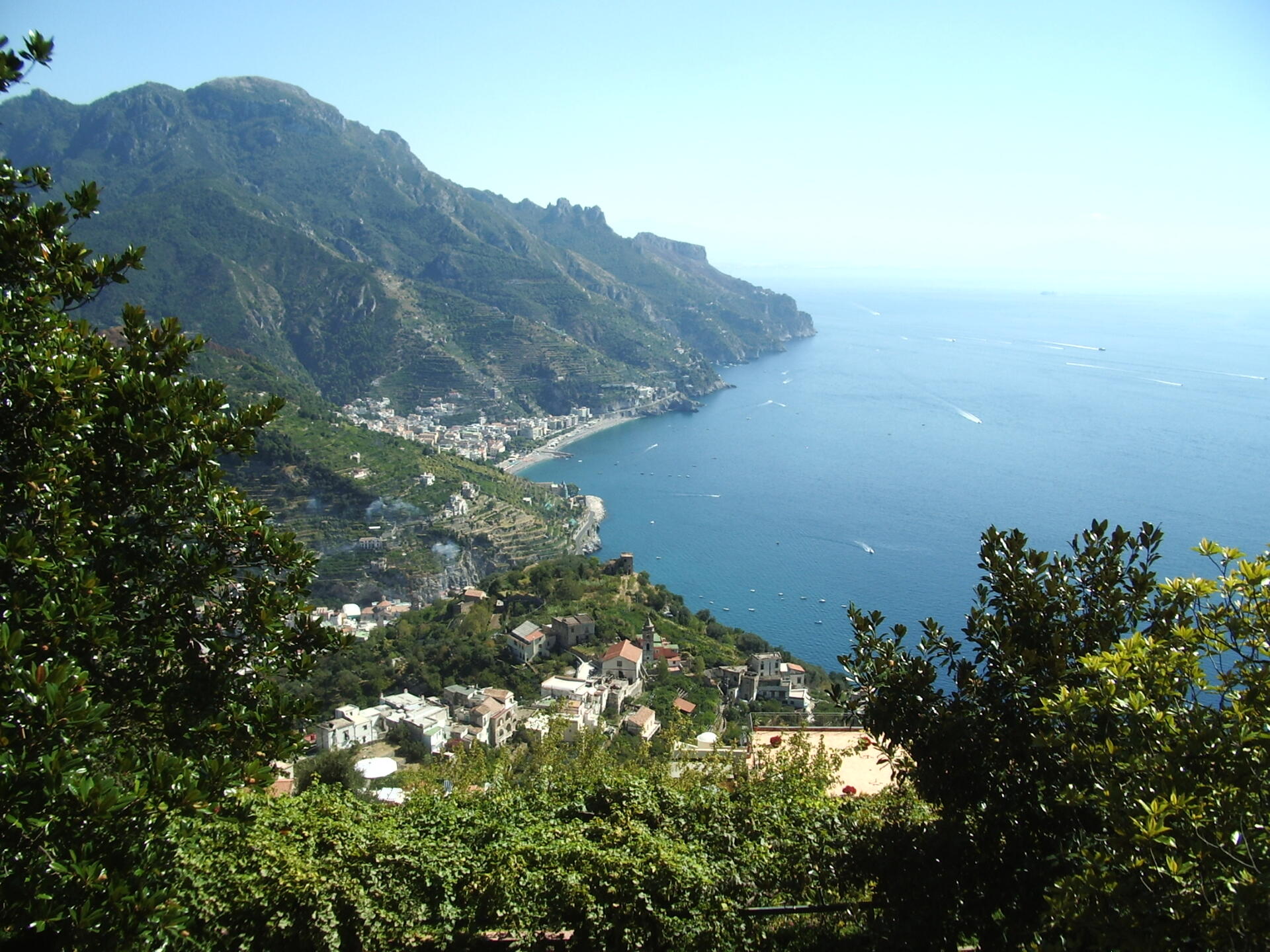
The Costiera Amalfitana, also known as the Amalfi Coast, is a captivating stretch of coastline situated in the Campania region of southern Italy. This alluring expanse overlooks the Tyrrhenian Sea and the Gulf of Salerno, nestled between the Sorrentine Peninsula and the Cilentan Coast. Inscribed as a UNESCO World Heritage Site in 1997, the Amalfi Coast boasts a rich history, stunning landscapes, and architectural wonders that have enthralled visitors for centuries.
More to come…UNESCO Description of the World Heritage Site
The Amalfi coast is an area of great physical beauty and natural diversity. It has been intensively settled by human communities since the early Middle Ages. There are a number of towns such as Amalfi and Ravello with architectural and artistic works of great significance. The rural areas show the versatility of the inhabitants in adapting their use of the land to the diverse nature of the terrain, which ranges from terraced vineyards and orchards on the lower slopes to wide upland pastures.
UNESCO Justification of the World Heritage Site
Criterion (ii): The Costiera Amalfitana is an outstanding cultural landscape with exceptional cultural and natural scenic values resulting from its dramatic topography and historical evolution. Much of its architecture and artistic works reflect a fusion of eastern and western influences linked to the period of the economic power of Amalfi Sea Republic between the 9th and 11th centuries.
Criterion (iv): The Costiera Amalfitana is an outstanding example of a Mediterranean landscape that has evolved over many centuries in an area of great physical beauty and natural diversity. It has been intensively settled since the early Middle Ages. There are a number of towns, such as Amalfi and Ravello, with architectural and artistic works of great significance.
Criterion (v): The Costiera Amalfitana represents an example of complex settlement since within it there is an exceptional diversity of landscape types, ranging from ancient urban settlements through areas of intensive land-use and cultivation and pastoralism to areas untouched by human intervention. The complex topography and resulting climatic variations provide habitats with an exceptional range of plant species within a relatively confined area.
Encyclopedia Record: Amalfi Coast
The Amalfi Coast is a stretch of coastline in southern Italy overlooking the Tyrrhenian Sea and the Gulf of Salerno. It is located south of the Sorrentine Peninsula and north of the Cilentan Coast.Additional Site Details
Area: 11,231 hectares
Number of Components: 1
(iv) — Outstanding example of a type of building or landscape
(v) — Outstanding example of traditional human settlement
Coordinates: 40.6333333333 , 14.6027777778
World Heritage Research
Discover scientific research and academic studies that deepen our understanding of Costiera Amalfitana from its history and significance to its conservation, management, and contemporary challenges.
-
Aree interne e beni culturali: il patrimonio dismesso in Costiera Amalfitana
Abandoned cultural heritage, particularly from the proto-industrial era linked to milling and paper production, remains undervalued in the inland areas of Costiera Amalfitana, despite its historical significance. This study maps and documents these disused structures, offering a framework for their potential economic revitalization through complementary tourism. Using census-based methods, geographic location analysis, and photographic documentation, researchers identified a rich but neglected material and immaterial heritage that could enhance the region's tourist offerings beyond its coastal appeal.
Amodio, T. (2019). Aree interne e beni culturali: il patrimonio dismesso in Costiera Amalfitana. Università Del Piemonte Orientale. https://doi.org/10.20373/2283-3102/17
View Publication Record | Read Publication -
Modelling the Maritime Cultural Landscape of the Costiera Amalfitana: The First Three Seasons of Research (2016–2018)
A surprising dearth of pre-modern maritime cultural heritage was uncovered during the first three seasons (2016–2018) of a multi-disciplinary project modeling the maritime landscape of Italy’s UNESCO-listed Costiera Amalfitana. Despite extensive archival, museum documentation, and geomorphological research, few underwater artifacts from this period were found, suggesting either limited preservation or different patterns of human activity than previously assumed. The study’s approach combined fieldwork with historical analysis to map tangible and intangible elements of the region’s maritime heritage, though its preliminary findings raise new questions about the area’s underwater archaeology—particularly in the Marine Protected Area west of Positano—where further research is needed.
Harpster, M., Trakadas, A., Denel, E., Capriglione, V., Lucarini, C., Meranda, M., Morselli, M., Pelling, R., Bennett, I., Zazzaro, C., Demirci, Ö., Donadio, C., Ferranti, L., Stanislao, C., Zavagno, L., & Pecci, P. (2021). Modelling the Maritime Cultural Landscape of the Costiera Amalfitana: The First Three Seasons of Research (2016–2018). International Journal of Nautical Archaeology, 50(1), 63–75. https://doi.org/10.1080/10572414.2021.1947117
View Publication Record | Read Publication -
Pulpiti in Costiera Amalfitana: cappelle private, contenitori di icone e reliquie
A notable proliferation of pulpits, some in stucco, linked to aristocratic lay patrons on the Amalfi Coast, reveals their ideological potential as liturgical furniture. These pulpits serve multiple functions: they amplify the divine voice, symbolize personal redemption and political/social roles, and house icons and relics, reflecting the donors' desire for salvation while asserting their influence in the community. The study highlights how these structures, often commissioned by aristocratic patrons, blend religious devotion with personal and communal power dynamics, offering a unique lens to understand medieval communication tools.
Marchionibus, M. R. (2021). Pulpiti in Costiera Amalfitana: cappelle private, contenitori di icone e reliquie. Hortus Artium Medievalium, 27, 357–369. https://doi.org/10.1484/j.ham.5.131687
View Publication Record | Read Publication -
Un viaggio attraverso la Costiera Amalfitana
A strong sense of identity and pride among residents of the Amalfi Coast, reinforced by UNESCO recognition, plays a pivotal role in sustaining cultural heritage and driving tourism growth. This study highlights how local communities actively promote their region despite economic disparities, such as the North-South divide, to attract visitors. The research confirms that foreign tourists prioritize the region's natural beauty and cultural appeal over socio-economic challenges, contributing to its rise in global recognition—Positano, for instance, earned a spot in TripAdvisor's Travelers' Choice Awards. Statistical data on tourism trends further validate this upward trajectory, underscoring the interplay between heritage preservation, local initiative, and international appeal.
Jordak, C.-S. (2018). Un viaggio attraverso la Costiera Amalfitana. :None. https://doi.org/10.25365/THESIS.52431
View Publication Record | Read Publication -
In-between soil erosion and sustainable land management: climate aridity and vegetation in a traditional agro-forest system (Costiera Amalfitana, southern Italy)
A study on the Amalfi Coast reveals that bioclimatic delineation is crucial for sustainable land management, particularly in areas prone to soil erosion. Researchers analyzed long-term climate data (1959–1999) from 28 stations, correlating rainfall and temperature patterns with topography, vegetation cover, and erosion. Using geographic information systems and multivariate statistics, they derived bioclimatic indicators and identified challenges in their methodology, proposing solutions to enhance accuracy. The findings underscore the importance of integrating climate data with physical and biological factors to inform policies for complex socio-ecological systems, offering a framework for mitigating erosion risks while preserving traditional agro-forest landscapes.
Savo, V., Salvati, L., & Caneva, G. (2016). In-between soil erosion and sustainable land management: climate aridity and vegetation in a traditional agro-forest system (Costiera Amalfitana, southern Italy). International Journal of Sustainable Development & World Ecology, 23(5), 423–432. https://doi.org/10.1080/13504509.2015.1132282
View Publication Record | Read Publication -
Valutazione e mappatura dei servizi culturali nei paesaggi terrazzati. Il caso studio della Costiera Amalfitana
A study on the UNESCO-listed terrazzato landscapes of the Amalfi Coast reveals that these 'living evolving cultural landscapes' are at risk due to changing socio-economic conditions, threatening their sustainability. The research identifies and maps cultural ecosystem services (ESS) using a multi-criteria valuation approach combined with spatial analysis via GIS, integrating local community input through semi-structured questionnaires and collaborative mapping tools like Volunteered Geographic Information (VGI). This method allows for the visualization of complex human-landscape relationships, providing actionable insights for conservation efforts. The findings underscore the importance of balancing development with heritage preservation while engaging local stakeholders in sustainable management strategies.
Gravagnuolo, A. (2016). Valutazione e mappatura dei servizi culturali nei paesaggi terrazzati. Il caso studio della Costiera Amalfitana [JB]. Territorio Italia, 107–132. https://doi.org/10.14609/Ti_1_16_5i
View Publication Record | Read Publication