World Heritage Identification Number: 939
World Heritage since: 1999
Category: Cultural Heritage
WHE Type: Archaeological Sites
Transboundary Heritage: No
Endangered Heritage: No
Country: 🇲🇽 Mexico
Continent: Americas
UNESCO World Region: Latin America and the Caribbean
Map
Xochicalco: A Pre-Columbian Political, Religious, and Commercial Center
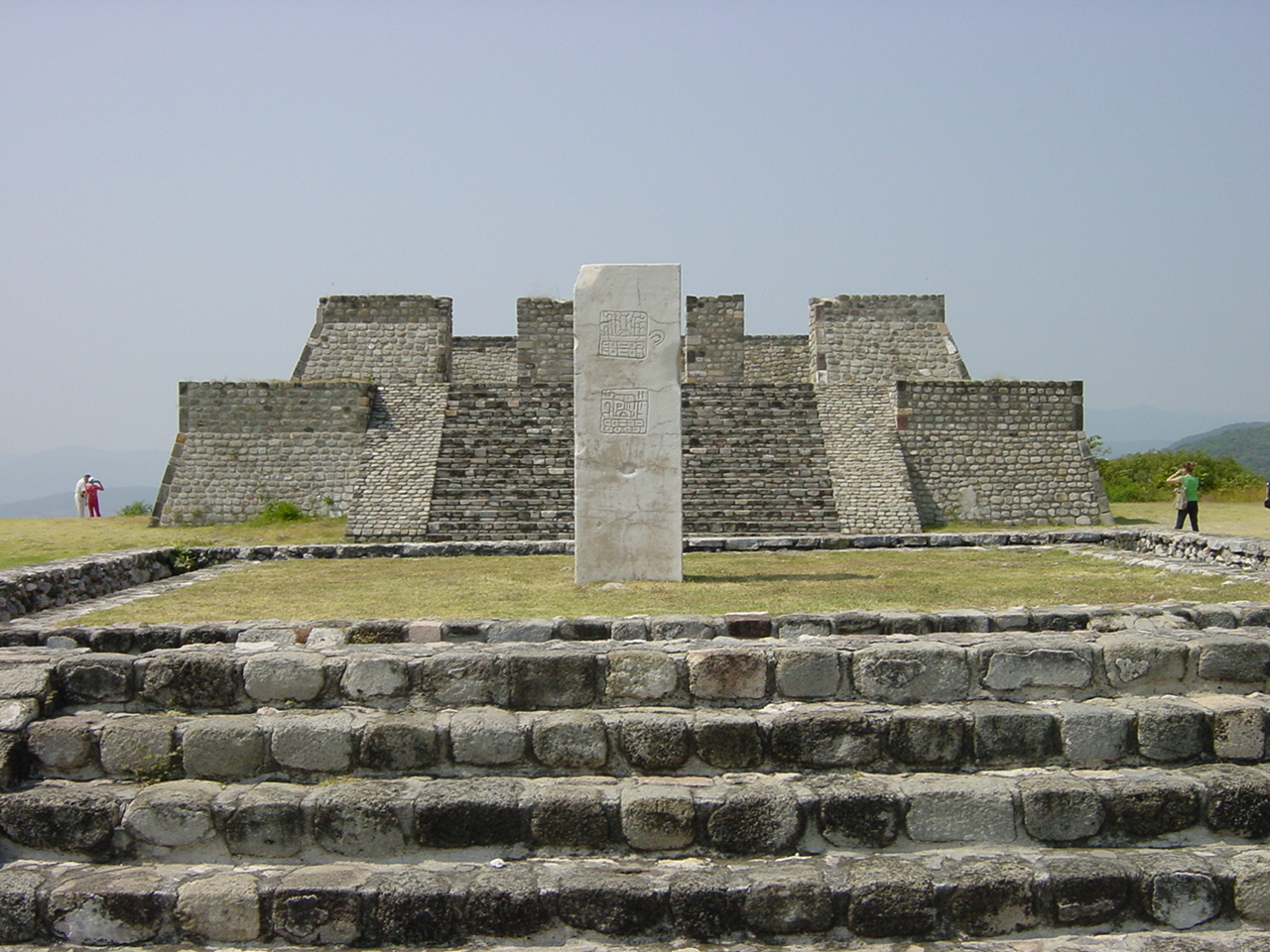
The Archaeological Monuments Zone of Xochicalco, inscribed as a UNESCO World Heritage Site in 1999, offers a unique glimpse into the complex and dynamic history of Mesoamerica during the Postclassic Period (650–900 AD). Located in Miacatlán, Morelos, approximately 38 kilometers southwest of Cuernavaca and 122 kilometers from Mexico City, this ancient city is a testament to the resilience and ingenuity of its inhabitants following the decline of major Mesoamerican civilizations like Teotihuacan, Monte Albán, Palenque, and Tikal.
More to come…UNESCO Description of the World Heritage Site
Xochicalco is an exceptionally well-preserved example of a fortified political, religious and commercial centre from the troubled period of 650–900 that followed the break-up of the great Mesoamerican states such as Teotihuacan, Monte Albán, Palenque and Tikal.
UNESCO Justification of the World Heritage Site
Criterion (iii): Xochicalco is an exceptionally well preserved and complete example of a fortified settlement from the Epiclassic Period of Mesoamerica.
Criterion (iv): The architecture and art of Xochicalco represent the fusion of cultural elements from different parts of Mesoamerica, at a period when the breakdown of earlier political structures resulted in intensive cultural regrouping.
Encyclopedia Record: Xochicalco
Xochicalco is a pre-Columbian archaeological site in Miacatlán in the western part of the Mexican state of Morelos. The name Xochicalco may be translated from Nahuatl as "in the house of Flowers". The site is located 38 km southwest of Cuernavaca, about 122 km by road from Mexico City. The site is open to visitors all week, from 10 am to 5 pm, although access to the observatory is only allowed after noon. The apogee of Xochicalco came after the fall of Teotihuacan and it has been speculated that Xochicalco may have played a part in the fall of the Teotihuacan empire.Additional Site Details
Area: 707.65 hectares
Number of Components: 1
(iv) — Outstanding example of a type of building or landscape
Coordinates: 18.803972 , -99.29639
World Heritage Research
Discover scientific research and academic studies that deepen our understanding of Archaeological Monuments Zone of Xochicalco from its history and significance to its conservation, management, and contemporary challenges.
-
Delineation of Fractures Using a 2D GPR Processing Strategy for 3D Imaging: Weak Zones within Carbonates at the Archaeological Site of Xochicalco in Mexico
Research at the UNESCO World Heritage Site of Xochicalco, Mexico, has identified critical weak zones within carbonate rocks that threaten archaeological stability. Using a novel 2D Ground-Penetrating Radar (GPR) processing strategy—specifically multipath summation on densely spaced parallel lines—the study successfully imaged fractures and potential caverns at depths of 1.6m and 1.8m. These findings suggest that cracks in the Quetzalcoatl Temple, which appeared after a significant earthquake in 2017, are linked to underlying structural weaknesses in the carbonate bedrock. The approach, employing a 400 MHz monostatic antenna, offers a precise method for assessing natural hazard impacts on cultural heritage sites.
Economou, N., Bano, M., & Ortega-Ramirez, J. (2021). Delineation of Fractures Using a 2D GPR Processing Strategy for 3D Imaging: Weak Zones within Carbonates at the Archaeological Site of Xochicalco in Mexico. Applied Sciences, 11(13), 5893. https://doi.org/10.3390/app11135893
View Publication Record | Read Publication -
The Stuccoed and Painted Benches of Xochicalco, Morelos, Mexico
Archaeological research at Xochicalco, a UNESCO World Heritage Site in Morelos, Mexico, reveals that intricately stuccoed and painted benches from the Epiclassic period (600–900 CE) likely served as royal seats or thrones. These benches, adorned with rich iconography and hieroglyphic signs, were pivotal in displaying religious, mythological, and historical narratives that reinforced hierarchical power structures. The study suggests parallels between Xochicalco's benches and those found in the Terminal Classic Maya city of Chichen Itza, indicating potential interregional cultural exchanges during this period. The research combines iconographic and epigraphic analysis to interpret the symbolic significance of these artifacts, offering new insights into the political and ceremonial functions of monumental architecture in Mesoamerica.
Nielsen, J., Alvarado León, C., & Helmke, C. (2020). THE STUCCOED AND PAINTED BENCHES OF XOCHICALCO, MORELOS, MEXICO. Ancient Mesoamerica, 32(2), 249–268. https://doi.org/10.1017/s0956536120000012
View Publication Record | Read Publication -
An Interconnected World? Evidence of Interaction in the Arts of Epiclassic Cacaxtla and Xochicalco, Mexico
Archaeological evidence from the Epiclassic period (AD 650-900) reveals complex interactions between the independent polities of Cacaxtla and Xochicalco, located in Central Mexico. These centers developed distinctive art styles that incorporated elements from distant regions, particularly Maya influences from the tropical lowlands. While previous studies focused on murals at Cacaxtla and sculptures at Xochicalco, this research expands the scope to include elite sumptuary goods, ritual items, and utilitarian trade goods like ceramics and obsidian. These artifacts suggest diverse strategies for identity formation, with references to Teotihuacan, Maya, Oaxaca, and Veracruz monuments indicating nuanced agendas in monumental artworks.
Nagao, Debra. (2014). An Interconnected World? Evidence of Interaction in the Arts of Epiclassic Cacaxtla and Xochicalco, Mexico. Columbia University. https://doi.org/10.7916/D8C53JFR
View Publication Record | Read Publication