World Heritage Identification Number: 1008
World Heritage since: 2000
Category: Cultural Heritage
WHE Type: Archaeological Sites
Transboundary Heritage: No
Endangered Heritage: No
Country: 🇨🇺 Cuba
Continent: Americas
UNESCO World Region: Latin America and the Caribbean
Map
The Archaeological Landscape of the First Coffee Plantations in the South-East of Cuba: A Window into the Economic, Social, and Technological History of the Caribbean
The Archaeological Landscape of the First Coffee Plantations in the South-East of Cuba is a UNESCO World Heritage Site that offers a unique insight into the economic, social, and technological history of the Caribbean and Latin America regions. This designation encompasses the remains of several 19th-century coffee plantations situated in the challenging terrain of the foothills of the Sierra Maestra.
More to come…UNESCO Description of the World Heritage Site
The remains of the 19th-century coffee plantations in the foothills of the Sierra Maestra are unique evidence of a pioneer form of agriculture in a difficult terrain. They throw considerable light on the economic, social, and technological history of the Caribbean and Latin American region.
UNESCO Justification of the World Heritage Site
Criterion iii The remains of the 19th and early 20th century coffee plantations in eastern Cuba are unique and eloquent testimony to a form of agricultural exploitation of virgin forest, the traces of which have disappeared elsewhere in the world. Criterion iv The production of coffee in eastern Cuba during the 19th and early 20th centuries resulted in the creation of a unique cultural landscape, illustrating a significant stage in the development of this form of agriculture.
Encyclopedia Record: Archaeological Landscape of the First Coffee Plantations in the South-East of Cuba
The Archaeological Landscape of the First Coffee Plantations in the South-East of Cuba are the remains of several 19th-century coffee plantations located in the foothills of the Sierra Maestra. During the 19th and early 20th centuries, eastern Cuba was primarily involved with coffea cultivation. The remnants of the plantations display the techniques used in the difficult terrain, as well as the economic and social significance of the plantation system in Cuba and the Caribbean.Additional Site Details
Area: 81,475 hectares
Number of Components: 7
(iv) — Outstanding example of a type of building or landscape
Coordinates: 20.03 , -75.39138889
Image
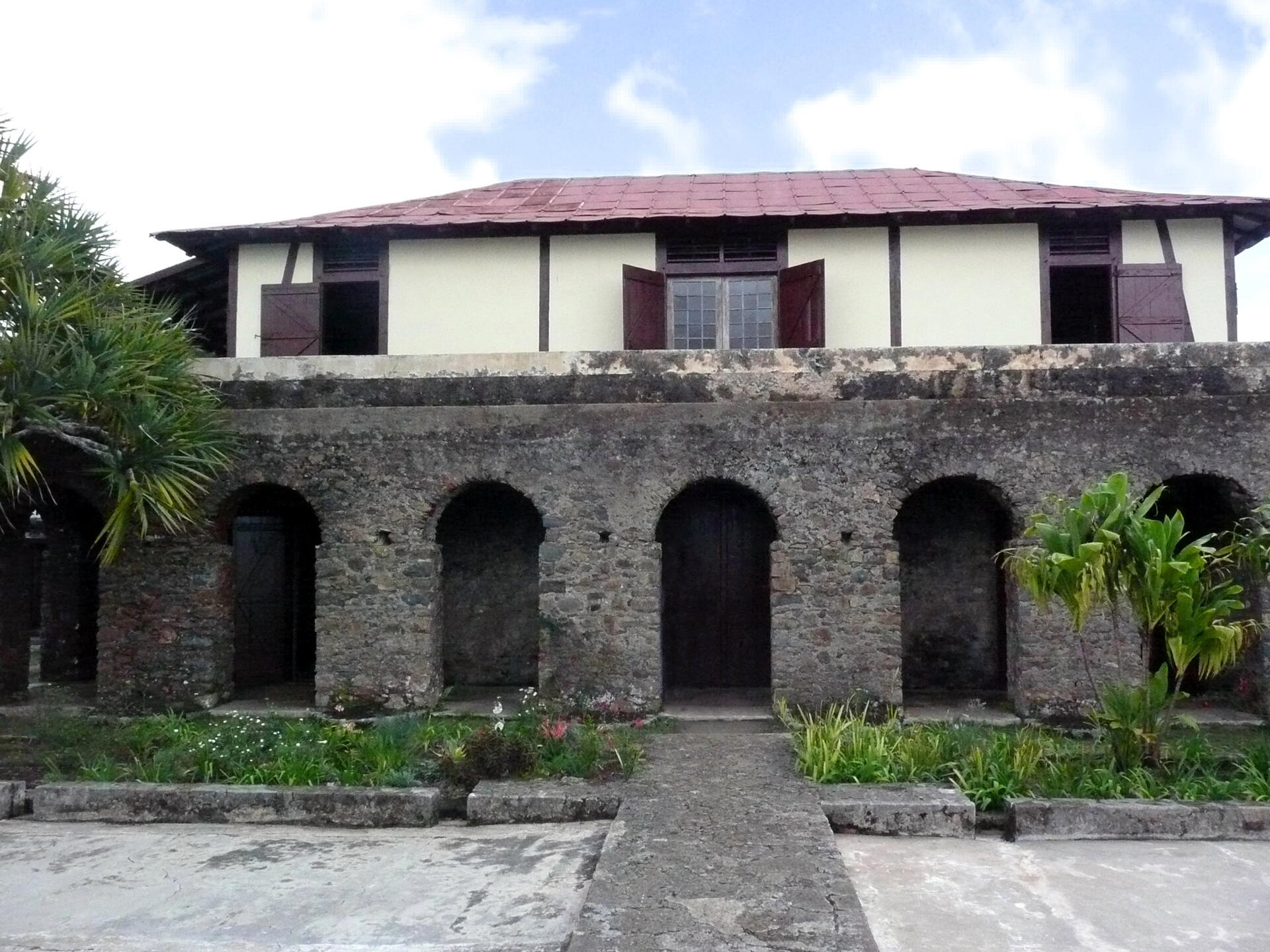
© Sigi Knoll (Lagaly_de), CC BY-SA 3.0 Resized from original. (This derivative is under the same CC BY-SA license.)