World Heritage Identification Number: 1356
World Heritage since: 2015
Category: Mixed Cultural Heritage and Natural Heritage
WHE Type: Natural Landscapes & Geographic Features
Transboundary Heritage: No
Endangered Heritage: No
Country: 🇯🇲 Jamaica
Continent: Americas
UNESCO World Region: Latin America and the Caribbean
Map
Blue and John Crow Mountains: A Biodiverse Refuge and Cultural Landmark
The Blue and John Crow Mountains, located in southeastern Jamaica, stand as a testament to the island's rich history and natural diversity. Inscribed as a UNESCO World Heritage Site in 2015, this rugged mountainous region offers a unique blend of cultural heritage and exceptional biodiversity.
More to come…UNESCO Description of the World Heritage Site
The site encompasses a rugged and extensively forested mountainous region in the south-east of Jamaica, which provided refuge first for the indigenous Tainos fleeing slavery and then for Maroons (former enslaved peoples). They resisted the European colonial system in this isolated region by establishing a network of trails, hiding places and settlements, which form the Nanny Town Heritage Route. The forests offered the Maroons everything they needed for their survival. They developed strong spiritual connections with the mountains, still manifest through the intangible cultural legacy of, for example, religious rites, traditional medicine and dances. The site is also a biodiversity hotspot for the Caribbean Islands with a high proportion of endemic plant species, especially lichens, mosses and certain flowering plants.
UNESCO Justification of the World Heritage Site
Criterion (iii): The Blue and John Crow Mountains in combination with its cultural heritage, materialised by the Nanny Town Heritage Route and associated remains, i.e. secret trails, settlements, archaeological remains, look-outs, hiding places etc., bear exceptional witness to the phenomenon of grand marronage as characterized by Windward Maroon culture which, in the search for freedom from colonial enslavement, developed a profound knowledge of, and attachment to, their environment, that sustained and helped them to achieve autonomy and recognition.
Criterion (vi): Blue and John Crow Mountains is directly associated with events that led to the liberation, and continuing freedom and survival, of groups of fugitive enslaved Africans that found their refuge in the Blue and John Crow Mountains. The property conveys outstandingly its association with living traditions, ideas and beliefs that have ensured that survival, and the specificity and uniqueness of which was recognised by UNESCO in 2008 through its inscription in the Representative List of Intangible Heritage.
Criterion (x): The Blue and John Crow Mountains belongs to the Caribbean Islands biodiversity hotspot and is an important centre for plant endemism in the Caribbean displaying 50% endemicity in the flowering plants at elevations above 900-1000 m asl with between 30-40 % of these species found only within the property’s boundaries. One of two Centres of Plant Diversity in Jamaica, the property includes a reported 1,357 species of flowering plant of which approximately 294 are Jamaican endemics and 87 of these species are found only within the property. 61 species of liverwort and moss occur in the property as well as 11 species of lichen, all of which are endemic. Genera which are well represented in the endemic flora of the property include Pilea (12 spp); Lepanthes (12 spp); Psychotria (12 spp) and Eugenia (11 spp). The Blue and John Crow Mountains overlaps with one of the world’s most irreplaceable protected areas, based on its importance for amphibian, bird and mammal species. The property hosts globally significant populations of bird species and represents a key part of the Jamaican Endemic Bird Area. It is important for a number of restricted-range species as well as a large number of migratory birds such as the Petchary (Tyrannus domenciensis) Bicknell’s Thrush (Catharus bicknellii) and Swainson’s Warbler (Limnothlypis swainsonii). The property contains two of Jamaica’s five Alliance for Zero Extinction sites, hosting a significant number of globally endangered species, including the critically endangered plant species Podocarpus urbanii, Eugenia kellyana and Psychotria danceri. The property is also home to several endangered frog and bird species including the critically endangered Arntully Robber Frog, Eleutherodactylus orcutti and the Jamaican Peak Frog, E. alticola. Threatened bird species include Bicknell's Thrush C. bicknellii, the Jamaican Blackbird, Nesopsar nigerrimus, as well as the Yellow-billed Parrot, Amazona collaria and Black-billed Parrot, Amazona agilis. The only terrestrial non-flying mammal species found in the property is the threatened rodent Hutia, Geocapromys brownii with a population restricted to John Crow Mountains.
Encyclopedia Record: Blue and John Crow Mountains National Park
Blue and John Crow Mountains National Park is a national park in Jamaica. The park covers 495.2 km2 and accounts for 4.5% of Jamaica's land surface. It derives its name from the Blue Mountains, the mountain range that runs through it, as well as from the common bird found in the park, the "John crow". The park is globally recognized for its biodiversity. This park is the last of two known habitats of the giant swallowtail butterfly, the largest butterfly in the Western Hemisphere and also the habitat for the endangered Jamaican blackbird. Additionally, it serves as a refuge for the Jamaican boa and the Jamaican hutia.Additional Site Details
Area: 26,251.6 hectares
Number of Components: 1
(vi) — Directly associated with events or living traditions
(x) — Contains most important habitats for biodiversity
Coordinates: 18.0775 , -76.5711111111
IUCN World Heritage Outlook
The 2025 Conservation Outlook on Blue and John Crow Mountains reports the following assessment:
Source: International Union for Conservation of Nature (IUCN) · View assessment
Image
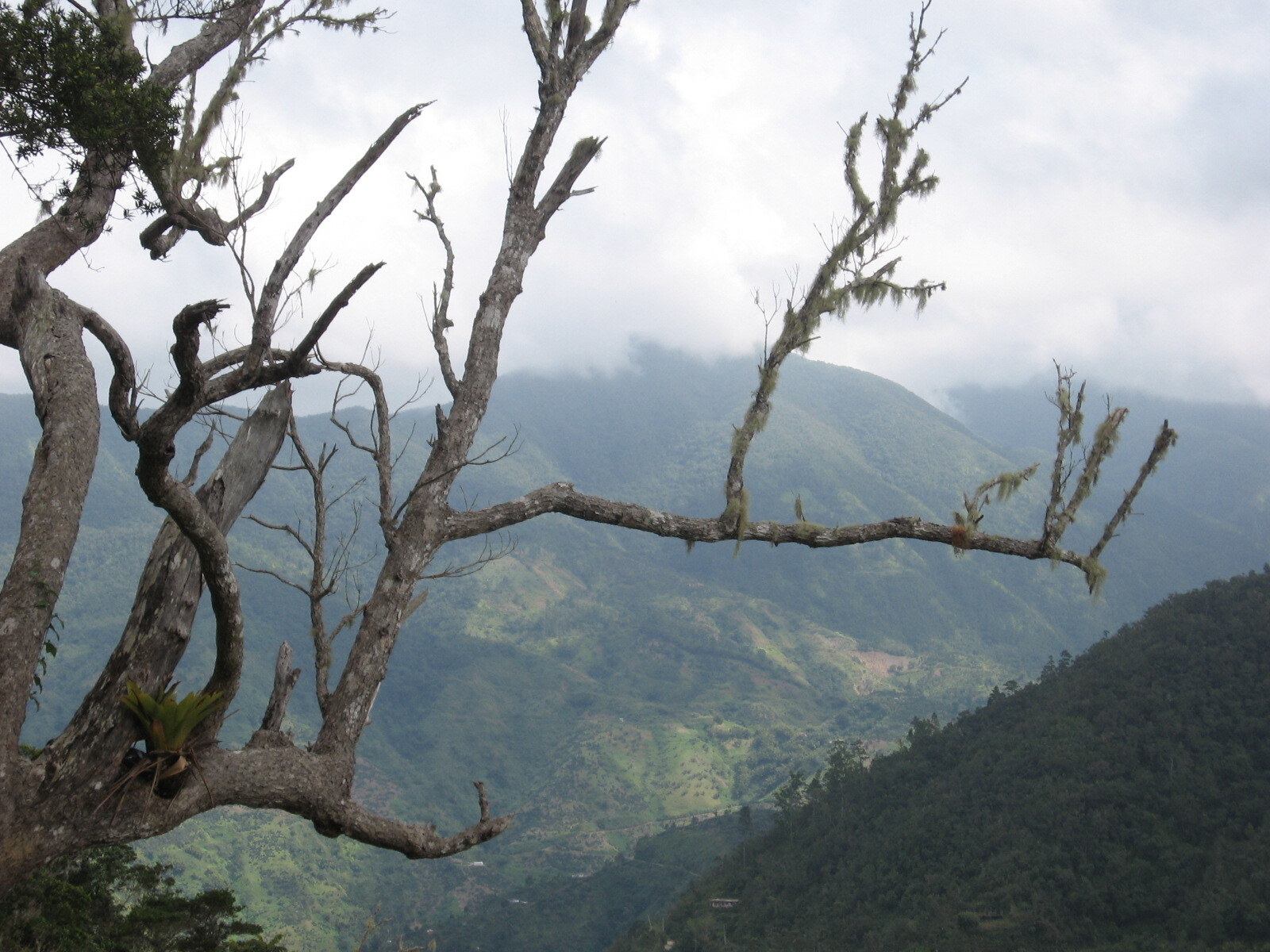
Wolmadrian, Public domain
World Heritage Research
Discover scientific research and academic studies that deepen our understanding of Blue and John Crow Mountains from its history and significance to its conservation, management, and contemporary challenges.
-
Challenges of Sustainability of the Blue and John Crow Mountains National Park
The Blue and John Crow Mountains National Park (BJCMNP) in Jamaica, a UNESCO World Heritage Site since 2015, faces significant threats to its natural and cultural heritage values. Climate change, unregulated tourism, land-use pressures, and community marginalization are key challenges compromising the park's long-term sustainability. The study highlights the need for inclusive governance, sustainable tourism planning, and targeted conservation strategies to mitigate these issues. By addressing these factors, the BJCMNP can ensure its protection and continue to contribute to Jamaica’s ecological and cultural legacy.
Williamson, A. S., Brown-Roomes, N., & Sawyers, R. (2025). Challenges of Sustainability of the Blue and John Crow Mountains National Park. Tourism Cases. https://doi.org/10.1079/tourism.2025.0048
View Publication Record | Read Publication -
Does endemic mammal conservation in Jamaica conflict with maintaining biocultural heritage?
Research reveals that conservation of the endangered Jamaican hutia (Geocapromys brownii) in the Blue and John Crow Mountains, Jamaica, can coexist with Maroon cultural practices without significant conflict. While hunting is a traditional activity, few respondents prioritize coney consumption culturally or economically, and most support conservation efforts. However, crop damage by coneys poses a notable challenge to local conservation enthusiasm. Despite an estimated 530 coneys killed annually by surveyed hunters, perceptions suggest minimal population impact, offering hope for inclusive, equitable conservation strategies that respect both ecological and biocultural heritage.
Turvey, S. T., Robinson, O. F., Duncan, C., Kennerley, R. J., & Otuokon, S. (2024). Does endemic mammal conservation in Jamaica conflict with maintaining biocultural heritage? Conservation Science and Practice, 6(12). Portico. https://doi.org/10.1111/csp2.13245
View Publication Record | Read Publication -
Biodiversity Knowledge and Conservation Awareness in a Bufferzone Community: An Assessment of Public Engagement Strategies and Tools
A study on the Blue and John Crow Mountains UNESCO World Heritage Site reveals that while public engagement strategies have significantly increased biodiversity knowledge and conservation awareness in the bufferzone community of Millbank, Jamaica, their long-term effectiveness is hindered by inconsistencies, limited funding, and ineffective enforcement. The research highlights a positive trend in conservation awareness due to collaborative efforts from academia, NGOs, and government, but notes that many educational signs have faded over time, reducing their impact. To strengthen stakeholder-community relationships and foster sustained cooperation for conservation, the study recommends diversifying communication methods and using layman terms for better public understanding.
Newell, D., & Garraway, E. (2023). Biodiversity Knowledge and Conservation Awareness in a Bufferzone Community: An Assessment of Public Engagement Strategies and Tools. Caribbean Journal of Science, 53(2). https://doi.org/10.18475/cjos.v53i2.a27
View Publication Record | Read Publication -
An Epidemiological Survey of Non-municipal Drinking Water Supplies Among Rural Communities in the Blue and John Crow Mountain Ranges, Jamaica, December 2021- June 2022
A comprehensive epidemiological survey revealed that all 14 non-municipal drinking water samples from rural communities in the Blue and John Crow Mountains, Jamaica, exceeded safe limits for total coliforms, posing significant public health risks. The study, conducted between December 2021 and June 2022, assessed microbiological and physiochemical parameters of spring and tributary water sources using standardized field sampling and laboratory testing methods. Findings confirmed the initial hypothesis that unsafe drinking water in these communities is a critical public health concern, with implications for disease burden in developing regions.
Atkinson, K. (2022). An Epidemiological Survey of Non-municipal Drinking Water Supplies Among Rural Communities in the Blue and John Crow Mountain Ranges, Jamaica, December 2021- June 2022. Texila International Journal of Public Health, 261–272. https://doi.org/10.21522/tijph.2013.10.04.art022
View Publication Record | Read Publication -
Wild Food Harvest, Food Security, and Biodiversity Conservation in Jamaica: A Case Study of the Millbank Farming Region
A strong relationship between wild food harvest and food insecurity exists among rural farmers in Jamaica, particularly within the Millbank farming region near the Blue and John Crow Mountains National Park. The study, involving interviews with 43 farmers, found that wild food harvesting significantly mitigates food insecurity (p < 0.001), highlighting its critical role in household well-being and livelihood satisfaction. This empirical evidence underscores the need to integrate wild food practices into food security, poverty alleviation, and biodiversity conservation policies. The research used mixed methods, including the Food Insecurity Experience Scale (FIES) and participatory techniques, to assess food insecurity, farming activities, and forest resource interactions.
Campbell, D., Moulton, A. A., Barker, D., Malcolm, T., Scott, L., Spence, A., Tomlinson, J., & Wallace, T. (2021). Wild Food Harvest, Food Security, and Biodiversity Conservation in Jamaica: A Case Study of the Millbank Farming Region. Frontiers in Sustainable Food Systems, 5. https://doi.org/10.3389/fsufs.2021.663863
View Publication Record | Read Publication -
Global conservation and local lore in a post-colonial society
Conservation efforts in Jamaica's Blue and John Crow Mountains demonstrate the successful integration of traditional ecological knowledge (TEK) with formal science, contrasting sharply with contestation observed in the Cockpit Country. The study highlights that differences in engagement between formally trained scientists and local TEK holders significantly influence conservation outcomes. Managers in the Blue and John Crow Mountains were more receptive to incorporating local cultural understandings into governance, suggesting that collaborative approaches can bridge global environmental norms and local practices. This research underscores the potential for scientists and policymakers to leverage informally generated knowledge, particularly in developing countries where protected area management often faces complex socio-cultural dynamics.
Fuentes-George, K. (2019). Global conservation and local lore in a post-colonial society. Contesting Global Environmental Knowledge, Norms, and Governance, 144–165. https://doi.org/10.4324/9781315166445-9
View Publication Record | Read Publication -
Suzanne Césaire et la Tropiques -poétique du morne : de Tropiques aux patrimoines immatériels des nœuds de mémoire
The Blue and John Crow Mountains, recognized as a UNESCO World Heritage Site, embody a unique cultural and ecological heritage that traces back to the foundational violence of slavery. This study reveals how Suzanne Césaire's work in the avant-garde journal Tropiques (1941–1945) laid the groundwork for postcolonial theories that challenge conventional narratives of existence and resistance, particularly in Southern societies. Through an interdisciplinary lens, the research demonstrates how the concept of the 'morne'—a symbolic geographical marker—serves as a node of memory, influencing both literary expression and intangible cultural heritage. The analysis extends to the patrimonialization of two UNESCO-listed sites: Le Morne in Mauritius and the Blue and John Crow Mountains in Jamaica, illustrating how Césaire's ecopoetic vision persists in contemporary cultural discourse. This work underscores the enduring relevance of Tropiques as a platform for liberationist thought and highlights the importance of revisiting such foundational texts to understand evolving postcolonial frameworks.
Curtius, A. D. (2018). Suzanne Césaire et la Tropiques -poétique du morne : de Tropiques aux patrimoines immatériels des nœuds de mémoire. Revue de Littérature Comparée, n° 364(4), 404–421. https://doi.org/10.3917/rlc.364.0404
View Publication Record | Read Publication -
Maroon History, Music, and Sacred Sounds in the Americas: A Jamaican Case
Jamaica's Windward Maroons preserve a rich tradition of music and spirituality, serving as a living archive of Africana heritage. Their sacred sounds, rooted in ancestor veneration, encapsulate oral histories, cultural identity, and spiritual practices, including the reverence for Granny Nanny—a legendary 18th-century leader—whose stronghold, Old Nanny Town, is now part of the UNESCO-listed Blue and John Crow Mountains National Park. This study highlights how Maroon music, such as Kromanti and Kumina, intertwines with their complex history, including sacred oaths and treaties, offering insights into the resilience and continuity of Africana spirituality in the Americas.
Fuller, H. (2017). Maroon History, Music, and Sacred Sounds in the Americas: A Jamaican Case. Journal of Africana Religions, 5(2), 275–282. https://doi.org/10.5325/jafrireli.5.2.0275
View Publication Record | Read Publication -
Using tourism to conserve the mist forests and mysterious cultural heritage of the Blue and John Crow Mountains National Park, Jamaica
Tourism initiatives within and around the Blue and John Crow Mountains National Park, Jamaica, have successfully contributed to biodiversity conservation by engaging local communities. These efforts raise public awareness of biodiversity values, provide skills training, and promote ecologically sustainable livelihoods that reduce threats like slash-and-burn agriculture. Community tourism has been established in some areas while others are in planning stages, with several community members now employed as park rangers or involved in park management. The study highlights the potential of tourism to align with Aichi Targets by fostering local capacity building and sustainable income-generating activities for poverty reduction.
Otuokon, S., Chai, S.-L., & Beale, M. (2012). Using tourism to conserve the mist forests and mysterious cultural heritage of the Blue and John Crow Mountains National Park, Jamaica. Parks, 18(2), 145–154. https://doi.org/10.2305/iucn.ch.2012.parks-18-2.so.en
View Publication Record | Read Publication -
Are We Losing the Best Parts of Our Protected Areas in Tropical Mountains?
A critical imbalance in forest conservation within the Blue and John Crow Mountains National Park, Jamaica, reveals that lower-altitude zones face significantly higher deforestation compared to montane regions. Research shows that while only 4% of montane forest was cleared by 2008 with minimal fragmentation, lowland areas experienced seven times more forest loss and an 11-fold increase in fragment density. The study highlights the high conservation value of remaining lowland forests, which harbor 18% endemic species and 71% of threatened tree species, 92% of which are endemic. This 'protected area hotspot zone,' situated between the park boundary and core montane areas, is identified as critical for IUCN categories I and II protected areas, emphasizing the need for targeted conservation efforts to preserve these biodiversity-rich regions.
Chai, S.-L., & Tanner, E. (2010). Are We Losing the Best Parts of Our Protected Areas in Tropical Mountains? Biotropica, 42(6), 739–747. Portico. https://doi.org/10.1111/j.1744-7429.2010.00634.x
View Publication Record | Read Publication