World Heritage Identification Number: 184
World Heritage since: 1982
Category: Cultural Heritage
WHE Type: Archaeological Sites
Transboundary Heritage: No
Endangered Heritage: Yes
Country: 🇱🇾 Libya
Continent: Africa
UNESCO World Region: Arab States
Map
Archaeological Site of Sabratha: A Testament to Ancient Trade and Roman Influence
The Archaeological Site of Sabratha, located near modern-day Sabratha, Libya, stands as a significant remnant of ancient trade routes and Roman influence in North Africa. This UNESCO World Heritage Site offers a captivating glimpse into the rich history of the region, spanning from its Phoenician origins to its Romanization during the 2nd and 3rd centuries A.D.
More to come…UNESCO Description of the World Heritage Site
A Phoenician trading-post that served as an outlet for the products of the African hinterland, Sabratha was part of the short-lived Numidian Kingdom of Massinissa before being Romanized and rebuilt in the 2nd and 3rd centuries A.D.
Encyclopedia Record: Archaeological Site of Sabratha
The archaeological site of Sabratha is an excavated Numidian and later Roman city situed near present-day Sabratha, Libya.Additional Site Details
Area: 90.534 hectares
Number of Components: 1
Coordinates: 32.80528 , 12.485
Image
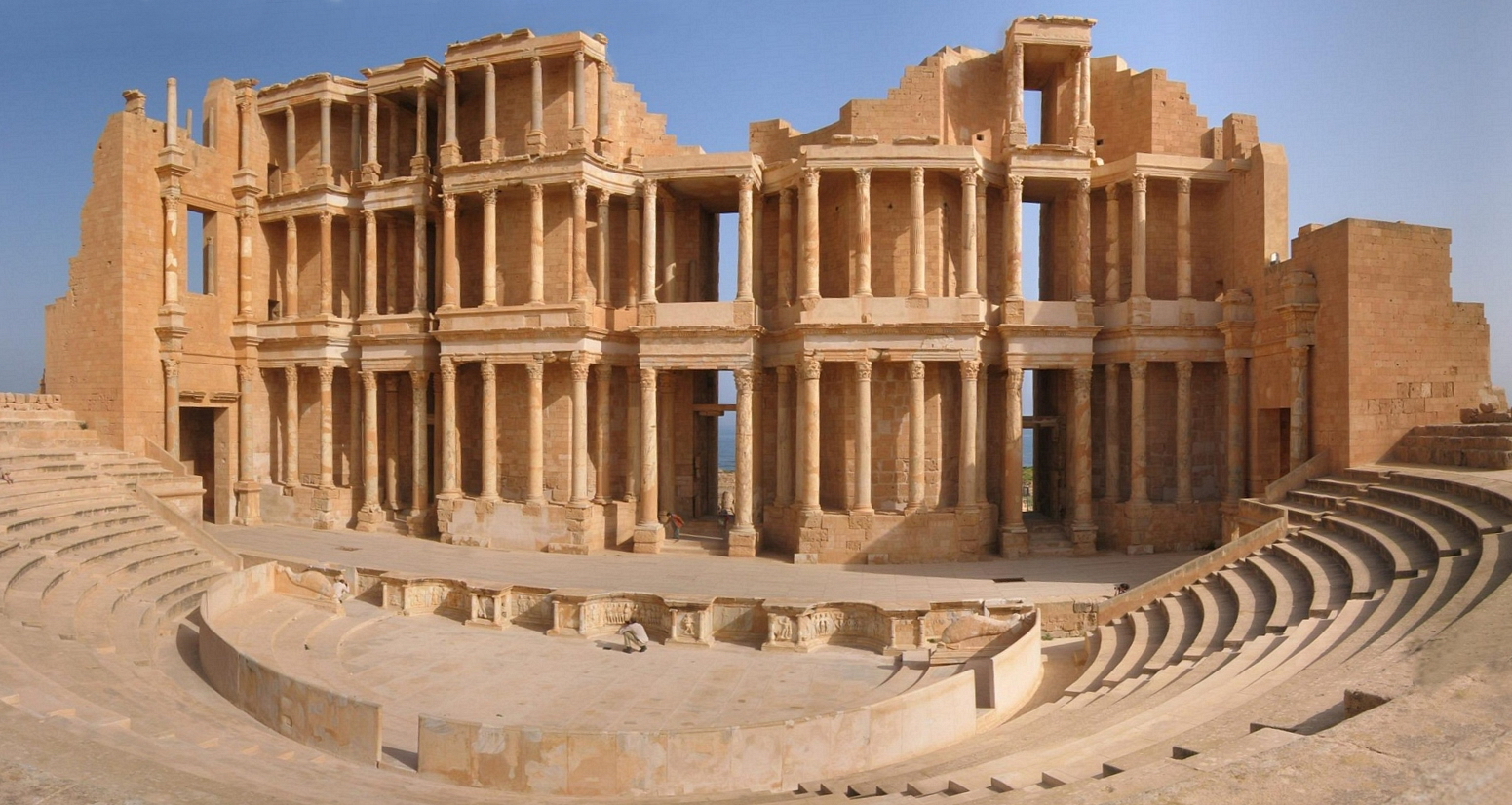
© Unknown, CC BY-SA 2.0 Resized from original. (This derivative is under the same CC BY-SA license.)
World Heritage Research
Discover scientific research and academic studies that deepen our understanding of Archaeological Site of Sabratha from its history and significance to its conservation, management, and contemporary challenges.
-
Endangered maritime archaeology in North Africa – the MarEA Project
Maritime cultural heritage in the Middle East and North Africa (MENA) is increasingly threatened by conflict, climate change, and urbanization. The Maritime Endangered Archaeology (MarEA) Project, launched in 2019, addresses this crisis by rapidly assessing vulnerabilities and aiding management strategies for at-risk sites. A key finding highlights the dual approach of MarEA: a generalized threat assessment applied across all sites, demonstrated through the historic port of Suakin (Sudan), and a site-specific shoreline change analysis to evaluate coastal erosion impacts, showcased at the UNESCO World Heritage Site of Sabratha (Libya). This methodology provides a comprehensive framework for preserving maritime heritage under mounting pressures.
Nikolaus, J., Westley, K., & Breen, C. (2023). Endangered maritime archaeology in North Africa – the MarEA Project. Libyan Studies, 54, 135–150. https://doi.org/10.1017/lis.2023.4
View Publication Record | Read Publication -
The Detachment Physical Weathering Form Group Affecting Stone Building Materials at The Archaeological Site of Sabratha, Northwest Libya
A comprehensive analysis of the Archaeological Site of Sabratha, a UNESCO World Heritage Site in Libya, reveals that nine primary physical weathering forms—belonging to the 'detachment group'—are significantly affecting its stone monuments. These weathering processes, ranging from non-visible damage (0 degrees) to moderate damage (3 degrees), are primarily driven by diurnal and seasonal temperature variations, relative humidity fluctuations, salt crystallization, moisture content, and water exposure. The study employed a methodology based on the classification system developed by Fitzner and Heinrichs (2002, 2004), which includes fifteen individual weathering forms. To visualize damage distribution, contour maps were created for each form, alongside linear and progressive damage indices. The findings underscore the urgent need for government institutions to prioritize the preservation of Sabratha's built heritage, given the severity and extent of the observed weathering damages.
Shushan, I. F., Akhmyra, S. B., & Minas, H. A. (2019). The Detachment Physical Weathering Form Group Affecting Stone Building Materials at The Archaeological Site of Sabratha, Northwest Libya. مجلة علوم البحار والتقنيات البيئية, 5(1), 1–14. https://doi.org/10.59743/jmset.v5i1.70
View Publication Record | Read Publication -
Impact of coastal environmental conditions on building materials of The Roman Theater at the archaeological site of Sabratha, Libya.
Coastal environmental conditions significantly impact the durability of building materials at Sabratha's Roman Theater, leading to structural degradation such as collapsing and disintegration. The study reveals that limestone, marble, and mortars used in the theater's construction undergo alterations due to exposure to coastal elements. Analytical techniques like XRD, XRF, PM, and SEM were employed to identify mineral composition and its changes, alongside evaluating physio-mechanical properties. These findings highlight the vulnerability of monumental structures in harsh coastal environments, offering insights into preservation challenges for UNESCO World Heritage Sites.
Abdalahh, M. (2011). Impact of coastal environmental conditions on building materials of The Roman Theater at the archaeological site of Sabratha, Libya. The Conference Book of the General Union of Arab Archeologists, 14(14), 288–323. https://doi.org/10.21608/cguaa.2011.35625
View Publication Record | Read Publication