World Heritage Identification Number: 984
World Heritage since: 2000
Category: Cultural Heritage
WHE Type: Infrastructure & Industry
Transboundary Heritage: No
Endangered Heritage: No
Country: 🇬🇧 United Kingdom of Great Britain and Northern Ireland
Continent: Europe
UNESCO World Region: Europe and North America
Map
Blaenavon Industrial Landscape: A Testament to Early Industrialization in South Wales
The Blaenavon Industrial Landscape, situated in the heart of Torfaen, Wales, stands as a significant remnant of the region's preeminent role in global iron and coal production during the 19th century. This historic site, inscribed as a UNESCO World Heritage Site in 2000, offers a unique glimpse into the early stages of industrialization in South Wales.
More to come…UNESCO Description of the World Heritage Site
The area around Blaenavon is evidence of the pre-eminence of South Wales as the world's major producer of iron and coal in the 19th century. All the necessary elements can still be seen - coal and ore mines, quarries, a primitive railway system, furnaces, workers' homes, and the social infrastructure of their community.
UNESCO Justification of the World Heritage Site
Criterion (iii): The Blaenavon Landscape constitutes an exceptional illustration in material form of the social and economic structure of 19th century industry.
Criterion (iv): The components of the Blaenavon Industrial Landscape together make up an outstanding and remarkably complete example of a 19th century industrial landscape.
Encyclopedia Record: Blaenavon Industrial Landscape
Blaenavon Industrial Landscape, in and around Blaenavon, Torfaen, Wales, was inscribed a World Heritage Site by UNESCO in 2000. The Blaenavon Ironworks, now a museum, was a major centre of iron production using locally mined or quarried iron ore, coal and limestone. Raw materials and products were transported via horse-drawn tramroads, canals and steam railways. The Landscape includes protected or listed monuments of the industrial processes, transport infrastructure, workers' housing and other aspects of early industrialisation in South Wales.Additional Site Details
Area: 3,290 hectares
Number of Components: 1
(iv) — Outstanding example of a type of building or landscape
Coordinates: 51.77638889 , -3.088055556
Image
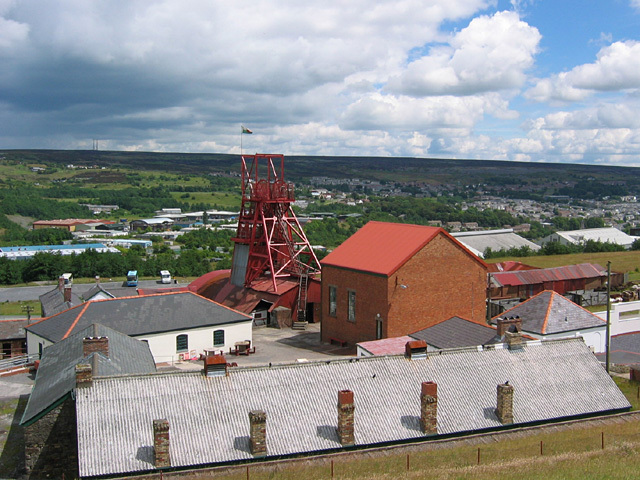
© Rafaël Delaedt (Arafi), CC BY-SA 2.5 Resized from original. (This derivative is under the same CC BY-SA license.)
World Heritage Research
Discover scientific research and academic studies that deepen our understanding of Blaenavon Industrial Landscape from its history and significance to its conservation, management, and contemporary challenges.
-
A Cultural Landscape Approach to Mining Heritage† - Focusing on UNESCO-Listed Mining Heritage Cases in the UK, Japan and France -
Mining heritage, when viewed as a cultural landscape, holds significant value beyond its industrial remnants, reflecting historical transformations in local communities and ecological environments. A study analyzing three UNESCO World Heritage Sites—Blaenavon Industrial Landscape (UK), Iwami Ginzan Silver Mine (Japan), and Nord-Pas de Calais Mining Basin (France)—reveals how industrial activities reshaped landscapes and fostered unique cultural identities. The research emphasizes a holistic approach to heritage management, integrating socio-cultural contexts for sustainable conservation and regional revitalization. By examining the interplay between industry, community, and environment, this study underscores the importance of recognizing mining heritage's multifaceted role in shaping cultural landscapes.
Bo-ram, K., Jaei, L., & Jong-sang, S. (2025). A Cultural Landscape Approach to Mining Heritage† - Focusing on UNESCO-Listed Mining Heritage Cases in the UK, Japan and France -. Journal of the Korean Institute of Landscape Architecture, 53(3), 48–64. https://doi.org/10.9715/kila.2025.53.3.048
View Publication Record | Read Publication -
Improvements and methodological innovations in the application of the Historic Landscape Characterisation methodology to industrial heritage landscapes
Industrial heritage landscapes, such as Blaenavon's, present unique challenges due to their complexity and cultural significance. While the Historic Landscape Characterisation methodology offers valuable insights into these landscapes, it has limitations that necessitate more sophisticated approaches. This study critically evaluates the methodology, identifying its strengths while highlighting theoretical and methodological weaknesses. It proposes improvements and innovations to better address the dynamic, highly anthropised nature of industrial landscapes, their diverse spatial and temporal scales, and their unique transformation by past industrial activity. These advancements aim to enhance the study, enhancement, and intervention of such landscapes from a heritage and cultural perspective.
Alba Dorado, M. I., & Cano Sanchiz, J. M. (2024). Improvements and methodological innovations in the application of the Historic Landscape Characterisation methodology to industrial heritage landscapes. City, Territory and Architecture, 11(1). https://doi.org/10.1186/s40410-023-00222-4
View Publication Record | Read Publication -
“A nation built on coal”: transcalar memory work at the Big Pit
This study reveals how the discourses of Welshness and coal heritage at Big Pit, part of the Blaenavon Industrial Landscape UNESCO World Heritage Site, have evolved alongside Wales' devolution from UK to Welsh Government control. Using a mixed methodology, researchers found that memory work at this site reflects complex, transcalar relationships involving tourism, heritage, and geopolitics, influenced by migration narratives, industrialization, and the romanticization of labor. These dynamics are shaped by Big Pit's position within multiple scales—including a UK National Park and the European Route of Industrial Heritage—and highlight how such sites navigate national identities and community narratives in response to shifting power structures.
Rhodes II, M. A., & Price, W. R. (2023). “A nation built on coal”: transcalar memory work at the Big Pit. Tourism Geographies, 26(5), 755–777. https://doi.org/10.1080/14616688.2023.2253793
View Publication Record | Read Publication -
Benefits of World Heritage Site Status
World Heritage Site (WHS) status offers multifaceted benefits beyond conservation, including economic stimulation through tourism and local regeneration. A study highlights that WHS inscription serves as a catalyst for destination marketing, fostering economic growth and employment in surrounding areas. It also enhances local pride and engagement with heritage assets while commodifying them for tourism. The research explores these dynamics through case studies of Blaenavon Industrial Landscape (Wales) and Cartagena de Indias (Colombia), demonstrating how WHS status can drive positive social and economic outcomes.
Woodward, S. C., & Cooke, L. (2022). Benefits of World Heritage Site Status. World Heritage, 95–123. https://doi.org/10.4324/9781003044857-9
View Publication Record | Read Publication -
Composted Municipal Green Waste Enhances Tree Success in Opencast Coal Land Reclamation in Wales
A controlled trial over 11 years found that composted municipal green waste (MGW) did not significantly improve tree height or diameter at breast height (DBH) but had contrasting effects on survival rates of three tree species in degraded opencast coal land near the UNESCO World Heritage site Blaenavon Industrial Landscape, Wales. While Common Alder showed the highest overall survival without MGW treatment, Silver Birch and European Larch exhibited significantly higher survival when treated with composted MGW (40% food waste and 60% garden waste). This suggests potential species-specific benefits of MGW in land reclamation efforts, despite its limited impact on growth metrics.
Haigh, M., Desai, M., Cullis, M., D’Aucourt, M., Sansom, B., Wilding, G., Alun, E., Garate, S., Hatton, L., Kilmartin, M., Panhuis, W., & Jenkins, R. (2019). Composted Municipal Green Waste Enhances Tree Success in Opencast Coal Land Reclamation in Wales. Air, Soil and Water Research, 12. https://doi.org/10.1177/1178622119877837
View Publication Record | Read Publication -
Civil engineering heritage: country profile – Wales, UK
Wales, UK, boasts a rich civil engineering heritage, highlighted by iconic structures such as the Conwy and Britannia tubular bridges, Telford's A5 trunk road bridges, and the Pont-y-Cafnau, the world's oldest iron tram road bridge (c. 1793). The region also includes two UNESCO World Heritage Sites: the Pontcysyllte Aqueduct and the Blaenavon industrial landscape, both of which exemplify significant advancements in engineering. This review identifies Wales's major civil engineering achievements, their national and regional recognition, conservation efforts, and key information sources. It underscores the importance of preserving these structures through organizations like Cadw and the Royal Commission on the Ancient and Historical Monuments in Wales, while providing resources for further exploration.
Jones, S. K., & Thomas, K. (2016). Civil engineering heritage: country profile – Wales, UK. Proceedings of the Institution of Civil Engineers - Engineering History and Heritage, 169(2), 101–106. https://doi.org/10.1680/jenhh.16.00005
View Publication Record | Read Publication -
World Heritage site status – a catalyst for heritage-led sustainable regeneration: Blaenavon Industrial Landscape, United Kingdom
World Heritage site status can serve as a catalyst for heritage-led sustainable regeneration, as demonstrated by the Blaenavon Industrial Landscape in the United Kingdom. This study highlights how the designation of a site as a UNESCO World Heritage Site fosters economic revitalization and environmental sustainability through the preservation and interpretation of industrial heritage. The research examines the Blaenavon landscape, which retains significant evidence of coal mining and ironworking from the Industrial Revolution. By analyzing the impact of its World Heritage status, the study underscores the potential for such sites to drive sustainable development while maintaining cultural integrity.
Thomas, C. (2012). World Heritage site status – a catalyst for heritage-led sustainable regeneration: Blaenavon Industrial Landscape, United Kingdom. World Heritage, 290–300. https://doi.org/10.1017/cbo9781139567657.031
View Publication Record | Read Publication