World Heritage Identification Number: 1388
World Heritage since: 2012
Category: Natural Heritage
WHE Type: Natural Landscapes & Geographic Features
Transboundary Heritage: No
Endangered Heritage: No
Country: 🇨🇳 China
Continent: Asia
UNESCO World Region: Asia and the Pacific
Map
Unveiling Ancient Life: The Chengjiang Fossil Site
The Chengjiang Fossil Site, situated in Yuxi, Yunnan Province, China, offers a unique glimpse into the early stages of life on Earth. Inscribed as a UNESCO World Heritage Site in 2012, this 512-hectare location has become a significant hub for paleontological research.
More to come…UNESCO Description of the World Heritage Site
A hilly 512 ha site in Yunnan province, Chengjiang’s fossils present the most complete record of an early Cambrian marine community with exceptionally preserved biota, displaying the anatomy of hard and soft tissues in a very wide variety of organisms, invertebrate and vertebrate. They record the early establishment of a complex marine ecosystem. The site documents at least sixteen phyla and a variety of enigmatic groups as well as about 196 species, presenting exceptional testimony to the rapid diversification of life on Earth 530 million years ago, when almost all of today’s major animal groups emerged. It opens a palaeobiological window of great significance to scholarship.
UNESCO Justification of the World Heritage Site
Criterion (viii): The Chengjiang Fossil Site presents an exceptional record of the rapid diversification of life on Earth during the early Cambrian period, 530 million years before present. In this geologically short interval almost all major groups of animals had their origins. The property is a globally outstanding example of a major stage in the history of life, representing a palaeobiological window of great significance. The exceptional palaeontological evidence of the Chengjiang Fossil Site is unrivalled for its rich species diversity. To date at least 16 phyla, plus a variety of enigmatic groups, and about 196 species have been documented. Taxa recovered range from algae, through sponges and cnidarians to numerous bilaterian phyla, including the earliest known chordates. The earliest known specimens of several phyla such as cnidarians, ctenophores, priapulids, and vertebrates occur here. Many of the taxa represent the stem groups to extant phyla and throw light on characteristics that distinguish major taxonomic groups. The property displays excellent quality of fossil preservation including the soft and hard tissues of animals with hard skeletons, along with a wide array of organisms that were entirely soft-bodied, and therefore relatively unrepresented in the fossil record. Almost all of the soft-bodied species are unknown elsewhere. Fine-scale detailed preservation includes features as the alimentary systems of animals, for example of the arthropod Naraoia, and the delicate gills of the enigmatic Yunnanozoon. The sediments of Chengjiang provide what are currently the oldest known fossil chordates, the phylum to which all vertebrates belong. The fossils and rocks of the Chengjiang Fossil Site, together, present a complete record of an early Cambrian marine community. It is one of the earliest records of a complex marine ecosystem, with food webs capped by sophisticated predators. Moreover, it demonstrates that complex community structures had developed very early in the Cambrian diversification of animal life, and provides evidence of a wide range of ecological niches. The property thus provides a unique window of understanding into the structure of early Cambrian communities.
Encyclopedia Record: Chengjiang
Chengjiang is a city located in Yuxi, Yunnan Province, China, just north of Fuxian Lake.Additional Site Details
Area: 512 hectares
Number of Components: 1
Coordinates: 24.6688888889 , 102.9772222222
IUCN World Heritage Outlook
The 2025 Conservation Outlook on Chengjiang Fossil Site reports the following assessment:
Source: International Union for Conservation of Nature (IUCN) · View assessment
Image
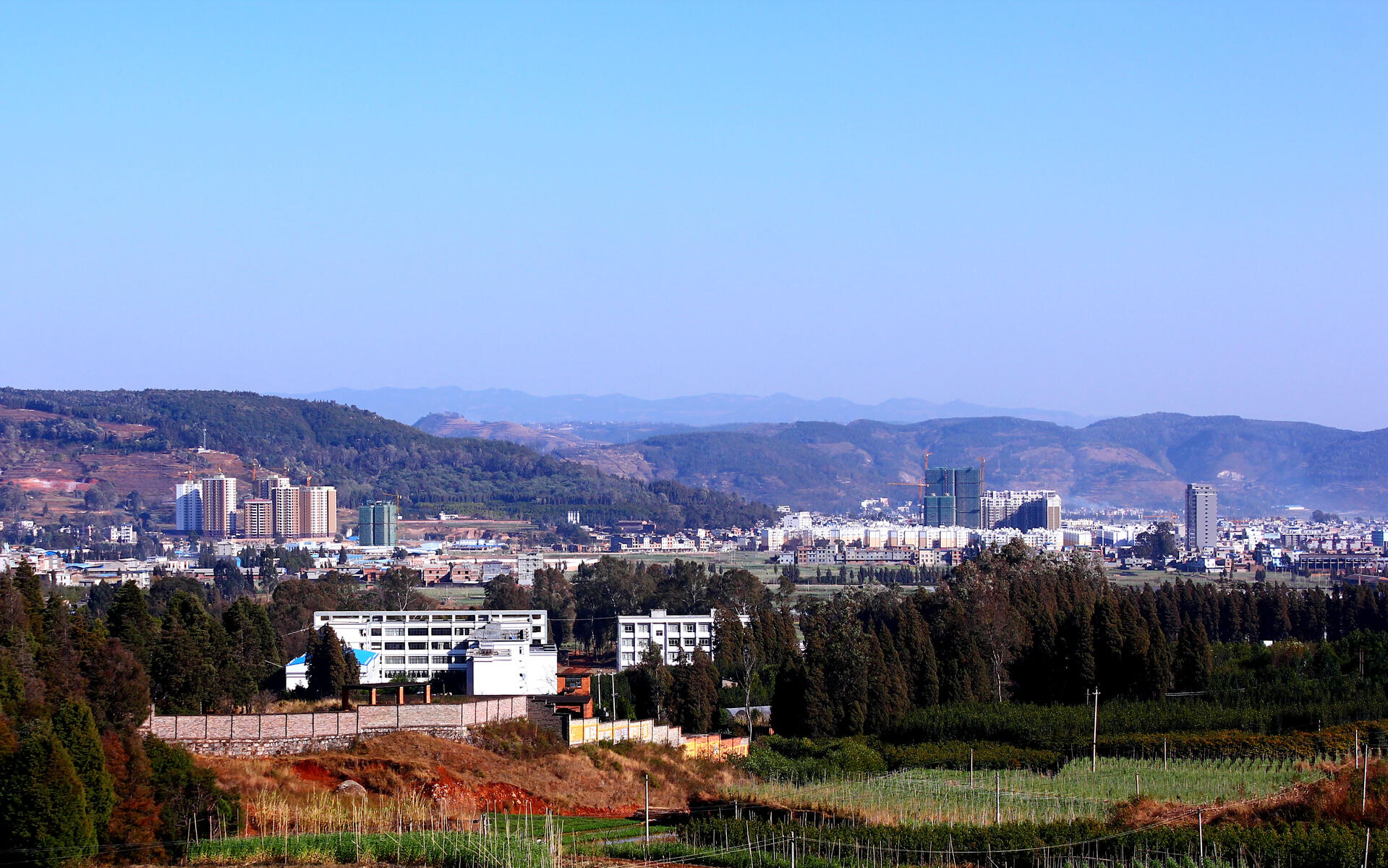
© Zhangmoon618, CC BY-SA 3.0 Resized from original. (This derivative is under the same CC BY-SA license.)
World Heritage Research
Discover scientific research and academic studies that deepen our understanding of Chengjiang Fossil Site from its history and significance to its conservation, management, and contemporary challenges.
-
The Early Cambrian Fossils
Exceptional fossil deposits at the Chengjiang site, dating to approximately 520 million years ago, have preserved soft tissues of diverse early Cambrian animals, revealing key insights into the rapid evolutionary radiation and anatomical diversification during this period. These fossils, including sponges, polyps, and bilaterians such as arthropods, demonstrate the growing separation of visceral organs from somatic features like limbs, fins, brain, and eyes. The Chengjiang community represents a global pattern, with earlier deposits at Kuanpuanchu indicating that this radiation began 15 million years prior. Additionally, even older Siberian fossils show evidence of predator-prey distinctions, suggesting complex ecological interactions had already evolved by the base of the Cambrian.
Bell, G. (2026). The Early Cambrian Fossils. The Sea-Change, 96–148. https://doi.org/10.1093/9780197797464.003.0009
View Publication Record | Read Publication -
Discovery of paleontological site of Chengjiang and new explanation of Cambrian life explosion——Site protection and sustainable development
The Chengjiang fossil site in Yunnan, China, has emerged as a pivotal discovery for understanding the Cambrian life explosion. Fossils from this site reveal unprecedented diversity and adaptability among early marine organisms, offering critical evidence for Earth's evolutionary history. The study highlights the site's significance in biotechnology and sustainable development while addressing challenges in its conservation. It emphasizes the potential to integrate scientific research with tourism, ensuring long-term protection without compromising its paleontological value.
Xia, R. (2025). Discovery of paleontological site of Chengjiang and new explanation of Cambrian life explosion——Site protection and sustainable development. Chinese Industry and Technology of Eco-Environment, 6(1), 48–54. https://doi.org/10.47297/wspciatewsp2633-772x09.20250601
View Publication Record | Read Publication -
The exploration on the path of foreign language talent cultivation from the perspective of rural revitalization --a case study of Chengjiang Fossil Site History Museum
A collaborative approach between colleges and villages, exemplified by the Chengjiang Fossil Site History Museum, demonstrates significant potential for cultivating foreign language talents tailored to rural revitalization needs. This study identifies a pathway for training composite talents that integrates foreign language skills with local contextual demands, addressing gaps in current talent cultivation strategies in China. By analyzing existing training models and aligning them with rural development requirements, the research proposes an innovative framework for education-village partnerships. The findings highlight the importance of localized, context-driven talent development in fostering sustainable rural growth.
NING, X., ZUO, M., & MO, X. (2024). The exploration on the path of foreign language talent cultivation from the perspective of rural revitalization --a case study of Chengjiang Fossil Site History Museum. Region - Educational Research and Reviews, 6(3), 69. https://doi.org/10.32629/rerr.v6i3.1816
View Publication Record | Read Publication -
Palaeontologic and Stratigraphic Research at NIGPAS
NIGPAS has achieved significant milestones in palaeontologic and stratigraphic research, including the determination of Global Boundary Stratotype Section and Point (GSSP) and groundbreaking studies on the Chengjiang Fauna and Wuda Tuff Flora. These discoveries, both recognized as IUGS Geological Heritage Sites, highlight China's rich fossil lagerstätten and ideal geological sections, which have become global focal points for addressing geoscience challenges. NIGPAS, supported by CAS, fosters extensive domestic and international collaboration, driving continued exploration and research in invertebrate palaeontology and palaeobotany.
Wang, J., Zhao, F., Wang, B., & Lv, J. (2024). Palaeontologic and Stratigraphic Research at NIGPAS. Bulletin of the Chinese Academy of Sciences, 38, 2024015. https://doi.org/10.1051/bcas/2024015
View Publication Record | Read Publication -
Modélisation d'un réseau trophique paléoécologique de la faune fossile des schistes de Fezouata (Maroc) de l'Ordovicien inférieur
A newly reconstructed paleoecological food web from the Fezouata fossil site (Morocco) reveals that Ordovician marine ecosystems, despite their early stage, exhibited modern-like trophic complexity. The study, which compiled the most comprehensive species list to date and modeled 15 trophic properties, found that Fezouata's network shared similarities with Burgess Shale (Cambrian) but featured higher basal species proportions and lower mean trophic levels, reflecting the rise of filter-feeding animals post-Cambrian explosion. Comparisons across Chengjiang, Burgess, and Fezouata suggest the Great Ordovician Biodiversification Event (GOBE) may not be as independent from the Cambrian diversification as previously thought, implying a continuous long-term evolutionary process rather than distinct events.
P. Soucy, C. (2024). Modélisation d'un réseau trophique paléoécologique de la faune fossile des schistes de Fezouata (Maroc) de l'Ordovicien inférieur [Université de Montréal]. https://doi.org/10.71781/20373
View Publication Record | Read Publication -
Cambrian explosion fossils from the North China craton
A new middle Cambrian (Drumian) Burgess-Shale-type (BST) fossil deposit, the Linyi Lagerstätte, has been formally described from the North China craton, marking a significant discovery. This site, located in Shandong Province, is the youngest BST found in China and complements earlier findings from nearby Weifang. The Linyi Lagerstätte includes notable soft-bodied species such as the newly described radiodont Cordaticaris striatus and rare arthropods like Thelxiope. Quantitative analysis suggests it represents an intermediate fauna between East Gondwana and Laurentia, providing insights into global paleobiogeographic patterns during the Cambrian explosion. This study underscores the importance of continued field exploration and detailed investigation to enhance our understanding of early animal evolution.
Caron, J.-B. (2022). Cambrian explosion fossils from the North China craton. National Science Review, 9(7). https://doi.org/10.1093/nsr/nwac082
View Publication Record | Read Publication -
Moving legs: A workflow on how to generate a flexible endopod of the 518 million‐year‐old Chengjiang arthropod Ercaicunia multinodosa using 3D ‐kinematics (Cambrian, China)
A groundbreaking reconstruction of limb movement in the 518-million-year-old arthropod Ercaicunia multinodosa from China’s Chengjiang Fossil Site reveals how its endopods could have flexed inward, offering new insights into early arthropod locomotion. Unlike prior two-dimensional analyses, this study leverages high-resolution micro-CT scanning to capture the fossilized limb’s three-dimensional structure, followed by 3D visualization and animation techniques. Researchers used Amira for surface modeling, SAP 3D Visual Enterprise Author for postprocessing, and Autodesk Maya with X_ROMM to simulate limb articulation, proposing multiple plausible movement patterns. This method bridges gaps in fossil morphology, enhancing our understanding of Cambrian arthropod behavior.
Schmidt, M., Liu, Y., Zhai, D., Hou, X., & Melzer, R. R. (2020). Moving legs: A workflow on how to generate a flexible endopod of the 518 million‐year‐old Chengjiang arthropod Ercaicunia multinodosa using
View Publication Record | Read Publication3D ‐kinematics (Cambrian, China). Microscopy Research and Technique, 84(4), 695–704. Portico. https://doi.org/10.1002/jemt.23628