World Heritage Identification Number: 1665
World Heritage since: 2023
Category: Cultural Heritage
WHE Type: Cultural Landscapes
Transboundary Heritage: No
Endangered Heritage: No
Country: 🇨🇳 China
Continent: Asia
UNESCO World Region: Asia and the Pacific
Map
Preserving Ancient Practices in the Cultural Landscape of Old Tea Forests of the Jingmai Mountain in Pu’er
The Cultural Landscape of Old Tea Forests of the Jingmai Mountain in Pu’er, inscribed as a UNESCO World Heritage Site in 2023, offers a unique insight into the rich cultural heritage and sustainable practices of the Blang and Dai peoples of southwestern China. This cultural landscape, situated on the Jingmai Mountain, has been developed over a millennium, with its origins dating back to the 10th century.
More to come…UNESCO Description of the World Heritage Site
Located on Jingmai Mountain in southwestern China, this cultural landscape was developed over a thousand years by the Blang and Dai peoples following practices that began in the 10th century. The property is a tea production area comprised of traditional villages within old tea groves surrounded by forests and tea plantations. The traditional understorey cultivation of old tea trees is a method that responds to the specific conditions of the mountain’s ecosystem and subtropical monsoon climate, combined with a governance system maintained by the local Indigenous communities. Traditional ceremonies and festivities relate to the Tea Ancestor belief that spirits live in the tea plantations and in the local fauna and flora, a belief that is at the core of this cultural tradition.UNESCO Justification of the World Heritage Site
Criterion (iii): The Cultural Landscape of Old Tea Forests of the Jingmai Mountain in Pu’er represents an exceptional testimony of the understorey tea cultivation traditions that enabled the development of a complementary spatial distribution of different land uses providing ecosystems and microclimates that support both the cultivation of old tea forests and the well-being of communities residing in this organically evolved cultural landscape. Blang and Dai peoples sustained these traditions for over thousand years by following a tripartite social governance system of tribe-government-religion that, based on the Tea Ancestor belief, has protected the natural resources and preserved the old tea forests. Traditional practices follow careful considerations of the mountain climate, topographic features, and local flora and fauna, demonstrating important local and traditional knowledge that safeguards cultural and biological diversity.
Criterion (v): The Cultural Landscape of Old Tea Forests of the Jingmai Mountain in Pu’er is an outstanding example of a sustainable land-use system based on a combination of horizontal and vertical land-use patterns. This land-use system permits the complementary use of natural resources in the mountainous environment of Jingmai Mountain and represents an exceptional example of a human interaction by Blang and Dai peoples with a challenging environment that is vulnerable to negative impacts of modernisation, urban development, and climate change. The location and layout of the traditional villages and the style of residential buildings represent the cultures and traditional knowledge of Blang and Dai peoples.
Encyclopedia Record: Pu'er City
Pu'er is a prefecture-level city in southern Yunnan Province, China. Pu'er City governs 9 counties, 1 district, 103 townships (towns), and a total population of 2.65 million. The urban administrative center of Pu'er is Simao District, which is also the former name of the prefecture-level city itself. A major downturn in the price of tea in 2007 caused severe economic distress in the area. Tea prices have since recovered, and Pu'er tea, a type of dark tea, still contributes much to the income of the area. By the end of 2024, the resident population of the city will be 2.337 million.Additional Site Details
Area: 7,167.89 hectares
Number of Components: 1
(v) — Outstanding example of traditional human settlement
Coordinates: 22.1841666667 , 100.0075
Image
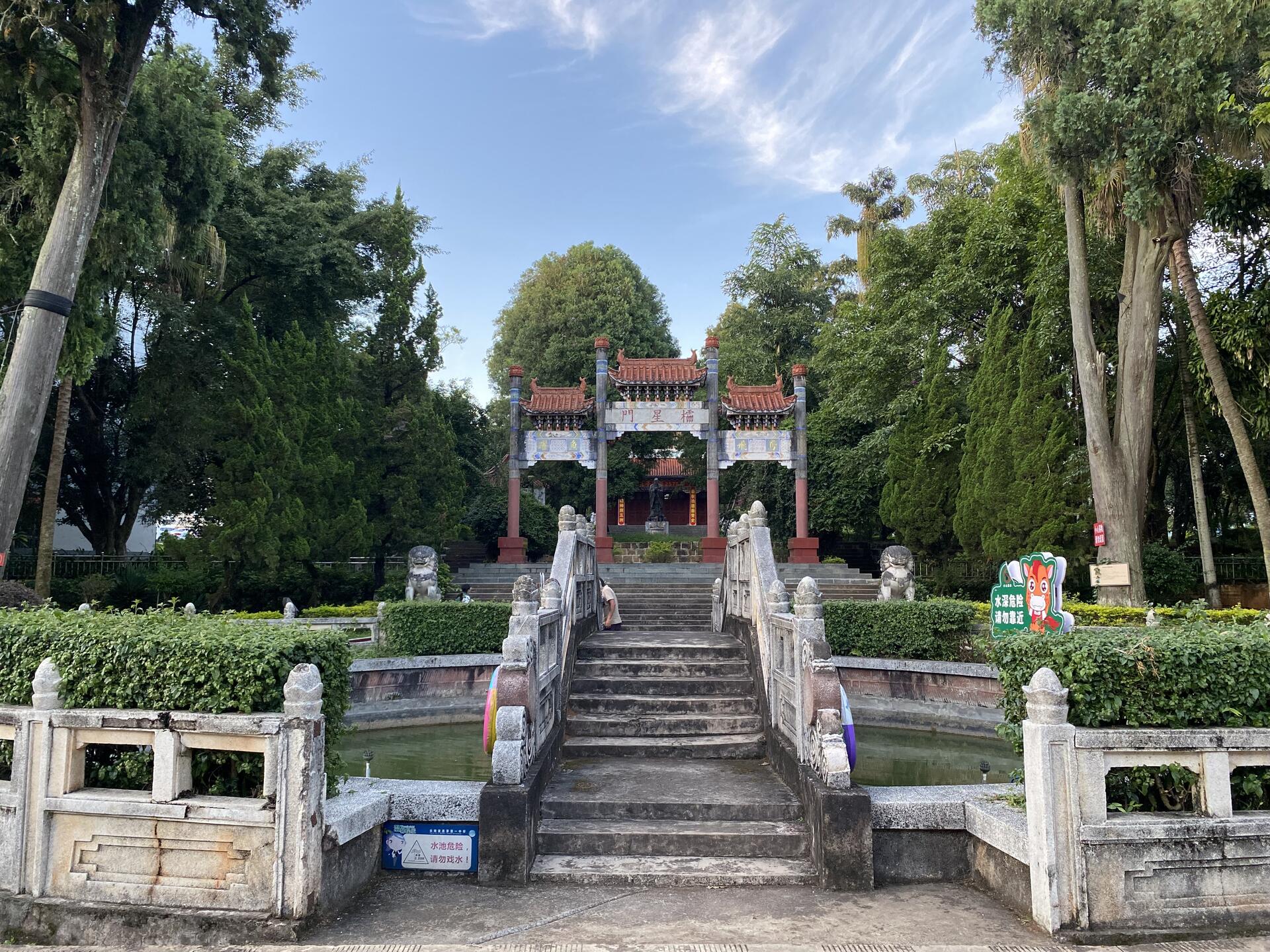
© 瑞丽江的河水, CC BY-SA 4.0 Resized from original. (This derivative is under the same CC BY-SA license.)
World Heritage Research
Discover scientific research and academic studies that deepen our understanding of Cultural Landscape of Old Tea Forests of the Jingmai Mountain in Pu’er from its history and significance to its conservation, management, and contemporary challenges.
-
Multidimensional Analysis of Key Aroma Compounds in Jingmai Ancient Arbor Pu'er Tea: Aroma Identification, Sensory Evaluation, and Molecular Docking
A multidimensional analysis reveals that nine key aroma compounds—including linalool, β-ionone, and methyl salicylate—define the distinctive scent of Jingmai ancient arbor Pu'er tea. Researchers identified 51 aroma compounds using GC–MS and GC-IMS, then narrowed them to 18 based on odor activity values (OAV). Recombination and omission tests confirmed these nine as essential for the tea's signature aroma. Molecular docking further explored interactions with human olfactory receptors, highlighting OR1A1, OR2AG1, and OR10AG1 as having stronger predicted affinities. This study provides a comprehensive understanding of Jingmai Pu'er tea's aromatic profile and its potential sensory perception in humans.
Kou, X., Tang, G., Ho, C.-T., Ke, Q., Qian, K.-Y., Fu, M., Su, Y., & Huang, X. (2026). Multidimensional Analysis of Key Aroma Compounds in Jingmai Ancient Arbor Pu’er Tea: Aroma Identification, Sensory Evaluation, and Molecular Docking. Flavour and Fragrance Journal, 41(5), 1103–1111. Portico. https://doi.org/10.1002/ffj.70103
View Publication Record | Read Publication -
Jingmai Mountain's Legacy: The Aesthetics of Pu'er Tea in the Transcultural Realm
A novel approach to cross-cultural communication and the preservation of tea culture has been demonstrated through the study of Jingmai Mountain's Pu'er tea forests, now a UNESCO World Heritage Site. The research highlights that strategic English translation methods, rooted in ecological translation theory, can effectively bridge cultural gaps and enhance global understanding. By employing techniques such as literal translation, transliteration, interpretative translation, annotation, and amplification, the study achieves an ecological equilibrium between source and target languages, significantly advancing the international dissemination of Pu'er tea culture. This work not only fills a gap in English translation studies related to Chinese tea but also provides practical guidelines for the global promotion of cultural heritage, emphasizing the pivotal role of translation in preserving local traditions amidst globalization.
Wang, S., & Yao, Y. (2025). Jingmai Mountain's Legacy: The Aesthetics of Pu'er Tea in the Transcultural Realm. Humanities and Arts. https://doi.org/10.57237/j.ha.2024.04.005
View Publication Record | Read Publication -
Ecological Asset Accounting Methods and Applications of Agricultural Cultural Heritage Sites—Taking the Ancient Tea Forest Cultural Landscape of Jingmai Mountain in Pu'er as an Example
A groundbreaking methodological framework for ecological asset accounting tailored to agricultural cultural heritage sites, exemplified by the ancient tea forests of Jingmai Mountain in Pu'er, reveals how integrating ecological, economic, and cultural valuations can sustainably balance conservation with socio-economic needs. This approach categorizes assets—such as land, water, vegetation, fauna, and microorganisms—into direct (e.g., agriculture), indirect (e.g., flood control), and non-use values (e.g., biodiversity and cultural heritage). By emphasizing the dual role of these sites in preserving both natural and cultural integrity, the study proposes innovative management strategies that support global conservation efforts. It demonstrates a replicable model for harmonizing ecological preservation with local community development, ensuring the coexistence of natural and cultural values in a sustainable manner.
Yongye, C., Yiting, H., & Xiaojing, C. (2025). Ecological Asset Accounting Methods and Applications of Agricultural Cultural Heritage Sites—Taking the Ancient Tea Forest Cultural Landscape of Jingmai Mountain in Pu’er as an Example. Journal of Resources and Ecology, 16(2), 472–486. https://doi.org/10.5814/j.issn.1674-764x.2025.02.016
View Publication Record | Read Publication -
Suitability Evaluation System of World Cultural Heritage Tourism Planning Based on Effective Interpretation of Heritage Value. A Case Study of the Ancient Tea Forest Cultural Landscape of Jingmai Mountain in Pu’er, China
Researchers have developed a novel evaluation system to assess the suitability of tourism planning for UNESCO World Heritage Sites, focusing on effective heritage value interpretation. Using the ancient tea forests of Jingmai Mountain in Pu’er, China, as a case study, the study applies the analytic hierarchy process (AHP) to evaluate multiple elements critical to heritage tourism, including resources, interpretive conditions, and planning design. This system provides a practical framework for rational development and evaluation, ensuring that tourism plans align with the preservation and interpretation of cultural landscapes. The approach bridges abstract concepts with actionable standards, offering a significant contribution to sustainable heritage management.
Li, Z., Shang, Q., Duan, X., & Nie, X. (2025). Suitability Evaluation System of World Cultural Heritage Tourism Planning Based on Effective Interpretation of Heritage Value. A Case Study of the Ancient Tea Forest Cultural Landscape of Jingmai Mountain in Pu’er, China. Mitteilungen Der Österreichischen Geographischen Gesellschaft, 1, 263–295. https://doi.org/10.1553/moegg166-100
View Publication Record | Read Publication -
Multi-ethnic Cultural Landscapes as Heritage: The Case of Jingmai Mountain Traditional Tea Forests, Pu'er City, Yunnan Province
The Jingmai Mountain Traditional Tea Forest, located in Yunnan Province, China, represents a unique multi-ethnic cultural landscape shaped by millennia of interaction among ethnic groups such as the Brown, Dai, and Lahu. This study reveals that its heritage value lies in three interconnected elements: traditional tea forests, traditional villages, and segregated protected forests, which collectively embody nation memory, religious beliefs, local governance systems, and ethnic ecological culture. The research adopts an interactive perspective to analyze how these cultural dimensions have evolved locally over time. Recognized as a potential UNESCO World Heritage Site since 2012, the landscape's significance is rooted in its historical depth, spanning back to 180 A.D., when tea cultivation began with the migration of the Brown ancestors. The study underscores the importance of preserving such landscapes not only for their ecological and economic value but also for their role in sustaining diverse cultural identities and traditions.
Qiang, Z. (2024). Multi-ethnic Cultural Landscapes as Heritage: The Case of Jingmai Mountain Traditional Tea Forests, Pu’er City, Yunnan Province. Anthropological Explorations of Gender, Identity, and Economics, 140–150. https://doi.org/10.9734/bpi/mono/978-81-970867-8-6/ch13
View Publication Record | Read Publication -
Research on the Mechanism of Tourists’ Autonomic Nervous System Regulation and Emotional Expression in Yunnan Ancient Village Tourism Experience: an Empirical Analysis Based on the Individual-Environmental Learning Motivation Model
Tourism experiences in Yunnan's ancient villages, such as those in the UNESCO-listed Cultural Landscape of Old Tea Forests of Jingmai Mountain, significantly enhance tourists' emotional well-being and physiological relaxation. A study found that visitors exhibited reduced negative emotions and increased positive emotions during their tours compared to daily life scenarios, alongside decreased stress levels and heightened curiosity. Heart rate variability (HRV) experiments revealed that participants were in a relaxed yet physiologically activated state, suggesting the ancient village environment stimulates both mental and physical engagement. The research employed paired t-tests and ANOVA to analyze data from lab and field settings, providing empirical evidence for the therapeutic and emotional benefits of such tourism experiences.
Mei, Y., Han, J., & Lin, H. (2024). Research on the Mechanism of Tourists’ Autonomic Nervous System Regulation and Emotional Expression in Yunnan Ancient Village Tourism Experience: an Empirical Analysis Based on the Individual-Environmental Learning Motivation Model. Proceedings of the 4th International Conference on Public Administration, Health and Humanity Development (PAHHD 2024), 92–101. https://doi.org/10.2991/978-2-38476-295-8_12
View Publication Record | Read Publication -
Traditional management of ancient Pu'er teagardens in Jingmai Mountains in Yunnan of China, a designated Globally Important Agricultural Heritage Systems site
Traditional management practices in the ancient tea gardens of Pu'er, China, significantly enhance biodiversity and productivity compared to monoculture systems. The study found that these gardens, designated as Globally Important Agricultural Heritage Systems (GIAHS), exhibit higher biodiversity indices (Shannon-Weiner, Pielou, Margalef) and greater annual gross output—approximately 6.5 times that of monoculture tea gardens. Local management techniques, including weeding, pruning, and pest control through diseased branch removal, along with the protection of forest animals like spiders, birds, and bees, contribute to this ecological richness. The research, based on interviews with 93 local people and field surveys from 2021–2022, highlights the importance of traditional knowledge in sustaining tea agroecosystems.
Li, W., Zhang, Q., Fan, Y., Cheng, Z., Lu, X., Luo, B., & Long, C. (2023). Traditional management of ancient Pu’er teagardens in Jingmai Mountains in Yunnan of China, a designated Globally Important Agricultural Heritage Systems site. Journal of Ethnobiology and Ethnomedicine, 19(1). https://doi.org/10.1186/s13002-023-00598-0
View Publication Record | Read Publication