World Heritage Identification Number: 1444
World Heritage since: 2014
Category: Cultural Heritage
WHE Type: Archaeological Sites
Transboundary Heritage: No
Endangered Heritage: No
Country: 🇲🇲 Myanmar
Continent: Asia
UNESCO World Region: Asia and the Pacific
Map
Pyu Ancient Cities: A Thousand Years of Civilization in Myanmar
The Pyu Ancient Cities, inscribed as a UNESCO World Heritage Site in 2014, offer a captivating glimpse into the rich history and culture of Myanmar. Located in the dry zone of the Ayeyarwady (Irrawaddy) River basin, these ancient cities - Halin, Beikthano, and Sri Ksetra - provide valuable insights into the Pyu Kingdoms that thrived for over a millennium between 200 BC and AD 900.
More to come…UNESCO Description of the World Heritage Site
Pyu Ancient Cities includes the remains of three brick, walled and moated cities of Halin, Beikthano and Sri Ksetra located in vast irrigated landscapes in the dry zone of the Ayeyarwady (Irrawaddy) River basin. They reflect the Pyu Kingdoms that flourished for over 1,000 years between 200 BC and AD 900. The three cities are partly excavated archaeological sites. Remains include excavated palace citadels, burial grounds and manufacture sites, as well as monumental brick Buddhist stupas, partly standing walls and water management features – some still in use – that underpinned the organized intensive agriculture.
UNESCO Justification of the World Heritage Site
Criterion (ii): Due to interaction between indigenous Pyu societies with Indic cultures from the 2nd century BCE, Buddhism achieved its first permanent foothold in Southeast Asia among the Pyu cities, where it was embraced by all classes of society from the ruling elite to agrarian labourers. Marked by imposing memorial stupas and other sophisticated forms of brick ritual structures, the Pyu Ancient Cities provide the earliest evidence of the emergence of these innovative architectural forms in the region, some of which have no known prototypes. The development of Pyu Buddhist urban culture had widespread and enduring impact throughout Southeast Asia, providing stimulus for later state formation after the 5th century CE following the onward transmission of Buddhist teaching and monastic practice into other parts of mainland Southeast Asia.
Criterion (iii): The Pyu Ancient Cities marked the emergence of the first historically-documented Buddhist urban civilization in Southeast Asia. The establishment of literate Buddhist monastic communities arose in tandem with the re-organization of agricultural production, based on expert management of seasonally-scarce water resources and the specialized production of manufactured goods in terracotta, iron, gold, silver and semi-precious stones both for veneration and for trade. Buddhism underpinned the construction of religious monuments in brick through royal and common public patronage, marked by the shift to permanent materials from earlier timber building techniques. The Pyu developed unique mortuary practices using burial urns to store cremated remains in communal funerary structures. Trading networks linked the Pyu ancient cities with commercial centres in Southeast Asia, China and India. Through this network Buddhist missionaries carried their Pali-based teaching into other areas of mainland Southeast Asia.
Criterion (iv): Technological innovations in resource management, agriculture and manufacturing of brick and iron at the Pyu Ancient Cities created the preconditions leading to significant advances in urban planning and building construction. These innovations resulted in the rise of the three earliest, largest, and most long-lived Buddhist urban settlements in all of Southeast Asia. The Pyu cities’ urban morphology set a new template of extended urban format characterized by massive gated walls surrounded by moats; a network of roads and canals linking urban space within the walls with extensive areas of extramural development, containing civic amenities, monumental religious structures defined by towering stupas and sacred water bodies. At or near the centre of each ancient city was an administrative compound containing the palace marking the cosmic hub of the Pyu political and social universe.
Encyclopedia Record: Pyu city-states
The Pyu city-states were a group of city-states that existed from about the 2nd century BCE to the mid-11th century in present-day Upper Myanmar. These city-states were founded as part of the migration of the Pyu people from Tibet to Mainland Southeast Asia by the Tibeto-Burman-speaking Pyu settlers, the earliest inhabitants of Burma of whom records are extant. The thousand-year period, often referred to as the Pyu millennium, linked the Bronze Age to the beginning of the classical states period when the Pagan Kingdom emerged in the late 9th century.Additional Site Details
Area: 5,809 hectares
Number of Components: 3
(iii) — Unique or exceptional testimony to a cultural tradition
(iv) — Outstanding example of a type of building or landscape
Coordinates: 22.47 , 95.8186111111
Image
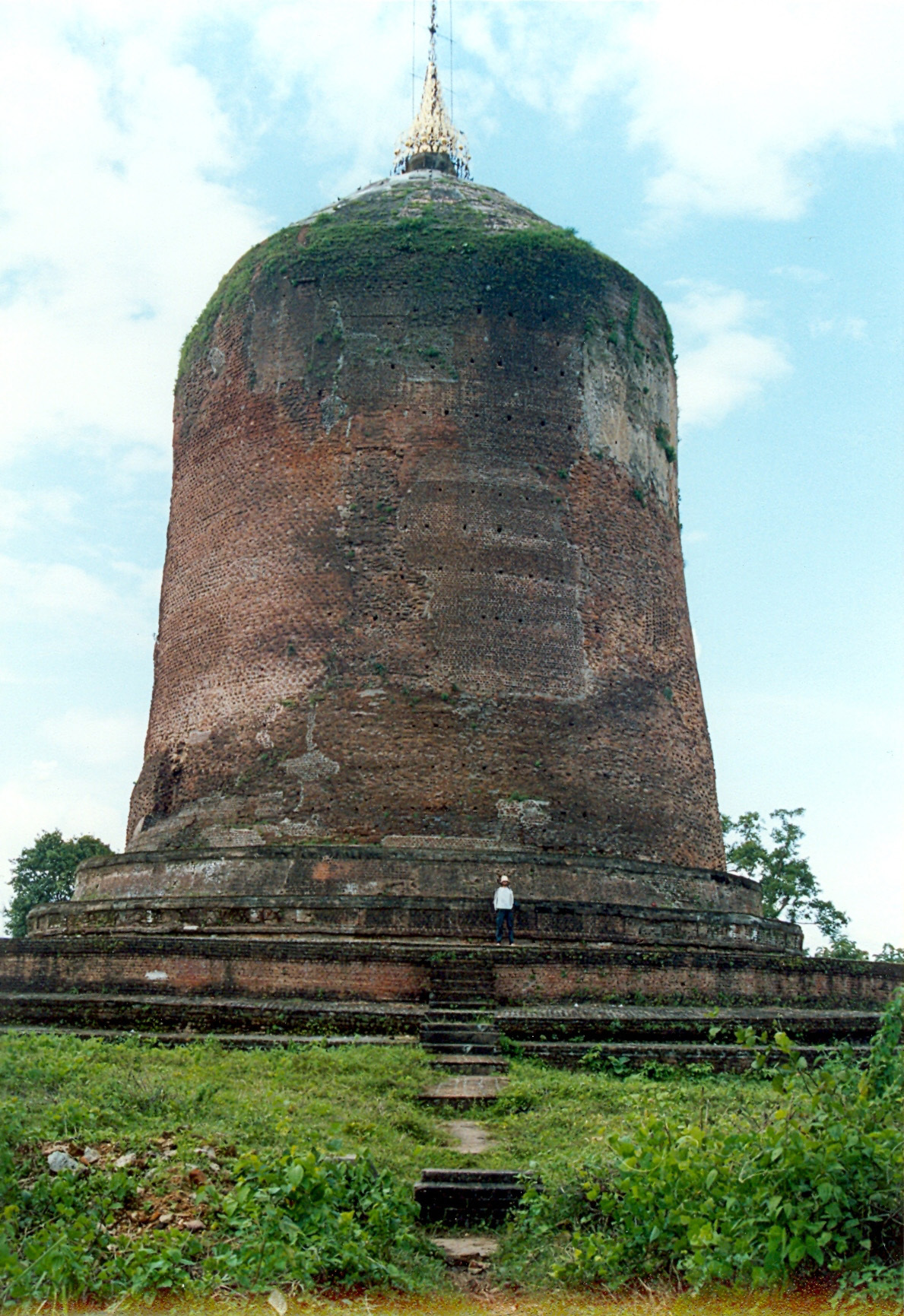
© Doron, CC BY-SA 3.0 Resized from original. (This derivative is under the same CC BY-SA license.)
World Heritage Research
Discover scientific research and academic studies that deepen our understanding of Pyu Ancient Cities from its history and significance to its conservation, management, and contemporary challenges.
-
Recent Archaeological Research at Śrīkṣetra
Recent archaeological research at Śrīkṣetra, one of the largest and most influential Pyu ancient cities, has revealed significant insights into urban morphology, sociocultural changes, and the dissemination of early South Asian Buddhist traditions in Southeast Asia. Unlike previous efforts spanning over a century, which focused on surveying, recording, and restoration, this study employs systematic excavation and advanced scientific methods to deepen our understanding of Pyu civilization. The findings highlight the dynamic nature of urbanization in early Southeast Asia and its cultural interactions with broader South Asian contexts.
Kyaing, W. (2024). Recent Archaeological Research at Śrīkṣetra. Journal of Burma Studies, 28(1), 11–41. https://doi.org/10.1353/jbs.2024.a923228
View Publication Record | Read Publication -
Bagan Myinkaba Village Cultural Heritage: Past and Present | ပဂ မငကပရရရယခငနင ယနခတ ယဉကမ အမအနစမ
Bagan Myinkaba Village, one of the 19 founding villages of the ancient Pyu city, stands out for its unique cultural and economic significance tied to a large seasonal water body. This study reveals that Myinkaba's strategic location on the Ayeyarawady River facilitated centuries-long trade in bamboo, lacquer, and glass production, while also preserving animist-Buddhist syncretic traditions from Pyu, Bamar, and Mon interactions. Unlike other villages, its proximity to water has shaped its economic role, with festivals generating income through traditional crafts and puppet competitions. The research proposes a village-based model for future excavations and education, aiming to sustain Bagan's UNESCO World Heritage status while offering insights into the city's complex social dynamics.
Moore, E. H., Aung, T. T., & Latt, H. W. Y. (2024). Bagan Myinkaba Village Cultural Heritage: Past and Present | ပုဂံ မြင်းကပါရွာရှိရှေးယခင်နှင့် ယနေ့ခေတ် ယဉ်ကျေးမှု အမွေအနှစ်များ. SPAFA Journal, 8, 86–113. https://doi.org/10.26721/spafajournal.5gpkq39o0x
View Publication Record | Read Publication -
Foreword. Sri Ksetra Museum Collection Inventory
The Pyu Ancient Cities of Myanmar—Halin, Beikthano, and Sri Ksetra—stand as pivotal examples of the transition from Bronze-Iron Age chiefdoms to early Buddhist kingdoms in Southeast Asia. These sites, inscribed as UNESCO World Heritage Sites in 2014, showcase over a millennium of Pyu cultural dominance (B.C. 200–A.D. 900) and their unique artistic evolution, blending Indian traditions with distinct local innovations. Sri Ksetra, the largest city, houses the Sri Ksetra Archaeological Museum, which preserves 265 artifacts, including burial urns, Buddha images, and ritual pottery adorned with auspicious symbols reflecting Hindu-Buddhist influences. The cities also illustrate regional exchange and cultural linkage in Myanmar, offering a rare glimpse into early Pyu statuary, beadwork, and architectural craftsmanship.
(Ed.). (2022). Foreword. Sri Ksetra Museum Collection Inventory, v–v. https://doi.org/10.1515/9783110674064-201
View Publication Record | Read Publication -
Introduction. Sri Ksetra Museum Collection Inventory
Recent excavations at Sri Ksetra, one of the earliest Pyu cities in Southeast Asia, have revealed that its foundations date back to at least the first century BCE, predating previous estimates by several centuries. This discovery challenges long-held assumptions about the timeline of urbanism and the rise of the Bagan Empire. The research, led by Janice Stargardt and U Win Kyaing, employed systematic surveys, radiocarbon dating, and analysis of hydraulic systems to uncover evidence of early settlement and the city's complex water management infrastructure. These findings not only reshape our understanding of Sri Ksetra but also provide new insights into Pyu culture, society, and their interaction with the dynamic environment.
Hawkes, J. (2022). Introduction. Sri Ksetra Museum Collection Inventory, 1–9. https://doi.org/10.1515/9783110674064-001
View Publication Record | Read Publication -
Sri Ksetra Museum Collection Inventory
The Sri Ksetra Museum Collection Inventory highlights the cultural and historical significance of the Pyu Ancient Cities, which were inscribed as UNESCO World Heritage Sites in 2014. These cities, including Halin, Beikthano, and Sri Ksetra, represent a pivotal transition from Bronze-Iron Age chiefdoms to early Buddhist kingdoms in mainland Southeast Asia, spanning over a thousand years (B.C 200 to A.D 900). The study focuses on the Sri Ksetra Archaeological Museum's collection of approximately 265 artifacts, which include burial urns with Pyu inscriptions, Buddha images, Brahmanical statues, terracotta votive tablets, and other significant objects from the Pyu period. This inventory underscores the unique artistic and iconographic developments of the Pyu civilization, blending Indian traditions with distinct local characteristics in their craftsmanship, particularly evident in beads, ritual pottery, and architectural designs. The research provides a comprehensive overview of the cultural heritage preserved at Sri Ksetra, offering insights into the regional exchange and religious practices of the Pyu Kingdoms.
Galloway, C. (2022). Sri Ksetra Museum Collection Inventory. https://doi.org/10.1515/9783110674064
View Publication Record | Read Publication -
World heritage sustainable development policy & local implementation: Site management issues using a case study of Sri Ksetra at Pyu ancient cities in Myanmar
A key finding from this study is that the implementation of UNESCO's World Heritage sustainable development policy often faces challenges due to mismatches between formal policy goals and local management practices, even when participatory models are intended. The research focuses on Sri Ksetra, part of Myanmar's Pyu Ancient Cities to analyze how site management practices can hinder community involvement in conservation efforts. The study highlights the need for both robust policy frameworks and practical, inclusive conduct by management systems to effectively integrate sustainable development into heritage conservation. It underscores that successful implementation requires alignment between policy statements and on-the-ground actions.
Liljeblad, J., & Oo, K. T. T. (2020). World heritage sustainable development policy & local implementation: Site management issues using a case study of Sri Ksetra at Pyu ancient cities in Myanmar. Sustainable Development, 28(3), 468–477. Portico. https://doi.org/10.1002/sd.2037
View Publication Record | Read Publication -
Sri Ksetra, 3rd Century BCE to 6th Century CE: Indianization, Synergies, Creation
Archaeological research challenges the long-held narrative of Indianization in Southeast Asia, revealing that the Pyu cities of Myanmar underwent significant cultural and architectural transformations between the 3rd century BCE and 6th century CE. Contrary to George Coedès' theory of a rapid transition from Neolithic to Hindu-influenced societies, this study highlights the nuanced, gradual processes of Indianization, with enduring impacts on script, religion, art, and architecture. The research employs epigraphic and archaeological evidence to reinterrogate the timing, human agencies, and driving forces behind these changes, providing a more comprehensive understanding of the Pyu civilization's syncretic cultural landscape.
Stargardt, J. (2020). Sri Ksetra, 3rd Century BCE to 6th Century CE: Indianization, Synergies, Creation. Primary Sources and Asian Pasts, 220–266. https://doi.org/10.1515/9783110674088-009
View Publication Record | Read Publication