World Heritage Identification Number: 273
World Heritage since: 1983
Category: Cultural Heritage
WHE Type: Historic Cities & Urban Areas
Transboundary Heritage: No
Endangered Heritage: No
Country: 🇵🇪 Peru
Continent: Americas
UNESCO World Region: Latin America and the Caribbean
Map
The City of Cuzco: A Blend of Ancient Incan and Colonial Architecture
The City of Cuzco, located in the Peruvian Andes, stands as a testament to the rich history and cultural diversity of South America. Inscribed as a UNESCO World Heritage Site in 1983, this ancient city offers a unique blend of Incan and colonial architecture that reflects its tumultuous past and enduring spirit.
More to come…UNESCO Description of the World Heritage Site
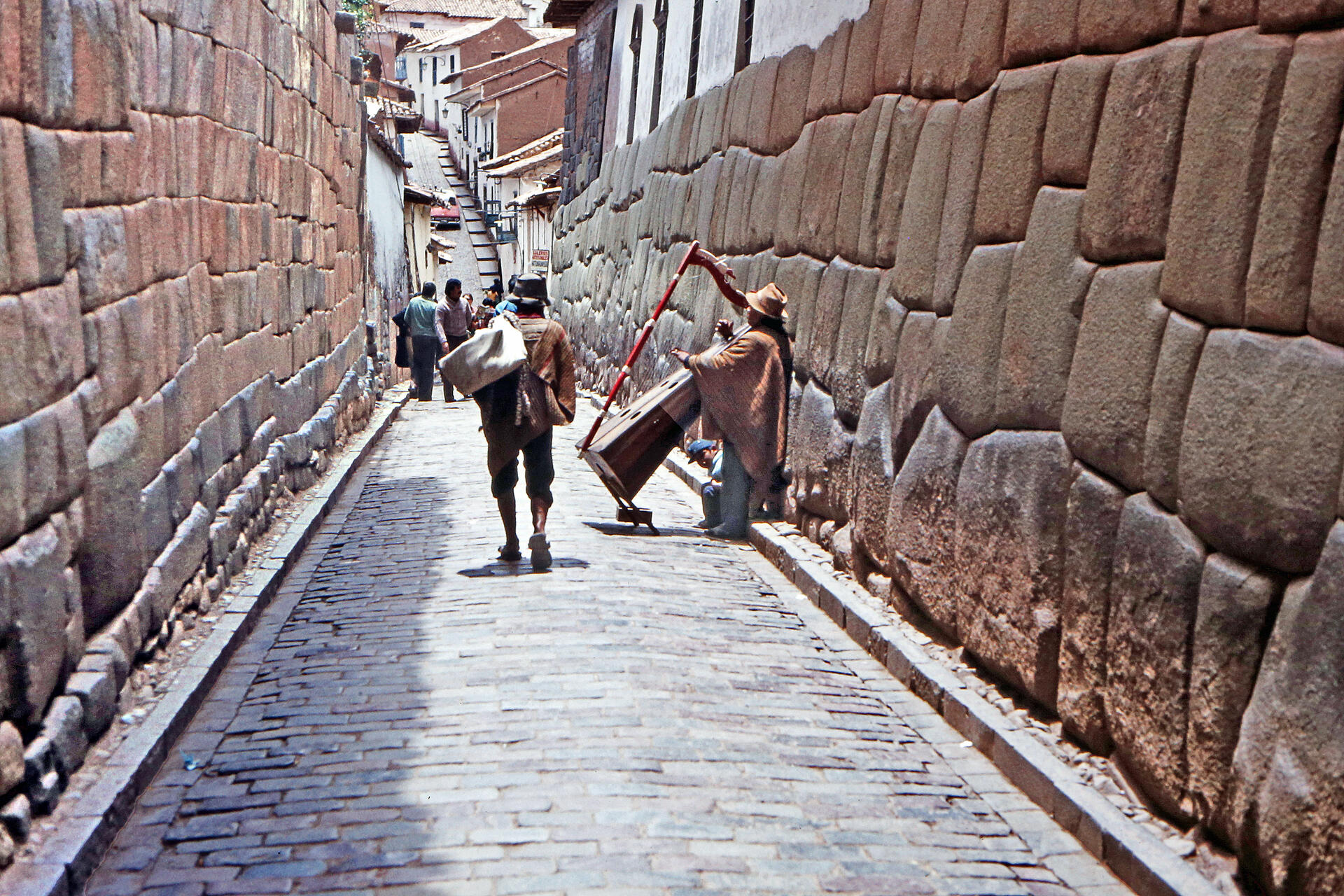
Situated in the Peruvian Andes, Cuzco developed, under the Inca ruler Pachacutec, into a complex urban centre with distinct religious and administrative functions. It was surrounded by clearly delineated areas for agricultural, artisan and industrial production. When the Spaniards conquered it in the 16th century, they preserved the basic structure but built Baroque churches and palaces over the ruins of the Inca city.
UNESCO Justification of the World Heritage Site
Criterion (iii): The City of Cuzco is a unique testimony of the ancient Inca civilization, heart of Tawantinsuyu imperial government, which exercised political, religious and administrative control over much of the South American Andes between the 15th and 16th centuries. The city represents the sum of 3,000 years of indigenous and autonomous cultural development in the Peruvian southern Andes.
Criterion (iv) : The City of Cuzco provides a unique testimony to the urban and architectural achievements of important political, economic and cultural settlements during the pre-Columbian era in South America. It is a representative and exceptional example of the confluence of two distinct cultures; Inca and Hispanic, which through the centuries produced an outstanding cultural syncretism and configured a unique urban structure and architectural form.
Encyclopedia Record: Cusco
Cusco or Cuzco is a city in southeastern Peru, near the Sacred Valley of the Andes mountain range, and the Huatanay and Urubamba rivers. It is the capital and largest city of the eponymous Cusco Province and Cusco Department. It has historically been one of the largest cultural, economic and political centers of Peru.Additional Site Details
Area: 142.48 hectares
Number of Components: 4
(iv) — Outstanding example of a type of building or landscape
Coordinates: -13.517276 , -71.980004
Image
© W. Bulach, CC BY-SA 4.0 Resized from original. (This derivative is under the same CC BY-SA license.)
World Heritage Research
Discover scientific research and academic studies that deepen our understanding of City of Cuzco from its history and significance to its conservation, management, and contemporary challenges.
-
Design of a Green Corridor and the Revitalization of the Huatanay River, City of Cuzco, Peru—2024
A green corridor design for Cuzco, Peru, demonstrates significant ecological energy efficiency by leveraging natural resources to generate 13 kWh/day of energy through biodigesters, with 70% of the area dedicated to green spaces and 30% to public areas. This approach optimizes the revitalization of the Huatanay River by restoring its course, reforesting its banks, and creating recreational zones, thereby enhancing biodiversity while addressing urban expansion's environmental impact. The study utilized a four-stage methodology involving literature analysis, environmental data assessment (using tools like Climate Consultant and SIGRID), project implementation, and comparative discussion with existing literature. This design serves as a model for sustainable urban development in UNESCO World Heritage Sites.
Larrea, V., Pelaez, F., & Esenarro, D. (2024). Design of a Green Corridor and the Revitalization of the Huatanay River, City of Cuzco, Peru—2024. Urban Science, 8(4), 185. https://doi.org/10.3390/urbansci8040185
View Publication Record | Read Publication -
Green Corridors and Social Connectivity with a Sustainable Approach in the City of Cuzco in Peru
A proposed green corridor design for the City of Cuzco, Peru, aims to serve as an ecological lung, addressing uncontrolled urban development and a shortage of green areas that negatively impact quality of life. The study highlights the importance of balanced resource management and social organization in sustainable urban planning. Using methods such as literature review, urban analysis, and climate analysis supported by digital tools, the proposal includes 69.96% green areas for recreation, biolakes (3.18%) for environmental quality, a botanical zone (18.14%) with diverse plant species, a convention area (9.7%) for community activities, and a cultural zone (0.98%) for artistic exhibitions. This multifunctional approach seeks to counteract urban expansion, environmental degradation, and social alienation while promoting climate regulation and biodiversity. The absence of such strategies could compromise development and quality of life in Cuzco.
Mancilla, D., Robledo, S., Esenarro, D., Raymundo, V., & Vega, V. (2024). Green Corridors and Social Connectivity with a Sustainable Approach in the City of Cuzco in Peru. Urban Science, 8(3), 79. https://doi.org/10.3390/urbansci8030079
View Publication Record | Read Publication -
Cuzco: Incas, Spaniards, and the Making of a Colonial City
Cuzco's transformation from an Inca capital to a Spanish colonial city between 1534 and 1560 is meticulously reconstructed through firsthand accounts, official documents, and archaeological evidence. Unlike previous studies that focused on post-earthquake architecture, this research illuminates the city's transition during its formative years, revealing how Spanish rule reshaped Inca structures like the House of the Sun (Coricancha) into symbolic colonial landmarks, such as the Dominican convent. The study leverages primary sources from chroniclers like Juan de Betanzos and Inca Garcilaso de la Vega to trace urban changes, including the 1536–37 siege by Manco Inca and subsequent civil wars. While it lacks detailed topographical plans or distinctions between existing and hypothetical Inca walls, its rigorous analysis bridges art history and literary history, offering a nuanced account of Cuzco's layered past.
Morgado, P. (2021). Cuzco: Incas, Spaniards, and the Making of a Colonial City. Hispanic American Historical Review, 101(3), 513–514. https://doi.org/10.1215/00182168-9051977
View Publication Record | Read Publication