
World Heritage Identification Number: 430
World Heritage since: 1987
Category: Cultural Heritage
WHE Type: Archaeological Sites
Transboundary Heritage: Yes
Endangered Heritage: No
Country: Germany, United Kingdom of Great Britain and Northern Ireland
Continent: Europe
UNESCO World Region: Europe and North America
Map
Frontiers of the Roman Empire: A Testament to Ancient Military Architecture and Strategy
The Frontiers of the Roman Empire, inscribed as a UNESCO World Heritage Site in 1987, offers a unique glimpse into the strategic prowess and architectural ingenuity of the Roman Empire at its zenith during the second century AD. Spanning over 5,000 kilometers, this extensive network of fortifications, military roads, and civilian settlements served as the imperial boundary that demarcated the Roman world from the lands beyond.
More to come…UNESCO Description of the World Heritage Site
The ‘Roman Limes’ represents the border line of the Roman Empire at its greatest extent in the 2nd century AD. It stretched over 5,000 km from the Atlantic coast of northern Britain, through Europe to the Black Sea, and from there to the Red Sea and across North Africa to the Atlantic coast. The remains of the Limes today consist of vestiges of built walls, ditches, forts, fortresses, watchtowers and civilian settlements. Certain elements of the line have been excavated, some reconstructed and a few destroyed. The two sections of the Limes in Germany cover a length of 550 km from the north-west of the country to the Danube in the south-east. The 118-km-long Hadrian’s Wall (UK) was built on the orders of the Emperor Hadrian c. AD 122 at the northernmost limits of the Roman province of Britannia. It is a striking example of the organization of a military zone and illustrates the defensive techniques and geopolitical strategies of ancient Rome. The Antonine Wall, a 60-km long fortification in Scotland was started by Emperor Antonius Pius in 142 AD as a defense against the “barbarians” of the north. It constitutes the northwestern-most portion of the Roman Limes.
UNESCO Justification of the World Heritage Site
Criterion (ii): The extant remains of the fortified German Limes, Hadrian’s Wall and Antonine Wall constitute significant elements of the Roman Frontiers present in Europe. With their forts, fortlets, walls, ditches, linked infrastructure and civilian architecture they exhibit an important interchange of human and cultural values at the apogee of the Roman Empire, through the development of Roman military architecture, extending the technical knowledge of construction and management to the very edges of the Empire. They reflect the imposition of a complex frontier system on the existing societies of the northwestern part of the Roman Empire, introducing for the first time military installations and related civilian settlements, linked through an extensive supporting network. The frontiers did not constitute an impregnable barrier, but controlled and allowed the movement of peoples: not only the military units, but also civilians and merchants. Hence, they triggered the exchange of cultural values through movement of soldiers and civilians from different nations. This entailed profound changes and developments in the respective regions in terms of settlement patterns, architecture and landscape design and spatial organization. The frontiers still today form a conspicuous part of the landscape.
Criterion (iii): As parts of the Roman Empire’s general system of defense the German Limes, Hadrian’s Wall and the Antonine Wall have an extraordinarily high cultural value. They bear an exceptional testimony to the maximum extension of the power of the Roman Empire through the consolidation of its northwestern frontiers and thus constitute a physical manifestation of Roman imperial policy. They illustrate the Roman Empire’s ambition to dominate the world in order to establish its law and way of life there in a long-term perspective. They witness Roman colonization in the respective territories, the spread of Roman culture and its different traditions – military, engineering, architecture, religion management and politics – and the large number of human settlements associated with the defenses which contribute to an understanding of how soldiers and their families lived in this part of the Roman Empire.
Criterion (iv): The fortified German Limes, Hadrian’s Wall and the Antonine Wall are outstanding examples of Roman military architecture and building techniques and of their technological development, perfected by engineers over the course of several generations. They demonstrate the variety and sophistication of the Romans’ responses to the specific topography and climate as well as to the political, military and social circumstances in the northwestern part of the Empire which spread all around Europe and thereby shaped much of the subsequent development in this part of the world.
Encyclopedia Record: Borders of the Roman Empire
The borders of the Roman Empire, which fluctuated throughout the empire's history, were realised as a combination of military roads and linked forts, natural frontiers and man-made fortifications which separated the lands of the empire from the countries beyond.Additional Site Details
Area: 526.9 hectares
Number of Components: 420
(iii) — Unique or exceptional testimony to a cultural tradition
(iv) — Outstanding example of a type of building or landscape
Coordinates: 54.9926111111 , -2.601
Image
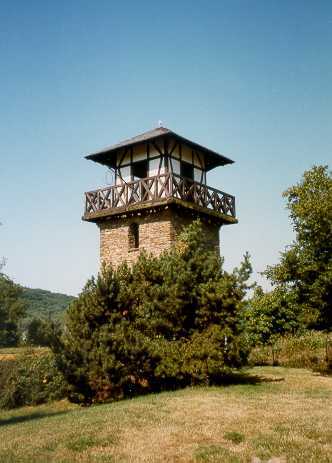
© Unknown, CC BY-SA 3.0 Resized from original. (This derivative is under the same CC BY-SA license.)
World Heritage Research
Discover scientific research and academic studies that deepen our understanding of Frontiers of the Roman Empire from its history and significance to its conservation, management, and contemporary challenges.
-
Frontiers of the Roman Empire: The Frontier of the Roman Province of Raetia
The Roman Province of Raetia emerges as a critical geopolitical crossroads and defensive frontier, bridging the eastern and western Roman Empire while safeguarding Italy. This study reveals its dual role through comprehensive archaeological and historical analysis, tracing troop deployment, local population dynamics, and frontier organization from early imperial times to Late Antiquity. A key finding is Raetia's strategic significance, now recognized under UNESCO’s World Heritage initiative as part of the Upper German-Raetian Limes and Danube Limes (Western Segment), underscoring its universal cultural value. The research integrates cutting-edge methods with rich illustrations, offering insights that support heritage preservation efforts along this historically pivotal region.
Thomas, F., Veronika, F., Christof, F., Markus, G., Martina, M., Bernd, S., & David J., B. (2026). Frontiers of the Roman Empire: The Frontier of the Roman Province of Raetia. https://doi.org/10.32028/9781805832775
View Publication Record | Read Publication -
Supplying the Roman Empire. Proceedings of the 25th International Congress of Roman Frontier Studies 4
The Roman Empire's frontiers, spanning over 6,000 km along rivers, mountain ranges, and artificial barriers, were dynamic zones of contact, exchange, coercion, and exclusion. These frontiers, central to the International Congress of Roman Frontier Studies (LIMES), offer a diverse array of topics for scholarly exploration. This volume, part of the proceedings from the 25th LIMES Congress held in Nijmegen in 2022, delves into various aspects of supply and provisioning within the empire, focusing on organic material finds, riverine and maritime supply systems, militarily controlled mining, building material procurement, agro-political schemes, water management, and military material culture. The collection aims to provide both generalists and specialists with coherent thematic collections, making complex topics more accessible.
van Enckevort, H., Driessen, M., Graafstal, E., Hazenberg, T., Ivleva, T., & van Driel-Murray, C. (Eds.). (2024). Supplying the Roman Empire. Proceedings of the 25th International Congress of Roman Frontier Studies 4. https://doi.org/10.59641/mm723py
View Publication Record | Read Publication -
Current Approaches to Roman Frontiers. Proceedings of the 25th International Congress of Roman Frontier Studies 1
Roman frontiers, spanning over 6,000 kilometers along rivers, mountain ranges, and artificial barriers, serve as dynamic zones of contact, exchange, and coercion that reflect the socio-political complexities of the Roman Empire. This volume, part of the proceedings from the 25th International Congress of Roman Frontier Studies (LIMES XXV), introduces innovative approaches to studying these frontiers, including feminist perspectives, digital methodologies, computational modeling, and archaeological heritage management. It also compares the Roman Limes with the Great Wall of China, offering a comprehensive exploration of frontier dynamics that bridges diverse scholarly interests. The congress, held in Nijmegen in 2022, brought together a global community of researchers to analyze these frontiers through interdisciplinary lenses, providing new insights into their role in shaping imperial spaces.
van Enckevort, H., Driessen, M., Graafstal, E., Hazenberg, T., Ivleva, T., & van Driel-Murray, C. (Eds.). (2024). Current Approaches to Roman Frontiers. Proceedings of the 25th International Congress of Roman Frontier Studies 1. https://doi.org/10.59641/3d278gp
View Publication Record | Read Publication -
Soldiers and Society: The Army in Numidia
Recent studies have broadened the understanding of Roman frontier dynamics by examining the army's role as a 'social instrument' beyond its military function, particularly in Numidia. This approach reveals complex economic and social relationships between soldiers and local populations, contributing to political integration into the Roman Empire. Building on works like Elizabeth Fentress's Numidia and the Roman Army and Michel Janon's methodologies, these syntheses offer novel insights into frontier studies, addressing gaps left by earlier technical-military analyses. By deploying new research methods, they challenge traditional narratives and deepen our comprehension of how peripheral regions became part of the Empire.
Shaw, B. D. (2024). Soldiers and Society: The Army in Numidia. Rulers, Nomads, and Christians in Roman North Africa, IX–133. https://doi.org/10.4324/9781003556909-11
View Publication Record | Read Publication -
High-resolution isotopic data link settlement complexification to infant diets within the Roman Empire
A significant link between settlement complexity and infant breastfeeding duration has been identified within the Roman Empire, with urban centers like Pompeii and Thessaloniki showing adherence to medical guidelines of weaning infants by age two. This finding emerges from high-resolution Bayesian-modeled stable isotope measurements from incremental dentine of permanent first molars, revealing inter-site variability in breastfeeding durations ranging from 1.5 years to approximately 5 years. The study compiled isotopic data from multiple Roman sites, including new analyses from Pompeii and Ostia Via del Mare (AVM), suggesting that adherence to medical guidelines, support infrastructures, or financial strategies may have influenced these practices.
Cocozza, C., Harris, A. J. T., Formichella, G., Pedrucci, G., Rossi, P. F., D’Alessio, A., Amoretti, V., Zuchtriegel, G., O’Reilly, M., Mantile, N., Panella, S., Tafuri, M. A., Altieri, S., di Cicco, M. R., Fernandes, R., & Lubritto, C. (2024). High-resolution isotopic data link settlement complexification to infant diets within the Roman Empire. PNAS Nexus, 4(1). https://doi.org/10.1093/pnasnexus/pgae566
View Publication Record | Read Publication -
From Empire-wide integration to regional localization: A synthetic and quantitative study of heterogeneous amphora data in Roman Germania reveals centuries-long change in regional patterns of production and consumption
A groundbreaking analysis of amphorae data from Roman Germania reveals dynamic shifts in trade patterns over 550 years, transitioning from empire-wide integration to regional localization. The study, utilizing probabilistic aoristic methods, uncovers how connections with distant regions like the Eastern Mediterranean and Iberian Peninsula fluctuated over time, while local German producers increasingly competed with imported goods. This research provides a transparent, reproducible case study of market activity pulsation within the Roman economy, offering new insights into long-term economic changes along the empire's frontier.
Franconi, T., Brughmans, T., Borisova, E., & Paulsen, L. (2023). From Empire-wide integration to regional localization: A synthetic and quantitative study of heterogeneous amphora data in Roman Germania reveals centuries-long change in regional patterns of production and consumption. Plos One, 18(1), e0279382. https://doi.org/10.1371/journal.pone.0279382
View Publication Record | Read Publication -
Frontiers of the Roman Empire: The Danube Limes in Austria
The Danube Limes in Austria stands as one of the most extensive and well-preserved remnants of the Roman Empire's frontier system, stretching over 7,500 kilometers across 20 countries. This series of booklets not only educates visitors about the historical significance of these frontiers but also serves as a practical guide, highlighting Austria’s exceptional survival of military installations such as forts and towers, some reaching up to two stories high. These structures offer a tangible connection to Rome's lost might, with artifacts like inscriptions, sculptures, weapons, and pottery providing further insight into the lives of soldiers and civilians who inhabited these frontiers. The booklet aims to increase awareness and visitation of this remarkable heritage, blending historical narrative with archaeological detail.
David J., B., Andreas, S., & René, P. (2023). Frontiers of the Roman Empire: The Danube Limes in Austria. https://doi.org/10.32028/9781803276083
View Publication Record | Read Publication