World Heritage Identification Number: 1113
World Heritage since: 2008
Category: Cultural Heritage
WHE Type: Buildings & Architectural Ensembles
Transboundary Heritage: No
Endangered Heritage: No
Country: 🇨🇳 China
Continent: Asia
UNESCO World Region: Asia and the Pacific
Map
Fujian Tulou: Fortified Earth Homes of the Hakka People
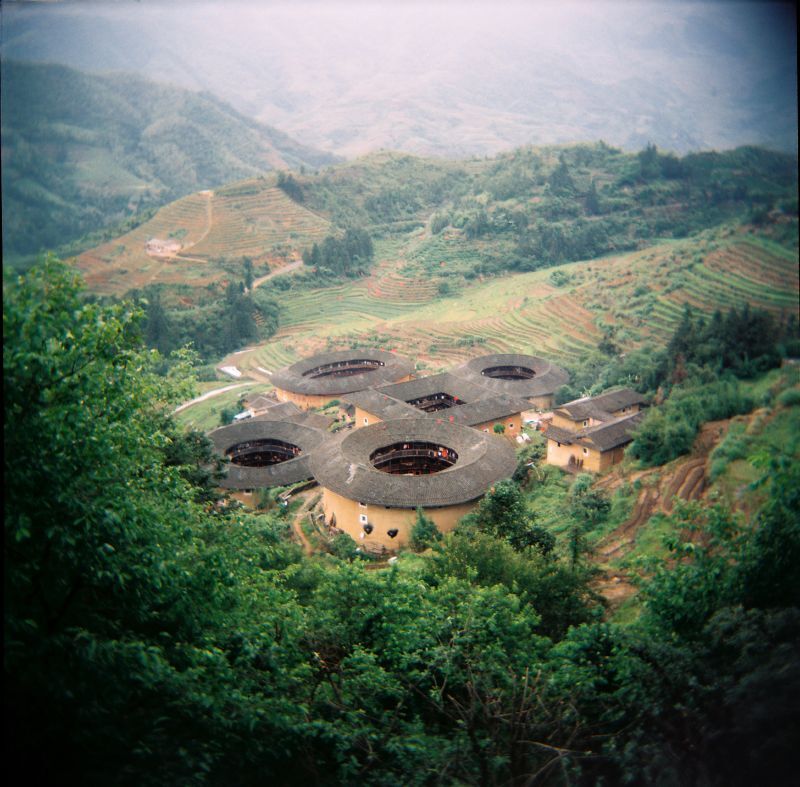
The Fujian Tulou, a series of fortified earth homes nestled amidst the verdant landscapes of southeastern Fujian, China, offer a captivating glimpse into the rich cultural heritage of the Hakka people. These architectural marvels, dating from the 12th to the 20th century, have been recognized by UNESCO as a testament to the ingenuity and resilience of this ethnic group.
More to come…UNESCO Description of the World Heritage Site
Fujian Tulou is a property of 46 buildings constructed between the 15th and 20th centuries over 120 km in south-west of Fujian province, inland from the Taiwan Strait. Set amongst rice, tea and tobacco fields the Tulou are earthen houses. Several storeys high, they are built along an inward-looking, circular or square floor plan as housing for up to 800 people each. They were built for defence purposes around a central open courtyard with only one entrance and windows to the outside only above the first floor. Housing a whole clan, the houses functioned as village units and were known as “a little kingdom for the family” or “bustling small city.” They feature tall fortified mud walls capped by tiled roofs with wide over-hanging eaves. The most elaborate structures date back to the 17th and 18th centuries. The buildings were divided vertically between families with each disposing of two or three rooms on each floor. In contrast with their plain exterior, the inside of the tulou were built for comfort and were often highly decorated. They are inscribed as exceptional examples of a building tradition and function exemplifying a particular type of communal living and defensive organization, and, in terms of their harmonious relationship with their environment, an outstanding example of human settlement.
UNESCO Justification of the World Heritage Site
Criterion (iii): The tulou bear an exceptional testimony to a long-standing cultural tradition of defensive buildings for communal living that reflect sophisticated building traditions and ideas of harmony and collaboration, well documented over time.
Criterion (iv): The tulou are exceptional in terms of size, building traditions and function, and reflect society’s response to various stages in economic and social history within the wider region.
Criterion (v): The tulou as a whole and the nominated Fujian tulou in particular, in terms of their form are a unique reflection of communal living and defensive needs, and in terms of their harmonious relationship with their environment, an outstanding example of human settlement.
Encyclopedia Record: Fujian tulou
The Fujian tulou are Chinese rural dwellings unique to the Hakka in the mountainous areas in southeastern Fujian, China. They were mostly built between the 12th and the 20th centuries.Additional Site Details
Area: 152.65 hectares
Number of Components: 10
(iv) — Outstanding example of a type of building or landscape
(v) — Outstanding example of traditional human settlement
Coordinates: 25.0230555556 , 117.6858333333
World Heritage Research
Discover scientific research and academic studies that deepen our understanding of Fujian Tulou from its history and significance to its conservation, management, and contemporary challenges.
-
Cultural Communication and Digital Design of Fujian Hakka Tulou: Analysis on Shen Yuan Tulou Residents' Questionnaire Feedback
A high level of cultural awareness and openness to digital innovation among Fujian Tulou residents emerges as a key finding, offering a pathway for sustainable heritage development. Residents express strong support for integrating traditional culture into tourism while advocating for minimal disruption to daily life. They also endorse the use of technologies like virtual reality (VR) and interactive experiences to enhance cultural communication without compromising preservation efforts. The study employed qualitative methods—including in-depth interviews and questionnaire surveys—to gather feedback on digital design proposals, revealing that residents perceive these innovations as beneficial for both heritage dissemination and visitor engagement. This research provides actionable insights for balancing technological advancement with community needs, ensuring the long-term viability of Fujian Tulou as a UNESCO World Heritage Site.
JieRu, L., & Joneurairatana, E. (2025). Cultural Communication and Digital Design of Fujian Hakka Tulou: Analysis on Shen Yuan Tulou Residents’ Questionnaire Feedback. Asian Journal of Arts and Culture, 25(1), e276883. https://doi.org/10.48048/ajac.2025.276883
View Publication Record | Read Publication -
Dual-Path Framework Analysis of Crack Detection Algorithm and Scenario Simulation on Fujian Tulou Surface
A dual-path framework combining advanced crack detection and physical simulation has been developed to address the vulnerability of Fujian Tulou to environmental and human-induced stresses. The study introduces an improved YOLOv12 model for lightweight, accurate crack recognition across complex wall textures, while a two-layer RFPA3D model simulates crack evolution under varying conditions, aligning with field observations. Quantitative validation demonstrates superior consistency in morphology, geometry, and topology compared to baseline models. This framework offers a practical solution for standardized crack documentation and mechanistic interpretation, advancing preventive conservation efforts and sustainable management of Fujian Tulou.
Hu, Y., Chen, S., Zhao, Z., & Cheng, S. (2025). Dual-Path Framework Analysis of Crack Detection Algorithm and Scenario Simulation on Fujian Tulou Surface. Coatings, 15(10), 1156. https://doi.org/10.3390/coatings15101156
View Publication Record | Read Publication -
Research on destination image perception of Fujian Tulou World Heritage Site based on online visitors’ reviews
Tourists generally hold positive evaluations of the architectural aesthetics and historical significance of Fujian Tulou World Heritage Site, but express negative sentiments toward service management, infrastructure, and characteristic qualities. The study used Octopus Collector to gather online reviews from Ctrip and ROST CM6 for in-depth analysis across three dimensions: behavioral characteristics, destination image perception, and emotional responses. Findings highlight the need for optimized passenger flow management, stronger architectural protection, and enhanced folklore displays to support sustainable tourism development. This research provides empirical insights for managing and promoting Fujian Tulou while offering broader implications for other heritage sites.
Chen, Y., Chen, D., & Zhong, Z. (2025). Research on destination image perception of Fujian Tulou World Heritage Site based on online visitors’ reviews. Journal of Asian Architecture and Building Engineering, 1–14. https://doi.org/10.1080/13467581.2025.2568213
View Publication Record | Read Publication -
Research on the Behavioral Characteristics and Needs Profile of the Elderly in Fujian Tulou Village Neighborhood Open Space: A Case Study of Taxia Village, Nanjing County
Aging populations in Fujian Tulou villages, UNESCO World Heritage sites, face underutilized open spaces that lack senior-friendly features despite their cultural significance. This study reveals that elderly residents exhibit diverse yet habitual behaviors, clustering in multiple sites with strong social and cultural preferences. Their needs prioritize functionality, safety, and cultural identity, while accessibility and landscape, though less critical, significantly impact satisfaction. The research employs a mixed-methods approach to analyze these dynamics, highlighting the influence of Hakka culture's clan-based social order on spatial usage. Findings underscore the need for tailored designs that balance practicality with cultural heritage preservation.
Pei, H., & Zhang, J. (2025). Research on the Behavioral Characteristics and Needs Profile of the Elderly in Fujian Tulou Village Neighborhood Open Space: A Case Study of Taxia Village, Nanjing County. https://doi.org/10.20944/preprints202501.0725.v1
View Publication Record | Read Publication -
Research on the impact of sports event image on tourism loyalty in heritage sites: An empirical study based on the Yongding Tulou marathon
Sports event imagery significantly enhances tourist loyalty to heritage sites, such as Fujian's Yongding Tulou, by positively influencing their perception and emotional attachment. A study of the 2022 Yongding Tulou Marathon revealed that while sports events can boost the cognitive image of heritage, they do not directly foster a strong sense of place attachment. Instead, heritage imagery itself drives deeper emotional connections, which in turn strengthen tourist loyalty. Additionally, positive experiences during sports events further amplify this effect by improving perceptions of heritage. Demographic factors like gender, age, participation frequency, and running distance also play a crucial role in shaping how event imagery impacts destination loyalty. This research provides actionable insights for sustainable heritage development and offers a methodological framework to study the interplay between sports tourism and cultural preservation.
Du, J., Zheng, G., Liang, J., & Ma, Y. (2025). Research on the impact of sports event image on tourism loyalty in heritage sites: An empirical study based on the Yongding Tulou marathon. PLOS One, 20(6), e0326333. https://doi.org/10.1371/journal.pone.0326333
View Publication Record | Read Publication -
Estimating the preservation value of the Fujian Tulou as a World Cultural Heritage Site using dichotomous choice-contingent valuation method
Researchers estimated the preservation value of Fujian Tulou, a UNESCO World Cultural Heritage Site, using the dichotomous choice-contingent valuation method (DC-CVM). The study found that Fujian residents' willingness to pay for Tulou conservation ranged from 96.83 to 256.36 yuan annually per capita, depending on the scenario presented. Key influencing factors included bid amount, cultural values, patriotism, support, age, marital status, and monthly income. The total estimated annual preservation value for Fujian Tulou was approximately 4 billion yuan (776 billion won), considering the province's population in 2020. This study highlights the importance of using real scenarios to minimize hypothetical bias and suggests that truncated mean values are preferable to avoid overestimating conservation value.
Kong, Y.-Q., & Lee, C.-K. (2023). Estimating the preservation value of the Fujian Tulou as a World Cultural Heritage Site using dichotomous choice-contingent valuation method. International Journal of Tourism and Hospitality Research, 37(2), 5–17. https://doi.org/10.21298/ijthr.2023.2.37.2.5
View Publication Record | Read Publication -
Physicochemical Characterization of the Render Layer of a Rammed Earth Wall in Fuyulou, China
A physicochemical analysis of the render layer in Fujian Tulou, a UNESCO World Heritage Site in China, reveals key insights into the longevity and composition of rammed earth constructions. The study, conducted using particle-size analysis, compressive strength testing, SEM, XRF, FTIR, XRD, and TGA, identified critical characteristics that can inform restoration efforts. These findings provide technical data essential for formulating effective restoration mortars, ensuring the preservation of these historical structures.
Liu, S., Wang, R., Yu, J., Cai, Y., & Peng, X. (2023). Physicochemical Characterization of the Render Layer of a Rammed Earth Wall in Fuyulou, China. Journal of Materials in Civil Engineering, 35(6). https://doi.org/10.1061/jmcee7.mteng-13881
View Publication Record | Read Publication -
Research on the Sustainable Renewal of Architectural Heritage Sites from the Perspective of Extenics—Using the Example of Tulou Renovations in LantianVillage, Longyan City
A novel methodology using extenics principles successfully addresses the challenges of renovating Fujian Tulou, China’s unique multi-story earthen buildings. The study demonstrates that extension transformation techniques—such as divergent tree and conjugate pair analyses—can resolve contradictory problems in renovation design, including functional adaptation and material constraints. Applied to Lantian Village’s Tulou renovations, this approach extends the buildings' service life while preserving cultural heritage. Findings highlight that sustainable renewal hinges on resolving condition-objective-design contradictions, offering a scalable model for other architectural heritage sites. This work advances both the practical application of extenics in conservation and theoretical frameworks for heritage preservation.
You, X., Zhang, Y., Tu, Z., Xu, L., Li, L., Lin, R., Chen, K., Chen, S., & Ren, W. (2023). Research on the Sustainable Renewal of Architectural Heritage Sites from the Perspective of Extenics—Using the Example of Tulou Renovations in LantianVillage, Longyan City. International Journal of Environmental Research and Public Health, 20(5), 4378. https://doi.org/10.3390/ijerph20054378
View Publication Record | Read Publication -
Construction and Application of a System for Assessing the Value of Non-World Heritage Tulou in Pinghe County, Fujian Province, Based on the Analytic-hierarchy Process
A systematic approach to evaluating non-World Heritage Fujian tulou in Pinghe County, Fujian Province, has been developed using the analytic-hierarchy process (AHP), expert-scoring methods, and matrix calculations. This study identifies key factors such as value, location, and material conditions to assess these structures, which are culturally significant but lack recognition and funding compared to UNESCO-listed tulou. The research provides a framework for repurposing and conserving Pinghe tulou through targeted renovations, exemplified by case studies from Jiufeng town. By addressing structural deterioration and promoting functional repositioning, this methodology offers a model for preserving Fujian's architectural heritage beyond UNESCO-designated sites.
Ma, H., & Li, S. (2016). Construction and Application of a System for Assessing the Value of Non-World Heritage Tulou in Pinghe County, Fujian Province, Based on the Analytic-hierarchy Process. Procedia Environmental Sciences, 36, 114–121. https://doi.org/10.1016/j.proenv.2016.09.021
View Publication Record | Read Publication -
Wind Field Analysis for a Tulou (Earthen Building) in Fujian, China — “A Case Study of Eryi Lou”
A study on the Eryi Lou, a UNESCO World Heritage Site and one of Fujian's largest round tulou (earthen buildings), reveals that its traditional architecture excels in natural ventilation. Using computational fluid dynamics (CFD) simulations, researchers analyzed the wind field around this structure, considering incompressible isothermal turbulent airflow to assess its ventilation performance. The findings highlight the superior efficiency of the round earthen building's design in facilitating natural air movement, offering insights that could inform future ecological architecture. This research underscores the ingenuity and adaptability of vernacular dwellings in mountainous regions.
Su, Y. M., & Wu, Y. C. (2014). Wind Field Analysis for a Tulou (Earthen Building) in Fujian, China — “A Case Study of Eryi Lou”. Advanced Materials Research, 933, 335–340. https://doi.org/10.4028/www.scientific.net/amr.933.335
View Publication Record | Read Publication -
World Heritage as discourse: knowledge, discipline and dissonance in Fujian Tulou sites
Fujian Tulou's official World Heritage discourse, while emphasizing harmony between human habitat and nature, functions similarly to Western heritage narratives by privileging expert knowledge and governmental authority over local voices. This study reveals that the harmony discourse, despite its intent to foster societal cohesion, creates significant dissonance among inhabitants by marginalizing local residents' roles in conservation and legitimizing governmental power through framing non-heritage practices like public health and moral norms. The research compares Fujian Tulou's discourse with authorized heritage discourse using textual analysis, highlighting the hegemonic nature of both narratives.
Yan, H. (2014). World Heritage as discourse: knowledge, discipline and dissonance in Fujian Tulou sites. International Journal of Heritage Studies, 21(1), 65–80. https://doi.org/10.1080/13527258.2014.894930
View Publication Record | Read Publication -
Ecological Aesthetic of Wind Environment about the Circular Earth Building in Fujian, China
The Eryi Lou, the largest circular Tulou in Fujian, China, exemplifies ecological building design by harmonizing with its topography and local climate. Research reveals that its architectural features—such as Feng Shui-oriented entrances, courtyard layouts, and fourth-floor windows—enhance cross-ventilation and heat dissipation, aligning with ecological aesthetics principles of local and national significance. Using GIS analysis and on-site wind environment measurements, the study demonstrates how traditional Tulou design integrates aesthetic appeal with functional efficiency, offering a sustainable model for modern urban development. This symbiotic relationship between architecture and environment underscores its potential as an exemplar for future green building practices.
Su, Y. M., & Tsai, Y. P. (2013). Ecological Aesthetic of Wind Environment about the Circular Earth Building in Fujian, China. Applied Mechanics and Materials, 368-370, 624–630. https://doi.org/10.4028/www.scientific.net/amm.368-370.624
View Publication Record | Read Publication -
World Heritage in China: Universal Discourse and National Culture
China's engagement with UNESCO World Heritage Sites reflects a dynamic interplay between universal discourse and national culture, reshaping heritage preservation structures and introducing well-theorized frameworks. Contrary to post-colonial critiques, these influences are largely voluntarily pursued by the state, involving multiple agents such as transnational organizations, NGOs, and local inhabitants. The study, focusing on Fujian Tulou among other sites, reveals that World Heritage acts as a dialectical force, influenced by political, cultural, and economic contexts at both local and national levels. This research contributes to sociological literatures on collective memory and neo-institutionalism while offering insights into the complex relationship between universalism and particularism.
Yan, H. (2012). World Heritage in China: Universal Discourse and National Culture [University of Virginia]. https://doi.org/10.18130/V3QC10
View Publication Record | Read Publication