World Heritage Identification Number: 778
World Heritage since: 1996
Category: Cultural Heritage
WHE Type: Protected Areas & National Parks
Transboundary Heritage: No
Endangered Heritage: No
Country: 🇨🇳 China
Continent: Asia
UNESCO World Region: Asia and the Pacific
Map
Lushan National Park: A Spiritual Center of Chinese Civilization
Lushan National Park, inscribed as a UNESCO World Heritage Site in 1996, is nestled within the picturesque landscapes of Jiangxi province, China. This geographical treasure, often referred to as Mount Lushan, holds significant cultural and historical importance, serving as one of the spiritual centers of Chinese civilization.
More to come…UNESCO Description of the World Heritage Site
Mount Lushan, in Jiangxi, is one of the spiritual centres of Chinese civilization. Buddhist and Taoist temples, along with landmarks of Confucianism, where the most eminent masters taught, blend effortlessly into a strikingly beautiful landscape which has inspired countless artists who developed the aesthetic approach to nature found in Chinese culture.
UNESCO Justification of the World Heritage Site
Criterion (ii): The building and layout of temples and educational buildings within the scenic landscape at Lushan have created a cultural landscape exhibiting an interchange of values over a long period from the Han dynasty in the late 3rd century BCE through to the early 20th century.
Criterion (iii): The Lushan landscape has inspired philosophy and art. The selective and sensitive integration of high quality cultural properties into this landscape is exceptional testimony to Chinese appreciation of the harmonious interaction of natural beauty and culture.
Criterion (iv): The group of ancient buildings at the White Deer Cave Academy represents the architectural model for Chinese traditional academies. Guanyin Bridge, a stone arch bridge with a rabbet and mortise structure, has played a very important role in Chinese bridge building. The groups of modern villas are a testament to the penetration of Western culture into China’s hinterlands in the late 19thcentury to the middle of the 20th century.
Criterion (vi): Huiyuan, who created the Pure Land Sect of Buddhism at Lushan’s Donglin Temple, inaugurated an era of the localization of Buddhism in China. Zhu Xi revitalized the White Deer Cave Academy, making it the model for the popularization of Song and Ming Dynasty Confucian idealist philosophy and the model of academy-based education. His influence continued over 700 years of Chinese history after the Song Dynasty. The Confucian idealist philosophy as interpreted by Zhu Xi, and his educational pattern, spread as far as Japan, Korea, Indonesia and elsewhere, and has played a very important role in the global history of education.
Encyclopedia Record: Lushan Geopark
Lushan Geopark (庐山世界地质公园) is located in the region around Mount Lu, Jiujiang. The protected area of 500 square kilometres (190 sq mi) extends from the Yangtze River to the Poyang Lake basin.Additional Site Details
Area: 30,200 hectares
Number of Components: 1
(iii) — Unique or exceptional testimony to a cultural tradition
(iv) — Outstanding example of a type of building or landscape
(vi) — Directly associated with events or living traditions
Coordinates: 29.43333333 , 115.8666667
Image
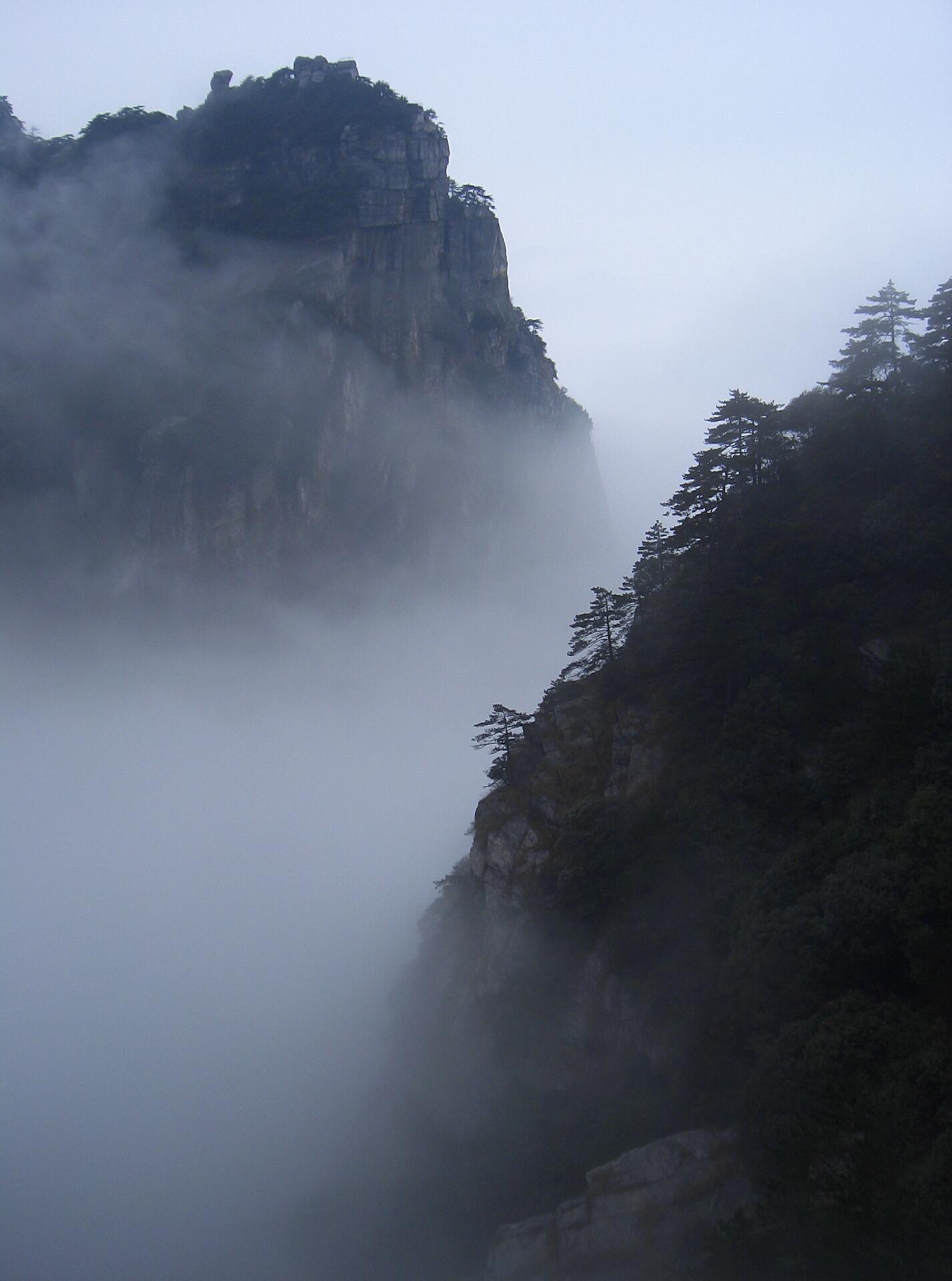
© me (w:User:pfctdayelise), CC BY-SA 2.5 Resized from original. (This derivative is under the same CC BY-SA license.)