World Heritage Identification Number: 666
World Heritage since: 1997
Category: Cultural Heritage
WHE Type: Religious Sites & Sacred Architecture
Transboundary Heritage: No
Endangered Heritage: No
Country: 🇳🇵 Nepal
Continent: Asia
UNESCO World Region: Asia and the Pacific
Map
Lumbini: The Sacred Birthplace of the Buddha
Lumbini, nestled in the fertile plains of the Rupandehi District in Lumbini Province, Nepal, holds a unique place in history and spirituality. Revered by millions worldwide, this sacred sanctuary is recognized as the birthplace of Siddhartha Gautama, who would later attain enlightenment as Lord Buddha, the founder of Buddhism.
According to Buddhist tradition, Siddhartha Gautama was born in the beautiful gardens of Lumbini in 623 B.C.—though modern historians continue to debate the exact timeline. His mother, Queen Maya Devi, was journeying to her parental home when she paused to rest in this tranquil grove. Tradition holds that she gave birth to the prince while standing, holding the branch of a sacred sal tree. This monumental event marked the dawn of a spiritual and philosophical legacy that would profoundly reshape human history.
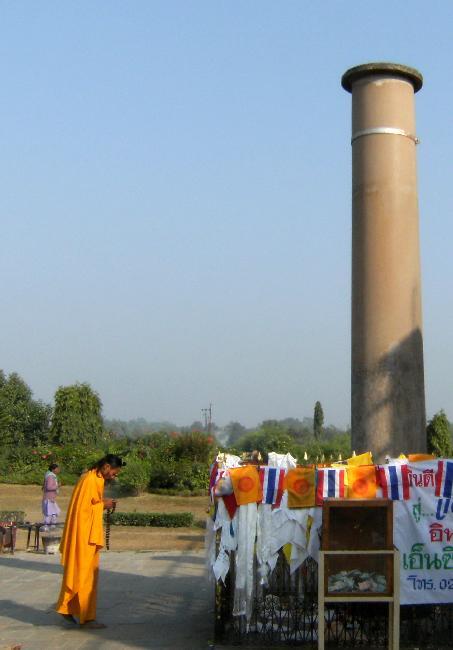
In the centuries that followed, Lumbini flourished into a vital pilgrimage destination. Among its most illustrious historical visitors was Emperor Ashoka of the Mauryan Empire, who journeyed here in approximately 249 B.C. To commemorate his pilgrimage, he erected a monolithic sandstone pillar. The Ashoka Pillar bears an inscription in the Brahmi script explicitly identifying Lumbini as the Buddha's birthplace, serving as the most important archaeological evidence for the site's historical significance.
Over time, numerous monasteries, temples, and stupas were built at Lumbini, reflecting the diverse cultural influences that have shaped the site over the centuries. These architectural marvels showcase a rich tapestry of Buddhist art and architecture, offering visitors a glimpse into the evolution of Buddhism throughout history. Together, they illustrate the global reach and enduring influence of Buddhism across the centuries.
In 1997, Lumbini was inscribed as a UNESCO World Heritage Site, recognizing its exceptional cultural and religious value. Since then, efforts have been made to preserve and protect the archaeological remains associated with the birth of the Lord Buddha, while also developing Lumbini as a Buddhist pilgrimage center. Today, Lumbini serves as a vibrant hub for Buddhist devotees, scholars, and tourists alike, attracting visitors from all corners of the world.
The focal point of modern Lumbini is the Maya Devi Temple, a structure dedicated to the Buddha's mother. Rather than replacing history, the modern temple was specifically constructed to safeguard invaluable archaeological treasures. The sanctuary encloses the precise, excavated foundations of brick temples and shrines dating back more than two millennia.
At its heart lies the sacred Marker Stone, traditionally regarded as marking the birthplace of the Buddha and widely associated with the location by scholars and archaeologists. Additionally, the temple houses a preserved nativity sculpture depicting Maya Devi in the moments surrounding the birth of the future Buddha.
Today, Lumbini offers a profound and inspiring experience for visitors. Its rich historical heritage, archaeological treasures, diverse monastic traditions, and deep spiritual significance make it one of the world's most important religious destinations. By preserving and honoring this sacred site, we celebrate not only the life of the Buddha but also the enduring legacy of compassion, wisdom, and peace embodied in his teachings.
UNESCO Description of the World Heritage Site
Siddhartha Gautama, the Lord Buddha, was born in 623 B.C. in the famous gardens of Lumbini, which soon became a place of pilgrimage. Among the pilgrims was the Indian emperor Ashoka, who erected one of his commemorative pillars there. The site is now being developed as a Buddhist pilgrimage centre, where the archaeological remains associated with the birth of the Lord Buddha form a central feature.
UNESCO Justification of the World Heritage Site
Criterion (iii): As the birthplace of the Lord Buddha, testified by the inscription on the Asoka pillar, the sacred area in Lumbini is one of the most holy and significant places for one of the world’s great religions.
Criterion (vi): The archaeological remains of the Buddhist viharas (monasteries) and stupas (memorial shrines) from the 3rd century BC to the 15th century AD, provide important evidence about the nature of Buddhist pilgrimage centres from a very early period.
Encyclopedia Record: Lumbini
Lumbinī is a Buddhist pilgrimage site in the Rupandehi District of Lumbini Province in Nepal. According to the sacred texts of the Buddhist Commentaries, Maya Devi gave birth to Siddhartha Gautama in Lumbini in c. 624 BCE. Siddhartha Gautama achieved Enlightenment, and became Shakyamuni Buddha who founded Buddhism. He later passed into parinirvana at the age of eighty, in c. 544 BCE. Lumbini is one of four most sacred pilgrimage sites pivotal in the life of the Buddha.Additional Site Details
Area: 1.95 hectares
Number of Components: 1
(vi) — Directly associated with events or living traditions
Coordinates: 27.46889 , 83.27611
Image
©