World Heritage Identification Number: 121
World Heritage since: 1979
Category: Cultural Heritage
WHE Type: Cultural Landscapes
Transboundary Heritage: No
Endangered Heritage: No
Country: 🇳🇵 Nepal
Continent: Asia
UNESCO World Region: Asia and the Pacific
Map
Exploring the Cultural Richness of the Kathmandu Valley
The Kathmandu Valley, nestled in the heart of the Himalayan mountains, serves as a testament to the rich cultural heritage of Nepal. This bowl-shaped valley, often referred to as the Nepal Valley or Nepa Valley, has been a significant crossroads of ancient civilizations from the Indian subcontinent and beyond. With at least 130 important monuments, the valley boasts seven World Heritage Sites that showcase the full spectrum of historical and artistic achievements for which it is globally renowned.
More to come…UNESCO Description of the World Heritage Site
The cultural heritage of the Kathmandu Valley is illustrated by seven groups of monuments and buildings which display the full range of historic and artistic achievements for which the Kathmandu Valley is world famous. The seven include the Durbar Squares of Hanuman Dhoka (Kathmandu), Patan and Bhaktapur, the Buddhist stupas of Swayambhu and Bauddhanath and the Hindu temples of Pashupati and Changu Narayan.
UNESCO Justification of the World Heritage Site
Criterion (iii): The seven monument ensembles represent an exceptional testimony to the traditional civilization of the Kathmandu Valley. The cultural traditions of the multi ethnic people who settled in this remote Himalayan valley over the past two millennia, referred to as the Newars, is manifested in the unique urban society which boasts of one of the most highly developed craftsmanship of brick, stone, timber and bronze in the world. The coexistence and amalgamation of Hinduism and Buddhism with animist rituals and Tantrism is considered unique.
Criterion (iv): The property is comprised of exceptional architectural typologies, ensembles and urban fabric illustrating the highly developed culture of the Valley, which reached an apogee between 1500 and 1800 AD. The exquisite examples of palace complexes, ensembles of temples and stupas are unique to the Kathmandu Valley.
Criterion (vi): The property is tangibly associated with the unique coexistence and amalgamation of Hinduism and Buddhism with animist rituals and Tantrism. The symbolic and artistic values are manifested in the ornamentation of the buildings, the urban structure and often the surrounding natural environment, which are closely associated with legends, rituals and festivals.
Encyclopedia Record: Kathmandu Valley
The Kathmandu Valley, also known as the Nepal Valley or Nepa Valley, National Capital Area, is a bowl-shaped valley located in the Himalayan mountains of Nepal. It lies at the crossroads of ancient civilizations of the Indian subcontinent and the broader Asian continent, and has at least 130 important monuments, including several pilgrimage sites for Hindus and Buddhists. The valley holds seven World Heritage Sites within it.Additional Site Details
Area: 167.37 hectares
Number of Components: 7
(iv) — Outstanding example of a type of building or landscape
(vi) — Directly associated with events or living traditions
Coordinates: 27.70395 , 85.30858
Image
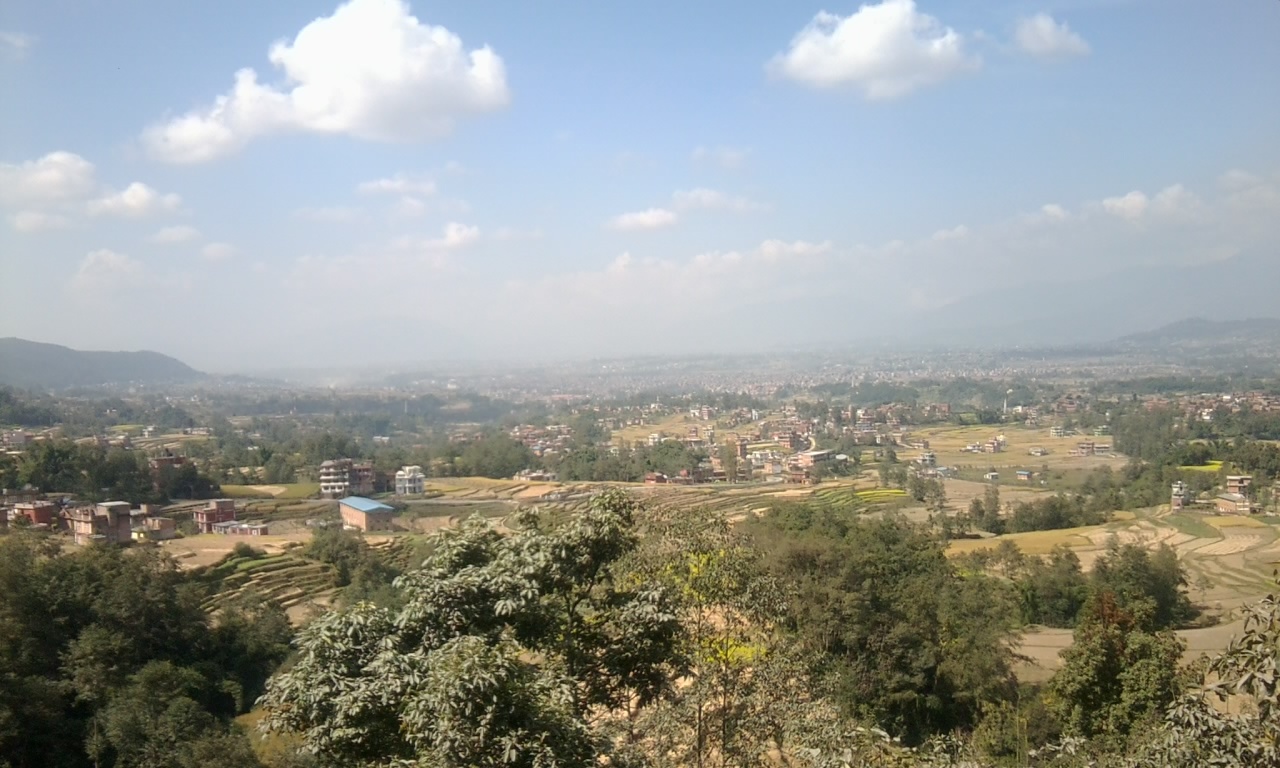
© Krish Dulal, CC BY-SA 3.0 Resized from original. (This derivative is under the same CC BY-SA license.)
World Heritage Research
Discover scientific research and academic studies that deepen our understanding of Kathmandu Valley from its history and significance to its conservation, management, and contemporary challenges.
-
Rapid Urban Growth in the Kathmandu Valley, Nepal: Monitoring Land Use Land Cover Dynamics of a Himalayan City with Landsat Imageries
Between 1989 and 2016, the urban area of the Kathmandu Valley expanded by 412%, driven primarily by the conversion of agricultural land. This rapid urban growth, analyzed through a pixel-based hybrid classification of Landsat imagery, reveals a concentric expansion pattern along major roads, significantly altering the valley's cityscape. The study identifies rural-to-urban migration and the centrality of Kathmandu as key proximate causes behind this transformation. While most expansion occurred between 1989 and 2009, urban growth continues, underscoring the need for systematic monitoring of land use and land cover changes in this Himalayan metropolitan valley.
Ishtiaque, A., Shrestha, M., & Chhetri, N. (2017). Rapid Urban Growth in the Kathmandu Valley, Nepal: Monitoring Land Use Land Cover Dynamics of a Himalayan City with Landsat Imageries. Environments, 4(4), 72. https://doi.org/10.3390/environments4040072
View Publication Record | Read Publication