World Heritage Identification Number: 565
World Heritage since: 1992
Category: Cultural Heritage
WHE Type: Historic Cities & Urban Areas
Transboundary Heritage: No
Endangered Heritage: No
Country: 🇩🇿 Algeria
Continent: Africa
UNESCO World Region: Arab States
Map
The Kasbah of Algiers: A Unique Medina Overlooking the Mediterranean
The Kasbah of Algiers, officially recognized as a UNESCO World Heritage Site in 1992, is a captivating testament to the rich history and cultural diversity of Algeria. Situated in the heart of the country's capital, this ancient fortress offers a glimpse into the past while maintaining its relevance in modern times.
More to come…UNESCO Description of the World Heritage Site
The Kasbah is a unique kind of medina, or Islamic city. It stands in one of the finest coastal sites on the Mediterranean, overlooking the islands where a Carthaginian trading-post was established in the 4th century BC. There are the remains of the citadel, old mosques and Ottoman-style palaces as well as the remains of a traditional urban structure associated with a deep-rooted sense of community.
UNESCO Justification of the World Heritage Site
Criterion (ii): The Kasbah of Algiers has exercised considerable influence on architecture and town-planning in North Africa, Andalusia and in sub-Saharan Africa during the 16th and 17th centuries. These exchanges are illustrated in the specific character of its houses and the density of its urban stratification, a model of human settlement where the ancestral lifestyle and Muslim customs have blended with other types of traditions.
Criterion (v): The Kasbah of Algiers is an outstanding example of a traditional human settlement representing a profoundly Mediterranean Muslim culture, synthesis of numerous traditions. The vestiges of the citadel, ancient mosques, Ottoman palaces, as well as a traditional urban structure associated with a strong sense of community testify to this culture and are the result of its interaction with the various layers of populations.
Encyclopedia Record: Casbah of Algiers
The Casbah of Algiers, commonly referred to as the Casbah, corresponds to the old town or medina of Algiers, the capital of Algeria. It is a historic district that has been listed as a UNESCO World Heritage Site since 1992. Administratively, it is located within the municipality of Casbah, in the province of Algiers.Additional Site Details
Area: 54.7 hectares
Number of Components: 1
(v) — Outstanding example of traditional human settlement
Coordinates: 36.78333 , 3.06028
Image
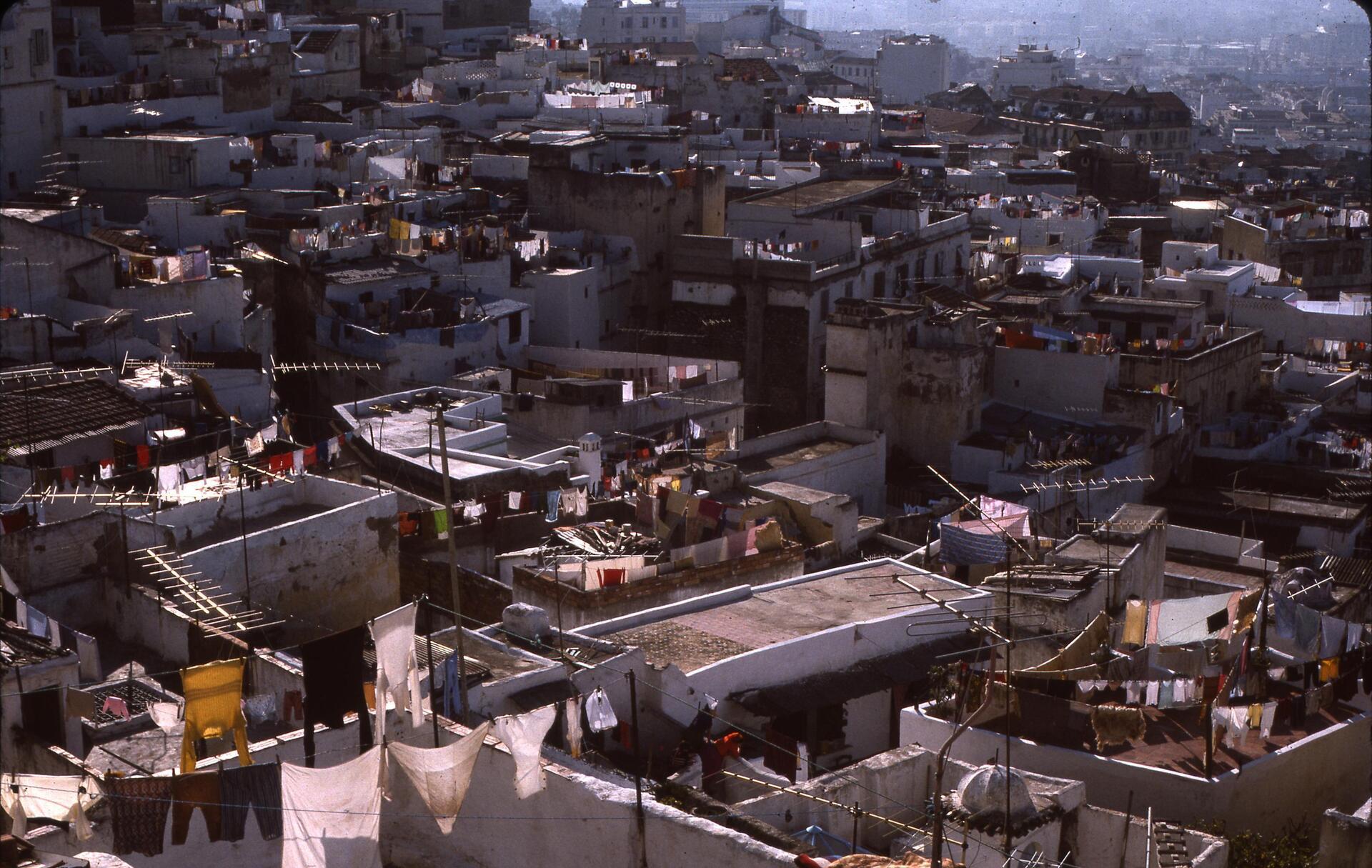
©
World Heritage Research
Discover scientific research and academic studies that deepen our understanding of Kasbah of Algiers from its history and significance to its conservation, management, and contemporary challenges.
-
(Re)building Algiers: Racial Segregation in the “Republican” Empire
Racial segregation in Algiers under French colonial rule was not enforced through formal legal structures but emerged from a sustained process of erasure, racial violence, and expropriation. This study reveals that despite the absence of explicit policies like public health codes or racial covenants, the city's spatial divisions were deeply entrenched, with European settlements expanding outward while the native Algerian population was confined to densely populated areas like the Casbah. The research highlights how these segregated spaces, though invisible in formal governance, became sites of resistance and solidarity for Algerians. The study employs a historical approach to unpack the mechanisms behind this segregation, emphasizing its role in limiting urban possibilities for Algerians while simultaneously fostering zones of resilience.
Beaujon, D. (2026). (RE)BUILDING ALGIERS: Racial Segregation in the “Republican” Empire. Capture/Connect/Shift. https://doi.org/10.14506/ob.ccs.02
View Publication Record | Read Publication -
Multicriteria sustainability evaluation of urban heritage
A novel multicriteria sustainability framework reveals critical vulnerabilities and value patterns in the Kasbah of Algiers, integrating economic, environmental, social, heritage, and institutional dimensions. The study, involving 10 experts across disciplines, employs hierarchical structuring (AHP) and network-based modeling (ANP) to assess the complex interplay between building decay, urban pressure, and tourism dynamics. This approach provides a reproducible protocol that transcends traditional monetary evaluations, offering deeper insights into non-market values and conservation limits in inhabited historic urban fabric.
Alaouchiche, A., Necissa, Y., Behiri, A., Monjo-Carrió, J., & Ramírez-Pacheco, G. (2026). Multicriteria sustainability evaluation of urban heritage. Prostor, 34(1(71)), 15–27. https://doi.org/10.31522/p.34.1(71).2
View Publication Record | Read Publication -
Revalorisation of Heritage Cultural Landscapes Through an Approach Based on Intangible Atmospheres
Research on the Kasbah of Algiers reveals that heritage atmospheres are shaped by residents' dynamic interactions with social, symbolic, sensory, and spatial dimensions. A key finding is the divergence between professionals, who prioritize spatial aspects, and residents, who value social and symbolic elements more highly. Historical richness fosters attachment, while significant spatial changes lead to disappropriation. The study introduces innovative cartographic tools for inclusive rehabilitation, validating the inclusion of a symbolic dimension in atmosphere theory.
Djedi, H., & Belakehal, A. (2026). Revalorisation of Heritage Cultural Landscapes Through an Approach Based on Intangible Atmospheres. Proceedings of the International Conference of Contemporary Affairs in Architecture and Urbanism-ICCAUA, 9(1), 2610106. https://doi.org/10.38027/iccaua2026en0106
View Publication Record | Read Publication -
Seismic vulnerability and dynamic response of the minaret of Sidi M’hammed Cherif Mosque: insights from a detailed finite element model
A novel approach combining Terrestrial Laser Scanning (TLS) and Finite Element Analysis (FEA) has successfully quantified the seismic vulnerability of the Sidi M’hammed Cherif Mosque minaret, a UNESCO-listed structure within the Kasbah of Algiers. The study identified critical damage zones at the base and geometric discontinuities, with numerical results aligning closely with observed damage patterns. This restoration-oriented methodology establishes a reproducible framework for assessing slender masonry heritage structures in seismic-prone regions like Algeria, addressing a significant gap in research on Maghreb historic architecture. By integrating seismic risk assessment into conservation planning, the study offers evidence-based recommendations to enhance resilience and inform ongoing restoration efforts.
Alliche, S., Si Youcef, Y., & Horra, B. E. M. (2026). Seismic vulnerability and dynamic response of the minaret of Sidi M’hammed Cherif Mosque: insights from a detailed finite element model. Budownictwo I Architektura / Civil and Architectural Engineering, 25(3), 26043. https://doi.org/10.35784/bud-arch.8876
View Publication Record | Read Publication -
Towards a Sustainable Algiers: Analyzing Urban Typologies for Sustainable Cities
A balanced urban development strategy that integrates historical contexts with modern advancements can enhance sustainability and livability in Algiers. This study analyzed the distinct sustainability advantages of three architectural typologies—traditional Casbah, 19th-century colonial architecture, and modern structures—using a mixed-method approach combining qualitative field observations and quantitative data from academic sources. The findings highlight how each typology contributes uniquely to social cohesion and citizen well-being, offering critical insights for sustainable urban planning in Algiers.
Hamoudi, A., & Emekci, Ş. (2025). Towards a Sustainable Algiers: Analyzing Urban Typologies for Sustainable Cities. International Journal of Built Environment and Sustainability, 12(1), 187–202. https://doi.org/10.11113/ijbes.v12.n1.1389
View Publication Record | Read Publication -
Colonial Legacies in Heritage Conservation in Algeria
Algeria's heritage conservation efforts, particularly for the UNESCO-listed Kasbah of Algiers, face significant challenges rooted in colonial legacies. This study reveals that contemporary conservation practices often fail to address these issues effectively, despite the country's rich cultural and historical assets. By analyzing pre-colonial valuation processes—such as Numidian 'mausoleum culture' and waqf traditions—the research argues for a shift toward homegrown conservation approaches inspired by indigenous care practices rather than French colonial models like 'secteurs sauvegardés.' The findings underscore the need to reconnect with Algeria's deep-seated heritage values to develop culturally appropriate conservation strategies.
Belgacem, S. (2025). Colonial Legacies in Heritage Conservation in Algeria. ARTis ON, (15). https://doi.org/10.37935/iha.oan2024.009
View Publication Record | Read Publication -
Cultural and Bioclimatic Insights from the Vernacular Architecture of the Casbah of Algiers: A Model for Sustainable Future
The Casbah of Algiers, a UNESCO World Heritage site, demonstrates the enduring value of vernacular architecture in addressing bioclimatic challenges while fostering cultural resilience. Research reveals that traditional construction techniques—such as compact urban morphology, shaded courtyards, and thick masonry walls—effectively provide passive cooling, reduce energy dependence, and enhance social cohesion. These features, adapted from Mediterranean design principles, offer a sustainable model for contemporary urban planning. The study combines on-site observations, photographic documentation, and socio-cultural analysis to highlight the architecture's adaptive potential, advocating its integration into modern designs to balance heritage preservation with climate responsiveness.
Roufaida Benbrahim, & Leila Sriti. (2025). CULTURAL AND BIOCLIMATIC INSIGHTS FROM THE VERNACULAR ARCHITECTURE OF THE CASBAH OF ALGIERS: A MODEL FOR SUSTAINABLE FUTURE. International Journal of Innovative Technologies in Social Science, (1(45)). https://doi.org/10.31435/ijitss.1(45).2025.3110
View Publication Record | Read Publication