World Heritage Identification Number: 120
World Heritage since: 1979
Category: Natural Heritage
WHE Type: Protected Areas & National Parks
Transboundary Heritage: No
Endangered Heritage: No
Country: 🇳🇵 Nepal
Continent: Asia
UNESCO World Region: Asia and the Pacific
Map
Sagarmatha National Park: A Unique Blend of Natural Beauty and Cultural Richness
Sagarmatha National Park, located in the Himalayas of eastern Nepal, is a testament to the harmonious coexistence of breathtaking natural beauty and rich cultural heritage. Established in 1976 and inscribed as a UNESCO World Heritage Site in 1979, this protected area spans over an expanse of 1,148 square kilometers in the Solukhumbu District.
More to come…UNESCO Description of the World Heritage Site
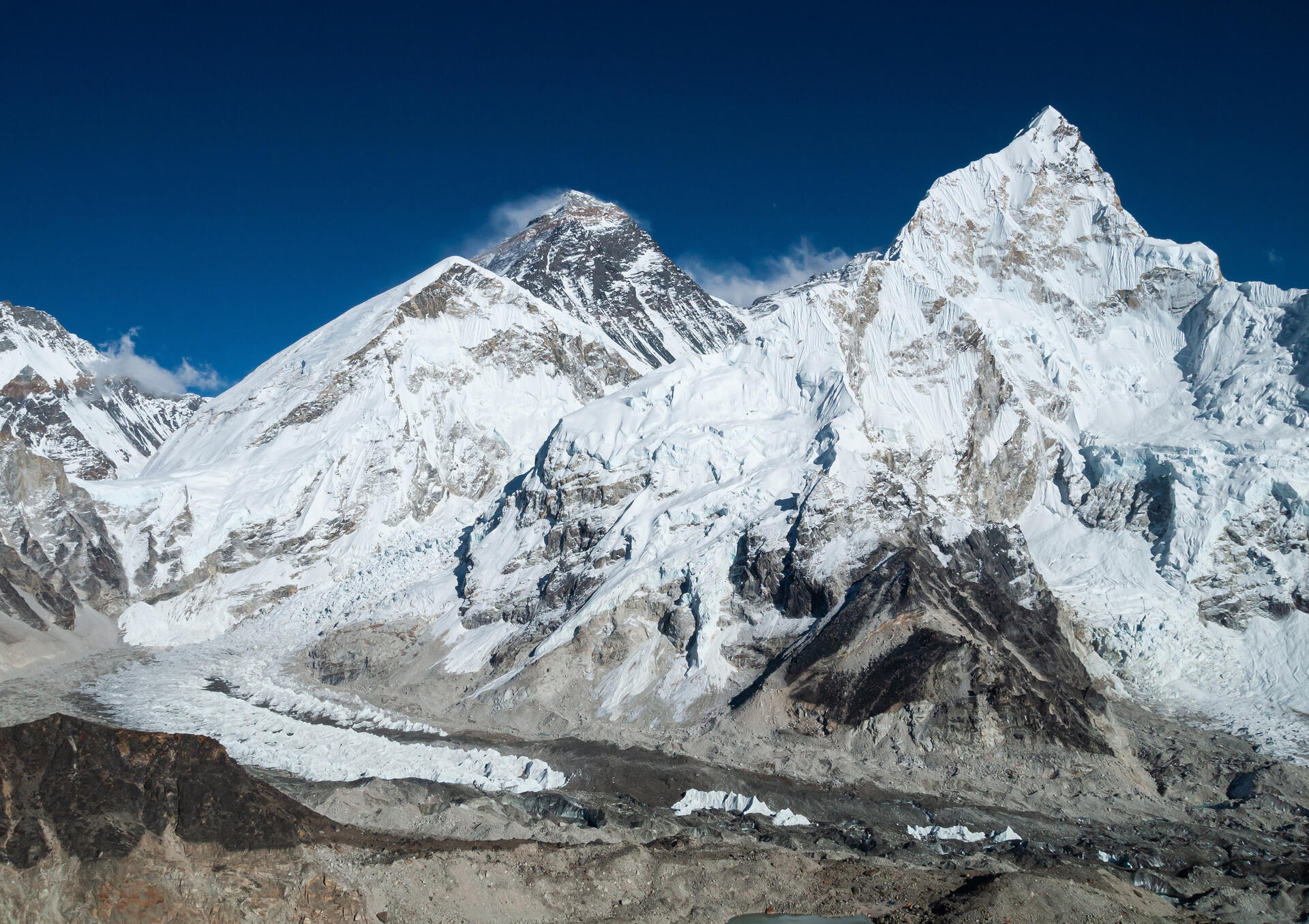
Sagarmatha is an exceptional area with dramatic mountains, glaciers and deep valleys, dominated by Mount Everest, the highest peak in the world (8,848 m). Several rare species, such as the snow leopard and the lesser panda, are found in the park. The presence of the Sherpas, with their unique culture, adds further interest to this site.
UNESCO Justification of the World Heritage Site
Criteria (vii): Sagarmatha National Parks’ superlative and exceptional natural beauty is embedded in the dramatic mountains, glaciers, deep valleys and majestic peaks including the Worlds’ highest, Mount Sagarmatha (Everest) (8,848 m.). The area is home to several rare species such as the snow leopard and the red panda. The area represents a major stage of the Earth’s evolutionary history and is one of the most geologically interesting regions in the world with high, geologically young mountains and glaciers creating awe inspiring landscapes and scenery dominated by the high peaks and corresponding deeply-incised valleys. This park contains the world’s highest ecologically characteristic flora and fauna, intricately blended with the rich Sherpa culture. The intricate linkages of the Sherpa culture with the ecosystem are a major highlight of the park and they form the basis for the sustainable protection and management of the park for the benefit of the local communities.
Encyclopedia Record: Sagarmatha National Park
Sagarmāthā National Park is a national park in the Himalayas of eastern Nepal that was established in 1976 and encompasses an area of 1,148 km2 (443 sq mi) in the Solukhumbu District. It ranges in elevation from 2,845 to 8,848 m and includes Mount Everest. In the north, it shares the international border with Qomolangma National Nature Preserve in Tibet Autonomous Region. In the east, it is adjacent to Makalu Barun National Park, and in the south it extends to Dudh Kosi river. It is part of the Sacred Himalayan Landscape.Additional Site Details
Area: 124,400 hectares
Number of Components: 1
Coordinates: 27.96528 , 86.91306
IUCN World Heritage Outlook
The 2025 Conservation Outlook on Sagarmatha National Park reports the following assessment:
Source: International Union for Conservation of Nature (IUCN) · View assessment
World Heritage Research
Discover scientific research and academic studies that deepen our understanding of Sagarmatha National Park from its history and significance to its conservation, management, and contemporary challenges.
-
Do Buffer Zone Programs Improve Local Livelihoods and Support Biodiversity Conservation? The Case of Sagarmatha National Park, Nepal
Buffer zone programs at Sagarmatha National Park, Nepal, primarily benefit local livelihoods and social welfare but fall short in addressing wildlife conservation conflicts. Despite legal provisions for compensation, traditional practices like 'Nawa' animal rearing and feral dog control remain overlooked, leading to a gap between policy intent and implementation. The study, spanning 2002–2016, identified 99 buffer zone activities, with 42% of park funds allocated to community development and only 22% to conservation and conflict management. This imbalance risks undermining the original purpose of buffer zones, which is to balance livelihood improvements with biodiversity protection. The findings underscore the need for policy updates that prioritize conflict management and integrate traditional practices to ensure sustainable coexistence between communities and wildlife.
Silwal, T., Devkota, B. P., Poudel, P., & Morgan, M. (2022). Do Buffer Zone Programs Improve Local Livelihoods and Support Biodiversity Conservation? The Case of Sagarmatha National Park, Nepal. Tropical Conservation Science, 15. https://doi.org/10.1177/19400829221106670
View Publication Record | Read Publication -
An Assessment of Drinking Water Sources in Sagarmatha National Park (Mt Everest Region), Nepal
A study assessing drinking water sources in Sagarmatha National Park (Mt Everest Region), Nepal, found that while physical parameters met World Health Organization standards, fecal contamination levels indicated low to moderate risk, failing Nepali national standards. The research, conducted during the 2016 premonsoon dry season, sampled 34 water sources and revealed a positive correlation between bacteria content and temperature, as well as a weak negative correlation with elevation. Samples from lower-elevation areas (<3500 m) showed higher levels of Escherichia coli and coliform bacteria, suggesting increased surface water influence in these regions. The findings highlight the potential for deeper groundwater to remain uncontaminated, warranting further investigation.
Nicholson, K. N., Neumann, K., Dowling, C., Gruver, J., Sherman, H., & Sharma, S. (2018). An Assessment of Drinking Water Sources in Sagarmatha National Park (Mt Everest Region), Nepal. Mountain Research and Development, 38(4), 353. https://doi.org/10.1659/mrd-journal-d-17-00024.1
View Publication Record | Read Publication -
E. coli and Coliform Bacteria as Indicators for Drinking Water Quality and Handling of Drinking Water in the Sagarmatha National Park, Nepal
A study conducted during the 2016 pre-monsoon dry season in the Khumbu Valley, Sagarmatha National Park (SNP), and its buffer zone revealed significant fecal contamination in drinking water sources, primarily groundwater-fed springs. The research found weak correlations between total coliform data and increasing temperature, decreasing elevation, and pH, but a notable correlation between population density—including tourist numbers—and higher levels of E. coli and total coliforms. Importantly, drinking water stored in tanks or transported long distances exhibited much higher bacterial contamination, suggesting that improved water handling practices could significantly enhance drinking water quality and public health outcomes.
Nicholson, K. N., Neumann, K., Dowling, C., & Sharma, S. (2017). E. coli and Coliform Bacteria as Indicators for Drinking Water Quality and Handling of Drinking Water in the Sagarmatha National Park, Nepal. Environmental Management and Sustainable Development, 6(2), 411. https://doi.org/10.5296/emsd.v6i2.11982
View Publication Record | Read Publication -
Drinking Water Quality in the Sagarmatha National Park, Nepal
A first-of-its-kind study reveals significant fecal contamination of drinking water sources in the Sagarmatha National Park, Nepal, particularly in lower-altitude, more populated areas and during the pre-monsoon summer season. The research identified a strong correlation between E. coli levels, population density, tourist traffic, and elevation, with surface water showing higher contamination than groundwater-fed springs. Despite meeting WHO standards for physical properties like temperature, pH, conductivity, and total dissolved solids (TDS), seasonal variability was observed, with May samples exhibiting higher bacterial presence than November ones. Conductivity and TDS generally decreased with elevation, while pH increased, underscoring the complex interplay of tourism, geography, and climate on water quality in this UNESCO World Heritage Site.
Nicholson, K., Hayes, E., Neumann, K., Dowling, C., & Sharma, S. (2016). Drinking Water Quality in the Sagarmatha National Park, Nepal. Journal of Geoscience and Environment Protection, 04(04), 43–53. https://doi.org/10.4236/gep.2016.44007
View Publication Record | Read Publication -
Land Use and Land Cover Change in Sagarmatha National Park, a World Heritage Site in the Himalayas of Eastern Nepal
Sagarmatha National Park, a UNESCO World Heritage Site in the Himalayas of eastern Nepal, has experienced significant land use and land cover (LULC) changes between 1992 and 2011. Satellite imagery analysis revealed that above 6000 meters, snow and ice coverage decreased, leading to an expansion of glacial lakes and barren areas. Below 6000 meters, forest and farmland diminished while grazing, settlement, and shrubland expanded, indicating severe land degradation. Sociological data from interviews and workshops showed that local perceptions often missed slower changes detectable via satellite imagery. Rapid economic development, tourism pressure, civil war, and limited protected area management were identified as key drivers of these changes, particularly below 6000 meters. While global factors like climate change cannot be locally mitigated, improved management practices could address local drivers to support conservation and sustainable development in this high-altitude ecosystem.
Garrard, R., Kohler, T., Price, M. F., Byers, A. C., Sherpa, A. R., & Maharjan, G. R. (2016). Land Use and Land Cover Change in Sagarmatha National Park, a World Heritage Site in the Himalayas of Eastern Nepal. Mountain Research and Development, 36(3), 299. https://doi.org/10.1659/mrd-journal-d-15-00005.1
View Publication Record | Read Publication -
Depicting community perspectives: repeat photography and participatory research as tools for assessing environmental services in Sagarmatha National Park, Nepal
A novel application of repeat photography as a diachronic photo-diary reveals a strong consensus among local communities in Sagarmatha National Park, Nepal, regarding adverse changes to environmental services (ES), particularly protection against natural hazards like landslides and floods. This study highlights the potential of participatory research methods, such as repeat photography, to complement traditional biophysical ecosystem assessments by integrating diverse stakeholders' knowledge and addressing power imbalances in complex social-ecological systems. The findings underscore the importance of incorporating local perspectives into conservation efforts to enhance livelihoods and protect UNESCO World Heritage Sites.
Garrard, R., Kohler, T., Wiesmann, U., Price, M. F., Byers, A. C., & Sherp, A. R. (2012). Depicting community perspectives: repeat photography and participatory research as tools for assessing environmental services in Sagarmatha National Park, Nepal. Eco.Mont (Journal on Protected Mountain Areas Research), 4(2), 21–31. https://doi.org/10.1553/eco.mont-4-2s21
View Publication Record | Read Publication -
Applying Scenario Planning to Park and Tourism Management in Sagarmatha National Park, Khumbu, Nepal
Scenario planning emerges as a critical tool for navigating long-term uncertainty and complexity in managing Sagarmatha National Park, Nepal. This study demonstrates how participatory scenario planning can guide adaptive management by engaging stakeholders from tourism, park comanagement institutions, and local communities. By developing four plausible scenarios based on governance changes and external tourism influences, the research highlights the need for strategic reflection on potential conflicts and long-term visions. The approach enables stakeholders to explore multiple perspectives, assess strategic goals, and better prepare for social-ecological changes driven by globalization and tourism growth.
Daconto, G., & Sherpa, L. N. (2010). Applying Scenario Planning to Park and Tourism Management in Sagarmatha National Park, Khumbu, Nepal. Mountain Research and Development, 30(2), 103–112. https://doi.org/10.1659/mrd-journal-d-09-00047.1
View Publication Record | Read Publication -
Energy, Forest, and Indoor Air Pollution Models for Sagarmatha National Park and Buffer Zone, Nepal
A critical decline of 38% in forest biomass within Sagarmatha National Park and Buffer Zone (SNPBZ), Nepal, from 1992 to 2008 has been attributed to rising fuelwood demand driven by tourism growth. This trend threatens the preservation of current forest conditions unless 75% of fuelwood is replaced with alternative energy sources. The study employed a participatory modeling framework to simulate management scenarios, revealing that reducing fuelwood use by 75% and dung use by 80% could lower indoor carbon monoxide (CO) concentrations to WHO-recommended limits. This research underscores the urgent need for adaptive management strategies to mitigate environmental degradation and health risks in this remote mountain region.
Salerno, F., Viviano, G., Thakuri, S., Flury, B., Maskey, R. K., Khanal, S. N., Bhuju, D., Carrer, M., Bhochhibhoya, S., Melis, M. T., Giannino, F., Staiano, A., Carteni, F., Mazzoleni, S., Cogo, A., Sapkota, A., Shrestha, S., Pandey, R. K., & Manfredi, E. C. (2010). Energy, Forest, and Indoor Air Pollution Models for Sagarmatha National Park and Buffer Zone, Nepal. Mountain Research and Development, 30(2), 113–126. https://doi.org/10.1659/mrd-journal-d-10-00027.1
View Publication Record | Read Publication -
Solid Waste and Water Quality Management Models for Sagarmatha National Park and Buffer Zone, Nepal
Most solid waste in Sagarmatha National Park and its Buffer Zone is organic, paper, or minor reused material, but non-degradable waste like glass, metal, and plastic poses significant environmental risks due to improper disposal methods such as burning or open dumps. These practices, along with anthropogenic activities and poor sanitation infrastructure, contribute to water contamination, particularly in flood-prone areas near watercourses. The study developed participatory consensus-building models to simulate management scenarios, identifying potential solutions for waste and water quality issues. These findings offer insights applicable to other protected mountain landscapes facing similar challenges due to population growth, changing consumption patterns, and tourism.
Manfredi, E. C., Flury, B., Viviano, G., Thakuri, S., Khanal, S. N., Jha, P. K., Maskey, R. K., Kayastha, R. B., Kafle, K. R., Bhochhibhoya, S., Ghimire, N. P., Shrestha, B. B., Chaudhary, G., Giannino, F., Cartenì, F., Mazzoleni, S., & Salerno, F. (2010). Solid Waste and Water Quality Management Models for Sagarmatha National Park and Buffer Zone, Nepal. Mountain Research and Development, 30(2), 127–142. https://doi.org/10.1659/mrd-journal-d-10-00028.1
View Publication Record | Read Publication