World Heritage Identification Number: 1056
World Heritage since: 2002
Category: Cultural Heritage
WHE Type: Religious Sites & Sacred Architecture
Transboundary Heritage: No
Endangered Heritage: No
Country: 🇮🇳 India
Continent: Asia
UNESCO World Region: Asia and the Pacific
Map
The Mahabodhi Temple Complex at Bodh Gaya: A Sacred Site of Buddhist Enlightenment
The Mahabodhi Temple Complex at Bodh Gaya, located in the Indian state of Bihar, holds significant importance in the history and culture of Buddhism. Inscribed as a UNESCO World Heritage Site in 2002, this sacred complex is one of the four main pilgrimage sites related to the life of Gautama Buddha, specifically marking the spot where he achieved enlightenment.
More to come…UNESCO Description of the World Heritage Site
The Mahabodhi Temple Complex is one of the four holy sites related to the life of the Lord Buddha, and particularly to the attainment of Enlightenment. The first temple was built by Emperor Asoka in the 3rd century B.C., and the present temple dates from the 5th or 6th centuries. It is one of the earliest Buddhist temples built entirely in brick, still standing in India, from the late Gupta period.
UNESCO Justification of the World Heritage Site
Criterion (i): The grand 50m high Mahabodhi Temple of the 5th-6th centuries is of immense importance, being one of the earliest temple constructions existing in the Indian sub-continent. It is one of the few representations of the architectural genius of the Indian people in constructing fully developed brick temples in that era
Criterion (ii): The Mahabodhi Temple, one of the few surviving examples of early brick structures in India, has had significant influence in the development of architecture over the centuries.
Criterion (iii): The site of the Mahabodhi Temple provides exceptional records for the events associated with the life of Buddha and subsequent worship, particularly since Emperor Asoka built the first temple, the balustrades, and the memorial column.
Criterion (iv): The present Temple is one of the earliest and most imposing structures built entirely in brick from the late Gupta period. The sculpted stone balustrades are an outstanding early example of sculptural reliefs in stone.
Criterion (vi): The Mahabodhi Temple Complex in Bodh Gaya has direct association with the life of the Lord Buddha, being the place where He attained the supreme and perfect insight.
Encyclopedia Record: Mahabodhi Temple
The Mahabodhi Temple or the Mahābodhi Mahāvihāra, a UNESCO World Heritage Site, is an ancient, but restored Buddhist temple in Bodh Gaya, Bihar, India, marking the location where the Buddha is said to have attained enlightenment. Bodh Gaya is 15 km (9.3 mi) from Gaya and is about 96 km (60 mi) from Patna. The site contains a tree believed to be a descendant of the Bodhi Tree under which the Buddha gained enlightenment and has been a major pilgrimage destination of Buddhists for over two thousand years. The Mahabodhi Temple at Bodh Gaya is the holiest and most revered pilgrimage site for Buddhists worldwide.Additional Site Details
Area: 4.86 hectares
Number of Components: 1
(ii) — Significant interchange of human values
(iii) — Unique or exceptional testimony to a cultural tradition
(iv) — Outstanding example of a type of building or landscape
(vi) — Directly associated with events or living traditions
Coordinates: 24.69528 , 84.99389
Image
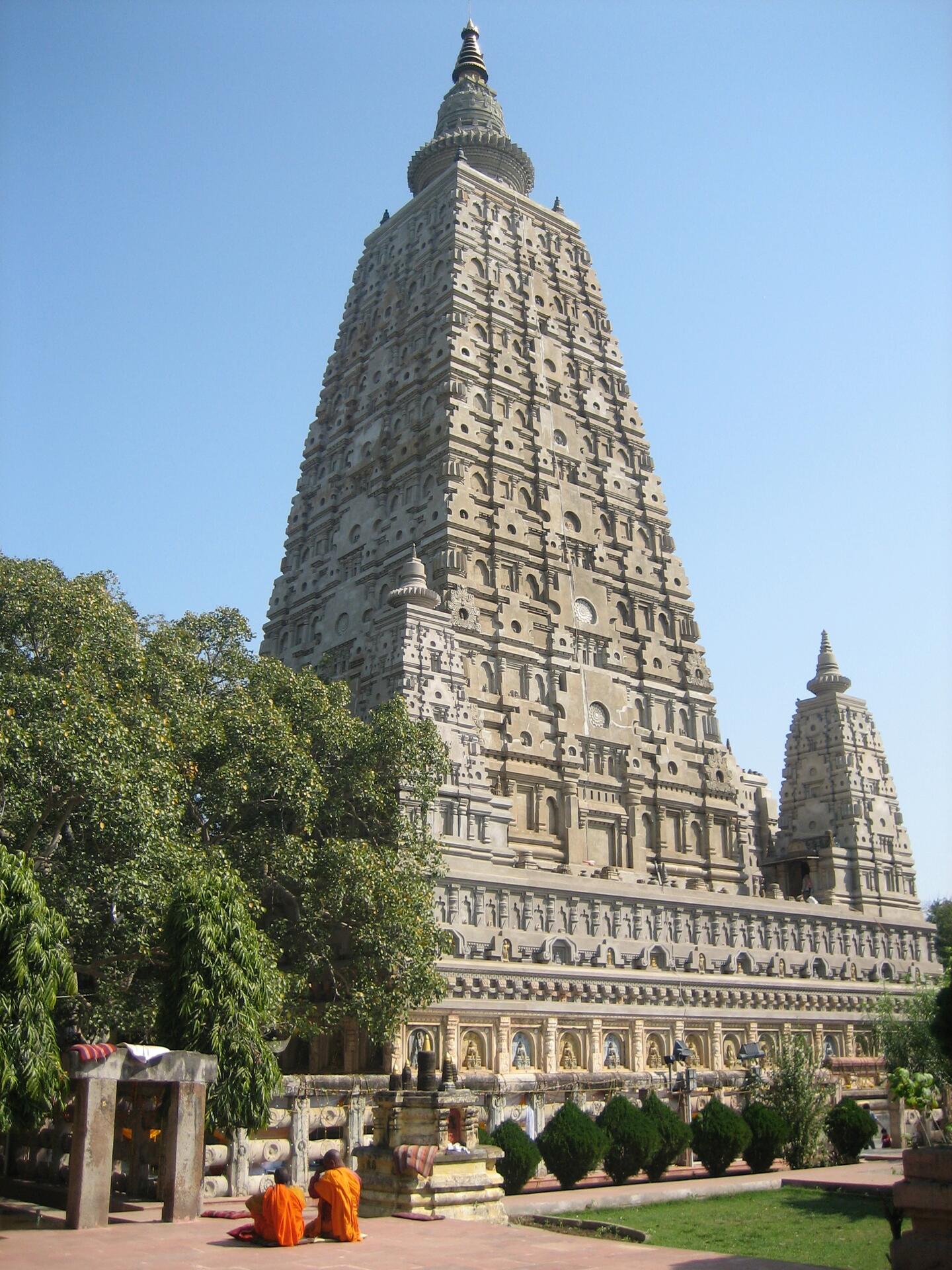
© Bpilgrim, CC BY-SA 2.5 Resized from original. (This derivative is under the same CC BY-SA license.)
World Heritage Research
Discover scientific research and academic studies that deepen our understanding of Mahabodhi Temple Complex at Bodh Gaya from its history and significance to its conservation, management, and contemporary challenges.
-
The Demand to Repeal the Bodh Gaya Temple Act, 1949
A recent demand to repeal the Bodh Gaya Temple Act, 1949, highlights longstanding grievances of Indian Buddhist monks and supporters, who argue that the current management perpetuates Brahmanical dominance over the sacred Mahabodhi Temple Complex. The protest calls for an end to state interference and full control transfer to the Indian Buddhist community, raising complex questions about governance, religious practices, and stakeholder inclusion. While a more inclusive model could offer diplomatic opportunities for India, any resolution must carefully balance the interests of local communities, foreign Buddhist organizations, and geopolitical considerations to preserve Bodh Gaya’s spiritual significance without disrupting its harmony.
Geary, D., & Manish Kumar. (2025). The Demand to Repeal the Bodh Gaya Temple Act, 1949. Economic & Political Weekly, 60(39). https://doi.org/10.71279/epw.v60i39.43761
View Publication Record | Read Publication -
Buddhist Pilgrimage and Living Religious Heritage in North India
Buddhist pilgrimage, particularly at the Mahabodhi Temple Complex in Bodh Gaya, serves as a living memory that embeds and diffuses the spiritual biography of the Buddha, playing a crucial role in Buddhist practice. The study reveals how these sacred spaces support a moral geography, shaping aspirations for those on the path to nirvana. By integrating insights from new materialism, it demonstrates the convergence of materiality and meaning at this UNESCO World Heritage Site, highlighting how Buddhist rituals intersect with heritage formations at both national and global scales. This research underscores the sensory, performative, and affective dimensions of place in Buddhist pilgrimage.
Geary, D. (2024). Buddhist Pilgrimage and Living Religious Heritage in North India. The Oxford Handbook of Lived Buddhism, 212–226. https://doi.org/10.1093/oxfordhb/9780197658697.013.11
View Publication Record | Read Publication