
World Heritage Identification Number: 1567
World Heritage since: 2023
Category: Cultural Heritage
WHE Type: Memorial Sites
Transboundary Heritage: Yes
Endangered Heritage: No
Country: Belgium, France
Continent: Europe
UNESCO World Region: Europe and North America
Map
Commemorating Sacrifice: The Funerary and Memory Sites of the First World War (Western Front)
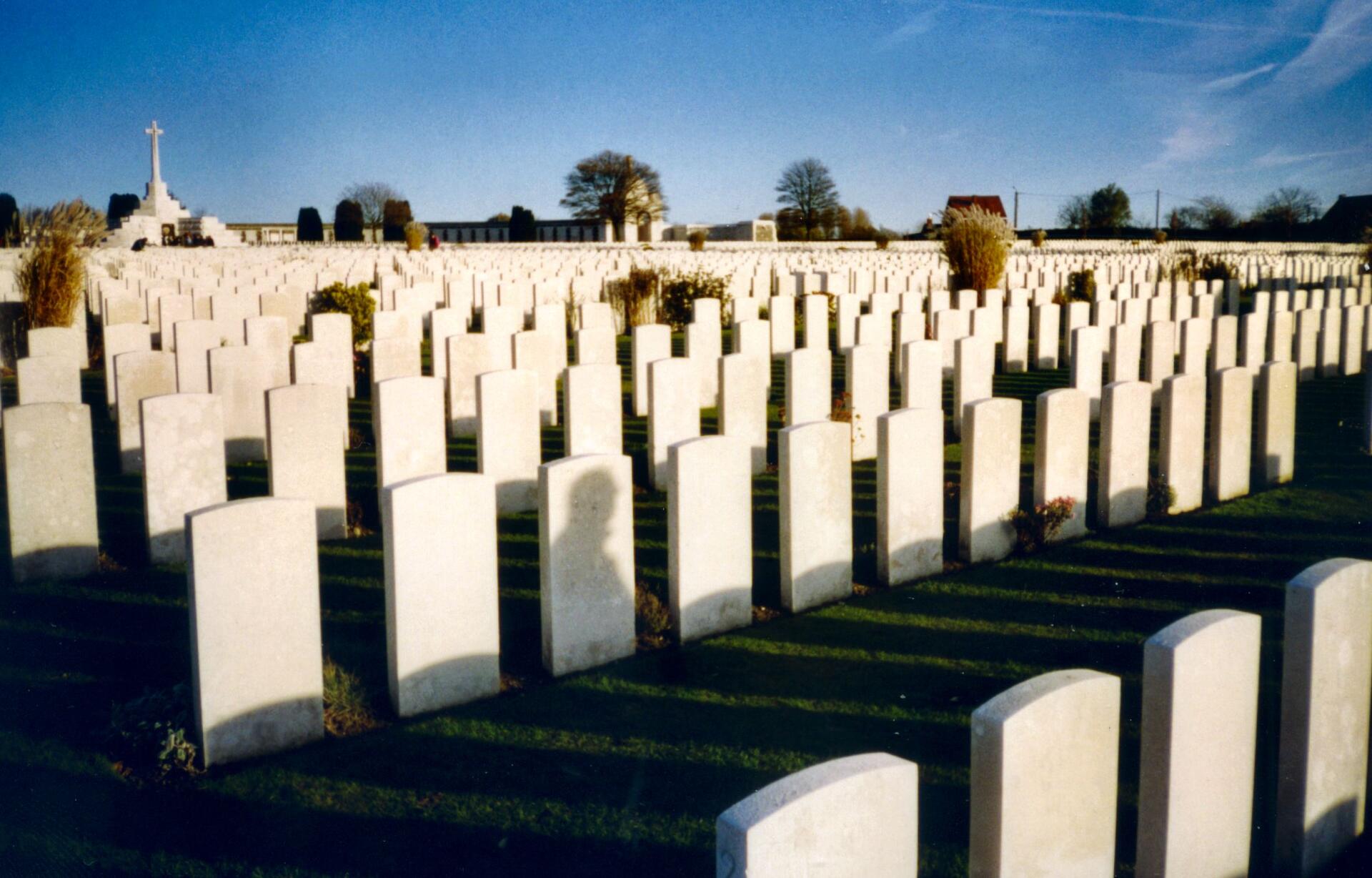
The Funerary and Memory Sites of the First World War (Western Front), inscribed as a UNESCO World Heritage Site in 2023, stand as poignant reminders of the human cost of one of history's most devastating conflicts. Stretching over 700 kilometers from the North Sea to the Franco-Swiss border, these 139 sites serve as testaments to the shared desire of the belligerent nations to honor their fallen soldiers.
More to come…UNESCO Description of the World Heritage Site
All along the Western Front of the First World War, which stretched for some 700 km from the North Sea to the Franco-Swiss border, a series of 139 funerary and memorial sites bear witness to the common desire of the various parties involved in the conflict to honour their children who fell in battle. This objective takes the form of individual graves and/or memorials listing the names of the missing. Places dedicated to meditation, remembrance and tributes are specially created. Beyond the diversity in size, location and design, there is a clear desire to create spaces that are worthy of the sacrifice made. This is reflected in the choice of noble materials, as well as in calls for renowned architects, botanists, landscape architects and artists to design sites of exceptional architectural, artistic and landscape quality. These sites are visited daily by pilgrims, individual visitors, official delegations, school groups, local community representatives and descendants. They bear witness to funerary and memorial practices that are still relevant today, as remains discovered by chance or during archaeological excavations are still buried there with all honours. These commemorative sites represent a heritage that almost literally belongs to the whole world, spreading a message of reconciliation that is still very topical.UNESCO Justification of the World Heritage Site
Criterion (iii): The serial property bears witness to the institutionalization and widespread adoption of a transnational approach to the treatment of the dead, which gave rise to a new form of humanitarian law: the identification and burial of those killed in war in individual graves. For the first time in history, every victim of the conflict was, in principle, buried and acknowledged as an individual, on a universal scale and without distinction of nationality, social status, ethnicity, or religion. This practice was carried out reciprocally by all the warring parties. The individual who died in combat is acknowledged as a person in their own right, with respect for their religious or philosophical beliefs. The name of each deceased is inscribed on their grave, if identified, or on a memorial if their identity is unknown. Individual graves are mostly grouped within military cemeteries. Ossuaries hold the remains of unidentified soldiers. Monuments to the missing are erected for those who have no identified individual grave. The names of the missing are engraved in alphabetical lists. This individual and equal recognition of all victims became a common practice and the legal norm for conflicts following the First World War.
Criterion (iv): The ensemble of funerary and memory sites of the First World War (Western Front) provides an exceptional illustration of the First World War and its consequences, an era of profound significance in human history. The serial property reflects the creation of new models, as well as architectural, landscape, and artistic works born from the desire to remember all those who died in the war, to pay tribute to them, and to restore a sense of human dignity. The component parts of the series were created and organized by all the belligerent nations, each expressing their own cultural sensibilities and national styles. Consistent attention to aesthetics and the surrounding environment is a defining feature. Through their scale and number, the sites reflect the unprecedented level of destruction brought about by a war that was, for the first time, total and global. By their location, generally near major battle sites and often accompanied by elements that directly bear witness to the conflict, they form a commemorative landscape. This typology of war cemeteries, ossuaries, and memorials has served as a model in subsequent conflicts.
Criterion (vi): This extensive and coherent series is tangibly and directly associated with the scope, scale, and global consequences of the First World War, which made it an exceptional event of worldwide significance. Together, these funerary and memory sites, erected across a vast yet clearly defined territory, bear witness to a tradition that remains alive, initiated even before the conflict ended. They reflect the multitude and diversity of soldiers who died in the war and the countries they represented. In the face of the inhumanity of war, they embody a shared commitment to preserving the individual identity of its victims and to rehumanizing the traumatized societies left in its wake. Through their design and layout, they highlight the values of equality and human dignity. More than a century later, millions of visitors of all generations from around the world still visit these sites as a form of remembrance and pilgrimage. Alongside local residents, they take part in commemorations, whether institutional or organized by associations, at international, national, local, or personal levels.
Encyclopedia Record: Funerary and memory sites of the First World War (Western Front)
Funerary and memory sites of the First World War (Western Front) is a UNESCO World Heritage Site which incorporates 139 cemeteries and memorials on the Western Front of the First World War. On 20 September 2023, UNESCO designated the locations as a World Heritage site.Additional Site Details
Area: 879.91 hectares
Number of Components: Not available
(iv) — Outstanding example of a type of building or landscape
(vi) — Directly associated with events or living traditions
Coordinates: 0 , 0
World Heritage Research
Discover scientific research and academic studies that deepen our understanding of Funerary and memory sites of the First World War (Western Front) from its history and significance to its conservation, management, and contemporary challenges.
-
A Study on the Heritage Interpretation of the United Nations Memorial Cemetery in Korea for the Inscription on the World Heritage List-Based on the “Funerary and Memorial Sites of the First World War (Western Front)” 18)
A groundbreaking analysis establishes the United Nations Memorial Cemetery in Korea (UNMCK) as a significant 'Site of Memory,' drawing parallels with UNESCO-listed First World War memorials like those on the Western Front. The study, leveraging archival research from UN Archives and fieldwork at Belgian sites such as Tyne Cot Cemetery and the Menin Gate, uncovers hidden histories central to the cemetery's heritage value. By applying interdisciplinary methods inspired by ICOMOS evaluations of European war memorials, it provides a theoretical framework for future heritage interpretation and potential UNESCO inscription. This work marks the first comprehensive examination of UNMCK’s role in global memory narratives, offering practical insights for cultural policy and academic discourse on World Heritage Sites.
Lee, C. (2020). A Study on the Heritage Interpretation of the United Nations Memorial Cemetery in Korea for the Inscription on the World Heritage List-Based on the “Funerary and Memorial Sites of the First World War (Western Front)” 18). The Journal of Cultural Policy, 34(1), 159–186. https://doi.org/10.16937/jcp.2020.34.1.159
View Publication Record | Read Publication