World Heritage Identification Number: 356
World Heritage since: 1985
Category: Cultural Heritage
WHE Type: Historic Cities & Urban Areas
Transboundary Heritage: No
Endangered Heritage: No
Country: 🇹🇷 Türkiye
Continent: Asia
UNESCO World Region: Europe and North America
Map
Historic Areas of Istanbul: Crossroads of Civilizations
The Historic Areas of Istanbul, inscribed as a UNESCO World Heritage Site in 1985, stand as a testament to the city's rich history spanning over two millennia. Situated on Istanbul's Historic Peninsula within the modern Fatih district, these historic areas have been the epicenter of significant political, religious, and artistic developments throughout history.
Istanbul's strategic position on the Bosphorus Strait, forming part of the maritime route linking the Black Sea to the Mediterranean through the Sea of Marmara and the Dardanelles, has made it a coveted location since antiquity. The city has been ruled by successive empires, including the Roman Empire, the Eastern Roman (Byzantine) Empire, the Latin Empire, and the Ottoman Empire, each leaving an indelible mark on its cityscape.
The Historic Areas of Istanbul comprise four principal conservation zones: the Archaeological Park, the Süleymaniye Conservation Area, the Zeyrek Conservation Area, and the Land Walls Conservation Area. Together, these areas preserve an extraordinary concentration of monuments spanning the Byzantine and Ottoman periods. Recognized for their Outstanding Universal Value, the site exemplifies exceptional architectural achievements, historical significance, and a lasting influence on the cultural development of Europe and the Near East.
One of the most iconic landmarks within the Historic Areas is the Hippodrome of Constantine. Originally established during the reign of Emperor Septimius Severus around AD 203 and later greatly expanded by Emperor Constantine I, this grand structure served as the center of chariot races, public ceremonies, political gatherings, and other civic events during the Byzantine period. Today, three principal monuments survive: the Obelisk of Theodosius, the Serpent Column, and the Walled Obelisk.
Another notable site is Hagia Sophia, completed in AD 537 during the reign of Emperor Justinian I. Renowned for its massive dome and magnificent mosaics, this architectural masterpiece was originally built as a cathedral before being converted into a mosque following the Ottoman conquest of Constantinople in 1453. It was secularized and opened as a museum in 1935 before being reconverted into a mosque in 2020. Hagia Sophia remains part of the UNESCO World Heritage Site and continues to welcome visitors outside prayer times.
The Historic Areas also include several outstanding examples of Byzantine architecture and engineering. The Zeyrek Mosque, originally the Monastery of Christ Pantokrator, is one of the finest surviving religious complexes from the Middle Byzantine period. Nearby, Hagia Irene, one of Istanbul's oldest churches, reflects the city's early Christian heritage and is notable for never having been converted into a mosque. Beneath the historic peninsula, the Basilica Cistern stands as a remarkable feat of Byzantine engineering, with its vast subterranean chambers and rows of marble columns illustrating the ingenuity of Constantinople's ancient water supply system.
The 16th century brought another architectural masterpiece to Istanbul: the Süleymaniye Mosque. Commissioned by Sultan Süleyman the Magnificent and designed by the renowned architect Mimar Sinan, the mosque was completed in 1557 and stands as the crowning achievement of classical Ottoman architecture. Perched atop one of Istanbul's seven hills, its soaring dome and elegant minarets dominate the city's skyline.
Among the other remarkable monuments within the World Heritage Site is Topkapı Palace, which served as the principal residence of the Ottoman sultans and the administrative heart of the empire from the 15th to the 19th century. Equally significant are the Theodosian Land Walls, constructed in the 5th century during the reign of Emperor Theodosius II. Stretching for several kilometers across the western side of the historic peninsula, these formidable fortifications protected Constantinople for nearly a thousand years and are widely regarded as one of the greatest surviving defensive systems of the medieval world.
However, these historic treasures face numerous challenges in the 21st century. Urbanization, population growth, industrial pollution, tourism pressures, and uncontrolled development pose significant threats to their preservation. Efforts continue to protect and conserve these cultural landmarks while balancing the demands of modern infrastructure, economic development, and the needs of a growing metropolis.
Today, the Historic Areas of Istanbul represent a priceless legacy of human history, culture, and artistic achievement. They stand as a reminder of the city's remarkable past and offer invaluable insights into the evolution of civilizations across Europe and Asia. By preserving these irreplaceable monuments, we safeguard our shared cultural heritage and ensure that future generations can continue to appreciate the extraordinary historical legacy embodied by Istanbul's Historic Areas.
UNESCO Description of the World Heritage Site
With its strategic location on the Bosphorus peninsula between the Balkans and Anatolia, the Black Sea and the Mediterranean, Istanbul has been associated with major political, religious and artistic events for more than 2,000 years. Its masterpieces include the ancient Hippodrome of Constantine, the 6th-century Hagia Sophia and the 16th-century Süleymaniye Mosque, all now under threat from population pressure, industrial pollution and uncontrolled urbanization.
UNESCO Justification of the World Heritage Site
Criterion (i): The Historic Areas of Istanbul include monuments recognised as unique architectural masterpieces of Byzantine and Ottoman periods such as Hagia Sophia, which was designed by Anthemios of Tralles and Isidoros of Miletus in 532-537 and the Suleymaniye Mosque complex designed by architect Sinan in 1550-1557.
Criterion (ii): Throughout history the monuments in Istanbul have exerted considerable influence on the development of architecture, monumental arts and the organization of space, both in Europe and the Near East. Thus, the 6,650 meter terrestrial wall of Theodosius II with its second line of defence, created in 447, was one of the leading references for military architecture; Hagia Sophia became a model for an entire family of churches and later mosques, and the mosaics of the palaces and churches of Constantinople influenced both Eastern and Western art.
Criterion (iii): Istanbul bears unique testimony to the Byzantine and Ottoman civilizations through its large number of high quality examples of a great range of building types, some with associated artworks. They include fortifications, churches and palaces with mosaics and frescos, monumental cisterns, tombs, mosques, religious schools and bath buildings. The vernacular housing around major religious monuments in the Süleymaniye and Zeyrek quarters provide exceptional evidence of the late Ottoman urban pattern.
Criterion (iv): The city is an outstanding set of monuments, architectural and technical ensembles that illustrate very distinguished phases of human history. In particular, the Palace of Topkapi and the Suleymaniye Mosque complex with its caravanserai, madrasa, medical school, library, bath building, hospice and imperial tombs, provide supreme examples of ensembles of palaces and religious complexes of the Ottoman period.
Encyclopedia Record: Historic Areas of Istanbul
The Historic Areas of Istanbul are a group of sites in the capital district of Fatih in the city of Istanbul, Turkey. These areas were added to the UNESCO World Heritage List in 1985.Additional Site Details
Area: 765.5 hectares
Number of Components: 4
(ii) — Significant interchange of human values
(iii) — Unique or exceptional testimony to a cultural tradition
(iv) — Outstanding example of a type of building or landscape
Coordinates: 41.00847 , 28.97993
Image
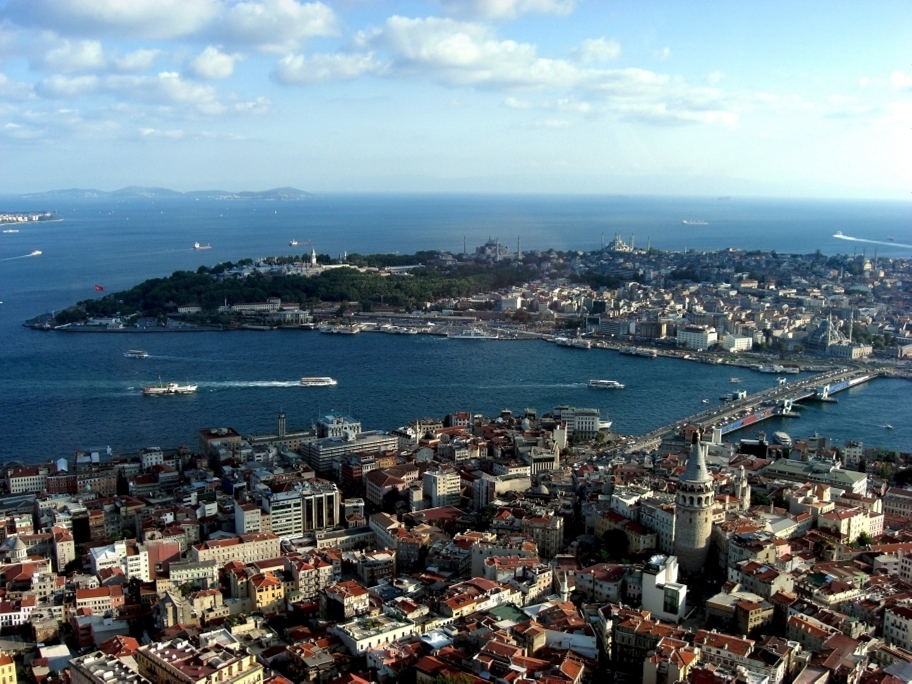
© please put the following link as a backlink in your article: Istanbul Tipps - Picture by Selda Yildiz and Erol Gülsen ., CC BY-SA 3.0 de Resized from original. (This derivative is under the same CC BY-SA license.)
World Heritage Research
Discover scientific research and academic studies that deepen our understanding of Historic Areas of Istanbul from its history and significance to its conservation, management, and contemporary challenges.
-
Changing Approaches of the 1972 Convention’s Stake- holders. Historic Areas of Istanbul, Türkiye
Istanbul's historic areas, inscribed as a UNESCO World Heritage Site (WHS) in 1985, have experienced significant shifts in stakeholder dynamics and governance since their designation. The study reveals that the 1972 Convention has catalyzed a 'supranational' multi-stakeholder approach, elevating local debates to an international platform and imposing new pressures on urban planning and conservation efforts. This paper assesses how the Convention's framework influences national decision-making processes, particularly in the context of Istanbul's urban historic centers. By analyzing state of conservation reports and stakeholder perspectives, it highlights both the impacts and limitations of international regulations in shaping heritage management practices.
Hetemoglu, A., & Tonga-Uriarte, Y. (2023). Changing Approaches of the 1972 Convention’s Stake- holders. Historic Areas of Istanbul, Türkiye. Restauro Archeologico, 30(1). https://doi.org/10.36253/rar-14352
View Publication Record | Read Publication -
Counter-Mapping through Digital Tools as an Approach to Urban History: Investigating the Spatial Condition of Activism
Urban heritage is not static but dynamically shaped by socio-political contexts, offering potential for sustainable development when its evolving meanings are understood. This study reveals that protests in Istanbul's historic areas during the 1960s redefined urban heritage—previously manipulated by an autocratic government—to assert social rights, demonstrating how counter-mapping through digital humanities tools can uncover these processes. By analyzing spatial patterns of activism linked to mid-century urban operations, the research highlights the need for deeper societal context in heritage studies to harness its full potential for democratic and sustainable cities.
Dinler, M. (2021). Counter-Mapping through Digital Tools as an Approach to Urban History: Investigating the Spatial Condition of Activism. Sustainability, 13(16), 8904. https://doi.org/10.3390/su13168904
View Publication Record | Read Publication -
Evaluation of the Conservation Process in Historic Areas of Istanbul in the Context of Rights
The conservation process in Istanbul's historic areas, while aiming to preserve cultural heritage, significantly fails to integrate human rights principles. This research reveals that the current system lacks a rights-based framework, leading to inefficiencies and shortcomings in heritage protection. Through qualitative methods—including in-depth interviews with seven key stakeholder groups (local people, government entities, conservation organizations, professionals, academicians, and investors)—the study identifies 30 indicators where the existing process deviates from rights-based criteria across physical, economic, social, cultural, political, and legal dimensions. The findings underscore that stakeholder preferences and restricted heritage rights are primary barriers to effective conservation, ultimately undermining the success of heritage preservation efforts.
eryazıcıoğlu, e. (2021). Evaluation of the Conservation Process in Historic Areas of Istanbul in the Context of Rights. MEGARON / Yıldız Technical University, Faculty of Architecture E-Journal. https://doi.org/10.14744/megaron.2021.82642
View Publication Record | Read Publication -
Politics of Loss in a World Heritage Site: The Case of the Historic Vegetable Gardens of the Land Walls of Istanbul
Historic vegetable gardens (bostanlar) within the UNESCO World Heritage Site of Istanbul's Land Walls face imminent destruction due to urban renewal pressures, highlighting a critical tension between architectural conservation and cultural landscape preservation. These gardens, integral to local agricultural heritage, are being systematically erased despite efforts by heritage experts to challenge commercial and political imperatives driving urban regeneration. The study reveals that institutional frameworks prioritize monument-focused conservation over culturally sensitive approaches, creating an unsustainable conflict. The fate of these gardens hinges on reconciling these opposing perspectives through negotiation and accommodation.
Aksoy, A., & Kıvılcım Çorakbaş, F. (2021). Politics of Loss in a World Heritage Site: The Case of the Historic Vegetable Gardens of the Land Walls of Istanbul. Heritage & Society, 14(1), 112–138. https://doi.org/10.1080/2159032x.2021.2022917
View Publication Record | Read Publication -
The Role of Heritage Impact Assessment in Safeguarding World Heritage Sites: Application Study on Historic Areas of Istanbul and Giza Pyramids
Heritage Impact Assessment (HIA) emerges as a critical tool for safeguarding World Heritage Sites, balancing preservation with development while mitigating adverse effects. A qualitative study involving interviews with site managers, archaeologists, and governmental bodies in Turkey and Egypt revealed that both the Historic Areas of Istanbul and the Giza Pyramids face significant threats from infrastructure and development projects. The research highlights a pressing need for local expertise in HIA to reduce reliance on foreign experts, as current practices often lack comprehensive mitigation strategies. By applying HIA methodology, stakeholders can make informed decisions that protect heritage integrity while supporting sustainable development.
Yilmaz, Y., & Gamil, R. E. (2018). The Role of Heritage Impact Assessment in Safeguarding World Heritage Sites: Application Study on Historic Areas of Istanbul and Giza Pyramids. Journal of Heritage Management, 3(2), 127–158. https://doi.org/10.1177/2455929619833198
View Publication Record | Read Publication -
Parking Management Policies Based on Behavior Analysis at Fatih District in Istanbul, Turkey
Parking behaviors and policy preferences significantly vary across sub-areas within Fatih District, Istanbul. A study analyzing interview survey data revealed distinct parking patterns, influencing the selection of effective management strategies. Statistical analysis and a discrete choice model identified key factors affecting policy choices, providing actionable insights for urban planners to tailor parking solutions in historic cities with limited space.
Dogru, A., Malaitham, S., Okamura, M., Fukuda, A., & Fukuda, T. (2017). Parking Management Policies Based on Behavior Analysis at Fatih District in Istanbul, Turkey. Transportation Research Procedia, 25, 5205–5219. https://doi.org/10.1016/j.trpro.2018.02.048
View Publication Record | Read Publication -
Riding the storm: ‘new Istanbul’
Istanbul faces a critical urban dilemma where real-estate-driven growth, aimed at global economic expansion and improved living standards, threatens its historic identity, social inclusivity, and ecological balance. This study highlights how the city's transformation into a fragmented megacity—marked by gated communities, residential complexes, and tourist zones—erodes its public character, turning historic districts into mono-functional 'dead spaces.' The research argues that for Istanbul to retain its inclusive, diverse nature, civic actors must develop a new critical politics capable of steering real-estate growth toward the common good. This involves balancing popular support for economic development with the preservation of Istanbul's cultural and social openness, akin to navigating a storm caused by the 'new Istanbul.'
Aksoy, A. (2012). Riding the storm: ‘new Istanbul’. City, 16(1-2), 93–111. https://doi.org/10.1080/13604813.2012.662373
View Publication Record | Read Publication -
The Impact of Neoliberal Policies on Historic Urban Space: Areas of Urban Renewal in Istanbul
Neoliberal urban renewal policies in Istanbul have significantly altered historic urban spaces, prioritizing private capital accumulation over the preservation of cultural heritage and local livelihoods. The 2005 Law on Renewal, which designates areas for redevelopment, has been implemented through four case studies—Sulukule, Tarlabasi, Suleymaniye, and Fener-Balat—revealing how municipalities leverage this framework to dismantle historic housing as 'common public assets.' This shift undermines both local economies and the cultural capital of communities, challenging traditional notions of urban space ownership. The study critically analyzes these processes, highlighting the tension between state-authorized redevelopment and the preservation of Istanbul's historic identity.
Dinçer, İ. (2011). The Impact of Neoliberal Policies on Historic Urban Space: Areas of Urban Renewal in Istanbul. International Planning Studies, 16(1), 43–60. https://doi.org/10.1080/13563475.2011.552474
View Publication Record | Read Publication -
Urban Regeneration and Hegemonic Power Relationships
A powerful urban coalition, dominated by central and local government actors, state institutions, and private-sector entities, has emerged in Turkey since the 2000s, driving neo-liberal urban transformation policies aimed at maximizing land rents and real-estate development. This coalition's influence, bolstered by legal changes and institutional initiatives like those of the Mass Housing Development Administration (TOKİ), has reshaped Istanbul's socio-spatial structure, prioritizing areas with high rent-gaining potential while exerting pressure on squatter housing and historic urban centers inhabited by the urban poor. The study reveals how this hegemonic discourse, supported by developers, landowners, and media, has steered Istanbul toward a vision of international finance, service, and tourism, illustrating broader trends in economic and political spheres.
Türkün, A. (2011). Urban Regeneration and Hegemonic Power Relationships. International Planning Studies, 16(1), 61–72. https://doi.org/10.1080/13563475.2011.552473
View Publication Record | Read Publication -
Searching for a Balance Between Community Needs and Conservation Policies in Historic Neighbourhoods of Istanbul
Recent regeneration efforts in Istanbul's historic neighbourhoods, such as Fetter and Balat (F&B), struggle to balance community needs with conservation policies. This study reveals that while sustainability and community-focused approaches are gaining traction among policymakers, their integration into urban conservation strategies remains limited. By analyzing the regeneration story of F&B, the research identifies key strengths and weaknesses in current conservation-led initiatives, offering critical insights for future sustainable urban development in historic areas. The findings suggest that achieving equilibrium between community aspirations and built environment preservation is essential for equitable and sustainable solutions.
Ercan, M. A. (2010). Searching for a Balance Between Community Needs and Conservation Policies in Historic Neighbourhoods of Istanbul. European Planning Studies, 18(5), 833–859. https://doi.org/10.1080/09654311003651552
View Publication Record | Read Publication