World Heritage Identification Number: 355
World Heritage since: 1986
Category: Natural Heritage
WHE Type: Protected Areas & National Parks
Transboundary Heritage: No
Endangered Heritage: No
Country: 🇧🇷 Brazil
Continent: Americas
UNESCO World Region: Latin America and the Caribbean
Map
Iguaçu National Park: A Natural Wonder of South America
Iguaçu National Park, located in the state of Paraná, Brazil, is a testament to the breathtaking beauty and biodiversity that can be found within South America's vast landscapes. Established in 1939, this expansive protected area spans an impressive 185,262.5 hectares. The park's boundaries encompass a diverse array of ecosystems, from dense rainforests teeming with unique flora and fauna to the thunderous roar of one of the world's most awe-inspiring waterfalls.
The park shares its namesake attraction, the Iguazu Falls, with Iguazú National Park in Argentina. With a height of up to 82 meters, the falls are among the tallest in the world, and their combined width of 2,700 meters makes them one of the widest. The sheer volume of water that flows over the falls creates a spectacle unlike any other, with clouds of mist rising high into the sky and rainbows arcing across the landscape.The falls are formed by the Iguazu River as it plunges into the Iguazu Gorge, creating a series of cascades that stretch for nearly 3 kilometers.
In addition to the falls themselves, Iguaçu National Park is home to a rich and diverse ecosystem. The park is home to numerous rare and endangered species, including the giant otter, jaguar, giant anteater, tapir, and howler monkeys. These animals, along with countless others, have adapted to the unique conditions of the park and play crucial roles in maintaining the delicate balance of its ecosystem. The park's lush vegetation, nourished by the constant mist produced by the falls, provides vital habitat for these animals and supports over 2,000 species of plants, making it a vital center of biodiversity.
The Iguaçu National Park is also of great cultural significance. The indigenous Guaraní people have lived in the region for centuries, and their history and traditions continue to be an integral part of the park's identity. Visitors to the park can learn about the Guaraní way of life through various cultural programs and exhibitions, gaining a deeper understanding of the rich tapestry of human history that has unfolded within the park's boundaries.
In recognition of its outstanding natural beauty and importance to global biodiversity, Iguaçu National Park was designated a UNESCO World Heritage Site in 1986. Today, the park is managed by the Chico Mendes Institute for Biodiversity Conservation (ICMBio), which works tirelessly to preserve and protect the park's unique ecosystems and the myriad species that call them home. Through its efforts, Iguaçu National Park continues to serve as a shining example of what can be achieved when conservation and preservation are prioritized.
To wrap it up, Iguaçu National Park stands as a testament to the breathtaking beauty and biodiversity that can be found within South America's vast landscapes. Its awe-inspiring waterfalls, rich ecosystems, and vibrant cultural heritage make it a must-visit destination for anyone seeking to experience the wonders of nature and the richness of human history. As we continue to face challenges related to climate change and habitat loss, it is more important than ever to support initiatives like those undertaken by Iguaçu National Park, ensuring that these natural treasures are preserved for future generations to enjoy.
UNESCO Description of the World Heritage Site
The park shares with Iguazú National Park in Argentina one of the world’s largest and most impressive waterfalls, extending over some 2,700 m. It is home to many rare and endangered species of flora and fauna, among them the giant otter and the giant anteater. The clouds of spray produced by the waterfall are conducive to the growth of lush vegetation.
UNESCO Justification of the World Heritage Site
Criterion (vii): Iguaçu National Park and its sister World Heritage property Iguazú National Park in Argentina conserve one of the largest and most spectacular waterfalls in the world, comprised of a system of numerous cascades and rapids nearly three kilometers wide within the setting of a lush and diverse sub-tropical broadleaf forest. The permanent water cloud from the cataracts forms an impressive scene that surrounds the forested islands and riverbanks resulting in a visually stunning and constantly changing interface between land and water.
Criterion (x): Iguaçu National Park forms with the contiguous Iguazú National Park in Argentina one of the largest protected remnants of the paranaense subtropical forest, belonging to the interior Atlantic Forest. The rich biodiversity includes some endangered and vulnerable species such as the Jaguar (Panthera onca), the Ocelot (Leopardus tigrinus), the Puma (Puma concolor), the Margay (Leopardus wiedii), the Jaguarondi (Puma yagouaroundi), the Harpy eagle (Harpia harpyja), the giant otter (Pteronura brasiliensis), the black-fronted piping guan (Aburria jacutinga), the Tapir (Tapirus terrestris), the Bush dog (Speothos venaticus), the Pygmy brocket (Mazama nana), the Giant anteater (Myrmecophaga tridactyla), the Monjolo or Surubim of the Iguaçu (Steindachneridion sp), the Piracanjuba (Brycon orbignyanus) and the Fasciated tiger heron (Tigrisoma fasciatum).
Encyclopedia Record: Iguaçu National Park
Iguaçu National Park is a national park in Paraná State, Brazil. It comprises a total area of 185,262.5 hectares and a length of about 420 kilometers (260 mi), 300 kilometers (190 mi) of which are natural borders by bodies of water and the Argentine and Brazilian sides together comprise around 260,000 hectares. Iguaçu National Park was created by federal decree nr. 1035 of 10 January 1939 and became a UNESCO World Heritage Site in 1986. The park is managed by Chico Mendes Institute for Biodiversity Conservation (ICMBio).Additional Site Details
Area: 169,695.9 hectares
Number of Components: 1
(x) — Contains most important habitats for biodiversity
Coordinates: -25.4481472222 , -53.8001444444
IUCN World Heritage Outlook
The 2025 Conservation Outlook on Iguaçu National Park reports the following assessment:
Source: International Union for Conservation of Nature (IUCN) · View assessment
Image
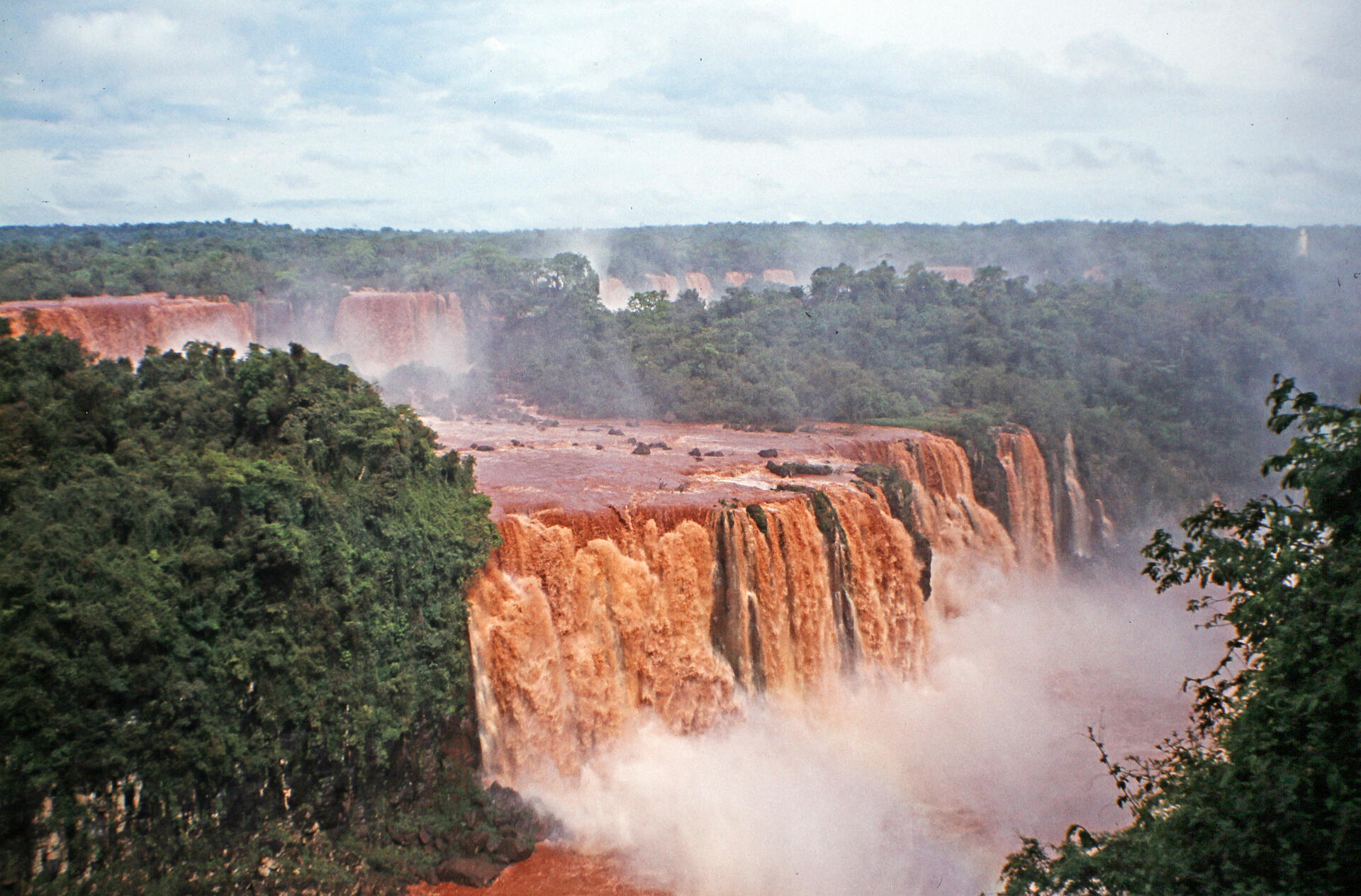
© W. Bulach, CC BY-SA 4.0 Resized from original. (This derivative is under the same CC BY-SA license.)
World Heritage Research
Discover scientific research and academic studies that deepen our understanding of Iguaçu National Park from its history and significance to its conservation, management, and contemporary challenges.
-
Katydids (Orthoptera: Tettigoniidae) from the Iguaçu National Park, Brazil
A comprehensive survey of katydids (Orthoptera: Tettigoniidae) in Iguaçu National Park, Brazil—the largest preserve of the Interior Atlantic Forest—revealed a remarkable diversity of 89 species across five subfamilies. Phaneropterinae emerged as the most speciose group with 57 species, followed by Conocephalinae (22), Meconematinae and Pseudophyllinae (four each), and Pterochrozinae (two). Notably, several species were recorded for the first time in Paraná State, southern Brazil, or even the country. The study also documented calling songs for 34 species, including 29 previously unknown to science, providing new insights into the acoustic behavior of these insects. These findings underscore Iguaçu National Park's critical role in maintaining biodiversity but also highlight the potential catastrophic impacts of ongoing threats on its unique ecosystems.
FIANCO, M., SZINWELSKI, N., & FARIA, L. R. R. (2022). Katydids (Orthoptera: Tettigoniidae) from the Iguaçu National Park, Brazil. Zootaxa, 5136(1), 1–72. https://doi.org/10.11646/zootaxa.5136.1.1
View Publication Record | Read Publication -
Flora of Acanthaceae of Iguaçu National Park, Paraná, Brazil
A comprehensive floristic survey of the Acanthaceae family within Iguaçu National Park, Paraná, Brazil, identified 13 native species across seven genera, with Justicia being the most diverse. Notably, 12 species were recorded for the first time in the park, including eight new to its Semideciduous Seasonal Forest ecosystem. The study also highlighted three threatened species—one vulnerable and two endangered—emphasizing the park's critical role in in-situ conservation. Conducted through monthly collections from August 2015 to July 2016 across key areas, this research integrated fieldwork with herbarium records (UNOP, EVB, HCF, MBM) and virtual databases (Reflora, SpeciesLink), providing botanical illustrations, identification keys, and species descriptions. This work underscores the park's biodiversity significance amid Atlantic Forest ecosystems.
Hammes, J. K., Silva, M. G. d., Kameyama, C., & Temponi, L. G. (2021). Flora of Acanthaceae of Iguaçu National Park, Paraná, Brazil. Rodriguésia, 72. https://doi.org/10.1590/2175-7860202172007
View Publication Record | Read Publication -
Synopsis of Leguminosae from Iguaçu National Park, Paraná, Brazil
A comprehensive survey of the Leguminosae family in Iguaçu National Park, Brazil, identified 63 native species across 40 genera, with notable discoveries including 24 new records for the park and two endemic species to Paraná. The study, conducted through extensive field expeditions and herbarium surveys from April 2018 to May 2019, revealed distinct distributions between Semideciduous Forest (SF) and Araucaria Forest (AF) areas, with five species exclusive to AF and 51 unique to SF. Additionally, two threatened species were documented: Apuleia leiocarpa and Gleditsia amorphoides. The research provides a detailed identification key, illustrations, and geographical distribution insights, contributing significantly to the understanding of Leguminosae biodiversity in this UNESCO World Heritage Site.
RAUBER, C. R., LIMA, L. C. P., CAXAMBU, M. G., & TEMPONI, L. G. (2021). Synopsis of Leguminosae from Iguaçu National Park, Paraná, Brazil. Phytotaxa, 501(2). https://doi.org/10.11646/phytotaxa.501.2.2
View Publication Record | Read Publication -
Synopsis of Rubiaceae from the Iguaçu National Park, Paraná, Brazil
Iguaçu National Park, a significant fragment of Paraná's Inland Atlantic Rainforest, harbors 35 Rubiaceae species across 19 genera. Palicourea and Psychotria dominate with five species each, while Borreria orientalis stands out for its restricted distribution in Brazil, limited to Paraná. The study, conducted through monthly collections from August 2013 to July 2014 and supplemented by sporadic collections until April 2019, reveals distinct species distributions: Foz do Iguaçu and Céu Azul areas host 24 and 22 species respectively, with notable exclusives. Seven species are ubiquitous across both forest formations, while 20 are exclusive to the seasonal semideciduous forest. Manettia tweedieana is identified as endangered, highlighting conservation concerns.
Rauber, C. R., Toderke, M. L., Zini, A. d. S., Lima, L. C. P., Caxambu, M. G., Salas, R. M., Cabral, E. L., & Temponi, L. G. (2021). Synopsis of Rubiaceae from the Iguaçu National Park, Paraná, Brazil. Rodriguésia, 72. https://doi.org/10.1590/2175-7860202172049
View Publication Record | Read Publication -
‘ Candidatus Mycoplasma haematonasua’ and tick‐borne pathogens in ring‐tailed coatis ( Nasua nasua Linnaeus, 1976) from the Iguaçu National Park, Paraná State, southern Brazil
Researchers have identified a novel haemotropic Mycoplasma species, 'Candidatus Mycoplasma haematonasua,' in ring-tailed coatis (Nasua nasua) from the Iguaçu National Park, Brazil. This discovery builds on previous findings of a potentially novel Mycoplasma in coatis from central-western and southern Brazil. The study, involving 18 wild coatis, used conventional PCR assays to detect haemotropic Mycoplasma spp., Theileria/Babesia spp., and Ehrlichia/Anaplasma spp. While only one coati tested positive for Ehrlichia/Anaplasma spp., phylogenetic analysis confirmed the presence of 'Ca. M. haematonasua' in 44.44% of the animals, marking a significant contribution to understanding tick-borne pathogens in this species and their potential implications for wildlife health.
Collere, F. C. M., Delai, R. M., Ferrari, L. D. R., da Silva, L. H., Fogaça, P. L. C., Rodrigues, A. N., Gonçalves, D. D., Baggio, R. A., Moraes, M. F. D., Lux Hoppe, E. G., André, M. R., Vieira, T. S. W. J., & Vieira, R. F. C. (2021). ‘ Candidatus Mycoplasma haematonasua’ and tick‐borne pathogens in ring‐tailed coatis ( Nasua nasua Linnaeus, 1976) from the Iguaçu National Park, Paraná State, southern Brazil. Transboundary and Emerging Diseases, 68(6), 3222–3229. Portico. https://doi.org/10.1111/tbed.14311
View Publication Record | Read Publication -
Effect of Environmental Variables in the Distribution of Tree Species in the Iguaçu National Park
A study on the Iguaçu National Park reveals that tree species distribution is significantly influenced by environmental variables such as altitude, humidity, soil fertility, aluminum saturation, and clay content. Using Canonical Correspondence Analysis (CCA), researchers identified specific patterns in how these factors shape vegetation across the park's diverse landscapes, ranging from riverbanks to plateau regions at altitudes between 150 and 750 meters. Notably, some species demonstrated tolerance to environmental variations, a trait common among widely distributed species. This finding underscores the importance of considering multiple environmental variables for efficient forest management and conservation efforts in degraded areas.
Souza, R. F., Machado, S. A., Galvão, F., & Figueiredo Filho, A. (2018). EFFECT OF ENVIRONMENTAL VARIABLES IN THE DISTRIBUTION OF TREE SPECIES IN THE IGUAÇU NATIONAL PARK. Revista Árvore, 41(6). https://doi.org/10.1590/1806-90882017000600009
View Publication Record | Read Publication -
Forests of the Iguaçu National Park: Structure, Composition, and Richness
A phytosociological survey of Iguaçu National Park's arboreal vegetation reveals a rich biodiversity with 218 species across 54 families and 135 genera, highlighting the park's advanced ecological succession. Euterpe edulis Mart. emerged as the most frequent species, alongside Aspidosperma polyneuron Müll. Arg., defining seasonal forests in central and southern regions. In contrast, the northern region, at 700 meters above sea level, showcased a transitional environment with Araucaria angustifolia (Bertol.) Kuntze and Ilex paraguariensis A. St.-Hil., blending seasonal and ombrophillous forest characteristics. This study addresses a significant gap in scientific knowledge by characterizing the park's forest ecology after seven and a half decades, providing critical insights for conservation efforts.
Souza, R. F., Machado, S. d. A., Galvão, F., Figueiredo Filho, A., & Picoli, A. C. (2018). Forests of the Iguaçu National Park: Structure, Composition, and Richness. Floresta E Ambiente, 26(1). https://doi.org/10.1590/2179-8087.026715
View Publication Record | Read Publication -
New species of Endecous (Grylloidea, Phalangopsidae, Luzarinae) from the Iguaçu National Park (Brazil), including bioacoustics, cytogenetic and distribution data
Researchers have identified two new species of cavicolous-straminicolous crickets, Endecous chape and E. naipi, inhabiting the Atlantic Semideciduous Forest within Iguaçu National Park, Brazil. These sympatric species were distinguished through morphological analysis, focusing on male genitalia and tegmina. Additionally, the study provides bioacoustics data for E. chape, including its calling song, and cytogenetic insights, contributing to the understanding of the genus Endecous. A distribution map for the species is also presented, enhancing knowledge of their geographic range. The findings are deposited in collections at the Museu de Zoologia da Universidade de São Paulo (MZSP) and Universidade Estadual Paulista—UNESP.
SOUZA-DIAS, P. G. B., SZINWELSKI, N., FIANCO, M., OLIVEIRA, E. C. D., MELLO, F. D. A. G. D., & ZEFA, E. (2017). New species of Endecous (Grylloidea, Phalangopsidae, Luzarinae) from the Iguaçu National Park (Brazil), including bioacoustics, cytogenetic and distribution data. Zootaxa, 4237(3). https://doi.org/10.11646/zootaxa.4237.3.2
View Publication Record | Read Publication -
White-lipped peccaries are recorded at Iguaçu National Park after 20 years
After two decades of absence, white-lipped peccaries (WLP), the most endangered ungulate in the Neotropics, have been recorded again within Iguaçu National Park (INP). This rediscovery, following confirmed reports of local extinction in the mid-1990s and subsequent surveys throughout the 2000s, suggests a potential population recovery, likely due to emigration from surrounding areas. The study highlights the critical need for urgent conservation measures to re-establish WLP populations and restore their ecological role within the park's ecosystem.
Brocardo, C. R., da Silva, M. X., Delgado, L. E. d. S., & Galetti, M. (2017). White-lipped peccaries are recorded at Iguaçu National Park after 20 years. Mammalia, 81(5). https://doi.org/10.1515/mammalia-2016-0049
View Publication Record | Read Publication -
Diet and ecomorphological relationships of an endemic, species-poor fish assemblage in a stream in the Iguaçu National Park
A study of the fish assemblage in Iguaçu National Park reveals that low species richness does not lead to broader trophic niches or the absence of key ecomorphotypes. Researchers analyzed the diet and morphology of seven endemic fish species, finding low diet overlap and distinct ecomorphological traits, suggesting niche partitioning even in species-poor environments. The study used quarterly electrofishing sampling from 2011 to 2012, analyzing stomach contents and body morphology through PCA, with a partial Mantel test confirming the independence of diet and morphology from phylogeny.
Neves, M. P., Delariva, R. L., & Wolff, L. L. (2015). Diet and ecomorphological relationships of an endemic, species-poor fish assemblage in a stream in the Iguaçu National Park. Neotropical Ichthyology, 13(1), 245–254. https://doi.org/10.1590/1982-0224-20140124
View Publication Record | Read Publication -
Population Structure of Araucaria angustifolia in the Iguaçu National Park
Iguaçu National Park serves as a critical conservation remnant for Araucaria angustifolia, with its population structure exhibiting a standard inverted-J pattern, indicative of healthy regeneration. The study found that regenerating individuals predominantly display an aggregated distribution, while juveniles, males, and females show a uniform pattern. Regeneration is more effective in shaded environments, as higher frequencies were observed at greater canopy densities. Researchers analyzed 479 individuals across 200 plots, revealing the park's importance for the species' survival amid agricultural encroachment.
Albiero Junior, A., Temponi, L. G., Galvão, F., Botosso, P. C., & Guimarães, A. T. B. (2015). POPULATION STRUCTURE OF Araucaria angustifolia IN THE IGUAÇU NATIONAL PARK. Floresta, 45(2), 361. https://doi.org/10.5380/rf.v45i2.35673
View Publication Record | Read Publication -
Biomass and Carbon in Non-Woody Vegetation, Dead Wood and Litter in Iguaçu National Park
Iguazu National Park (INP) stores significant carbon in its non-woody vegetation, dead wood, and litter. A 2004 study found that the Seasonal Semideciduous Forest (FES) contributes 8.29 tC/ha (30.41 tCO₂e/ha), while the Araucaria Forest (AF) holds 4.94 tC/ha (18.12 tCO₂e/ha). Carbon stocks varied by material type, with litter and large-diameter dead wood (WD4) accounting for the highest carbon fractions (36.2–42.1%). While no significant differences in carbon content were found between forest types, statistically significant variations existed among different carbon pools (p < 0.05). These findings underscore the importance of including non-woody biomass and dead wood in forest carbon assessments to accurately estimate total ecosystem carbon stocks.
Sanquetta, C. R., Corte, A. P. D., Pinto, C., & Melo, L. A. N. (2014). BIOMASS AND CARBON IN NON-WOODY VEGETATION, DEAD WOOD AND LITTER IN IGUAÇU NATIONAL PARK. Floresta, 44(2), 185. https://doi.org/10.5380/rf.v44i2.26500
View Publication Record | Read Publication -
Diatoms (Bacillariophyceae) of Iguaçu National Park, Foz do Iguaçu, Brazil
A comprehensive inventory of diatom species (Bacillariophyceae) in Iguaçu National Park, Brazil, revealed 120 taxa, including 36 new records for the region. This study significantly expands the known diversity of freshwater diatoms in this UNESCO World Heritage Site, highlighting the ecological richness of its aquatic ecosystems. Researchers employed a combination of light and scanning electron microscopy to analyze samples collected from various water bodies within the park. The findings underscore the importance of Iguaçu National Park as a biodiversity hotspot and provide crucial baseline data for future conservation efforts.
Bartozek, E. C. R., Bueno, N. C., Ludwig, T. A. V., Tremarin, P. I., Nardelli, M. S., & Rocha, A. C. R. d. (2013). Diatoms (Bacillariophyceae) of Iguaçu National Park, Foz do Iguaçu, Brazil. Acta Botanica Brasilica, 27(1), 108–123. https://doi.org/10.1590/s0102-33062013000100012
View Publication Record | Read Publication -
Seasonal variation of the phytoplankton community structure in the São João River, Iguaçu National Park, Brazil
A study of the São João River, a tributary of the Iguaçu River within Iguaçu National Park, Brazil, revealed significant seasonal and spatial variations in phytoplankton community structure. Over an annual cycle (August 2008 to July 2009), 221 taxa were identified, with Bacillariophyceae dominating both in density and biovolume. Detrended Correspondence Analysis (DCA) highlighted distinct differences between seasons and sampling sites, driven primarily by limnological factors such as temperature, transparency, and nutrient availability. While temporal heterogeneity was observed in diversity indexes and evenness, spatial similarity persisted due to the proximity of study stations and unidirectional flow characteristics typical of lotic environments.
Bortolini, JC., & Bueno, NC. (2013). Seasonal variation of the phytoplankton community structure in the São João River, Iguaçu National Park, Brazil. Brazilian Journal of Biology, 73(1), 1–14. https://doi.org/10.1590/s1519-69842013000100002
View Publication Record | Read Publication