World Heritage Identification Number: 754
World Heritage since: 1996
Category: Natural Heritage
WHE Type: Natural Landscapes & Geographic Features
Transboundary Heritage: No
Endangered Heritage: No
Country: 🇷🇺 Russian Federation
Continent: Europe
UNESCO World Region: Europe and North America
Map
Lake Baikal: The Oldest and Deepest Freshwater Lake on Earth
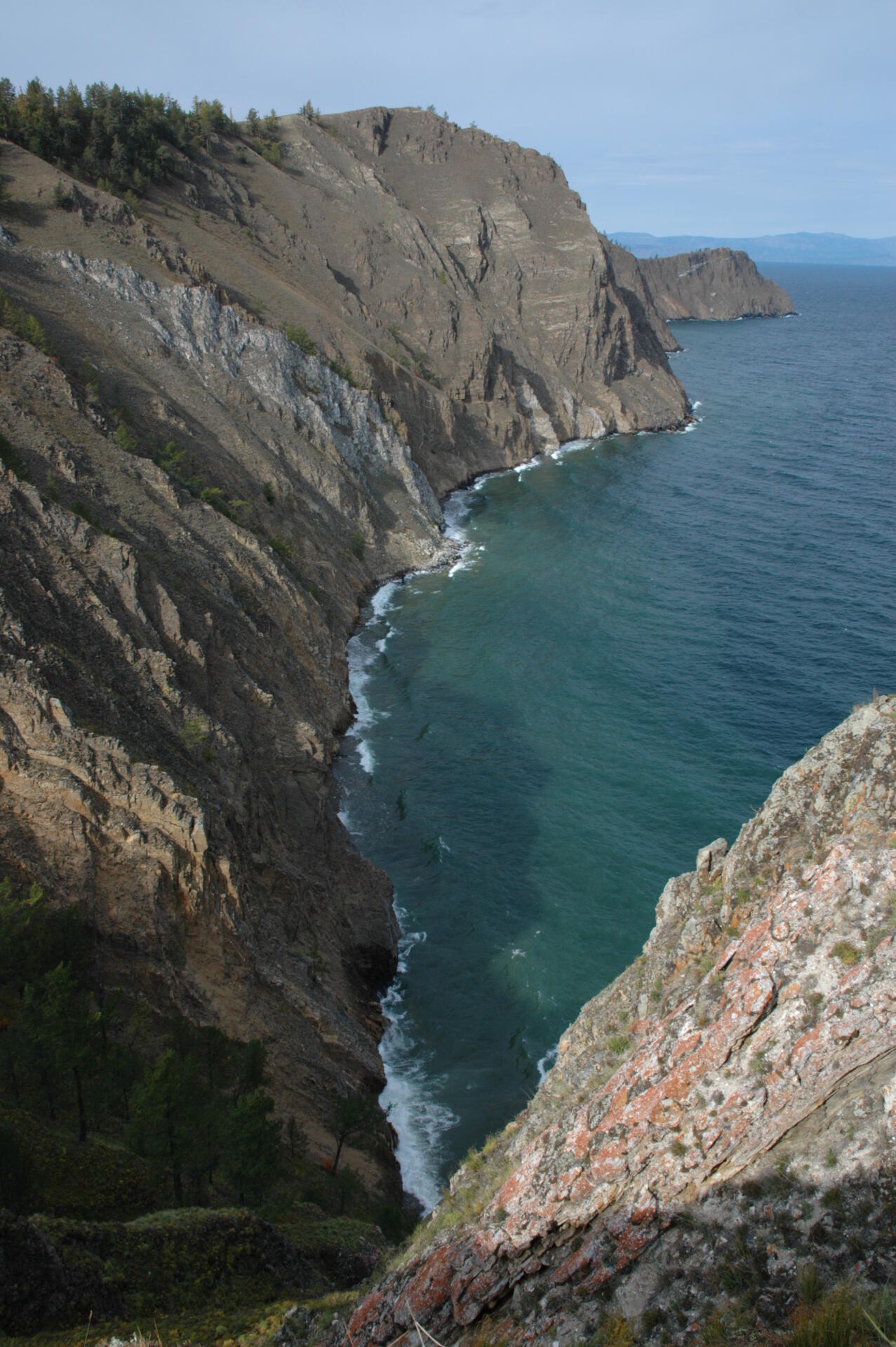
Lake Baikal, located in southern Siberia, Russia, stands as a testament to the wonders of nature and geological history. Inscribed as a UNESCO World Heritage Site in 1996, this vast expanse of water holds significant importance for its unique characteristics and rich biodiversity.
Covering about 31,500 square kilometers, an area roughly the size of Belgium, Lake Baikal is the oldest freshwater lake in the world, with an estimated age of around 25 million years. It is also the largest freshwater lake by volume, containing roughly 20 percent of the world’s unfrozen freshwater reserves, making it an invaluable natural reservoir of global importance.
Lake Baikal reaches a maximum depth of about 1,700 meters, a result of its formation within the Baikal Rift Zone, an active continental rift where the Eurasian Plate is gradually pulling apart, particularly along the Amur microplate. This ongoing tectonic activity has created a deep, elongated basin that continues to evolve today.
Baikal's isolation, unique location and age have contributed to the development of an exceptionally diverse and unusual freshwater ecosystem. Often referred to as the "Galapagos of Russia," the lake hosts thousands of plant and animal species, more than half of which are endemic. Notable examples include the Baikal seal (nerpa)—the only exclusively freshwater seal species in the world—the golomyanka, and the Baikal omul, a fish found nowhere else on Earth.
Baikal’s biodiversity also extends to its microscopic life. Endemic planktonic organisms such as the Baikal epischura, a tiny crustacean, play a crucial role in filtering the water and maintaining its exceptional clarity. Diverse algae species, and microorganisms like the Baikal water flea and the Baikal cyclops form the foundation of the lake’s food web and contribute to the overall health and stability of its ecosystem.
The exceptional value of Lake Baikal to evolutionary science lies in its isolated and ancient environment. This isolation has allowed unique adaptations to occur among its inhabitants, offering valuable insights into the processes of speciation and evolution. Furthermore, the study of these organisms can provide clues about the early stages of life on Earth and help scientists better understand the potential for life elsewhere in the universe.
Overall, Lake Baikal represents a remarkable example of the beauty and complexity of our planet's natural world. Its age, depth, and unique biodiversity make it an irreplaceable treasure for humanity, offering opportunities for scientific discovery, ecotourism, and cultural enrichment. As knowledge of this extraordinary lake continues to grow, it serves as a powerful reminder of the importance of preserving and protecting the planet’s most precious natural resources.
UNESCO Description of the World Heritage Site
Situated in south-east Siberia, the 3.15-million-ha Lake Baikal is the oldest (25 million years) and deepest (1,700 m) lake in the world. It contains 20% of the world's total unfrozen freshwater reserve. Known as the 'Galapagos of Russia', its age and isolation have produced one of the world's richest and most unusual freshwater faunas, which is of exceptional value to evolutionary science.
UNESCO Justification of the World Heritage Site
The Committee inscribed Lake Baikal as the most outstanding example of a freshwater ecosystem on the basis of natural criteria (vii), (viii), (ix) and (x). It is the oldest and deepest of the world´s lakes containing nearly 20% of the world´s unfrozen freshwater reserve. The lake contains an outstanding variety of endemic flora and fauna, which is of exceptional value to evolutionary science. It is also surrounded by a system of protected areas that have high scenic and other natural values. The Committee took note of the confirmation of the revised boundaries of the site, which correspond to the core areas defined in the Baikal Law (excluding the five urban developed areas). It also noted that the special Lake Baikal Law is now in its second reading in the Duma. Finally, it noted concern over a number of integrity issues including pollution, which should be brought to the attention of the Russian authorities.
Encyclopedia Record: Lake Baikal
Lake Baikal is a rift lake and the deepest lake in the world. It is situated in southern Siberia, Russia between the federal subjects of Irkutsk Oblast to the northwest and the Republic of Buryatia to the southeast.Additional Site Details
Area: 8,800,000 hectares
Number of Components: 1
(viii) — Outstanding example representing major earth stages
(ix) — Outstanding example representing ecological and biological processes
(x) — Contains most important habitats for biodiversity
Coordinates: 53.17361111 , 107.6625
IUCN World Heritage Outlook
The 2025 Conservation Outlook on Lake Baikal reports the following assessment:
Source: International Union for Conservation of Nature (IUCN) · View assessment
World Heritage Research
Discover scientific research and academic studies that deepen our understanding of Lake Baikal from its history and significance to its conservation, management, and contemporary challenges.
-
LANDSCAPE AND ECOLOGICAL FOUNDATIONS OF BIODIVERSITY ON BAIKAL SIBERIA SPECIALLY PROTECTED NATURAL AREAS
A comprehensive landscape and ecological analysis of 45 protected areas in Baikal Siberia reveals significant gaps in biodiversity conservation, particularly in forest-steppe and steppe regions. While 68.8% of these areas are concentrated in the Russian part of the Baikal Lake basin, with a mix of Nature Reserves (11.1%), National Parks (6.7%), and Wildlife Reserves (51.1%), only 8.9% are located in Mongolia. The study highlights an uneven distribution of protected territories, with critical ecosystems like mountain-taiga and forest-steppe landscapes underrepresented outside high-altitude belts around Baikal Lake. It underscores the urgent need to expand the network of protected areas to include ecotonic zones and heterogeneous landscapes, as proposed for the 'Selenginskaya Dauria' Steppe Reserve. This approach is essential for preserving the ecological diversity of Baikal Siberia, aligning with federal development plans.
ERDENI N. YELAYEV. (2026). LANDSCAPE AND ECOLOGICAL FOUNDATIONS OF BIODIVERSITY ON BAIKAL SIBERIA SPECIALLY PROTECTED NATURAL AREAS. Zenodo. https://doi.org/10.5281/ZENODO.18581124
View Publication Record | Read Publication -
Deep-Underwater Cherenkov Detector in Lake Baikal
A deep-underwater Cherenkov detector, Baikal-CVD, has been successfully deployed in Lake Baikal since 2016, marking a significant advancement in neutrino astronomy. This 1-km³-scale telescope, the largest of its kind in the Northern Hemisphere, is composed of modular clusters that enable scientific research even during early development stages. By 2021, it comprised eight clusters with 2304 optical modules, offering unprecedented capabilities for detecting high-energy neutrinos. The study highlights the detector's data acquisition system and addresses engineering challenges associated with deep-underwater operations. Initial results demonstrate its potential for groundbreaking discoveries in particle physics, particularly in studying cosmic neutrinos.
Avrorin, A. V., Avrorin, A. D., Ayinutdinov, V. M., Allakhverdyan, V. A., Banash, P., Bardachova, Z., Belolaptikov, I. A., Borina, I. V., Brudanin, V. B., Budnev, N. M., Gafarov, A. R., Golubkov, K. V., Gorshkov, N. S., Gres’, T. I., Dwornitski, R., Dzhilkibaev, Zh.-A. M., Dik, V. Ya., Domogatskii, G. V., Doroshenko, A. A., et al. (2022). Deep-Underwater Cherenkov Detector in Lake Baikal. Journal of Experimental and Theoretical Physics, 134(4), 399–416. https://doi.org/10.1134/s1063776122040148
View Publication Record | Read Publication -
Industrial and wildfire aerosol pollution over world heritage Lake Baikal
Aerosol pollution from industrial emissions and wildfires significantly impacts the UNESCO World Heritage Site Lake Baikal, threatening its unique ecosystem. The study, conducted during a July 2018 expedition, reveals that fine particle numbers, PM10, and black carbon (BC) mass concentrations are elevated due to industrial activities in Krasnoyarsk and Irkutsk regions, as well as wildfires from the Republic of Yakutia. Highest pollution levels were observed near harbor and touristic areas, with residential biomass burning contributing to the problem. Lidar sounding and meteorological observations provided insights into aerosol optical properties, including scattering, spectral absorption, and Absorption Angstrom Exponent (AAE), indicating varying pollution sources. The research underscores the severe ecological impact of aerosol deposition on Lake Baikal's pristine environment.
Popovicheva, O., Molozhnikova, E., Nasonov, S., Potemkin, V., Penner, I., Klemasheva, M., Marinaite, I., Golobokova, L., Vratolis, S., Eleftheriadis, K., & Khodzher, T. (2021). Industrial and wildfire aerosol pollution over world heritage Lake Baikal. Journal of Environmental Sciences, 107, 49–64. https://doi.org/10.1016/j.jes.2021.01.011
View Publication Record | Read Publication -
Human impact and ecosystemic health at Lake Baikal
Despite its global recognition as a UNESCO World Heritage Site, Lake Baikal faces mounting threats to its ecosystemic health due to human activities and climate change. While the lake's deep waters remain pristine, shallow coastal zones near settlements and industrial sites are experiencing significant degradation, impacting water quality and biodiversity. The study highlights that political, economic, and social factors contribute to cascading environmental consequences, including pollution sinks, water level management challenges, and forest maintenance issues. These pressures threaten the survival of Lake Baikal's unique endemic species and its ecological integrity. The research underscores the urgent need for effective conservation strategies to mitigate these risks and preserve this ancient and irreplaceable ecosystem.
Brown, K. P., Gerber, A., Bedulina, D., & Timofeyev, M. A. (2021). Human impact and ecosystemic health at Lake Baikal. WIREs Water, 8(4). Portico. https://doi.org/10.1002/wat2.1528
View Publication Record | Read Publication -
Neutrino Telescope in Lake Baikal: Present and Nearest Future
The Baikal Gigaton Volume Detector (Baikal-GVD), the largest neutrino telescope in the Northern Hemisphere, is making significant strides in the search for high-energy neutrinos—elusive particles whose cosmic sources remain unidentified. Currently operational with 2000 optical modules arranged on 64 strings, covering an effective volume of 0.4 km³, Baikal-GVD detects cascades with energies above 100 TeV. This summary reviews the scientific rationale behind the detector, its construction progress, and preliminary findings from the partially built experiment. As the telescope continues to expand, it promises to deepen our understanding of neutrino astrophysics and potentially uncover the origins of these high-energy particles.
Belolaptikov, I., Allakhverdyan, V. A., Avrorin, А. D., Avrorin, A. V., Aynutdinov, V. M., Bannasch, R., Bardаčová, Z., Belolaptikov, I. A., Borina, I. V., Brudanin, V., Budnev, N. M., Dik, V. Y., Domogatsky, G. V., Doroshenko, A. A., Dvornicky, R., Dyachok, A. N., Dzhilkibaev, Zh.-A. M., Eckerová, E., Elzhov, T. V., et al. (2021). Neutrino Telescope in Lake Baikal: Present and Nearest Future. Proceedings of 37th International Cosmic Ray Conference — PoS(ICRC2021), 2. https://doi.org/10.22323/1.395.0002
View Publication Record | Read Publication -
Wildfires as a Source of PAHs in Surface Waters of Background Areas (Lake Baikal, Russia)
Wildfires significantly elevate polycyclic aromatic hydrocarbons (PAHs) in Lake Baikal's surface waters, with concentrations spiking to 610 ng/L during extreme events like the 2016 fires. The study identified ten PAHs—including naphthalene and phenanthrene—in samples from various depths and tributaries, confirming wildfires as a major source through atmospheric transport analysis and satellite data. Total PAH concentrations (ΣPAHs) ranged widely (9.3–160 ng/L), with seasonal peaks linked to fire activity. Toxicity assessments indicated moderate ecological risk for biota, underscoring the need for monitoring in pristine environments like Lake Baikal.
Gorshkov, A. G., Izosimova, O. N., Kustova, O. V., Marinaite, I. I., Galachyants, Y. P., Sinyukovich, V. N., & Khodzher, T. V. (2021). Wildfires as a Source of PAHs in Surface Waters of Background Areas (Lake Baikal, Russia). Water, 13(19), 2636. https://doi.org/10.3390/w13192636
View Publication Record | Read Publication -
Changing nutrient cycling in Lake Baikal, the world’s oldest lake
A dramatic increase in nutrient supply from deep waters to the photic zone of Lake Baikal has been observed since the mid-19th century, driven by changing wind dynamics and reduced ice cover. This shift, analyzed through silicon isotope composition in diatoms—the dominant primary producers—highlights the impact of climate change on the lake's biogeochemical cycling. The study also notes growing threats from untreated sewage and catchment development near the shore, raising concerns about the resilience of this highly endemic ecosystem, recognized as a UNESCO World Heritage Site for its unique biodiversity.
Swann, G. E. A., Panizzo, V. N., Piccolroaz, S., Pashley, V., Horstwood, M. S. A., Roberts, S., Vologina, E., Piotrowska, N., Sturm, M., Zhdanov, A., Granin, N., Norman, C., McGowan, S., & Mackay, A. W. (2020). Changing nutrient cycling in Lake Baikal, the world’s oldest lake. Proceedings of the National Academy of Sciences, 117(44), 27211–27217. https://doi.org/10.1073/pnas.2013181117
View Publication Record | Read Publication