World Heritage Identification Number: 1621
World Heritage since: 2023
Category: Cultural Heritage
WHE Type: Archaeological Sites
Transboundary Heritage: No
Endangered Heritage: No
Country: 🇲🇳 Mongolia
Continent: Asia
UNESCO World Region: Asia and the Pacific
Map
Exploring the Enigmatic Deer Stone Monuments and Related Bronze Age Sites
The Deer Stone Monuments and Related Bronze Age Sites, inscribed as a UNESCO World Heritage Site in 2023, offer a captivating glimpse into the rich cultural history of Central Asia during the Bronze Age. These intriguing megaliths, primarily found in Mongolia (with similar examples known from adjacent regions of Siberia outside the World Heritage property), provide valuable insights into the lives, beliefs, and artistic expressions of the nomadic societies that inhabited this vast expanse around three thousand years ago.
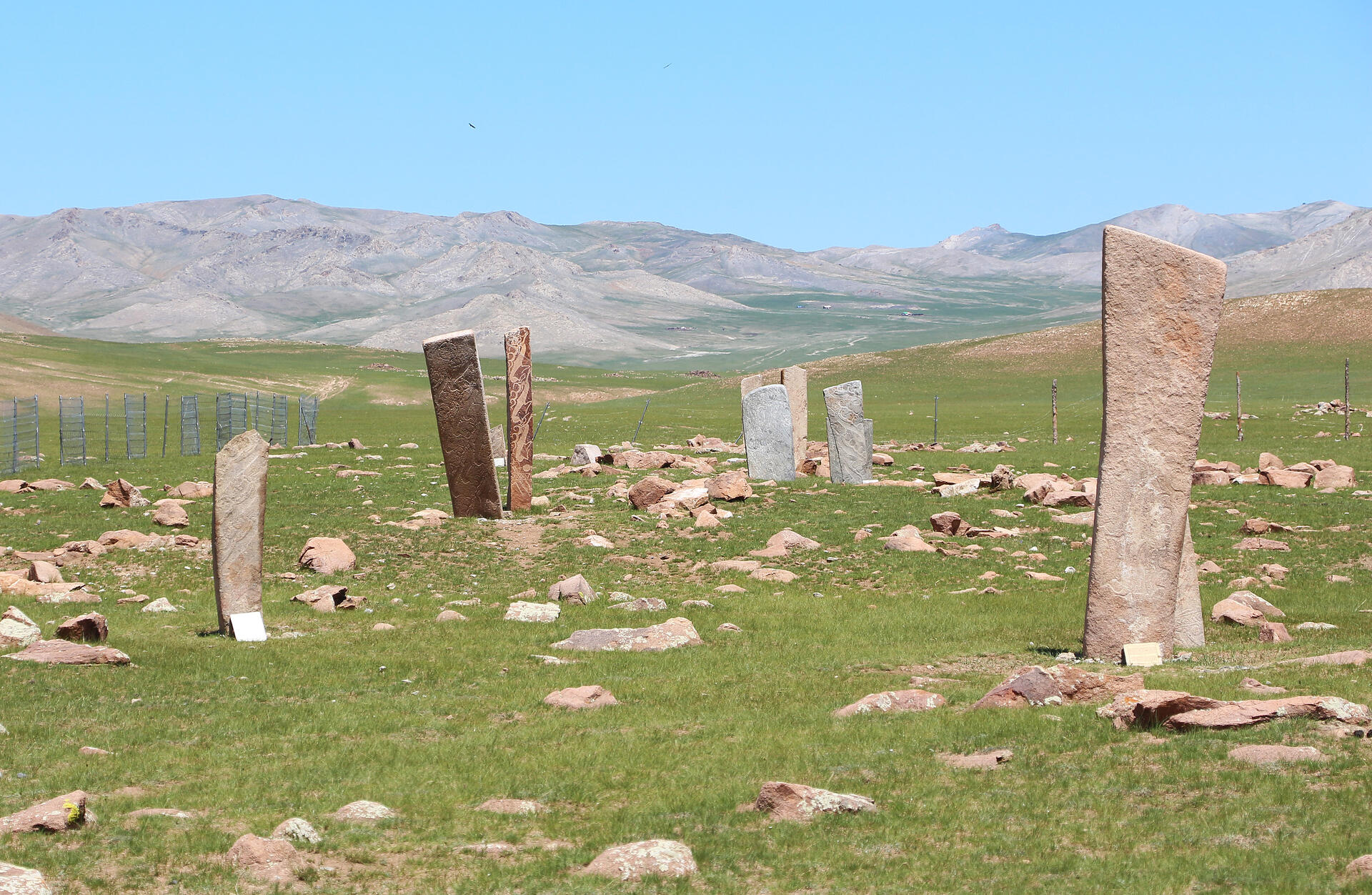
The Deer Stones, also known as the Deer Stone–Khirgisüür Complex (DSKC), derive their name from the distinctive carvings adorning their surfaces—most notably stylized representations of deer or stags, often depicted as if flying. These monoliths, ranging from one to four meters in height, are typically embedded directly into the ground, either as solitary standing stones or in clusters. They are invariably situated within complexes that include large burial mounds known as khirgisüürs, as well as associated ritual features such as stone circles and sacrificial altars.
While deer stones are found throughout Mongolia, the World Heritage property specifically protects four component sites: Khoid Tamir, Jargalantyn Am, Urtyn Bulag, and Uushigiin Övör. Together, these locations preserve a representative selection of some of the most elaborately decorated and well-preserved deer stones. Modern surveys estimate that about 1,500 deer stones have been discovered across the Eurasian steppe, with over 80% located in Mongolia.
The deer stones are considered the most significant remnants of the Eurasian Bronze Age cultures that flourished and eventually vanished between the second and first millennia BCE. Their engravings exhibit a remarkable level of stylization and symbolism, suggesting a sophisticated understanding of visual language among these early steppe societies.
One of the most fascinating aspects of the deer stones is the diversity of their motifs. While deer are indeed predominant, some stones also display other symbolic elements, including representations of animals, weapons, belts, and abstract or geometric forms. Together, these motifs contribute to the complexity and richness of the monuments’ iconography.
The exact purpose of the deer stones remains a subject of scholarly debate. Many researchers interpret them as ceremonial or commemorative monuments, possibly connected to funerary rites, ancestor veneration, or cosmological beliefs. Their close spatial association with khirgisüür burial mounds strongly suggests a ritual function, although the precise nature of their role within Bronze Age belief systems is still not fully understood.
Archaeological excavations have revealed that deer stone complexes form part of broader ritual and funerary landscapes, including extensive cemeteries, horse remains, and evidence of repeated ceremonial activity. These findings offer valuable insights into the social organization, ritual practices, and technological capabilities of the nomadic communities that created these monuments.
Genetic studies have also contributed to our understanding of the deer stone culture. Analysis of DNA samples from skeletal remains has provided evidence of migration patterns, kinship structures, and genetic continuity across time and space. This information helps us piece together the broader narrative of human history in the region.
In summary, the Deer Stone Monuments and Related Bronze Age Sites offer a unique window into the past, providing tantalizing glimpses into the lives, beliefs, and artistic expressions of the nomadic societies that once roamed the steppes of Central Asia. Continued research into these enigmatic artifacts, deepens our appreciation of early steppe cultures and highlights the enduring power of symbolism, ritual, and shared tradition in human history.
UNESCO Description of the World Heritage Site
Located on the slopes of the Khangai Ridge in central Mongolia, these deer stones were used for ceremonial and funerary practices. Dating from about 1200 to 600 BCE, they stand up to four metres tall and are set directly in the ground as single standing stones or in groups, and are almost always located in complexes that include large burial mounds called khirgisüürs and sacrificial altars. Covered with highly stylized or representational engravings of stags, deer stones are the most important surviving structures belonging to the culture of Eurasian Bronze Age nomads that evolved and then slowly disappeared between the 2nd and 1st millennia BCE.UNESCO Justification of the World Heritage Site
Criterion (i): The Deer Stone Monuments are of exceptional beauty and cultural significance and are masterworks of Late Bronze Age culture. They constitute an outstanding example of Bronze Age megalithic monumental art of the highest quality, demonstrating the artistic vitality and creative genius of human achievement in prehistoric times. They demonstrate an extraordinary variety in their ornamentation, yet all featuring the imagery of a great antlered stag.
Criterion (iii): The Deer Stone Monuments and Related Sites provide an exceptional testimony to the culture of Eurasian Bronze Age nomads, which had evolved and disappeared slowly from the 2nd to the 1st millennia BCE. In their landscape settings, they are testimony to the ceremonial and funeral practices of these peoples.
Encyclopedia Record: Deer stones culture
Deer stones, sometimes called the Deer stone-khirigsuur complex (DSKC), in reference to neighbouring khirigsuur tombs, are ancient megaliths carved with symbols found mainly in Mongolia and, to a lesser extent, in the adjacent areas in Siberia. 1,300 of the 1,500 deer stones found so far are located in Mongolia. The name comes from their carved depictions of flying deer. The "deer stones culture" relates to the lives and technologies of the late Bronze Age peoples associated with the deer stone complexes, as informed by archaeological finds, genetics, and the content of deer stone art.Additional Site Details
Area: 9,768.87 hectares
Number of Components: 4
(iii) — Unique or exceptional testimony to a cultural tradition
Coordinates: 47.7427777778 , 101.2258333333