World Heritage Identification Number: 801
World Heritage since: 1997
Category: Natural Heritage
WHE Type: Protected Areas & National Parks
Transboundary Heritage: No
Endangered Heritage: Yes
Country: 🇰🇪 Kenya
Continent: Africa
UNESCO World Region: Africa
Map
Exploring the Rich Biodiversity and Paleontological Significance of Lake Turkana National Parks
The Lake Turkana National Parks, a collection of three protected areas situated around the shores of Lake Turkana in Kenya, offer a captivating blend of natural beauty, biodiversity, and historical significance that has earned them a place on the prestigious UNESCO World Heritage List since 1997. This expansive region encompasses Sibiloi National Park and two islands within the lake itself – Central Island and South Island.
More to come…UNESCO Description of the World Heritage Site
The most saline of Africa's large lakes, Turkana is an outstanding laboratory for the study of plant and animal communities. The three National Parks serve as a stopover for migrant waterfowl and are major breeding grounds for the Nile crocodile, hippopotamus and a variety of venomous snakes. The Koobi Fora deposits, rich in mammalian, molluscan and other fossil remains, have contributed more to the understanding of paleo-environments than any other site on the continent.
UNESCO Justification of the World Heritage Site
Criterion (viii): The geology and fossil record represents major stages of earth history including records of life represented by hominid discoveries, presence of recent geological process represented by volcanic erosional and sedimentary land forms. This property’s main geological features stem from the Pliocene and Holocene periods (4million to 10,000 years old). It has been very valuable in the reconstruction of the paleo-environment of the entire Lake Turkana Basin. The Kobi Fora deposits contain pre-human, mammalian, molluscan and other fossil remains and have contributed more to the understanding of human ancestry and paleo-environment than any other site in the world.
Criterion (x): The property features diverse habitats resulting from ecological changes over time and ranging from terrestrial and aquatic, desert to grasslands and is inhabited by diverse fauna. In situ conservation within the protected areas includes threatened species particularly the reticulated giraffe, lions and gravy zebras and has over 350 recorded species of aquatic and terrestrial birds. The island parks are the breeding habitats of the Nile crocodile, Crocodylus niloticus, the hippopotamus amphibious and several snake species. Furthermore, the lake is an important flyway passage and stopover for palaeartic migrant birds, with the South Island Park also being designated as an important bird area under Birdlife International. The protected area around Lake Turkana provides a large and valuable laboratory for the study of plant and animal communities. Remoteness has preserved the area as a natural wilderness. On the grassy plains yellow speargrass Imperata cylindrica, Commiphora sp., Acacia tortilis, and other acacia species predominate along with A. elatior, desert date Balanites aegyptiaca and doum palm Hyphaene coriacea in sparse gallery woodlands. Salvadora persica bush is found on Central and South Islands. The muddy bays of South Island have extensive submerged beds of Potamogeton pectinatus which shelter spawning fish. The principal emergent macrophytes in the seasonally exposed shallows are the grasses Paspalidium geminatum and Sporobolus spicatus.
Encyclopedia Record: Lake Turkana National Parks
Lake Turkana National Parks is a group of three national parks located around Lake Turkana in Kenya. It was inscribed as a UNESCO World Heritage Site in 1997 and expanded in 2001. Reasons for the park's importance include its use as a stopping point for migratory birds, as a breeding ground for the Nile crocodile, hippopotamus, and snakes. It also contains fossils in the Koobi Fora deposits which are unique in the world. Lake Turkana National Parks consist of Sibiloi National Park and two islands on Lake Turkana.Additional Site Details
Area: 161,485 hectares
Number of Components: 3
(x) — Contains most important habitats for biodiversity
Coordinates: 3.051305556 , 36.50366667
IUCN World Heritage Outlook
The 2025 Conservation Outlook on Lake Turkana National Parks reports the following assessment:
Source: International Union for Conservation of Nature (IUCN) · View assessment
Image
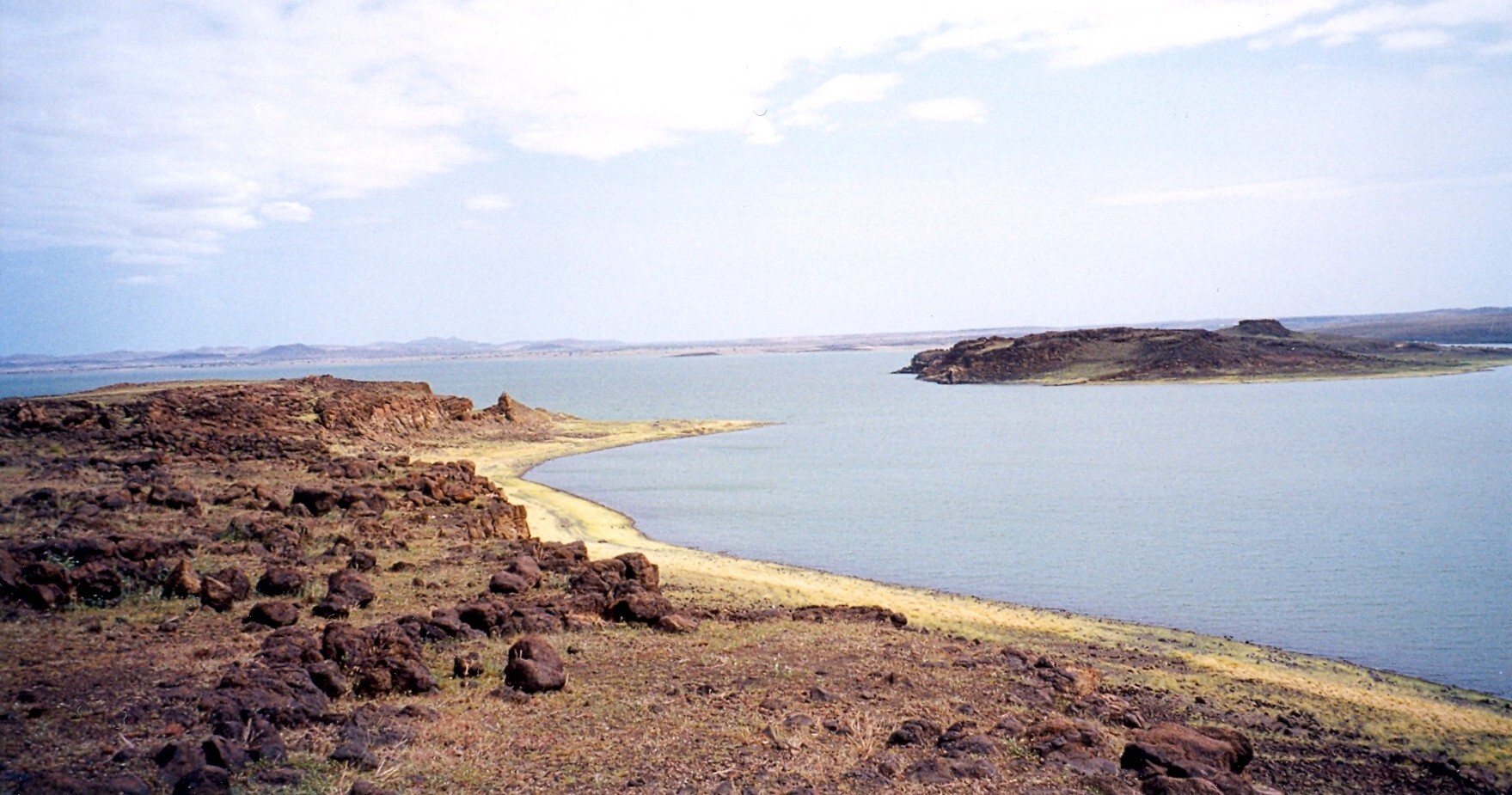
© User:Doron, CC BY-SA 3.0 Resized from original. (This derivative is under the same CC BY-SA license.)
World Heritage Research
Discover scientific research and academic studies that deepen our understanding of Lake Turkana National Parks from its history and significance to its conservation, management, and contemporary challenges.
-
The Practice of Protecting World Natural Heritage Sites in Africa
African nations face significant challenges in protecting UNESCO World Heritage Sites, including insufficient funding and limited human resources for effective management. The study highlights the legal obligations of the World Heritage Committee and examines its approaches to projects like hydroelectric power plants that impact ecosystems, such as Lake Turkana. It identifies a critical need for an international regulatory framework to balance development with environmental preservation. This research offers valuable insights applicable to other regions, including Russia's Lake Baikal, by analyzing African experiences and proposing new strategies for environmental policy.
Kolobov, R. Y., Ganeva, E. O., & Suvorova, A. V. (2022). The Practice of Protecting World Natural Heritage Sites in Africa. Международное Право, (3), 42–53. https://doi.org/10.25136/2644-5514.2022.3.38691
View Publication Record | Read Publication -
Vegetation of the Koobi Fora Region Northeast of Lake Turkana, Marsabit County, Northern Kenya
A comprehensive survey of the Koobi Fora region, northeast of Lake Turkana in northern Kenya, reveals a diverse flora comprising 367 plant species (361 angiosperms) across an area of approximately 2600 km². The study, conducted between 2012 and 2014, documents 137 new plant species for the region, none of which have been recorded in neighboring areas like Marsabit or the lower Omo Valley. Despite similar physiognomic appearances, each region exhibits distinct floristic composition, with only about one-third of angiosperm species shared among them. The vegetation is predominantly grassland and dwarf shrubland, with smaller proportions of shrubland, riparian forest, and woodland. This research highlights the unique botanical richness and endemism of the Koobi Fora region, contributing valuable data for conservation and ecological studies in this UNESCO World Heritage Site.
Mbaluka, J. K., & Brown, F. H. (2016). Vegetation of the Koobi Fora Region Northeast of Lake Turkana, Marsabit County, Northern Kenya. Journal of East African Natural History, 105(1), 21–50. https://doi.org/10.2982/028.105.0101
View Publication Record | Read Publication