
World Heritage Identification Number: 99
World Heritage since: 1979
Category: Mixed Cultural Heritage and Natural Heritage
WHE Type: Cultural Landscapes
Transboundary Heritage: Yes
Endangered Heritage: No
Country: Albania, North Macedonia
Continent: Europe
UNESCO World Region: Europe and North America
Map
The Natural and Cultural Treasures of the Ohrid Region: A Unique Blend of Antiquity and Biodiversity
The Natural and Cultural Heritage of the Ohrid region, inscribed on the UNESCO World Heritage List in 1979, presents a captivating fusion of natural beauty and historical significance that draws visitors from around the globe. This remarkable area encompasses the ancient town of Ohrid, nestled along the picturesque shores of Lake Ohrid, one of Europe's most significant geological wonders.
Lake Ohrid, straddling the border between North Macedonia and Albania, is renowned for its exceptional biodiversity and antiquity. As one of Europe's deepest and oldest lakes, it boasts a unique aquatic ecosystem of global importance, home to over 200 endemic species. These include the Ohrid minnow (Pelasgus minutus), a fish endemic to the Western Balkans, and the critically endangered Ohrid trout (Salmo letnica). The lake's rich biodiversity is further enhanced by its extensive submerged forests, providing vital habitats for various plant and animal species.
Beyond its natural splendor, the Ohrid region offers a wealth of cultural treasures. The ancient town of Ohrid, situated on the lake's shores on the North Macedonia side, is among the oldest human settlements in Europe, with evidence of habitation dating back to prehistoric times. The town's architectural landscape is a testament to its long and storied history, featuring structures built primarily between the 7th and 19th centuries.
One of the most notable landmarks within Ohrid is the St. Pantelejmon Monastery, the oldest Slav monastery in the country. Dating back to the 9th or 10th century, this historic site serves as a sanctuary for numerous Byzantine-style icons, many of which date from the 11th to the 14th century. The town also houses over 800 Byzantine-style icons, showcasing the rich artistic heritage of the region.
Prehistoric pile dwellings, built on stilts in the shallow waters along the lake’s shores, provide insight into the lives of early inhabitants. Additionally, the small Lin Peninsula is home to the remains of an Early Christian church founded in the middle of the 6th century. These archaeological sites provide valuable insights into the region's past, offering a glimpse into the lives of those who came before us.
On the Albanian side of Lake Ohrid, the heritage extends beyond the water: traditional lakeshore villages like Lin and towns like Pogradec, natural springs, wetlands, and karst landscapes — including caves and springs — contribute to the outstanding universal value of the region. In recent years, the UNESCO‑protected zone was extended to include Albania’s portion of the lake, recognizing the lake’s unique biodiversity as well as the intertwined cultural and natural heritage of both shores.
Altogether, the Natural and Cultural Heritage of the Ohrid region stands as a testament to the harmonious coexistence of nature and culture. The breathtaking landscapes of Lake Ohrid and the ancient town of Ohrid offer visitors a unique opportunity to immerse themselves in the rich tapestry of history, art, and natural beauty that defines this extraordinary UNESCO World Heritage Site.
UNESCO Description of the World Heritage Site
A superlative natural phenomenon, Lake Ohrid provides a refuge for numerous endemic species of freshwater fauna and flora dating from the Tertiary period. Situated on the shores of the lake, the town of Ohrid is one of the oldest human settlements in Europe. Built mainly between the 7th and 19th centuries, it has the oldest Slav monastery (St Pantelejmon) and more than 800 Byzantine-style icons dating from the 11th to the end of the 14th century. In the shallow waters near the shores of the lake, three sites testify to the presence of prehistoric pile dwellings, and the small Lin Peninsula is the site of the remains of an Early Christian church founded in the middle of the 6th century.
Encyclopedia Record: Lake Ohrid
Lake Ohrid is a lake which straddles the mountainous border between the southwestern part of North Macedonia and eastern Albania. It is one of Europe's deepest and oldest lakes, with a unique aquatic ecosystem of worldwide importance, with more than 200 endemic species.Additional Site Details
Area: 94,728.6 hectares
(iii) — Unique or exceptional testimony to a cultural tradition
(iv) — Outstanding example of a type of building or landscape
(vii) — Contains superlative natural phenomena or beauty
Coordinates: 40.9918333333 , 20.7041666667
IUCN World Heritage Outlook
The 2025 Conservation Outlook on Natural and Cultural Heritage of the Ohrid region reports the following assessment:
Source: International Union for Conservation of Nature (IUCN) · View assessment
Image
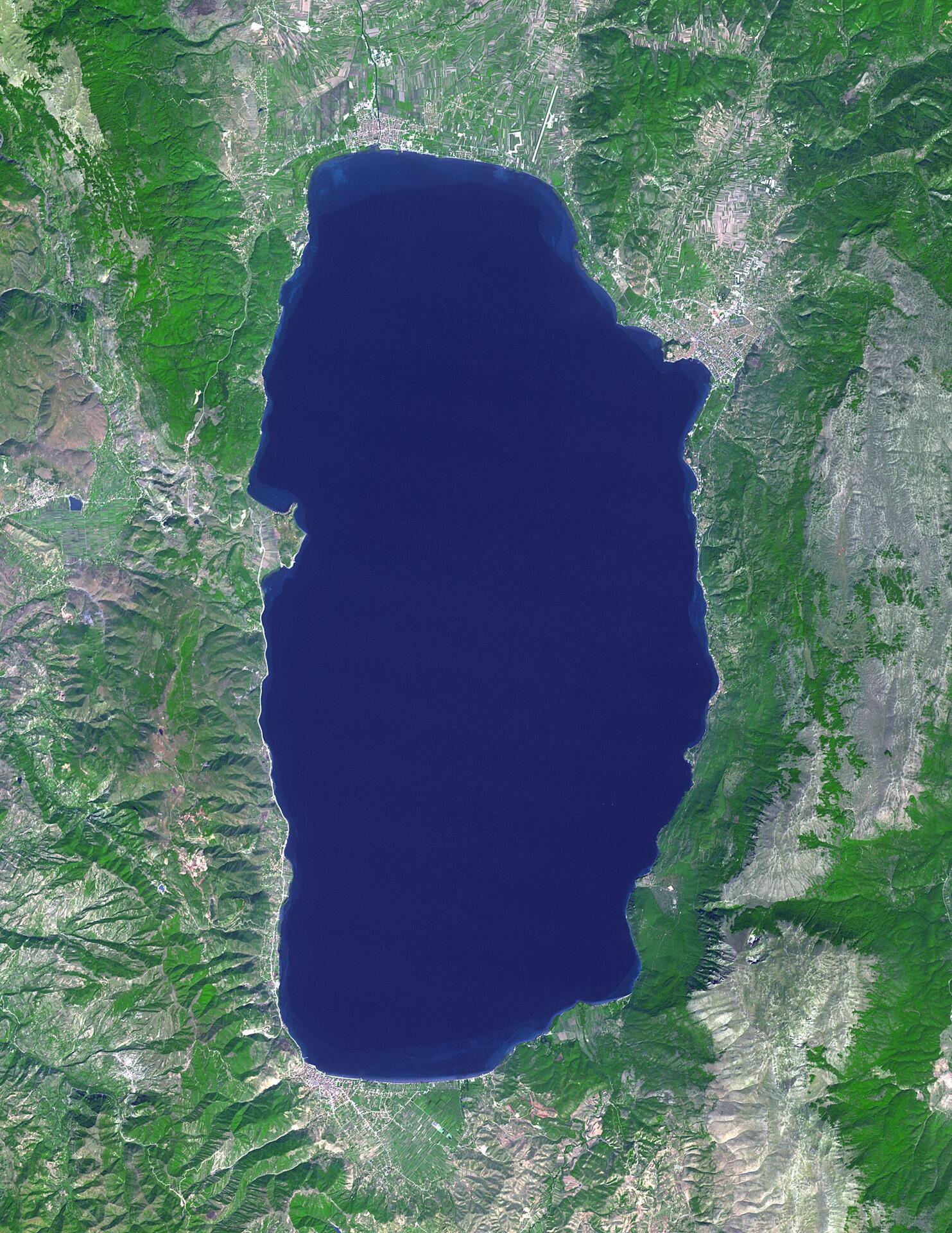
NASA/METI/AIST/Japan Space Systems, and U.S./Japan ASTER Science Team, Public domain