World Heritage Identification Number: 85
World Heritage since: 1979
Category: Cultural Heritage
WHE Type: Archaeological Sites
Transboundary Heritage: No
Endangered Heritage: No
Country: 🇫🇷 France
Continent: Europe
UNESCO World Region: Europe and North America
Map
Exploring the Prehistoric Sites and Decorated Caves of the Vézère Valley
The Prehistoric Sites and Decorated Caves of the Vézère Valley, located in the Dordogne department of France, is a UNESCO World Heritage Site that offers a unique glimpse into the past. This region, often referred to as the "Capital of Prehistory," boasts over 150 known prehistoric sites, making it one of the richest areas in Europe for studying the Paleolithic era and its art.
More to come…UNESCO Description of the World Heritage Site
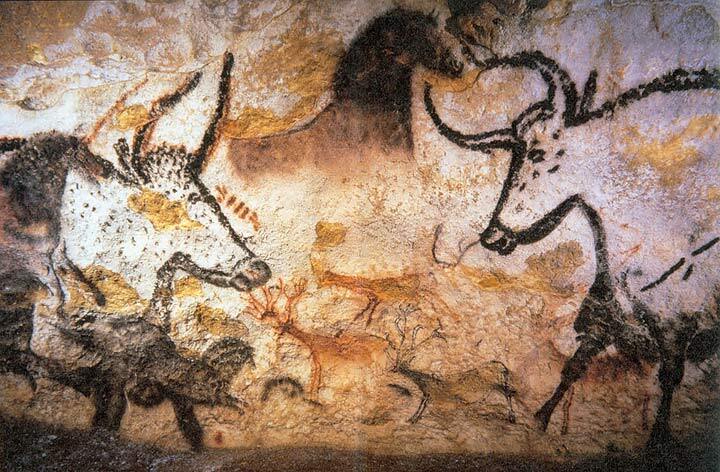
The Vézère valley contains 147 prehistoric sites dating from the Palaeolithic and 25 decorated caves. It is particularly interesting from an ethnological and anthropological, as well as an aesthetic point of view because of its cave paintings, especially those of the Lascaux Cave, whose discovery in 1940 was of great importance for the history of prehistoric art. The hunting scenes show some 100 animal figures, which are remarkable for their detail, rich colours and lifelike quality.
UNESCO Justification of the World Heritage Site
Criterion (i): Some of the figurative ensembles found in the caves of the Vézère Valley are universally recognized as masterpieces of prehistoric art: The Venus de Laussel (Marquay), the chevaline frieze in high relief of Cap-Blanc, and especially the wall paintings of the Lascaux Cave (Montignac), of which the discovery, in 1940, marks an important date in the history of prehistoric art: hunting scenes skillfully composed present close to one hundred animal figures, surprising in the precision of their observation, the richness of their colour, and the vivacity of their rendering.
Criterion (iii): The objects and the works of art found in the Vézère Valley are extremely rare witnesses of long extinct civilizations, which are very difficult to understand. This material, invaluable to the knowledge of the most distant periods of the history of humankind, dates back to the Paleolithic period and is of exceptional interest from an historic, ethnological, anthropological and aesthetic point of view.
Encyclopedia Record: Prehistoric Sites and Decorated Caves of the Vézère Valley
The Prehistoric Sites and Decorated Caves of the Vézère Valley is a UNESCO World Heritage Site in France since 1979. It specifically lists 15 prehistoric sites in the Vézère valley in the Dordogne department, mostly in and around Les Eyzies-de-Tayac-Sireuil, which has been called the "Capital of Prehistory". This valley is exceptionally rich in prehistoric sites, with more than 150 known sites including 25 decorated caves, and has played an essential role in the study of the Paleolithic era and its art. Three of the sites are the namesakes for prehistoric periods; the Micoquien, Mousterian, and Magdalenian. Furthermore, the Cro-Magnon rock shelter gave its name to the Cro-Magnon, the generic name for the European early modern humans. Many of the sites were discovered or first recognised as significant and scientifically explored by the archaeologists Henri Breuil and Denis Peyrony in the early twentieth century, while Lascaux, which has the most exceptional rock art of these, was discovered in 1940.Additional Site Details
Area: 105.733 hectares
Number of Components: 15
(iii) — Unique or exceptional testimony to a cultural tradition
Coordinates: 45.0575 , 1.17
Image