
World Heritage Identification Number: 1459
World Heritage since: 2014
Category: Cultural Heritage
WHE Type: Infrastructure & Industry
Transboundary Heritage: Yes
Endangered Heritage: No
Country: Argentina, Bolivia (Plurinational State of), Chile, Colombia, Ecuador, Peru
Continent: Americas
UNESCO World Region: Latin America and the Caribbean
Map
The Qhapaq Ñan, Andean Road System: A Remarkable Incan Legacy
The Qhapaq Ñan, also known as the Andean Road System, is an impressive testament to the ingenuity and ambition of the Inca civilization. Designated as a UNESCO World Heritage Site in 2014, this extensive network of roads spans over 30,000 kilometers, making it one of the most extensive and advanced transportation systems in pre-Columbian South America.
More to come…UNESCO Description of the World Heritage Site
This site is an extensive Inca communication, trade and defence network of roads covering 30,000 km. Constructed by the Incas over several centuries and partly based on pre-Inca infrastructure, this extraordinary network through one of the world’s most extreme geographical terrains linked the snow-capped peaks of the Andes – at an altitude of more than 6,000 m – to the coast, running through hot rainforests, fertile valleys and absolute deserts. It reached its maximum expansion in the 15th century, when it spread across the length and breadth of the Andes. The Qhapac Ñan, Andean Road System includes 273 component sites spread over more than 6,000 km that were selected to highlight the social, political, architectural and engineering achievements of the network, along with its associated infrastructure for trade, accommodation and storage, as well as sites of religious significance.
UNESCO Justification of the World Heritage Site
Criterion (ii): The Qhapaq Ñan exhibits important processes of interchange of goods, communication and cultural traditions within a cultural area of the world which created a vast empire of up to 4,200km in extension at its height in the 15th century. It is based on the integration of prior Andean ancestral knowledge and the specifics of Andean communities and cultures forming a state organizational system that enabled the exchange of social, political and economic values for imperial policy. Several roadside structures provide lasting evidence of valuable resources and goods traded along the network, such as precious metals, muyu (spondylus shell), foodstuffs, military supplies, feathers, wood, coca and textiles transported from the areas where they were collected, produced or manufactured, to Inca centres of various types and to the capital itself. Several communities, who remain custodians of components of this vast Inca communication network, are living reminders of the exchange of cultural values and language.
Criterion (iii): The Qhapaq Ñan is an exceptional and unique testimony to the Inca civilization based on the values and principles of reciprocity, redistribution and duality constructed in a singular system of organization called Tawantinsuyu. The road network was the life giving support to the Inca Empire integrated into the Andean landscape. As a testimony to the Inca Empire, it illustrates thousands of years of cultural evolution and was an omnipresent symbol of the Empire’s strength and extension throughout the Andes. This testimony influences the communities along the Qhapaq Ñan until today, in particular with relation to the social fabric of local communities and the cultural philosophies that give meaning to relationships among people and between people and the land. Most importantly, life is still defined by links among close kin and an ethic of mutual support.
Criterion (iv): The Qhapaq Ñan, Andean Road System is an outstanding example of a type of technological ensemble which despite the most difficult geographical conditions created a continuous and functioning communication and trade system with exceptional technological and engineering skills in rural and remote settings. Several elements illustrate characteristic typologies in terms of walls, roads, steps, roadside ditches, sewage pipes, drains, etc., with construction methods unique to the Qhapaq Ñan while varying according to location and regional context. Many of these elements were standardized by the Inca State, which allowed for the control of equal conditions along the road network.
Criterion (vi): The Qhapaq Ñan played an essential role in the organization of space and society in a wide geographical area along the Andes, where the roads were used as a means to share cultural values with outstanding intangible significance. The Qhapaq Ñan continues today to provide communities with a sense of identity and to enable their cultural practices, cultural expressions and traditional skills to continue to be transmitted from generation to generation. Members of these communities base their own existence on an Andean cosmovision, which is unique in the World. This cosmovision applies to all aspects of everyday life. Today, Qhapaq Ñan is directly associated with the intangible values shared by the communities in the Andean World, such as traditional trade, ritual practices, and the use of ancient technology, among others, which are living traditions and beliefs essential to the cultural identity of the communities concerned. The Andean Road System continues to serve its original functions of integration, communication, exchange and flow of goods and knowledge, and - despite the current modern trade and social changes - keeps its pertinence and importance throughout the centuries and its role as a cultural reference which contributes to reinforcing the identity within the Andean world.
Encyclopedia Record: Inca road system
The Inca road system was the most extensive and advanced transportation system in pre-Columbian South America. It was about 40,000 kilometres (25,000 mi) long in total. The construction of the roads required a large expenditure of time and effort.Additional Site Details
Area: 3,642.807 hectares
Number of Components: 137
(iii) — Unique or exceptional testimony to a cultural tradition
(iv) — Outstanding example of a type of building or landscape
(vi) — Directly associated with events or living traditions
Coordinates: -18.25 , -69.5916666667
Image
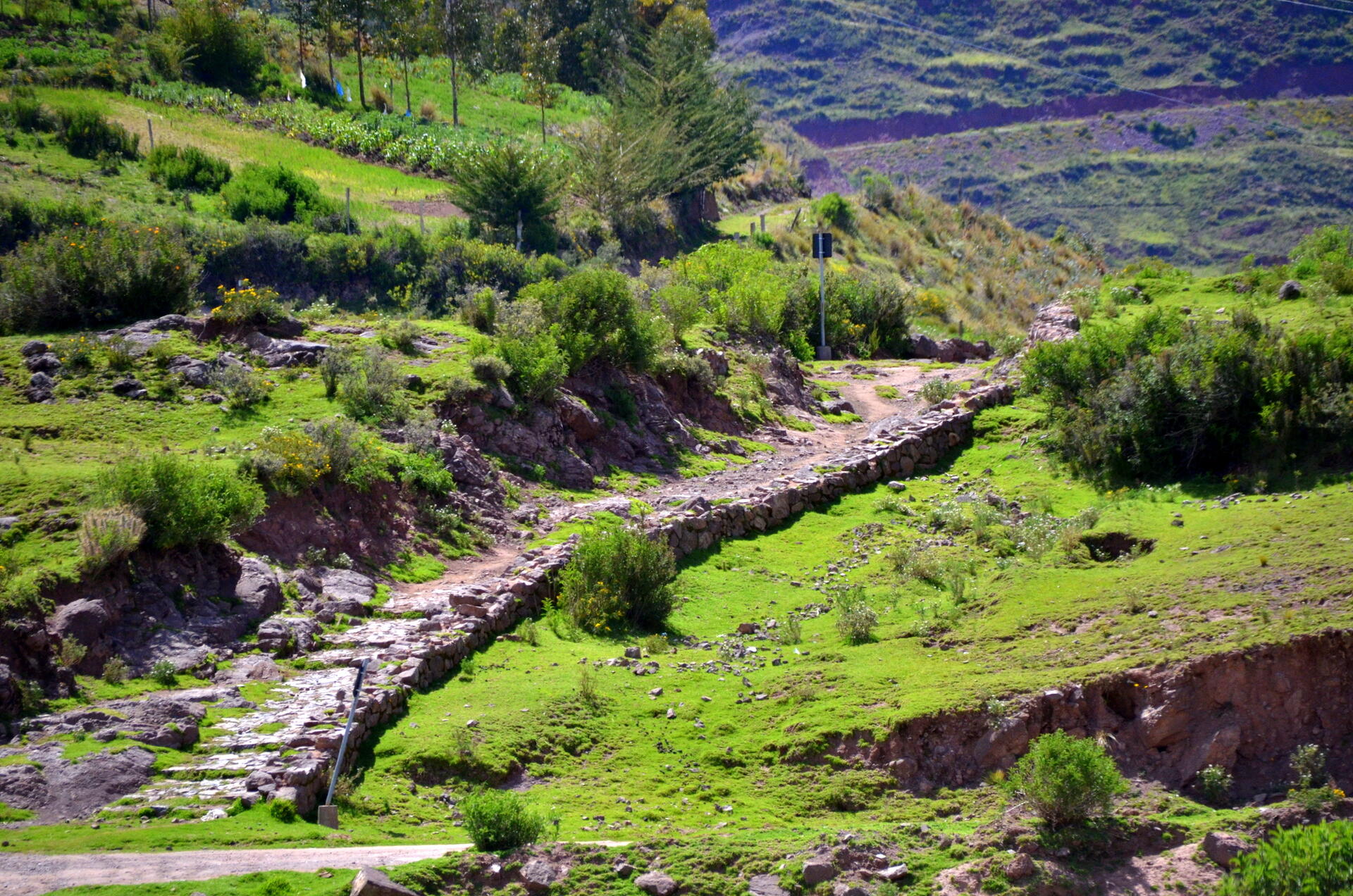
© Aga Khan (IT), CC BY-SA 4.0 Resized from original. (This derivative is under the same CC BY-SA license.)
World Heritage Research
Discover scientific research and academic studies that deepen our understanding of Qhapaq Ñan, Andean Road System from its history and significance to its conservation, management, and contemporary challenges.
-
Beyond Inca roads: the Redes Andinas project explores complex palimpsests of Andean road networks
Ancient Andean road networks exhibit remarkable complexity and resilience, extending far beyond the iconic Inca roads system. The Redes Andinas project reveals that these networks evolved dynamically over the past millennium along a vertical transect at 18°S, forming intricate 'palimpsests' of overlapping routes adapted to environmental and socio-political changes. Using a multiscale methodological approach, researchers characterized the transformation patterns, challenging assumptions about the dominance of Inca infrastructure in Andean transportation history.
Saintenoy, T. (2024). Beyond Inca roads: the Redes Andinas project explores complex palimpsests of Andean road networks. Antiquity, 98(400). https://doi.org/10.15184/aqy.2024.84
View Publication Record | Read Publication -
The thrive for a new heritage ethos in Peru?: The Qhapaq Ñan’s policymaking and the ethics of community participation
Peru's Qhapaq Ñan Project, an Inca road system inscribed as a UNESCO World Heritage Site, sparked a transformative shift in heritage policymaking by embedding community participation at its core. This study reveals how Peruvian heritage specialists actively redefined their ethical commitments, crafting a participatory framework that transcended passive compliance with international guidelines. Despite legal and ideological constraints, the project integrated formal regulations with informal practices—such as consultation, collaboration, and benefit-sharing—to challenge traditional material-focused paradigms. The research demonstrates that this approach was not merely procedural but an assertive ethical stance, reshaping heritage values and practices in Peru.
Uribe-Chinen, C. (2024). The thrive for a new heritage ethos in Peru?: The Qhapaq Ñan’s policymaking and the ethics of community participation. International Journal of Cultural Property, 31(3), 278–298. https://doi.org/10.1017/s0940739124000274
View Publication Record | Read Publication -
Characterization of Geoheritage and Geotourism Potential of the Fluvial-Glacial Landscapes in the Culebrillas Lagoon (Ecuador)
Culebrillas Lagoon, a glacio-lacustrine landscape in Ecuador's southern Andes, harbors significant geoheritage and geotourism potential. This study identifies its fluvio-glacial morphologies as key elements that, when combined with cultural heritage—such as Inca and Cañari traditions, myths, and the Qhapaq Ñan road system—offer a holistic socio-environmental value. The research employs a comprehensive approach to characterize these landscapes, revealing their intrinsic worth for sustainable geotourism development. By integrating geoheritage with local legends and historical vestiges, the study underscores Culebrillas Lagoon's untapped potential as both an ecological treasure and a cultural landmark.
Sánchez-Cortez, J. L., Vélez-Macías, K., Macas-Espinosa, V., & Naranjo-Freire, C. (2023). Characterization of Geoheritage and Geotourism Potential of the Fluvial-Glacial Landscapes in the Culebrillas Lagoon (Ecuador). Tourism and Hospitality, 4(3), 419–434. https://doi.org/10.3390/tourhosp4030026
View Publication Record | Read Publication -
La ruta colonial de Potosí a Cobija y la vieja nueva praxis de modelos andinos mercantiles
Research on the Potosí-Cobija colonial route reveals that native Andean transport practices, independent of official infrastructure, played a pivotal role in early mercantile flows. Archaeological and historical evidence, including traditional rest stops (pascanas) and shepherd settlements, suggests a fusion of Andean and Spanish mercantile models during Inca and Bourbon periods. The study combines XVIII and XIX-century documents with remote sensing and surveys to localize the route, uncovering its continuous evolution from Inca road canons to post-Toledo merchantilization and eventual adaptation of Bourbon dictates post-independence.
García-Albarido, F. (2022). The Potosi-Cobija colonial route and the old-new praxis of Andean mercantile models. Estudios Atacameños, 68, e5003. https://doi.org/10.22199/issn.0718-1043-2022-0013
View Publication Record | Read Publication -
Heritage routes and multiple narratives. The Inca Road System (Qhapaq Ñan, Camino principal andino / Andean road system): a specific case of a non-tourism heritage route?
The Qhapaq Ñan, a 4,000 km Andean road system spanning six countries, offers a unique case study of transnational cultural heritage and its complex narratives. Inscribed on the UNESCO World Heritage List in 2014, this ancient Inca route reveals conflicting interpretations of its historical significance, with shared but contested remembrance among stakeholders. The study highlights the geopolitical dimensions of heritage development, where tourism—particularly ecotourism—is both embraced and rejected, reflecting broader tensions in the appropriation and preservation of fragmented heritage routes. By analyzing multiple narratives, this research underscores the challenges of consensus-building in transnational cultural landscapes.
Salin, E. (2021). Heritage routes and multiple narratives. The Inca Road System (Qhapaq Ñan, Camino principal andino / Andean road system): a specific case of a non-tourism heritage route? (U. Bretagne Occidentale, Trans.). Via Tourism Review, 20. https://doi.org/10.4000/viatourism.7364
View Publication Record | Read Publication -
Incamisana: Engineering an Inca Water Temple
A masterpiece of Inca civil engineering, the Incamisana water temple at Ollantaytambo, Peru, stands as a high-status sanctuary for worship of water. The temple's architecture and hydraulic works, including fourteen ceremonial fountains with three more under construction, showcase intricate planning and execution. Flooding in 1679 preserved its lower portion, offering a unique glimpse into its design. Reverse engineering field research, paleohydrological studies, and archaeological investigations revealed the temple's sophisticated water supply system, canals, and conduit/distribution network. Cliff carvings parallel to the temple add a mystical dimension, while Inca roads connected Ollantaytambo to the broader empire, underscoring its cultural significance.
Wright, K. R. (2017). Incamisana: Engineering an Inca Water Temple. World Environmental and Water Resources Congress 2017, 346–358. https://doi.org/10.1061/9780784480595.031
View Publication Record | Read Publication -
Proposing a Digital Information System for the Management and Conservation of the Qhapaq Ñan – Andean Road System
A coordinated digital information system is essential for the management and conservation of Qhapaq Ñan, the Andean Road System inscribed as a UNESCO World Heritage Site in 2014. This ancient infrastructure network, spanning six countries, facilitated social and economic exchanges before the Inca Empire's expansion and continues to shape cultural traditions. While some Latin American nations have adopted digital tools for its preservation, gaps remain in integrated management. The study advocates for an Integrated Digital Model to address these challenges, ensuring unified protection efforts across the region.
Duperré, G. N. (2017). PROPOSING A DIGITAL INFORMATION SYSTEM FOR THE MANAGEMENT AND CONSERVATION OF THE QHAPAQ ÑAN – ANDEAN ROAD SYSTEM. The International Archives of the Photogrammetry, Remote Sensing and Spatial Information Sciences, XLII-2/W5, 193–200. https://doi.org/10.5194/isprs-archives-xlii-2-w5-193-2017
View Publication Record | Read Publication -
Highways to Empire: The Inca Road System
Qhapaq Ñan, the Andean Road System, played a dual role in the Inca Empire: it unified vast territories while also contributing to its eventual decline. This extensive network integrated both new and preexisting roads, facilitating communication, trade, and military movement across the empire. The study highlights how the road system's strategic design and maintenance were crucial to imperial cohesion but also exposed vulnerabilities that accelerated its downfall. Research into this ancient infrastructure reveals insights into Inca engineering prowess and the complexities of large-scale empire management.
Brown, J. (2016). Highways to Empire: The Inca Road System. Civil Engineering Magazine, 86(1), 40–43. https://doi.org/10.1061/ciegag.0001065
View Publication Record | Read Publication -
Innovative Technologies Used to Investigate Segments of the Inca Road
A groundbreaking study of the Qhapaq Ñan, the Andean Road System, reveals sustainable engineering practices employed by the Inca civilization. The research, supported by the National Science Foundation and Smithsonian Institute, utilized advanced technologies such as satellite communication systems, GIS/GPS mapping, photogrammetry, laser range finding, and ground-penetrating radar (GPR) to analyze the road's design and construction methods in extreme conditions. These findings highlight innovative techniques that could inform modern engineering practices. The study also showcased its discoveries globally through live interactive satellite broadcasts, providing a unique educational experience for visitors at the National Museum of the American Indian.
Jaselskis, E. J., Schexnayder, C. J., Fiori, C., Becker, T. C., Hung, W.-C., Beckman, C., Kaewmoracharoen, M., Recavarren, G. C., Celaya, M., & Alarcon, D. (2013). Innovative Technologies Used to Investigate Segments of the Inca Road. Journal of Professional Issues in Engineering Education and Practice, 139(3), 187–195. https://doi.org/10.1061/(asce)ei.1943-5541.0000145
View Publication Record | Read Publication