World Heritage Identification Number: 196
World Heritage since: 1982
Category: Natural Heritage
WHE Type: Protected Areas & National Parks
Transboundary Heritage: No
Endangered Heritage: Yes
Country: 🇭🇳 Honduras
Continent: Americas
UNESCO World Region: Latin America and the Caribbean
Map
The Río Plátano Biosphere Reserve: A Tropical Treasure in Central America
The Río Plátano Biosphere Reserve, located in the Gracias a Dios department region on the Caribbean coast of Honduras, stands as a testament to the rich biodiversity and cultural heritage of Central America. Established in 1982, this vast protected area spans over 5,250 square kilometers (2,030 sq mi) and is primarily defined by the winding course of the Río Plátano.
More to come…UNESCO Description of the World Heritage Site
Located on the watershed of the Río Plátano, the reserve is one of the few remains of a tropical rainforest in Central America and has an abundant and varied plant and wildlife. In its mountainous landscape sloping down to the Caribbean coast, over 2,000 indigenous people have preserved their traditional way of life.
UNESCO Justification of the World Heritage Site
Criterion (vii): The natural beauty of Río Plátano Biosphere Reserve is a function of the variety of the terrain and landscape types and features. Within its boundaries, the property harbours densely forested mountains reaching 1,418 m.a.s.l. at Punta Piedra, transitioning into savannahs, patches of pine forest and vast wetlands towards the coastal plains of the Caribbean Sea. Along the coast, there are spectacular lagoons, namely Laguna Brus and Laguna Ibans, both full of wildlife, boasting major bird colonies and serving as nurseries for fish and many other forms of aquatic life. Another characteristic element of the landscape are the many rivers and creeks, namely the eponymous Río Plátano and the Sico, Sikre Kipahni, Uhra and Tilasunta Rivers.
Criterion (viii): The property comprises two main geomorphological areas. These are the steep mountain range harbouring the headwaters of Río Plátano and the flat to undulating coastal plains. The latter is composed of terraces of recent marine sediments and partly underlain by a belt of infertile deeply weathered Pleistocene quartz sandy gravels. The Río Plátano meanders for some 45 kilometres through the lowlands forming ox-bow lakes, backwater swamps and natural levees. At about 100 m.a.s.l inland the foothills begin abruptly. The rugged granite mountains, which rise to Punta Piedra at 1,418 m.a.s.l. have many steep ridges, remarkable rock formations such as Pico Dama, a 150 metre pinnacle, and many waterfalls, one reaching 150 metres in height. Two thirds of the Plátano River run through a rugged part of the mountains with long stretches of white water. In one cataract in a deep forested gorge the river disappears under massive boulders. The mountains are part of the Cordillera Central, which corresponds to what was the Honduras Intercontinental Depression, during the Cretaceous period.
Criterion (ix): As one of a quickly decreasing number of major river basins the Plátano River, the heart of the property, continues to flow freely from its mountainous headwaters to the Sea. Along the altitudinal range the property connects a huge variety of very different ecosystems and habitats. The ecological linkages between these ecosystems and corresponding processes continue to be largely intact at the landscape level. Starting from the Caribbean Sea, there are estuarine and marine systems, sandy beaches, coastal lagoons of varying salinity, mangrove swamps, and pine savannah. Along the many rivers and creeks, there are broadleaf gallery forest traversing the savannahs and serving as natural corridors. The bulk of the property, however, are dense tropical rainforests covering the mountain ranges inland with smaller areas of rare elfin forest on the highest ridges.
Criterion (x): As a globally important stronghold of biodiversity Río Plátano harbours at least 586 species of vascular plants in its diverse habitats and there may still be species new to science in remote parts of the property. Across virtually all taxonomic groups, Río Plátano Biosphere Reserve is home to impressive proportions of the fauna of the entire country, in many cases well over half of the number of species occurring. The over 721 species of vertebrates include more than half of all mammals known in Honduras, such as the critically endangered Mexican Spider Monkey, the endangered Central American Tapir, the vulnerable Giant Anteater and the West Indian Manatee, as well as the near-threatened Jaguar and White-lipped Peccary. Other charismatic species are Puma, Ocelot, Jaguarundi and Margay, Neotropical Otter, White-throated Capuchin Monkey and Mantled Howler Monkey. The endangered Great Green Macaw, the vulnerable Great Curassow and Scarlet Macaw and the near-threatened Guiana Crested Eagle and harpy eagle stand out among the impressive 411 documented species of birds, along with Jabiru, King Vulture and the majestic Harpy Eagle. The 108 species of reptiles and amphibians comprise several rare poisonous snakes and 4 species marine turtles (Loggerhead, Leatherback, green turtle and hawksbill turtle)
Encyclopedia Record: Río Plátano Biosphere Reserve
The Río Plátano Biosphere Reserve is a protected area in the Gracias a Dios department region on the Caribbean coast of Honduras. With a total area of 5,250 square kilometers (2,030 sq mi), most of the reserve runs along the Río Plátano. The reserve has a number of endangered species and some of the largest remnants of tropical forest in Central America. It has been a World Heritage Site and biosphere reserve since 1982. In 2011, UNESCO placed the reserve on the List of World Heritage in Danger.Additional Site Details
Area: 350,000 hectares
Number of Components: 1
(viii) — Outstanding example representing major earth stages
(ix) — Outstanding example representing ecological and biological processes
(x) — Contains most important habitats for biodiversity
Coordinates: 15.74444444 , -84.675
IUCN World Heritage Outlook
The 2025 Conservation Outlook on Río Plátano Biosphere Reserve reports the following assessment:
Source: International Union for Conservation of Nature (IUCN) · View assessment
Image
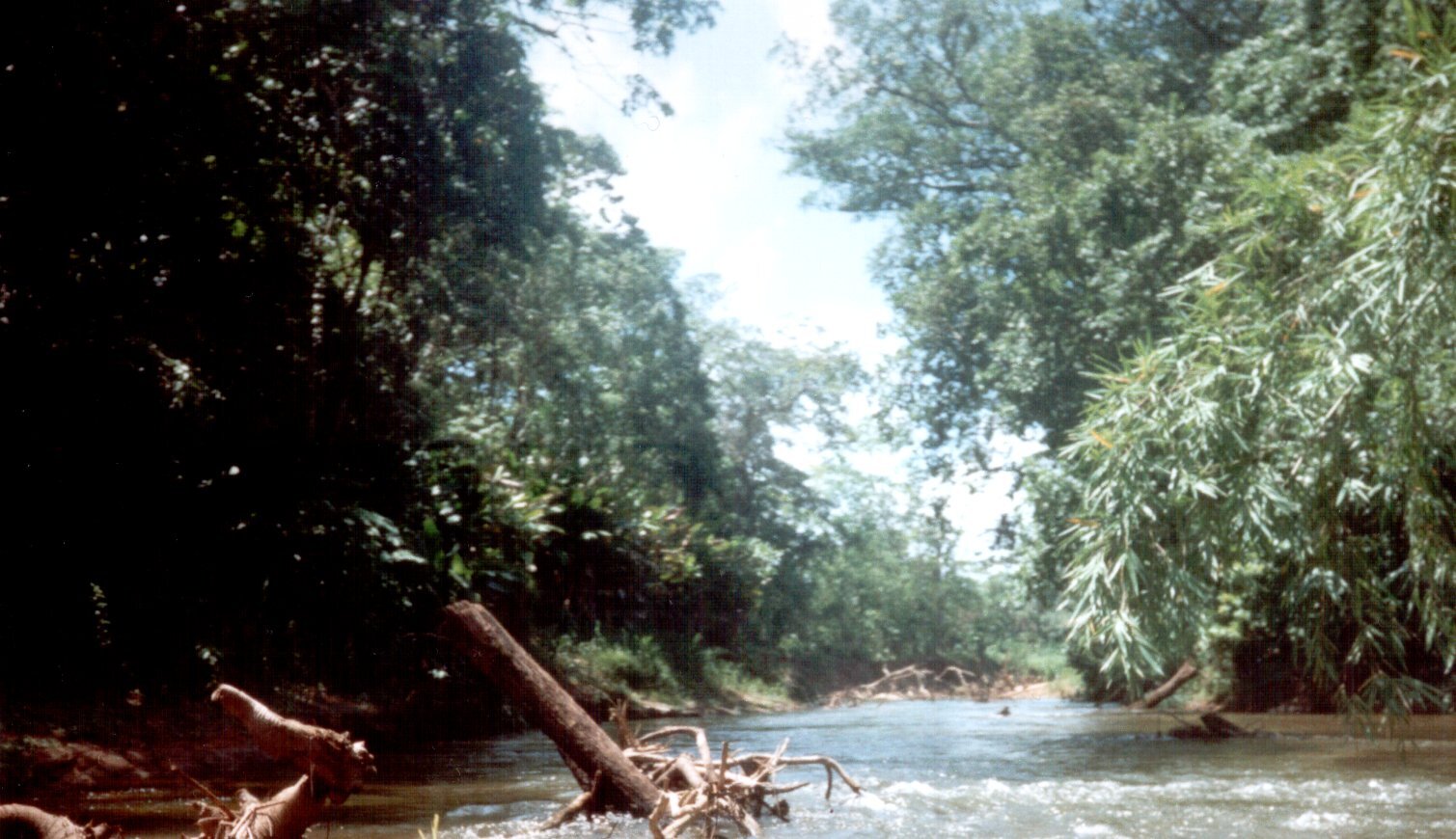
© Hjvannes at Dutch Wikipedia, CC BY-SA 3.0 Resized from original. (This derivative is under the same CC BY-SA license.)