World Heritage Identification Number: 1534
World Heritage since: 2018
Category: Mixed Cultural Heritage and Natural Heritage
WHE Type: Protected Areas & National Parks
Transboundary Heritage: No
Endangered Heritage: No
Country: 🇲🇽 Mexico
Continent: Americas
UNESCO World Region: Latin America and the Caribbean
Map
Tehuacán-Cuicatlán Valley: A Cradle of Biodiversity and Ancient Mesoamerica
The Tehuacán-Cuicatlán Valley, inscribed as a UNESCO World Heritage Site in 2018, stands out as one of the most important centers of biodiversity in North America. Located in central-southern Mexico, extending across southeastern Puebla and northern Oaxaca, the UNESCO World Heritage property covers approximately 145,255 hectares and consists of three components: Zapotitlán-Cuicatlán, San Juan Raya, and Purrón. The entire World Heritage property lies within the larger Tehuacán-Cuicatlán Biosphere Reserve.
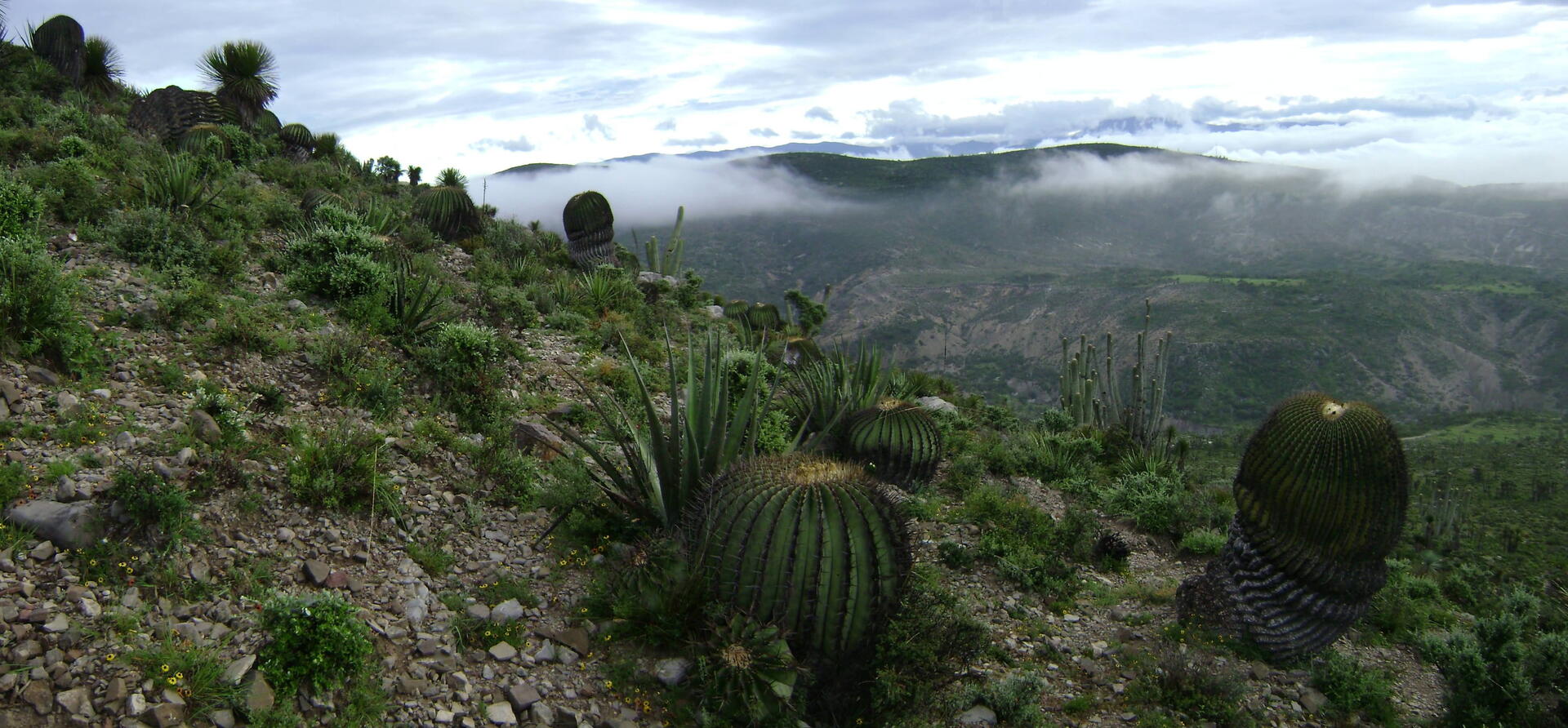
The valley is renowned as the arid or semi-arid zone with the richest biodiversity in North America and as one of the world's major centers of diversification for the cactus family. More than 3,000 species of vascular plants have been recorded in the valley, with approximately 10 percent endemic to the region. Of its 36 plant communities, 15 types of xeric shrubland are exclusive to the Tehuacán-Cuicatlán Valley. This remarkable diversity is especially striking because it occurs in an environment characterized by limited rainfall, high temperatures, and other challenging conditions.
Among the most notable features of the valley are its extraordinary forests of columnar cacti, which form some of the densest concentrations of their kind anywhere in the world. Densities can reach approximately 1,800 columnar cacti per hectare. These tall cacti shape the distinctive landscape of the valley, standing alongside agaves, yuccas, bromeliads, bursera, and oaks. The result is an ecosystem that is visually striking as well as biologically exceptional.
The cactus-rich landscape is much more than a scenic feature. Cacti and other native plants are important components of local ecosystems, providing food, shelter, and other resources for wildlife while helping sustain ecological processes in an arid environment. The biodiversity of the valley has also supported human communities for thousands of years. Roughly 1,000 species, representing about one-third of the valley's total biological diversity, are currently used by local people. These plants have provided food, medicines, materials, fuel, and other resources, demonstrating the long-standing relationship between human communities and the natural environment.
The Tehuacán-Cuicatlán Valley is divided within the World Heritage designation into the three components of Zapotitlán-Cuicatlán, San Juan Raya, and Purrón. Each contributes to the protection of the valley's exceptional natural and cultural heritage. Together, they encompass different landscapes and archaeological evidence that illustrate the long interaction between people and their environment. Rather than being important solely as separate protected areas, the three components form part of a larger cultural and ecological landscape that helps explain the development of human societies in the region.
In addition to its rich flora and fauna, the Tehuacán-Cuicatlán Valley contains archaeological remains that provide important evidence of technological development, plant domestication, agriculture, and changing patterns of human settlement. Archaeological evidence reveals a long sequence of human adaptation in the valley extending for more than 14,000 years. The region is particularly important for understanding the early domestication of plants, which has been identified as one of the most ancient processes of plant domestication in the world. Evidence places this process at approximately 9500–7000 BCE.
The valley's ancient inhabitants also developed an exceptional water-management system, including canals, wells, terraces, aqueducts, and dams - the most diversified ancient irrigation complex on the continent. These technologies enabled communities to capture, store, and distribute scarce water resources, supporting agriculture and the development of more settled communities. The archaeological evidence therefore demonstrates not only technological ingenuity but also the close relationship between water management, agriculture, settlement, and the emergence of increasingly complex societies in the region.
The Tehuacán-Cuicatlán Valley's biodiversity and archaeological remains make it an essential site for understanding the emergence and development of Mesoamerican culture and the evolution of unique ecosystems. UNESCO's designation recognizes both aspects of the valley's significance: its exceptional biological diversity under criterion (x) and its archaeological and technological heritage under criterion (iv). The valley is therefore not simply a natural landscape or an archaeological site, but a remarkable cultural and ecological landscape in which human societies and the natural environment have interacted for thousands of years.
As a UNESCO World Heritage Site, the Tehuacán-Cuicatlán Valley serves as a testament to the rich history and natural beauty of Mexico and the broader Mesoamerican region. Its ancient agricultural practices, sophisticated water-management systems, extraordinary plant diversity, and continuing traditional relationships with natural resources provide valuable lessons about human adaptation and ecological resilience. By preserving this remarkable valley, we help protect irreplaceable species and ecosystems while also safeguarding archaeological evidence that contributes to our understanding of humanity's long relationship with the environment.
UNESCO Description of the World Heritage Site
Tehuacán-Cuicatlán Valley, part of the Mesoamerican region, is the arid or semi-arid zone with the richest biodiversity in all of North America. Consisting of three components, Zapotitlán-Cuicatlán, San Juan Raya and Purrón, it is one of the main centres of diversification for the cacti family, which is critically endangered worldwide. The valley harbours the densest forests of columnar cacti in the world, shaping a unique landscape that also includes agaves, yuccas and oaks. Archaeological remains demonstrate technological developments and the early domestication of crops. The valley presents an exceptional water management system of canals, wells, aqueducts and dams, the oldest in the continent, which has allowed for the emergence of agricultural settlements.
UNESCO Justification of the World Heritage Site
Criterion (iv): The technological ensemble of water management of the Tehuacán-Cuicatlán Valley, along with other archaeological evidences such as the remains found in caves, plant domestication sites and agriculture, use of wild species, salt ponds and pottery, mark a stage of the utmost importance for the Mesoamerican region: the appearance and development of one of the oldest civilisations in the world. Located throughout the Valley, these technologies bear unique evidence of the constant adaptation of humans to the environment and reflect their innovative capacity to face the adverse environmental conditions in the area.
Criterion (x): The Tehuacán-Cuicatlán Valley demonstrates exceptional levels of biological diversity in an arid and semiarid zone in North America. A remarkable 70% of worldwide floral families are represented in the Valley, by at least one species, and the area is one of the main centres of diversification for the cacti family, which is highly threatened worldwide. A remarkable diversity of cacti exists within the property often in exceptional densities of up to 1,800 columnar cacti per hectare. The property exhibits particularly high diversity among other plant types, namely the agaves, yuccas, bromeliads, bursera and oaks. Worldwide, it hosts one of the highest animal biodiversity levels in a dryland, at least with regard to taxa such as amphibians, reptiles and birds. The property coincides with one of the most important protected areas worldwide for the conservation of threatened species encompassing over 10% of the global distribution range of four amphibian species, and is ranked as the one of the two most important protected areas in the world for the conservation of seven amphibian and three bird species. The biodiversity of this region has a long history of sustaining human development and today a third of the total diversity of the Tehuacán-Cuicatlán Valley, some 1,000 species, are used by local people.
Encyclopedia Record: Tehuacán-Cuicatlán Biosphere Reserve
The Tehuacán-Cuicatlán biosphere reserve is a protected natural area located in southeastern Mexico. Its name derives from its two main locations: Cuicatlán and Tehuacán, in the latter are their administrative offices, covers 490,186 hectares distributed among 21 municipalities in the state of Puebla and Oaxaca.Additional Site Details
Area: 145,255.2 hectares
Number of Components: 3
(x) — Contains most important habitats for biodiversity
Coordinates: 17.9899611111 , -97.1871527778
IUCN World Heritage Outlook
The 2025 Conservation Outlook on Tehuacán-Cuicatlán Valley: originary habitat of Mesoamerica reports the following assessment:
Source: International Union for Conservation of Nature (IUCN) · View assessment
World Heritage Research
Discover scientific research and academic studies that deepen our understanding of Tehuacán-Cuicatlán Valley: originary habitat of Mesoamerica from its history and significance to its conservation, management, and contemporary challenges.
-
In Vitro Antibacterial and Antioxidant Activities of Extracts of Turnera diffusa Willd. Ex Schult and Its Polyphenol Profile
Research confirms the antibacterial and antioxidant properties of Turnera diffusa, a plant traditionally used in Mexico's Tehuacán-Cuicatlán Valley for treating infections. The study found that acetone extracts of T. diffusa exhibited strong bactericidal effects against Gram-negative (Escherichia coli, Klebsiella pneumoniae, Pseudomonas aeruginosa) and Gram-positive bacteria (Staphylococcus aureus, S. epidermidis), with minimal inhibitory concentrations as low as 2.0 mg/mL. Methanol extracts showed significant antioxidant activity, particularly in scavenging DPPH and ABTS radicals, and reducing ferric ions, likely due to their high polyphenol content (6.052%). The study used diffusion and agar dilution assays for antibacterial testing, microbial survival curves, and colorimetric/HPLC analyses for chemical profiling. These findings validate the plant's medicinal use and highlight its potential in treating infectious diseases and oxidative stress.
Serrano-Parrales, R., Aguilera-Ramírez, C. U., Carrillo-Servin, D. N., Nolasco-Ontiveros, E., & Bárcenas-Correa, J. D. (2026). In Vitro Antibacterial and Antioxidant Activities of Extracts of Turnera diffusa Willd. Ex Schult and Its Polyphenol Profile. American Journal of Plant Sciences, 17(01), 1–17. https://doi.org/10.4236/ajps.2026.171001
View Publication Record | Read Publication -
Novelties in the genus Stylosanthes (Leguminosae, Papilionoideae, Dalbergieae) for Mexico
A taxonomic and molecular study identifies three new species of the genus Stylosanthes (Leguminosae) endemic to Mexico, expanding the country's botanical diversity. These discoveries—Stylosanthes leticiana, S. rosalindae, and S. gretheriae—are supported by detailed morphological descriptions, distribution maps, and comparative scanning electron microscope (SEM) images of their fruits. Stylosanthes leticiana exhibits a broad distribution in Mexico with affinities to S. humilis, while S. rosalindae is primarily found in the central-southern region, particularly within the UNESCO-listed Tehuacán-Cuicatlán Valley, showing morphological similarities to S. subsericea and S. viscosa. Meanwhile, S. gretheriae occurs in western Mexico and shares traits with S. guianensis. This research contributes critical insights into the biodiversity of Mesoamerica's originary habitat, highlighting the region's ecological significance.
GAMA-LÓPEZ, S. (2026). Novelties in the genus Stylosanthes (Leguminosae, Papilionoideae, Dalbergieae) for Mexico. Phytotaxa, 741(2), 143–167. https://doi.org/10.11646/phytotaxa.741.2.2
View Publication Record | Read Publication -
Spatial phylogenetics of the genus Melampodium (Millerieae: Asteraceae)
Research on the genus Melampodium (Asteraceae) reveals Mexico as a primary center for its diversification and endemism, with distinct phyloregions characterized by phylogenetic clustering. The study identified four types of phylogenetic endemism—neo-, palaeo-, mixed-, and super-endemism—with palaeo-endemisms linked to higher elevations and greater environmental stability since the Pliocene. Phylogenetic overdispersion was notably found in the Tehuacán–Cuicatlán Valley suggesting unique evolutionary dynamics. The research used spatial phylogenetics, including categorical analysis of endemism, Wilcoxon tests for environmental variables, and phylogenetic Sorensen dissimilarity to map phyloregions. Chromosomal evidence supported some findings, reinforcing Mexico's significance in the genus' evolutionary history.
Morales-Garduño, L., Villaseñor, J. L., Cervantes, C. R., & Stuessy, T. F. (2026). Spatial phylogenetics of the genus Melampodium (Millerieae: Asteraceae). Botanical Journal of the Linnean Society. https://doi.org/10.1093/botlinnean/boag035
View Publication Record | Read Publication -
Evolutionary history reveals spatial concentration of threatened evolutionary diversity in Agave across the Americas
A groundbreaking study reveals that the Tehuacán–Cuicatlán Valley and other arid regions in Mexico, the USA, and Guatemala are critical hotspots for threatened evolutionary diversity in Agave, hosting a disproportionate share of evolutionarily unique and endangered species. Using a time-calibrated phylogenomic framework analyzing 207 taxa and 286 nuclear genes, researchers traced Agave's origins to Aridoamerica during the late Miocene (∼7 Ma), highlighting how dispersal and macroevolutionary processes shaped its biodiversity. The study identifies 70 Evolutionarily Distinct and Globally Endangered (EDGE) taxa, with species like Agave montium-sancticaroli and A. aurea var. promontorii facing extreme conservation risks. These findings underscore the urgent need to prioritize spatial conservation efforts in these regions, where anthropogenic pressures exacerbate threats to unique evolutionary lineages.
Ruiz-Mondragón, K. Y., Eguiarte, L. E., García-Mendoza, A. J., Aguirre-Planter, E., Nieto Sotelo, J., Corcoran, M., Rees, P., Barker, A., Cable, S., Manco, B. N., Prosper, D., Blaise, J., Lira-Saade, R., & Viruel, J. (2026). Evolutionary history reveals spatial concentration of threatened evolutionary diversity in Agave across the Americas. Biological Conservation, 322, 112076. https://doi.org/10.1016/j.biocon.2026.112076
View Publication Record | Read Publication -
Restoration implications of the germination ecology of six dry-forest woody Fabaceae species in Mexico
Seed germination responses to temperature and light vary significantly among six dry-forest woody Fabaceae species, offering critical insights for ecological restoration and climate change adaptation. The study found that mechanical scarification substantially increases germination rates, while higher temperatures generally accelerate germination in dark conditions, though responses in germination synchrony differ among species. These findings highlight the importance of understanding not just germination percentage and time but also synchrony to guide effective management actions. The research involved a multifactorial experiment with five temperature ranges (10–40 °C), two light regimes, and scarification conditions for species such as Mimosa luisana and Vachellia constricta, which are ecologically, culturally, or economically significant in the Tehuacán-Cuicatlán Valley, Mexico. The study underscores potential threats to natural recruitment due to warmer, drier conditions and deforestation, emphasizing the need for targeted restoration strategies.
Aguirre-Salcedo, C., Montaño-Arias, S. A., & Jansson, R. (2025). Restoration implications of the germination ecology of six dry-forest woody Fabaceae species in Mexico. Trees, 39(2). https://doi.org/10.1007/s00468-025-02606-0
View Publication Record | Read Publication -
Viability and Morphometry in Agave Seeds as an Initial Study for Sustainable Management and Genetic Preservation
A. marmorata seeds exhibit the highest viability (78.49% at 72 hours), indicating robust physiological adaptations, while A. potatorum shows the lowest (57.99%), suggesting potential reproductive challenges. Morphometric analysis revealed significant interspecific differences, with A. angustifolia seeds being the largest and A. marmorata the smallest. This study highlights critical variability in seed viability and morphometric traits among Agave species in the Tehuacán-Cuicatlán Valley (TCV), a biodiversity hotspot. Researchers collected seeds from five Agave species, subjected them to controlled dehydration and storage, then assessed viability using the tetrazolium chloride (TTC) test while measuring length, width, weight, and volume. These findings provide key insights for conservation strategies and sustainable management of Agave populations, influencing regeneration efforts and breeding programs.
Lechuga-Campuzano, J. L., Arzate-Fernández, A. M., García-Núñez, H. G., Mariezcurrena-Berasaín, M. D., & Reyes Díaz, J. I. (2025). VIABILITY AND MORPHOMETRY IN Agave SEEDS AS AN INITIAL STUDY FOR SUSTAINABLE MANAGEMENT AND GENETIC PRESERVATION. Tropical and Subtropical Agroecosystems, 28(2). https://doi.org/10.56369/tsaes.6193
View Publication Record | Read Publication -
Fungi and Myxomycetes of the Tehuacán‐Cuicatlán Biosphere Reserve, Mexico: A Comprehensive Review and Future Perspectives
The Tehuacán-Cuicatlán Biosphere Reserve in Mexico hosts 436 taxa of fungi and myxomycetes, including 266 fungal species and 170 myxomycete taxa, many adapted to arid conditions. This first comprehensive inventory highlights their role as bioindicators for ecosystem health and climate resilience, with potential applications in drug discovery and agricultural sustainability. The study combines mycological literature reviews and biodiversity databases to document these organisms' variability and adaptive strategies under environmental stress. Interdisciplinary research is proposed to leverage fungi's polyextremotolerant traits for conservation and climate mitigation efforts.
Mena‐Portales, J., Pérez‐Llano, Y., Vásquez‐Dávila, M. A., Cantillo, T., Manzanero‐Medina, G. I., del Rayo Sánchez‐Carbente, M., & Batista‐García, R. A. (2025). Fungi and Myxomycetes of the Tehuacán‐Cuicatlán Biosphere Reserve, Mexico: A Comprehensive Review and Future Perspectives. IUBMB Life, 77(6). Portico. https://doi.org/10.1002/iub.70034
View Publication Record | Read Publication