World Heritage Identification Number: 942
World Heritage since: 1999
Category: Cultural Heritage
WHE Type: Religious Sites & Sacred Architecture
Transboundary Heritage: No
Endangered Heritage: No
Country: 🇬🇷 Greece
Continent: Europe
UNESCO World Region: Europe and North America
Map
The Historic Centre of Chorá, the Monastery of Saint-John the Theologian, and the Cave of the Apocalypse on the Island of Pátmos
The Historic Centre of Chorá, located on the small island of Pátmos in the Aegean Sea, is a significant cultural and spiritual site that boasts a rich history dating back over a millennium. This UNESCO World Heritage Site, inscribed in 1999, encompasses three key components: the Monastery of Saint-John the Theologian, the town of Chorá, and the Cave of the Apocalypse.
More to come…UNESCO Description of the World Heritage Site
The small island of Pátmos in the Dodecanese is reputed to be where St John the Theologian wrote both his Gospel and the Apocalypse. A monastery dedicated to the ‘beloved disciple’ was founded there in the late 10th century and it has been a place of pilgrimage and Greek Orthodox learning ever since. The fine monastic complex dominates the island. The old settlement of Chorá, associated with it, contains many religious and secular buildings.
UNESCO Justification of the World Heritage Site
Criterion (iii): The town of Chóra on the Island of Pátmos is one of the few settlements in Greece that have evolved uninterruptedly since the 12th century. There are few other places in the world where religious ceremonies that date back to the early Christian times are still being practised unchanged.
Criterion (iv): The Monastery of Saint Ioannis Theologos (Saint John the Theologian) and the Cave of the Apocalypse on the Island of Pátmos, together with the associated medieval settlement of Chóra, constitute an exceptional example of a traditional Greek Orthodox pilgrimage centre of outstanding architectural interest.
Criterion (vi): The Monastery of Saint Ioannis Theologos and the Cave of the Apocalypse commemorate the site where Saint John the Theologian (Divine), the “Beloved Disciple”, composed two of the most sacred Christian works, his Gospel and the Apocalypse.
Encyclopedia Record: Monastery of Saint John the Theologian
The Monastery of Saint John the Theologian is a Greek Orthodox monastery founded in 1088 in Chora on the island of Patmos. It is named after St John of Patmos, the author of the Christian Book of Revelation who, according to the text, lived on the island when visions of the apocalypse came to him. Since its founding, the monastery has been a pilgrimage site and a place of Greek Orthodox learning and worship. The monastery is unique in that it integrated from its founding the surrounding community of Chora, which was built around its fortifications. Religious ceremonies that date back to the early Christian period are still practiced within the monastery today. Because of its sacred significance, uninterrupted architectural evolution, and the exceptional preservation of early Christian customs, the monastery was declared a UNESCO World Heritage Site in 1999, along with the town of Chora and the nearby Cave of the Apocalypse.Additional Site Details
Area: Not available
Number of Components: 1
(iv) — Outstanding example of a type of building or landscape
(vi) — Directly associated with events or living traditions
Coordinates: 37.3 , 26.55
Image
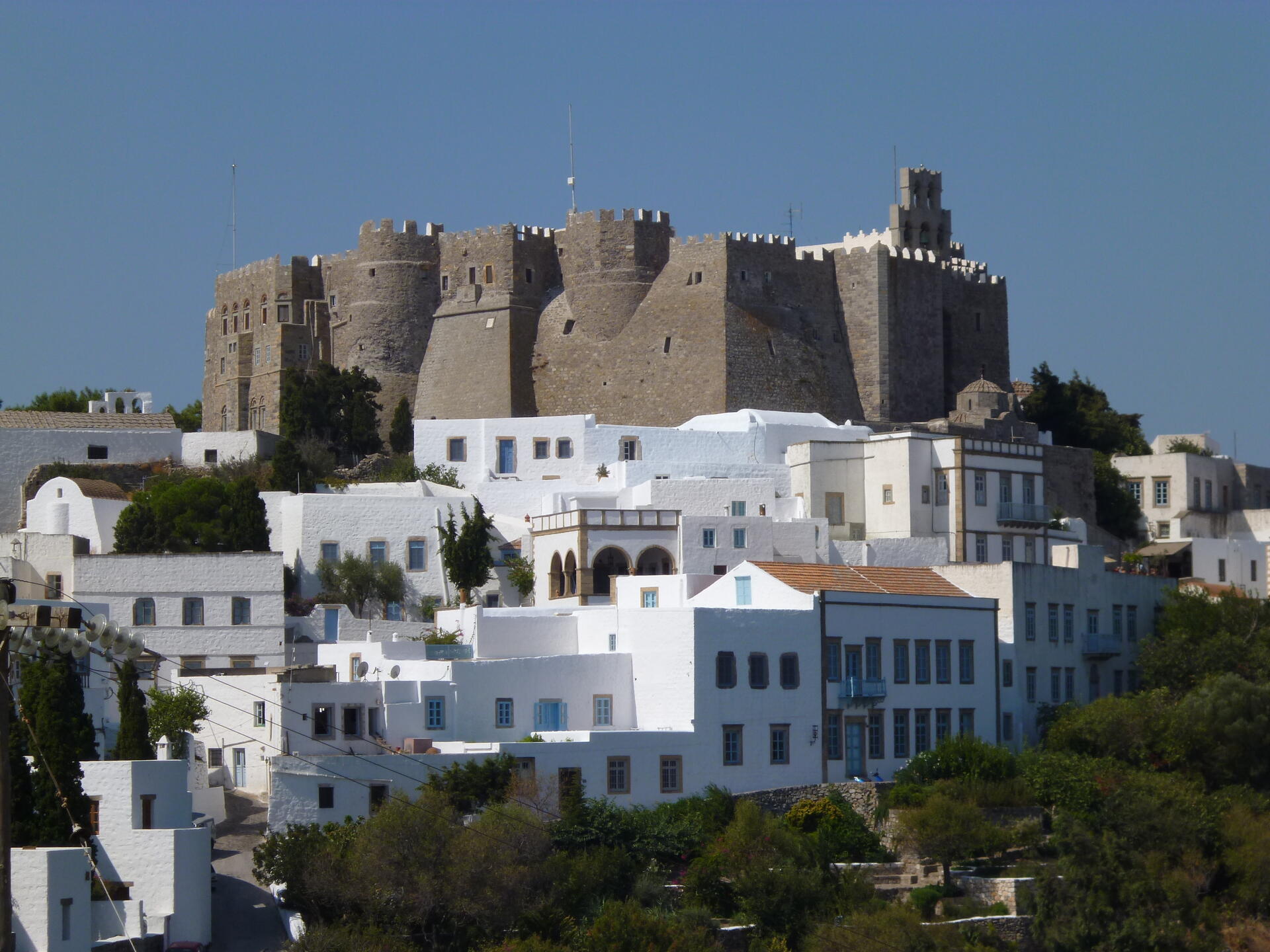
© Valeria Casali, CC BY-SA 3.0 Resized from original. (This derivative is under the same CC BY-SA license.)