World Heritage Identification Number: 933
World Heritage since: 2000
Category: Cultural Heritage
WHE Type: Cultural Landscapes
Transboundary Heritage: No
Endangered Heritage: No
Country: 🇫🇷 France
Continent: Europe
UNESCO World Region: Europe and North America
Map
The Loire Valley Between Sully-sur-Loire and Chalonnes: A Cultural Landscape of Outstanding Beauty
The Loire Valley, a region spanning approximately 280 kilometers (170 miles) along the middle stretch of the Loire River in central France, is a designated UNESCO World Heritage Site. This cultural landscape, situated within the administrative regions of Pays de la Loire and Centre-Val de Loire, encompasses around 800 square kilometers (310 square miles). Known as the Cradle of the French and the Garden of France, the Loire Valley is renowned for its historic towns, architectural monuments, and fertile agricultural lands that have been shaped over countless centuries by human interaction with the natural environment, particularly the river Loire itself.
The designation of the central part of the Loire River valley as a World Heritage Site by UNESCO in 2000 recognizes its exceptional cultural and historical significance. The valley's rich history dates back to the Middle Palaeolithic period, making it one of the most ancient inhabited regions in France. Over time, the Loire Valley has developed into a unique blend of rural landscapes, picturesque towns, and grand châteaux, all of which contribute to its outstanding beauty and charm.
One of the most striking features of the Loire Valley is its collection of châteaux, which are scattered throughout the region. These magnificent structures, built during the Renaissance period, showcase the wealth and power of the nobility who commissioned them. Some notable examples include Château d'Amboise, Château de Chenonceau, and Château de Chambord, each boasting distinctive architectural styles and intricate designs.
The Loire Valley played a significant role in the history of the French monarchy. During the Renaissance and the 16th century, several French kings and queens, including François I, Catherine de' Medici, and Louis XII, made the Loire Valley their royal residence. The region became a center for political and cultural development, and many of the châteaux were built or expanded to reflect the grandeur and power of the monarchy.
In addition to its impressive châteaux, the Loire Valley is also home to several charming towns and villages. These settlements, such as Blois, Tours, and Saumur, offer visitors a glimpse into the region's rich history and culture. Many of these towns feature well-preserved medieval architecture, including half-timbered houses, cobblestone streets, and imposing churches.
The fertile agricultural lands of the Loire Valley are another key component of its World Heritage status. The region is famous for its vineyards, fruit orchards, and vegetable fields, which produce a variety of high-quality products. The Loire Valley is particularly known for its wines, with the Sauvignon Blanc, Chenin Blanc, and Muscadet grape varieties being among the most popular.
In conclusion, the Loire Valley between Sully-sur-Loire and Chalonnes is a remarkable cultural landscape that offers visitors a unique blend of history, architecture, and natural beauty. Its designation as a UNESCO World Heritage Site is well deserved, recognizing the region's outstanding cultural and historical value. Whether exploring the grand châteaux, wandering through picturesque towns, or sampling the delicious local wines, there is much to discover in this enchanting corner of France.
UNESCO Description of the World Heritage Site
The Loire Valley is an outstanding cultural landscape of great beauty, containing historic towns and villages, great architectural monuments (the châteaux), and cultivated lands formed by many centuries of interaction between their population and the physical environment, primarily the river Loire itself.
UNESCO Justification of the World Heritage Site
Criterion (i): The Loire Valley is noteworthy for the quality of its architectural heritage, in its historic towns such as Blois, Chinon, Orléans, Saumur and Tours, but in particular in its world-famous castles, such as the Château de Chambord.
Criterion (ii): The Loire Valley is an outstanding cultural landscape along a major river. It bears witness to an interchange of human values and to a harmonious development of interactions between humankind and their environment over two millennia.
Criterion (iv): The landscape of the Loire Valley, and more particularly its many cultural monuments, illustrate to an exceptional degree the ideals of the Renaissance and the Age of Enlightenment on western European thought and design.
Encyclopedia Record: Loire Valley
The Loire Valley, spanning 280 kilometres (170 mi), is a valley located in the middle stretch of the Loire river in central France, in both the administrative regions Pays de la Loire and Centre-Val de Loire. The area of the Loire Valley comprises about 800 square kilometres (310 sq mi). It is referred to as the Cradle of the French and the Garden of France due to the abundance of vineyards, fruit orchards, and artichoke and asparagus fields, which line the banks of the river. Notable for its historic towns, architecture, and wines, the valley has been inhabited since the Middle Palaeolithic period. In 2000, UNESCO added the central part of the Loire River valley to its list of World Heritage Sites.Additional Site Details
Area: 86,021 hectares
Number of Components: 1
(ii) — Significant interchange of human values
(iv) — Outstanding example of a type of building or landscape
Coordinates: 47.39889 , 0.70278
Image
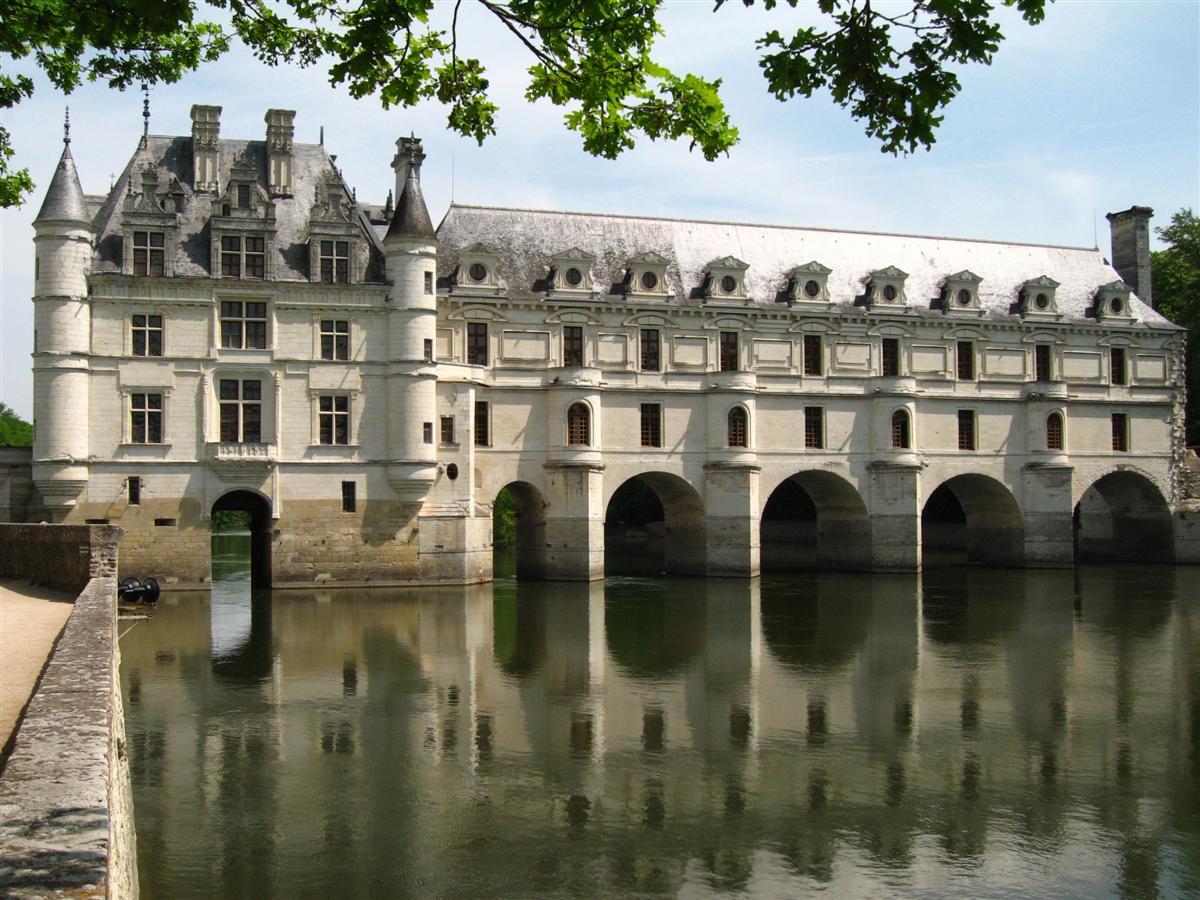
© Photo taken by Luke van Grieken on 4 May 2006 using a Canon IXUS 750 camera, uploader was 98octane at en.wikipedia, CC BY 2.5 Resized from original.
World Heritage Research
Discover scientific research and academic studies that deepen our understanding of The Loire Valley between Sully-sur-Loire and Chalonnes from its history and significance to its conservation, management, and contemporary challenges.
-
Tourism development at World Heritage Site: The case of Loire Valley in France
Tourism development at UNESCO World Heritage Sites faces complex challenges, as illustrated by the case of the Loire Valley between Sully-sur-Loire and Chalonnes. Despite its innovative management, the region grapples with issues such as short tourist stays, slow growth in visitor numbers, and uneven distribution among castles. The study reveals that the blurred role of World Heritage status in shaping destination perception further complicates tourism strategies. To address these challenges, authorities have employed a multi-faceted approach, focusing on governance and marketing, attraction development, and community synergy. This research combines quantitative and qualitative data to provide a comprehensive analysis of both the obstacles and strategic solutions in sustainable tourism management for cultural landscapes.
Morice, J.-R., Liu, Y.-D., & Lin, C.-F. (2020). Tourism development at World Heritage Site: The case of Loire Valley in France. Tourism and Heritage Journal, 2, 72–92. https://doi.org/10.1344/thj.2020.2.6
View Publication Record | Read Publication