World Heritage Identification Number: 261
World Heritage since: 1983
Category: Natural Heritage
WHE Type: Protected Areas & National Parks
Transboundary Heritage: No
Endangered Heritage: No
Country: 🇸🇨 Seychelles
Continent: Africa
UNESCO World Region: Africa
Map
A Glimpse into the Enchanting Vallée de Mai Nature Reserve
The Vallée de Mai Nature Reserve, nestled within the idyllic island of Praslin in the Seychelles archipelago, presents a captivating tableau of pristine beauty and biodiversity that has earned it the distinction of being a UNESCO World Heritage Site since 1983. This enchanted valley offers a rare glimpse into the untouched splendor of a near-original palm forest, where the majestic coco de mer, the largest seed in the plant kingdom, reigns supreme.
More to come…UNESCO Description of the World Heritage Site
In the heart of the small island of Praslin, the reserve has the vestiges of a natural palm forest preserved in almost its original state. The famous coco de mer, from a palm-tree once believed to grow in the depths of the sea, is the largest seed in the plant kingdom.
UNESCO Justification of the World Heritage Site
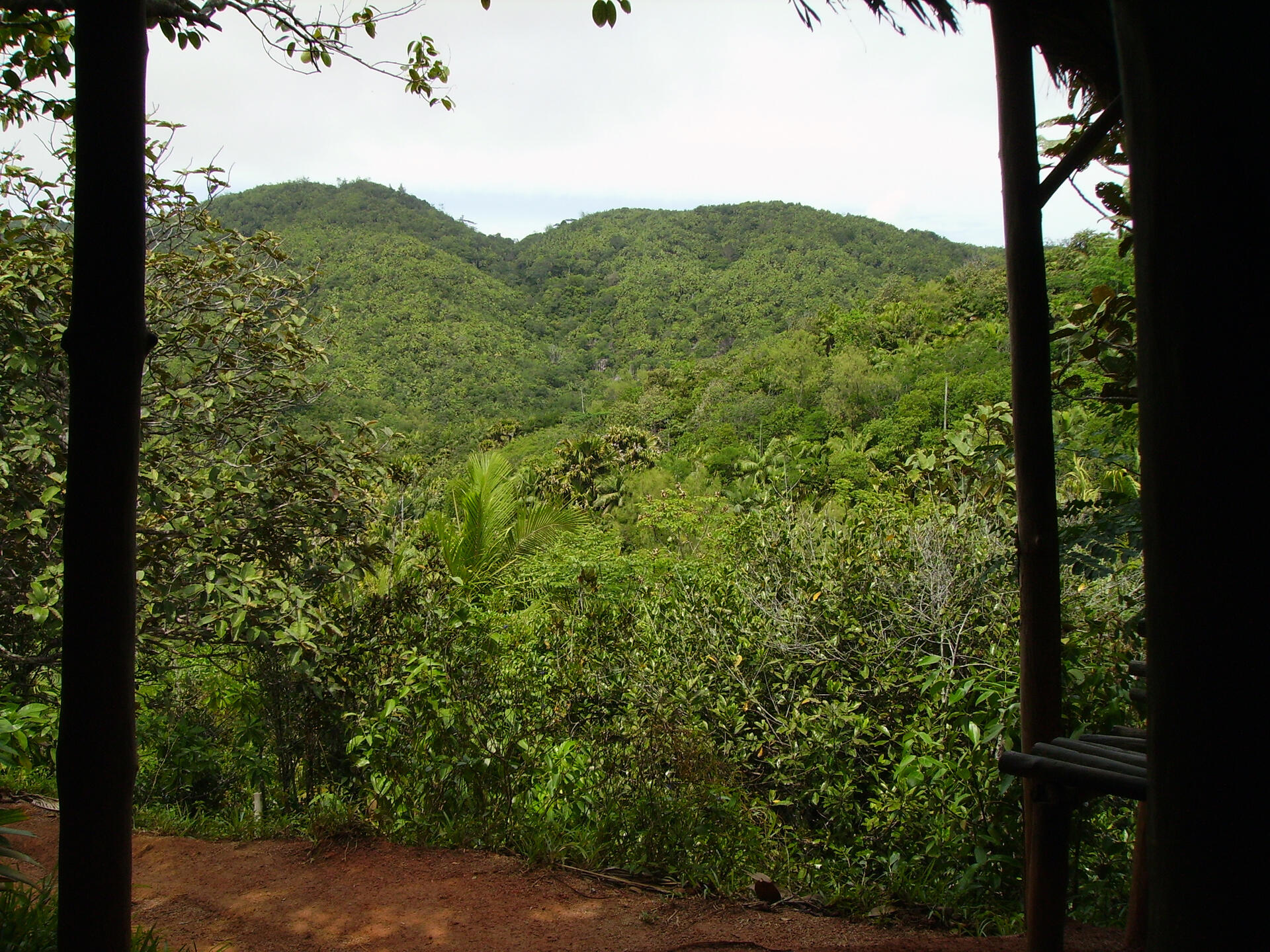
Criterion (vii): The property contains a scenic mature palm forest. The natural formations of the palm forests are of aesthetic appeal with dappled sunlight and a spectrum of green, red and brown palm fronds. The natural beauty and near-natural state of the Vallée de Mai are of great interest, even to those visitors who are not fully aware of the ecological significance of the forest.
Criterion (viii): Shaped by geological and biological processes that took place millions of years ago, the property is an outstanding example of an earlier and major stage in the evolutionary history of the world's flora. Its ecology is dominated by endemic palms, and especially by the coco-de-mer, famous for its distinctively large double nut containing the largest seed in the plant kingdom. The Vallée de Mai constitutes a living laboratory, illustrating of what other tropical areas would have been before the advent of more advanced plant families.
Criterion (ix): The property represents an outstanding example of biological evolution dominated by endemic palms. The property's low and intermediate-altitude palm forest is characteristic of the Seychelles and is preserved as something resembling its primeval state. The forest is dominated by the coco-de-mer Lodoicea maldivica but there are also five other endemic species of palms. Located in the granitic island of Praslin, the Vallée de Mai is the only area in the Seychelles where all six species occur together and no other island in the Indian Ocean possesses the combination of features displayed in the property. The ancient palms form a dense forest, along with Pandanus screw palms and broadleaf trees, which together constitute an ecosystem where unique ecological processes and interactions of nutrient cycling, seed dispersal, and pollination occur.
Criterion (x): The Vallée de Mai is the world's stronghold for the endemic coco-de-mer (Lodoicea maldivica )and the endemic palm species millionaire's salad (Deckenia nobilis ), thief palm (Phoenicophorium borsigianum ), Seychelles stilt palm (Verschaffeltia splendida) latanier millepattes (Nephrosperma vanhoutteanum) and latanier palm (Roscheria melanochaetes), are also found within the property. The palm forest is relatively pristine and it provides a refuge for viable populations of many endemic species, including the black parrot (Coracopsis nigra barklyi), restricted to Praslin Island and totally dependent on the Vallée de Mai and surrounding palm forest. Other species supported by the palm habitat include three endemic species of bronze gecko, endemic blue pigeons, bulbuls, sunbirds, swiftlets, Seychelles skinks, burrowing skinks, tiger chameleons, day geckos, caecilians, tree frogs, freshwater fish and many invertebrates.
Encyclopedia Record: Vallée de Mai
Vallée de Mai Nature Reserve is a nature park and UNESCO World Heritage Site on the island of Praslin, Seychelles. It consists of a well-preserved palm forest, flagship species made up of the island endemic coco de mer, as well as five other endemic palms.Additional Site Details
Area: 19.5 hectares
Number of Components: 1
(viii) — Outstanding example representing major earth stages
(ix) — Outstanding example representing ecological and biological processes
(x) — Contains most important habitats for biodiversity
Coordinates: -4.331 , 55.738
IUCN World Heritage Outlook
The 2025 Conservation Outlook on Vallée de Mai Nature Reserve reports the following assessment:
Source: International Union for Conservation of Nature (IUCN) · View assessment
Image
© Unknown, CC BY-SA 3.0 Resized from original. (This derivative is under the same CC BY-SA license.)
World Heritage Research
Discover scientific research and academic studies that deepen our understanding of Vallée de Mai Nature Reserve from its history and significance to its conservation, management, and contemporary challenges.
-
De l’ancienneté du « Christ », dans la vallée des Merveilles
A re-evaluation of the famous 'Christ' petroglyph in the Vallée de Mai Nature Reserve suggests its true age may extend into the Iron Age or historical periods, challenging previous Neolithic and Bronze Age attributions. The study employs detailed analysis of pecking techniques and comparative iconographic examination against later anthropomorphic representations to argue for a later chronology. This challenges long-held assumptions about the site's temporal boundaries and raises questions about the continuity and evolution of rock art practices in the region, where petroglyphs endure on ever-changing rock surfaces.
Mourey, J. M. (2018). De l’ancienneté du « Christ », dans la vallée des Merveilles. Préhistoires Méditerranéennes, 6. https://doi.org/10.4000/pm.1501
View Publication Record | Read Publication -
The nutrient economy of Lodoicea maldivica, a monodominant palm producing the world's largest seed
Lodoicea maldivica, the palm producing the world's largest seed, demonstrates remarkable nutrient efficiency to support its high reproductive output despite growing in nutrient-poor soils. Research at the Vallée de Mai UNESCO Site revealed that male and female palms allocate significant amounts of nitrogen (N) and phosphorus (P) to reproduction, with P costs far exceeding those for vegetative growth. A unique leaf structure acts as a funnel, intercepting particulate material—particularly pollen—which is flushed to the base of the trunk during rainfall, enhancing nutrient supply for both the palm and its dispersal-limited offspring. This study highlights shared traits with other monodominant tropical trees while emphasizing Lodoicea's distinctive features, suggesting an evolutionary history under stable conditions.
Edwards, P. J., Fleischer‐Dogley, F., & Kaiser‐Bunbury, C. N. (2015). The nutrient economy of Lodoicea maldivica, a monodominant palm producing the world’s largest seed. New Phytologist, 206(3), 990–999. Portico. https://doi.org/10.1111/nph.13272
View Publication Record | Read Publication -
Invasion of yellow crazy ant Anoplolepis gracilipes in a Seychelles UNESCO palm forest
A study on the Vallée de Mai Nature Reserve reveals that the invasive yellow crazy ant (Anoplolepis gracilipes) has significantly impacted the endemic fauna of this unique Seychellois palm forest. Since its first recorded presence in 2009, the ant has been confined to the northeast region, showing minimal spread between 2010 and 2012. Infested areas exhibit higher temperature and humidity but lower canopy cover compared to uninvaded zones. Notably, endemic arboreal fauna abundance and species richness were reduced in invaded areas, with molluscs entirely absent. This restricted distribution suggests potential biotic resistance or the need for effective control measures to mitigate further ecological disruption.
Kaiser-Bunbury, C., Cuthbert, H., Fox, R., Birch, D., & Bunbury, N. (2014). Invasion of yellow crazy ant Anoplolepis gracilipes in a Seychelles UNESCO palm forest. NeoBiota, 22, 43–57. https://doi.org/10.3897/neobiota.22.6634
View Publication Record | Read Publication -
Scientists’ responsibilities towards evidence‐based conservation in a S mall I sland D eveloping S tate
A successful evidence-based conservation strategy for the endangered coco de mer palm (Lodoicea maldivica) in Seychelles demonstrates how collaborative research and stakeholder engagement can bridge the 'implementation gap' between science and policy. The study highlights that integrating scientific findings with management practices, through a working group involving researchers, practitioners, and policymakers, led to significant conservation actions such as a stewardship scheme reducing poaching by 30-50% and legal harvesting by up to 75%. Key strategies included incentivizing local staff to protect nuts, restricting kernel trade via CITES Appendix III, and revising national legislation. The approach underscores the critical role of scientists in translating research into actionable recommendations, fostering mutual trust, and adapting traditional management practices to achieve long-term sustainability for a flagship species.
Kaiser‐Bunbury, C. N., Fleischer‐Dogley, F., Dogley, D., & Bunbury, N. (2014). Scientists’ responsibilities towards evidence‐based conservation in a
View Publication Record | Read PublicationS mallI slandD evelopingS tate. Journal of Applied Ecology, 52(1), 7–11. Portico. https://doi.org/10.1111/1365-2664.12346 -
World Heritage hot spots: a global model identifies the 16 natural heritage properties on the World Heritage List most at risk from climate change
A global model identifies 16 natural UNESCO World Heritage Sites, including the Vallée de Mai Nature Reserve, as most vulnerable to climate change within the next 40 years. These sites, spanning islands, coastal regions, and mountains, face significant risks that could threaten their World Heritage status. The study employs a multi-model approach using general circulation models (GCMs), vulnerability assessments, and Human Influence Index (HII) to create the World Heritage Vulnerability Index (WHVI). This index quantifies relative risk among properties, highlighting areas where proactive adaptation strategies should be prioritized to mitigate climate impacts.
Perry, J. (2011). World Heritage hot spots: a global model identifies the 16 natural heritage properties on the World Heritage List most at risk from climate change. International Journal of Heritage Studies, 17(5), 426–441. https://doi.org/10.1080/13527258.2011.568064
View Publication Record | Read Publication -
Morphological and genetic differentiation in populations of the dispersal‐limited coco de mer (Lodoicea maldivica): implications for management and conservation
Research on the coco de mer palm (Lodoicea maldivica) reveals that while populations on Praslin and Curieuse islands exhibit significant morphological differences—such as height, growth rate, and seed production—they show remarkably low genetic differentiation. This suggests high phenotypic plasticity and potential long-distance gene flow via wind pollination. The study analyzed 447 trees using morphological measurements and amplified fragment length polymorphisms (AFLPs), finding that the Curieuse population had lower genetic diversity but similar overall connectivity to Praslin populations. Given these findings, the authors recommend avoiding seed transfers between islands in restoration efforts due to uncertainty about adaptive variation.
Fleischer‐Dogley, F., Kettle, C. J., Edwards, P. J., Ghazoul, J., Määttänen, K., & Kaiser‐Bunbury, C. N. (2010). Morphological and genetic differentiation in populations of the dispersal‐limited coco de mer (Lodoicea maldivica): implications for management and conservation. Diversity and Distributions, 17(2), 235–243. Portico. https://doi.org/10.1111/j.1472-4642.2010.00732.x
View Publication Record | Read Publication -
De la patrimonialisation du karst libanais : étude du site Unesco de la vallée de la Qadisha, Nord-Liban
A critical gap in the UNESCO World Heritage inscription of the Qadisha Valley, Lebanon, has been identified: despite its status as one of the country's most significant karst landscapes, geological and spéléological values were marginalized in favor of cultural, historical, and religious significance. Analysis reveals that while the valley's rich history—including its role as a refuge for Maronite hermits since the 5th century and its deep ties to tourism—dominated its 1998 UNESCO listing, systematic spéléological studies highlight substantial untapped geopatrimonial potential. This oversight underscores the need for a more balanced approach in heritage valorization, integrating karst-specific attributes into future conservation strategies.
Pasquier, J. (2010). De la patrimonialisation du karst libanais : étude du site Unesco de la vallée de la Qadisha, Nord-Liban. Karstologia : Revue de Karstologie et de Spéléologie Physique, 55(1), 39–48. https://doi.org/10.3406/karst.2010.2669
View Publication Record | Read Publication