World Heritage Identification Number: 1342
World Heritage since: 2012
Category: Natural Heritage
WHE Type: Natural Landscapes & Geographic Features
Transboundary Heritage: No
Endangered Heritage: No
Country: 🇮🇳 India
Continent: Asia
UNESCO World Region: Asia and the Pacific
Map
The Western Ghats: A Biodiversity Hotspot and Climate Regulator
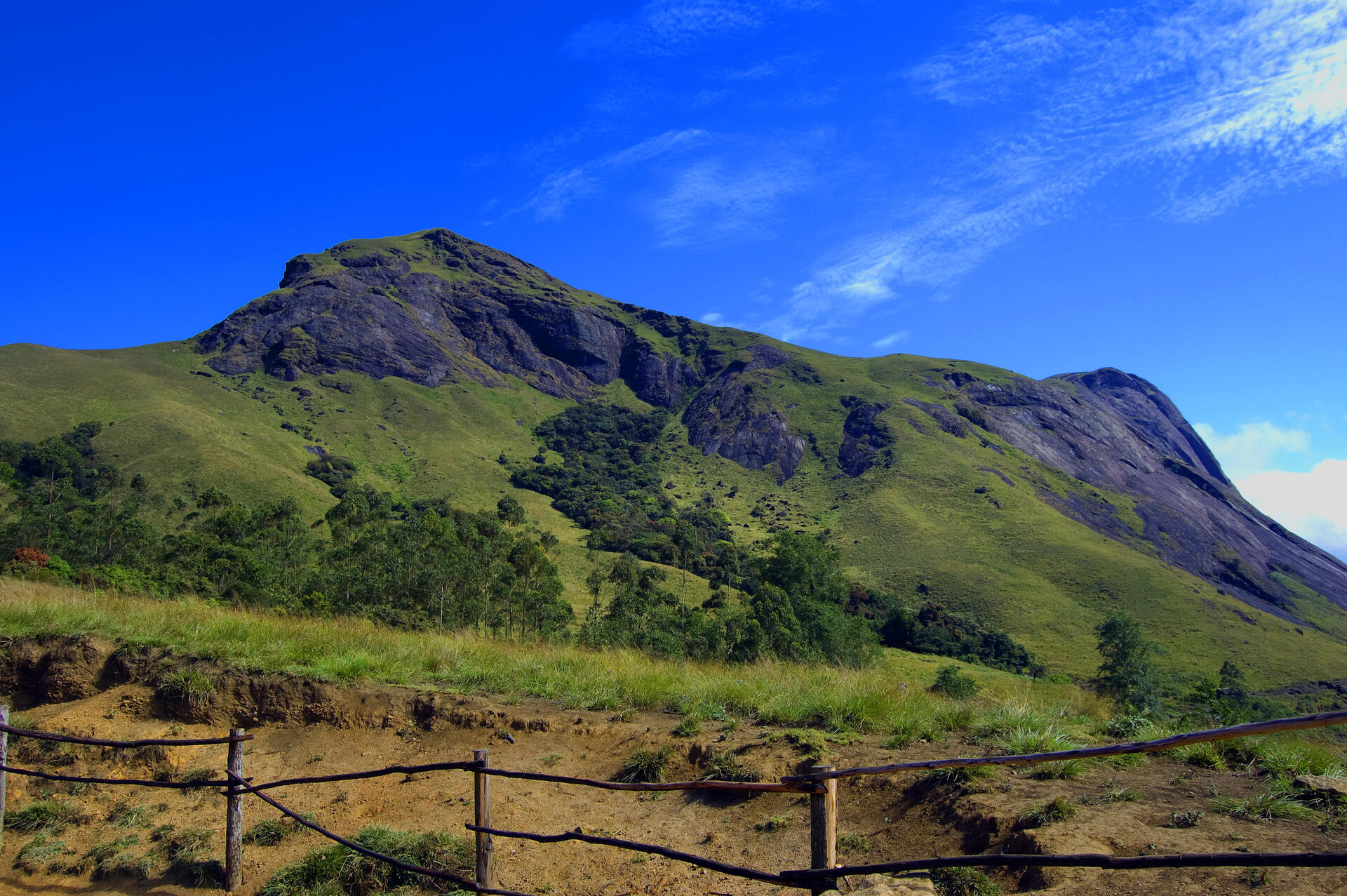
The Western Ghats, also known as the Sahyadri, is a significant mountain range that spans approximately 1,600 kilometers along the western coast of India. This ancient range, older than the Himalayas, covers an area of around 160,000 square kilometers and traverses six Indian states: Gujarat, Maharashtra, Goa, Karnataka, Kerala, and Tamil Nadu. The Western Ghats forms an almost continuous chain of mountains along the western edge of the Deccan Plateau, from the Tapti River to Swamithoppe in Kanyakumari district at the southern tip of the Indian peninsula.
More to come…UNESCO Description of the World Heritage Site
Older than the Himalaya mountains, the mountain chain of the Western Ghats represents geomorphic features of immense importance with unique biophysical and ecological processes. The site’s high montane forest ecosystems influence the Indian monsoon weather pattern. Moderating the tropical climate of the region, the site presents one of the best examples of the monsoon system on the planet. It also has an exceptionally high level of biological diversity and endemism and is recognized as one of the world’s eight ‘hottest hotspots’ of biological diversity. The forests of the site include some of the best representatives of non-equatorial tropical evergreen forests anywhere and are home to at least 325 globally threatened flora, fauna, bird, amphibian, reptile and fish species.
UNESCO Justification of the World Heritage Site
Criterion (ix): The Western Ghats region demonstrates speciation related to the breakup of the ancient landmass of Gondwanaland in the early Jurassic period; secondly to the formation of India into an isolated landmass and the thirdly to the Indian landmass being pushed together with Eurasia. Together with favourable weather patterns and a high gradient being present in the Ghats, high speciation has resulted. The Western Ghats is an “Evolutionary Ecotone” illustrating “Out of Africa” and “Out of Asia” hypotheses on species dispersal and vicariance.tb1
Criterion (x): The Western Ghats contain exceptional levels of plant and animal diversity and endemicity for a continental area. In particular, the level of endemicity for some of the 4-5,000 plant species recorded in the Ghats is very high: of the nearly 650 tree species found in the Western Ghats, 352 (54%) are endemic. Animal diversity is also exceptional, with amphibians (up to 179 species, 65% endemic), reptiles (157 species, 62% endemic), and fishes (219 species, 53% endemic). Invertebrate biodiversity, once better known, is likely also to be very high (with some 80% of tiger beetles endemic). A number of flagship mammals occur in the property, including parts of the single largest population of globally threatened ‘landscape’ species such as the Asian Elephant, Gaur and Tiger. Endangered species such as the lion-tailed Macaque, Nilgiri Tahr and Nilgiri Langur are unique to the area. The property is also key to the conservation of a number of threatened habitats, such as unique seasonally mass-flowering wildflower meadows, Shola forests and Myristica swamps.
Encyclopedia Record: Western Ghats
The Western Ghats, also known as the Sahyadri, is a mountain range that stretches 1,600 km (990 mi) along the western coast of the Indian peninsula. Covering an area of 160,000 km2 (62,000 sq mi), it traverses the Indian states of Gujarat, Maharashtra, Goa, Karnataka, Kerala, and Tamil Nadu. The range forms an almost continuous chain of mountains along the western edge of the Deccan Plateau, from the Tapti River to Swamithoppe in Kanyakumari district at the southern tip of the Indian peninsula. The Western Ghats meet with the Eastern Ghats at Nilgiris before continuing south.Additional Site Details
Area: 795,315 hectares
Number of Components: 39
(x) — Contains most important habitats for biodiversity
Coordinates: 8.5297222222 , 77.2497222222
IUCN World Heritage Outlook
The 2025 Conservation Outlook on Western Ghats reports the following assessment:
Source: International Union for Conservation of Nature (IUCN) · View assessment
Image
© Arunguy2002, CC BY-SA 3.0 Resized from original. (This derivative is under the same CC BY-SA license.)
World Heritage Research
Discover scientific research and academic studies that deepen our understanding of Western Ghats from its history and significance to its conservation, management, and contemporary challenges.
-
GIS and AHP Techniques Based Delineation of Groundwater Potential Zones: a case study from Southern Western Ghats, India
Approximately 59% of the studied river basin in the Southern Western Ghats, India, is identified as having moderate groundwater potential, with high and low potential zones covering 11% and 29%, respectively. The study employed a combination of Geographic Information System (GIS) and Analytical Hierarchical Process (AHP) techniques to delineate these zones using 12 thematic layers such as geology, geomorphology, rainfall, soil, and topography. This approach, validated with local groundwater data, achieved an overall accuracy of around 85%. The findings highlight the effectiveness of GIS-based methods in rapidly assessing groundwater potential, offering crucial insights for sustainable water resource management in tropical river basins.
Arulbalaji, P., Padmalal, D., & Sreelash, K. (2019). GIS and AHP Techniques Based Delineation of Groundwater Potential Zones: a case study from Southern Western Ghats, India. Scientific Reports, 9(1). https://doi.org/10.1038/s41598-019-38567-x
View Publication Record | Read Publication -
Assessment of soil erosion in a tropical mountain river basin of the southern Western Ghats, India using RUSLE and GIS
Researchers found that while the Muthirapuzha River Basin (MRB) in the southern Western Ghats, India, experiences significant gross soil erosion at 14.36 tons per hectare per year, net erosion is substantially lower at 3.60 tons due to deposition processes. About 86% of the basin undergoes slight erosion, while nearly 3% acts as a depositional environment for sediments. Human activities in agricultural areas and tea plantations significantly accelerate soil erosion compared to natural vegetation belts. The study used the Revised Universal Soil Loss Equation (RUSLE) combined with transport-limited sediment delivery (TLSD) modeling to quantify soil erosion and deposition, providing critical data for land management strategies to mitigate soil degradation in tropical mountain river basins.
Thomas, J., Joseph, S., & Thrivikramji, K. P. (2018). Assessment of soil erosion in a tropical mountain river basin of the southern Western Ghats, India using RUSLE and GIS. Geoscience Frontiers, 9(3), 893–906. https://doi.org/10.1016/j.gsf.2017.05.011
View Publication Record | Read Publication -
Flowering plants of the Western Ghats, India
The Western Ghats, a UNESCO World Heritage Site and global biodiversity hotspot, host a remarkably diverse angiosperm flora. A comprehensive two-volume checklist identifies 7,402 species (5,588 indigenous) across 164,280 km², including 376 naturalized and 1,438 cultivated taxa. The study organizes entries by accepted names, synonyms, habit, nativity, distribution, phenology, conservation status, economic importance, and local names, drawing significantly from earlier regional works like the Flowering plants of Kerala. While the checklist follows an outdated family classification (BD Sharma et al., 1993), it serves as a critical resource for understanding the region's flora, despite minor nomenclatural oversights. The Western Ghats' undisturbed vegetation has dwindled to one-third of its original extent, underscoring urgent conservation needs.
Dorr, L. J. (2015). Flowering plants of the Western Ghats, India. Journal of Systematics and Evolution, 53(4), 367–368. Portico. https://doi.org/10.1111/jse.12163
View Publication Record | Read Publication -
Microphysics of clouds and rain over the Western Ghat
Shallow clouds over the Western Ghats produce heavy rainfall due to rapid condensational growth of cloud droplets, driven by orographic updrafts. Research reveals that collision-coalescence processes dominate rain formation, with distinct raindrop size distribution (DSD) patterns observed on both windward and leeward sides of the mountains. At Pune (lee side), DSD shapes transition from concave upward to downward during stratiform rain, indicating breakup processes at lower altitudes. Conversely, Mahabaleshwar (windward side) shows bimodal and monomodal DSDs for light and heavy rainfall, respectively, with small drops contributing significantly. Aircraft measurements confirm that ambient updraft speeds foster rapid droplet growth, leading to precipitation within a few hundred meters of cloud depth. These findings highlight the dynamic interplay between cloud microphysics and orographic forcing in shaping rainfall over this UNESCO-listed region.
Konwar, M., Das, S. K., Deshpande, S. M., Chakravarty, K., & Goswami, B. N. (2014). Microphysics of clouds and rain over the Western Ghat. Journal of Geophysical Research: Atmospheres, 119(10), 6140–6159. Portico. https://doi.org/10.1002/2014jd021606
View Publication Record | Read Publication