World Heritage Identification Number: 1704
World Heritage since: 2025
Category: Cultural Heritage
WHE Type: Religious Sites & Sacred Architecture
Transboundary Heritage: No
Endangered Heritage: No
Country: 🇲🇽 Mexico
Continent: Americas
UNESCO World Region: Latin America and the Caribbean
Map
The Wixárika Route Through Sacred Sites to Wirikuta (Tatehuarí Huajuyé): A Journey of Cultural Preservation and Spiritual Significance
The Wixárika Route Through Sacred Sites to Wirikuta, also known as Tatehuarí Huajuyé, is a remarkable 500-kilometer journey that weaves through the heart of Mexico, connecting 20 significant sites across five states. Inscribed as a UNESCO World Heritage Site in 2025, this "braid of trails" holds immense spiritual and cultural value for the indigenous Wixárika peoples, often referred to as Huichol.
More to come…UNESCO Description of the World Heritage Site
The Huichol Route is a serial property of 20 sites, spanning over 500 km across five states in north-central Mexico. This “braid of trails” connects sacred landscapes central to the spiritual and cultural practices of the Wixárika Indigenous Peoples. Beginning in the Huichol Sierra, the route leads to Wirikuta in the Chihuahuan Desert, with additional sacred sites in Nayarit and Durango. Traversing diverse ecological regions, the route supports rituals tied to ancestral deities, agriculture, and community well-being. Known as “Tatehuarí Huajuyé” or the Path of Our Grandfather Fire, it embodies deep spiritual and environmental significance.UNESCO Justification of the World Heritage Site
Criterion (iii): The Wixárika Route through Sacred Sites to Wirikuta (Tatehuarí Huajuyé) is one of the most representative pre-Columbian routes still in use in the Americas and is an exceptional testimony of the continuing cultural traditions of the Wixárika people. The annual pilgrimages of the Wixárika to Wirikuta and other sacred sites are a clear manifestation of a spiritual tradition, reflecting a specific worldview that connects humans with nature and the sacred realm. The route bears witness to the intimate cultural knowledge that the Wixárika have of these lands, plants and animals.
Criterion (vi): The Wixárika Route through Sacred Sites to Wirikuta (Tatehuarí Huajuyé) is an outstanding illustration of the inter-relationship between culture and the natural environment in the spiritual practices of the Wixárika. The sacred sites are imbued with a deep spiritual meaning, representing different elements of the Wixárika worldviews and beliefs. Specific landforms, weather, plants and animals reveal the ancestors, and each component part has specific ritual meaning. Flora and fauna with ritual meaning include tobacco, peyote, deer, and the Golden Eagle. During the travels through this route, elders transmit their knowledge to younger generations through oral traditions, dance, stories, art, music and rituals.
Encyclopedia Record: Huichol Route to Huiricuta
The Huichol people of western Mexico exude an enduring spirit and passion to hold on to their traditions. This is exemplified in the pilgrimage route between Nayarit and Huiricuta, stretching nearly 800 km, wherein dozens of sacred sites are visited along the way. The route follows the old pre-Hispanic trade routes between the Gulf of Mexico and the Pacific Ocean. One of the most important of these routes, to Huiricuta or Wirikuta, is known as such for its historical importance in the preservation of Huichol cultural as well as the sheer proliferation of pilgrims that follow the route. Because the Huichol have no written language, the pilgrimage has the added importance of linking populations of Huichol and disseminating knowledge of culture and reinforcing cultural practices.Additional Site Details
Area: 135,420.6 hectares
Number of Components: 20
(vi) — Directly associated with events or living traditions
Coordinates: 22.5978638889 , -103.2801527778
Image
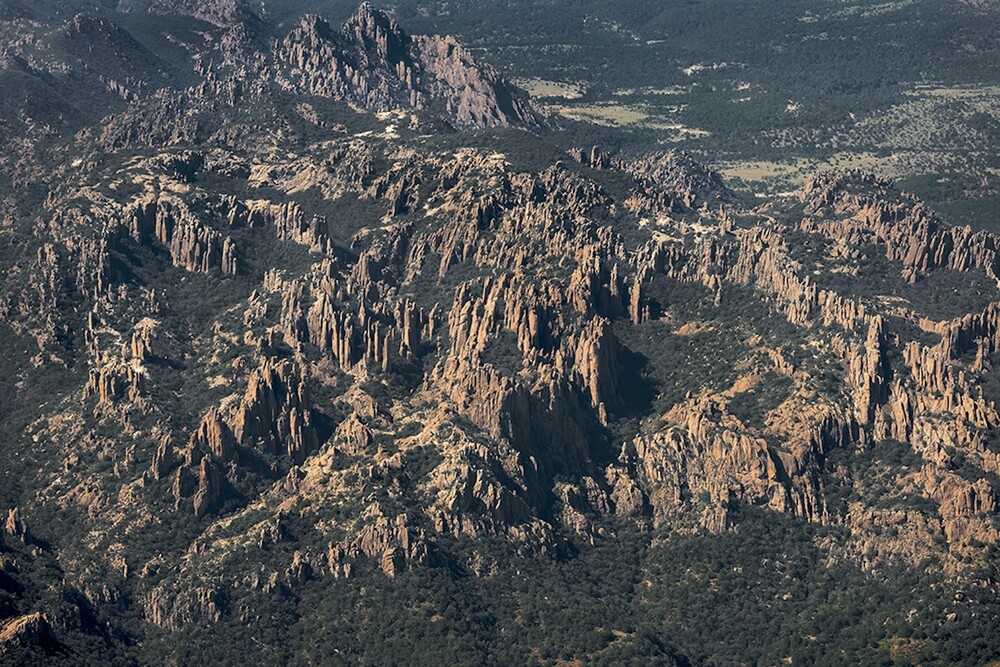
© Conservación Humana AC Archives. Used with permission.
World Heritage Research
Discover scientific research and academic studies that deepen our understanding of Wixárika Route through Sacred Sites to Wirikuta (Tatehuarí Huajuyé) from its history and significance to its conservation, management, and contemporary challenges.
-
A proposal for the determination of a Protected Natural Area (PNA) of the Wirikuta zone in the state of San Luis Potosi, México
A comprehensive proposal expands the Wirikuta zone, a UNESCO World Heritage Site and sacred Wixárika route in San Luis Potosí, México, from 138,750 ha to 293,388.42 ha. This expansion incorporates critical hydrogeological, ecological, and social dynamics, addressing gaps in previous studies that relied on linear geometric criteria. The research integrates physiological, hydrological, topographical, meteorological, and climatological factors, along with an assessment of soil toxicity and economic/social elements, while also considering mining concessions. By adopting a watershed-based approach, the proposal aims to protect the site's biodiversity, cultural significance, and natural integrity more holistically.
Tristán, A. C., Saldaña, M. R., Ovalle, A. G. C., Cárdenas, O. R., Waskita, T. B., & Putri, R. F. (2021). A proposal for the determination of a Protected Natural Area (PNA) of the Wirikuta zone in the state of San Luis Potosi, México. IOP Conference Series: Earth and Environmental Science, 686(1), 12027. https://doi.org/10.1088/1755-1315/686/1/012027
View Publication Record | Read Publication -
Wirikuta
Wirikuta, a sacred region in Mexico's Chihuahuan Desert and the endpoint of an annual 550-kilometer pilgrimage by the Wixárika (Huichol) people, faces significant threats despite its legal protection under Mexico's Indigenous rights framework. The study highlights Wirikuta's dual importance as both a natural site and a cultural landmark, protected by official decree to allow Indigenous management aligned with traditional practices. However, illegal mining activities pose severe risks to the region's ecological integrity and the Wixárika way of life. This research underscores the critical role of Indigenous stewardship in preserving Wirikuta while identifying urgent challenges, including legal violations and environmental degradation, that demand immediate attention for its sustainable future.
Ramírez, A. P. V., Aragón, Ú. G., Cerami, A. U. D., & Carillo, S. d. l. C. (2018). Wirikuta. Indigenous Perspectives on Sacred Natural Sites, 155–166. https://doi.org/10.4324/9781351234900-10
View Publication Record | Read Publication