World Heritage Identification Number: 928
World Heritage since: 1999
Category: Natural Heritage
WHE Type: Protected Areas & National Parks
Transboundary Heritage: No
Endangered Heritage: No
Country: 🇨🇷 Costa Rica
Continent: Americas
UNESCO World Region: Latin America and the Caribbean
Map
Area de Conservación Guanacaste: A Biodiverse Haven in Costa Rica
The Area de Conservación Guanacaste (ACG) is a remarkable testament to Costa Rica's commitment to preserving its rich biodiversity. Inscribed as a UNESCO World Heritage Site in 1999, this expansive network of protected areas spans over 238,000 hectares in the northwestern province of Guanacaste.
More to come…UNESCO Description of the World Heritage Site
The Area de Conservación Guanacaste (inscribed in 1999), was extended with the addition of a 15,000 ha private property, St Elena. It contains important natural habitats for the conservation of biological diversity, including the best dry forest habitats from Central America to northern Mexico and key habitats for endangered or rare plant and animal species. The site demonstrates significant ecological processes in both its terrestrial and marine-coastal environments.
UNESCO Justification of the World Heritage Site
Criterion (ix): A striking feature of Area de Conservación Guanacaste is the wealth of ecosystem and habitat diversity, all connected through an uninterrupted gradient from the Pacific Ocean across the highest peaks to the lowlands on the Caribbean side. Beyond the distinction into land and sea, the many landscape and forest types comprise mangroves, lowland rainforest, premontane and montane humid forest, cloud forest, as well as oak forests and savannahs with evergreen gallery forests along the many water courses. Along the extraordinary transect the property allows migration, genetic exchange and complex ecological processes and interactions at all levels of biodiversity, including between land and sea. The vast dry forest is a rare feature of enormous conservation value, as most dry forests elsewhere in the region are fragmented remnants only. Conservation has permitted the natural restoration of the previously degraded forest ecosystem, today serving again as a safe haven for the many species depending on this acutely threatened ecosystem. Major nutrient-rich cold upwelling currents offshore result in a high marine productivity and are the foundation of a diverse coastal-marine ecosystem containing important coral reefs, algal beds, estuaries, mangroves, sandy and cobble beaches, shore dunes and wetlands.
Criterion (x): The property is globally important for the conservation of tropical biological diversity as one of the finest examples of a continuous and well-protected altitudinal transect in the Neotropics along a series of marine and terrestrial ecosystems. The enormous variation in environmental conditions favours a high diversity, with two thirds of all species described for Costa Rica occurring within the relatively compact area. Coexisting in the property, there are more than 7,000 species of plants, as diverse as Mahogany in the lush forests and several species of agaves and cacti in drier areas. Over 900 vertebrates have been confirmed. Some notable mammals include the endangered Central American Tapir, at least 40 species of bat, Jaguar, Margay, Jaguarundi and Ocelot, as well as numerous primate species. Among some 500 bird species are the endangered Mangrove Hummingbird and Great Green Macaw, and the vulnerable Military Macaw. Charismatic representatives of reptiles include the vulnerable American Crocodile and the Spectacled Caiman. Several species of sea turtles occur in the property, with the critically endangered Leatherback nesting and a massive breeding population of the vulnerable Olive Ridley. Invertebrate diversity is extraordinary with an estimated 20,000 species of beetles, 13,000 species of ants, bees and wasps and 8,000 species of butterflies and moths.
Encyclopedia Record: Area de Conservación Guanacaste World Heritage Site
The Area de Conservación Guanacaste is a network of protected areas and a World Heritage Site in Guanacaste Province, in northwestern Costa Rica. The World Heritage Site contains an unbroken tract of tropical dry forest and important habitat for several vulnerable species, including the Central American tapir, mangrove hummingbird, and the great green macaw. Over 7,000 plant species and 900 vertebrate species have been located in the park.Additional Site Details
Area: 147,000 hectares
Number of Components: 1
(x) — Contains most important habitats for biodiversity
Coordinates: 10.85 , -85.61666667
IUCN World Heritage Outlook
The 2025 Conservation Outlook on Area de Conservación Guanacaste reports the following assessment:
Source: International Union for Conservation of Nature (IUCN) · View assessment
Image
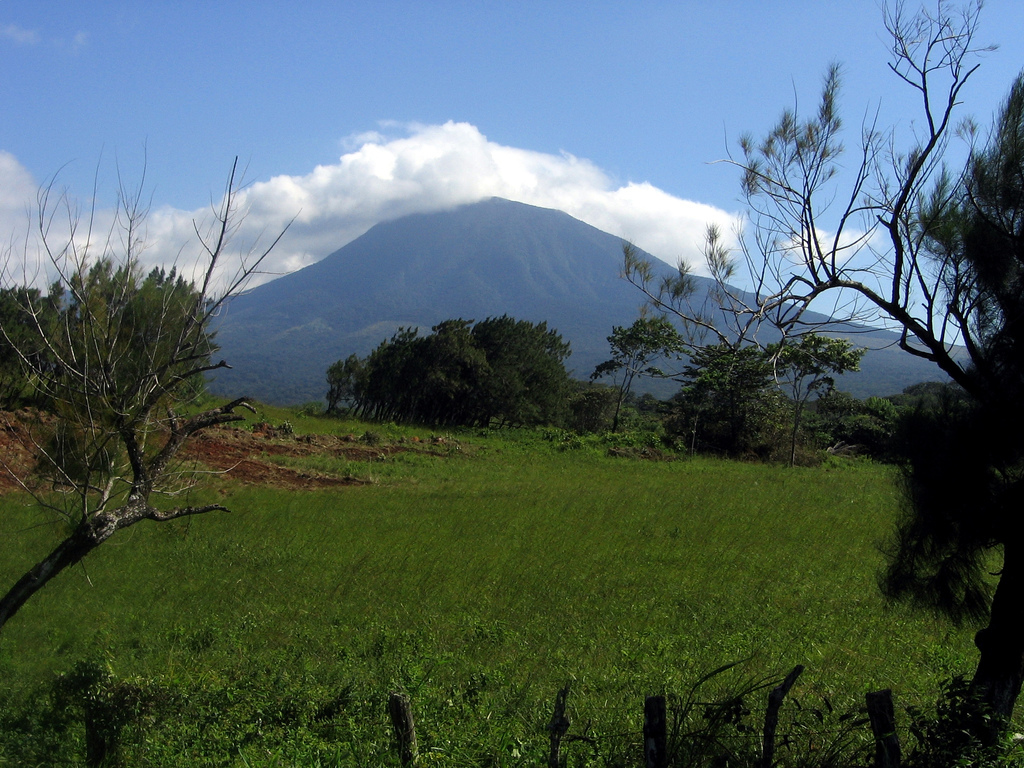
© cyph3r [2], CC BY-SA 2.0 Resized from original. (This derivative is under the same CC BY-SA license.)
World Heritage Research
Discover scientific research and academic studies that deepen our understanding of Area de Conservación Guanacaste from its history and significance to its conservation, management, and contemporary challenges.
-
Revision of the species of Lytopylus from Area de Conservación Guanacaste, northwestern Costa Rica (Hymenoptera, Braconidae, Agathidinae)
A groundbreaking study reveals the diversity of Lytopylus wasps (Agathidinae) in Costa Rica's Area de Conservación Guanacaste, describing 32 new species. This revision provides detailed morphological descriptions and an interactive key for identification, alongside comprehensive ecological data linking these wasps to their host caterpillars and food plants. Genetic analysis using mitochondrial COI barcodes supported species delimitation, offering a robust taxonomic framework. The findings significantly advance our understanding of wasp biodiversity in this UNESCO-listed region, highlighting the importance of integrating molecular and ecological approaches in systematics.
Kang, I., Chapman, E. G., Janzen, D. H., Hallwachs, W., Dapkey, T., Smith, M. A., & Sharkey, M. J. (2017). Revision of the species of Lytopylus from Area de Conservación Guanacaste, northwestern Costa Rica (Hymenoptera, Braconidae, Agathidinae). ZooKeys, 721, 93–158. https://doi.org/10.3897/zookeys.721.20287
View Publication Record | Read Publication -
Two new species of Erythromelana Townsend, 1919 (Diptera: Tachinidae) from Area de Conservación Guanacaste in northwestern Costa Rica
Scientists have identified two new species of the fly genus Erythromelana within the Area de Conservación Guanacaste (ACG) in northwestern Costa Rica. These discoveries, Erythromelana jimmychevezi and Erythromelana glenriverai, were made by rearing flies from wild-caught caterpillars of the moth family Geometridae. The research integrates morphological descriptions, life history observations, molecular data, and photographic documentation to characterize these species. This study highlights the biodiversity of ACG and contributes new insights into the taxonomy of Tachinidae flies, which are important predators in ecosystems.
Fleming, A., Wood, D. M., Smith, M. A., Hallwachs, W., Janzen, D., & Dapkey, T. (2016). Two new species of Erythromelana Townsend, 1919 (Diptera: Tachinidae) from Area de Conservación Guanacaste in northwestern Costa Rica. Biodiversity Data Journal, 4. https://doi.org/10.3897/bdj.4.e7386
View Publication Record | Read Publication -
Integrative taxonomy of New World Euplectrus Westwood (Hymenoptera, Eulophidae), with focus on 55 new species from Area de Conservación Guanacaste, northwestern Costa Rica
A groundbreaking integrative taxonomy study identifies 55 new species of Euplectrus wasps (Hymenoptera, Eulophidae) from the Area de Conservación Guanacaste (ACG), Costa Rica, bringing the total treated to 90 species. This research, led by C. Hansson, provides detailed descriptions and illustrations for all species, including 20 previously known ones found in ACG. The study also establishes one new synonym and designates lectotypes for eight species with uncertain status due to damaged type material. Host records are available for 74 Euplectrus species, contributing significantly to the understanding of their natural history. Two identification keys—one for females and one for males—facilitate species differentiation, enhancing taxonomic precision in this region.
Hansson, C., Smith, M. A., Janzen, D. H., & Hallwachs, W. (2015). Integrative taxonomy of New World Euplectrus Westwood (Hymenoptera, Eulophidae), with focus on 55 new species from Area de Conservación Guanacaste, northwestern Costa Rica. ZooKeys, 485, 1–236. https://doi.org/10.3897/zookeys.485.9124
View Publication Record | Read Publication -
Three new species of Trigonospila Pokorny (Diptera: Tachinidae), from Area de Conservación Guanacaste, northwestern Costa Rica, with a key for their identification
Researchers have identified three new species of Trigonospila flies (Diptera: Tachinidae) from the Area de Conservación Guanacaste (ACG), Costa Rica, bringing the total known in the New World to ten. These discoveries—Trigonospila edwinbermudezi, T. uniformis, and T. josemariamoragai—were made through a comprehensive study integrating morphological analysis, photographic documentation, life history data, and molecular evidence. The study also describes the previously unknown male of Trigonospila panamensis. All species were reared from ACG caterpillars during an ongoing inventory of caterpillar-parasitoid interactions across dry, rain, and cloud forests, contributing to biodiversity documentation in this UNESCO World Heritage Site.
Fleming, A., Wood, D. M., Janzen, D., Hallwachs, W., & Smith, M. A. (2015). Three new species of Trigonospila Pokorny (Diptera: Tachinidae), from Area de Conservación Guanacaste, northwestern Costa Rica, with a key for their identification. Biodiversity Data Journal, 3. https://doi.org/10.3897/bdj.3.e4595
View Publication Record | Read Publication -
Review of Apanteles sensu stricto (Hymenoptera, Braconidae, Microgastrinae) from Area de Conservación Guanacaste, northwestern Costa Rica, with keys to all described species from Mesoamerica
A groundbreaking study from the Area de Conservación Guanacaste (ACG) in Costa Rica reveals the extraordinary diversity of Apanteles wasps, a critical group of caterpillar parasitoids. Researchers identified 186 new species and redefined the genus Apanteles sensu stricto, providing keys to all 205 described species from Mesoamerica. This work leverages a unique dataset of over half a million Lepidoptera caterpillars reared for their parasitoids, combining traditional taxonomy with molecular techniques like DNA barcoding and interactive software (Lucid 3.5) to distinguish cryptic species. The study also highlights the host preferences of these wasps, with about 90% exhibiting monophagous or oligophagous behavior, attacking primarily Hesperiidae, Elachistidae, and Crambidae caterpillars. This comprehensive review accelerates the understanding of hyperdiverse parasitoid groups and their ecological roles.
Fernandez-Triana, J., Whitfield, J., Rodriguez, J., Smith, M. A., Janzen, D., Hallwachs, W., Hajibabaei, M., Burns, J., Solis, A., Brown, J., Cardinal, S., Goulet, H., & Hebert, P. (2014). Review of Apanteles sensu stricto (Hymenoptera, Braconidae, Microgastrinae) from Area de Conservación Guanacaste, northwestern Costa Rica, with keys to all described species from Mesoamerica. ZooKeys, 383, 1–565. https://doi.org/10.3897/zookeys.383.6418
View Publication Record | Read Publication -
Hyperparasitoid wasps (Hymenoptera, Trigonalidae) reared from dry forest and rain forest caterpillars of Area de Conservación Guanacaste, Costa Rica
A study of hyperparasitoid wasps (Hymenoptera, Trigonalidae) in Area de Conservación Guanacaste, Costa Rica, identified five species associated with dry and rain forests. These generalist hyperparasitoids, including Lycogaster apicipennis, Taeniogonalos woodorum sp. n., Taeniogonalos fasciatipennis, Trigonalys championi, and Trigonalys maculifrons, were reared from caterpillars parasitized by Ichneumonidae and Tachinidae. Morphological and DNA barcoding data confirmed species separation, while Taeniogonalos gundlachii was found to be restricted to eastern North America, with the Costa Rican population reclassified as T. fasciatipennis. The research clarifies taxonomic confusion and highlights habitat-specific distributions of these hyperparasitoids in ACG's diverse ecosystems.
Smith, D., Janzen, D., Hallwachs, W., & Smith, M. A. (2012). Hyperparasitoid wasps (Hymenoptera, Trigonalidae) reared from dry forest and rain forest caterpillars of Area de Conservación Guanacaste, Costa Rica. Journal of Hymenoptera Research, 29, 119–144. https://doi.org/10.3897/jhr.29.3233
View Publication Record | Read Publication -
Lytopylus Förster (Hymenoptera, Braconidae, Agathidinae) species from Costa Rica, with an emphasis on specimens reared from caterpillars in Area de Conservación Guanacaste
A comprehensive taxonomic study identifies twelve species of Lytopylus wasps from Costa Rica, including ten newly described species and two reclassified from other genera. Over 32 years of caterpillar inventory in Area de Conservación Guanacaste yielded critical specimens, revealing the diversity and ecological significance of these parasitoids. The research transfers nine species to the Lytopylus genus, providing updated taxonomic keys—one interactive and one static—to facilitate identification. This work advances our understanding of wasp biodiversity and their role in tropical ecosystems.
Sharkey, M., Stoelb, S., Tucker, E., Janzen, D., Hallwachs, W., Dapkey, T., & Smith, M. A. (2011). Lytopylus Förster (Hymenoptera, Braconidae, Agathidinae) species from Costa Rica, with an emphasis on specimens reared from caterpillars in Area de Conservación Guanacaste. ZooKeys, 130, 379–419. https://doi.org/10.3897/zookeys.130.1569
View Publication Record | Read Publication