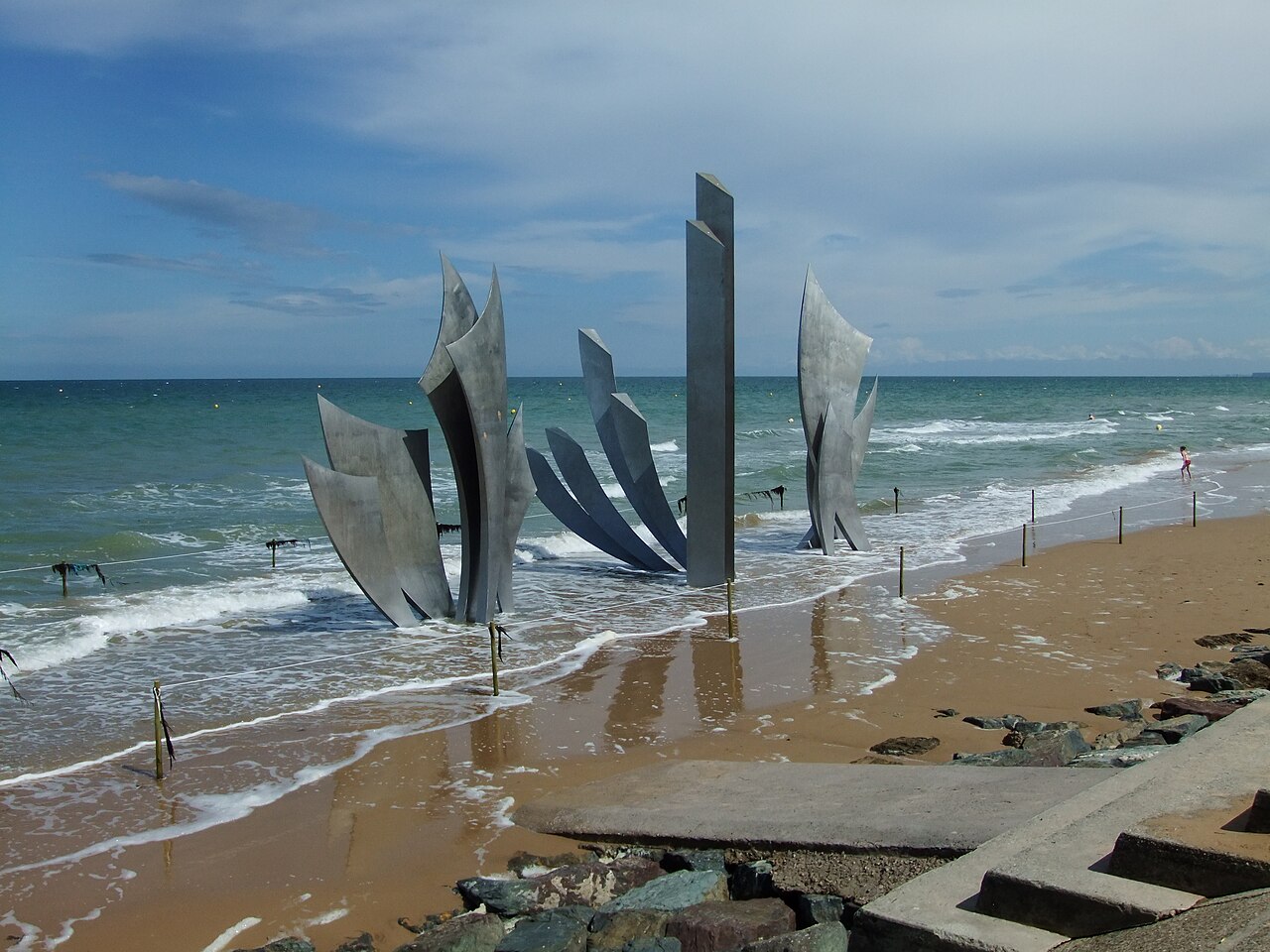
World Heritage Identification Number: 1581
World Heritage since: 2026
Category: Cultural Heritage
WHE Type: Memorial Sites
Transboundary Heritage: No
Endangered Heritage: No
Country: 🇫🇷 France
Continent: Europe
UNESCO World Region: Europe and North America
Map
Beaches of the D-Day Landings, Normandy, 1944: A Cultural Landscape of Historical Significance
The Beaches of the D-Day Landings, Normandy, 1944, inscribed as a UNESCO World Heritage Site in 2026, represent a unique cultural landscape that bears testament to one of the most pivotal events in modern history – the Allied invasion of Normandy during World War II. This extensive site spans approximately 80 kilometers of the Normandy coastline, encompassing five distinct beaches (Utah, Omaha, Gold, Juno, and Sword) and Pointe du Hoc.
More to come…UNESCO Description of the World Heritage Site
The serial property comprises six component parts along approximately 80 km of the Normandy coastline, encompassing Utah, Omaha, Gold, Juno, and Sword Beaches, as well as Pointe du Hoc. These sites are directly associated with the Allied landings of 6 June 1944, the opening phase of Operation Overlord, which marked the beginning of the liberation of Western Europe from Nazi occupation during the Second World War. The property preserves significant remains of the German Atlantic Wall, including casemates, artillery batteries, fire‑control posts, and resistance nests, alongside battlefield traces, original wartime equipment, and major commemorative landscapes such as the American Cemetery at Colleville‑sur‑Mer. Together, these elements form an exceptional cultural landscape shaped both by the events of 1944 and by their enduring remembrance.Encyclopedia Record: Normandy landings
The Normandy landings were the landing operations and associated airborne operations on 6 June 1944 of the Allied invasion of Normandy in Operation Overlord during the Second World War. Codenamed Operation Neptune and often referred to as D-Day, it is the largest seaborne invasion in history. The operation began the liberation of France and the rest of Western Europe, and laid the foundations for the Allied victory on the Western Front.Additional Site Details
Area: 4,228.68 hectares
Number of Components: 6
Coordinates: 49.4305555556 , -1.1855555555