World Heritage Identification Number: 1748
World Heritage since: 2025
Category: Cultural Heritage
WHE Type: Memorial Sites
Transboundary Heritage: No
Endangered Heritage: No
Country: 🇰🇭 Cambodia
Continent: Asia
UNESCO World Region: Asia and the Pacific
Map
A Journey Through the Cambodian Memorial Sites: From Centers of Repression to Places of Peace and Reflection
The Cambodian Memorial Sites: From Centers of Repression to Places of Peace and Reflection, inscribed as a UNESCO World Heritage Site in 2025, offers a poignant testament to the dark chapter of Cambodia's history under the Khmer Rouge regime from 1971 to 1979. Comprising three distinct locations—the former M-13 prison, the Tuol Sleng Genocide Museum, and the Choeung Ek Genocidal Center—these sites bear witness to the widespread violence, detention, torture, and execution that occurred during this period.
More to come…UNESCO Description of the World Heritage Site
The property consists of three locations that reflect the human rights abuses of the Khmer Rouge regime in Cambodia from 1971 to 1979. The three component parts represent the widespread violence during this period: the former M-13 prison (early repression), the Tuol Sleng Genocide Museum (former S-21 prison), and the Choeung Ek Genocidal Center (former execution site of S-21). These places have been preserved and memorialized since the regime’s fall. The Tuol Sleng Museum maintains extensive archives and collections related to this period, mainly documented by the Extraordinary Chambers in the Courts of Cambodia (ECCC).
Encyclopedia Record: Cambodian Memorial Sites
The Cambodian Memorial Sites: From centres of repression to places of peace and reflection is a UNESCO World Heritage Site which consists of the former M-13 prison, the Tuol Sleng Genocide Museum and the Choeung Ek Genocidal Center. These sites have been preserved and memorialized since the fall of the Khmer Rouge regime. They stand as testimony to the horrors carried out by the communist Khmer Rouge from 1975 to 1979. Formerly sites of mass detention, torture, and execution, these locations have been transformed into profound spaces of remembrance and learning. Today, they serve as solemn memorials to one of the 20th century’s most tragic genocides and offer opportunities for reflection, healing, and the pursuit of peace. UNESCO’s recognition of these memorials represents a significant step in safeguarding Cambodia’s painful history, paying tribute to the resilience of its people, and raising global awareness about the devastating impact of totalitarianism and mass violence.Additional Site Details
Area: 3.9 hectares
Coordinates: 11.77016 , 104.384814
Image
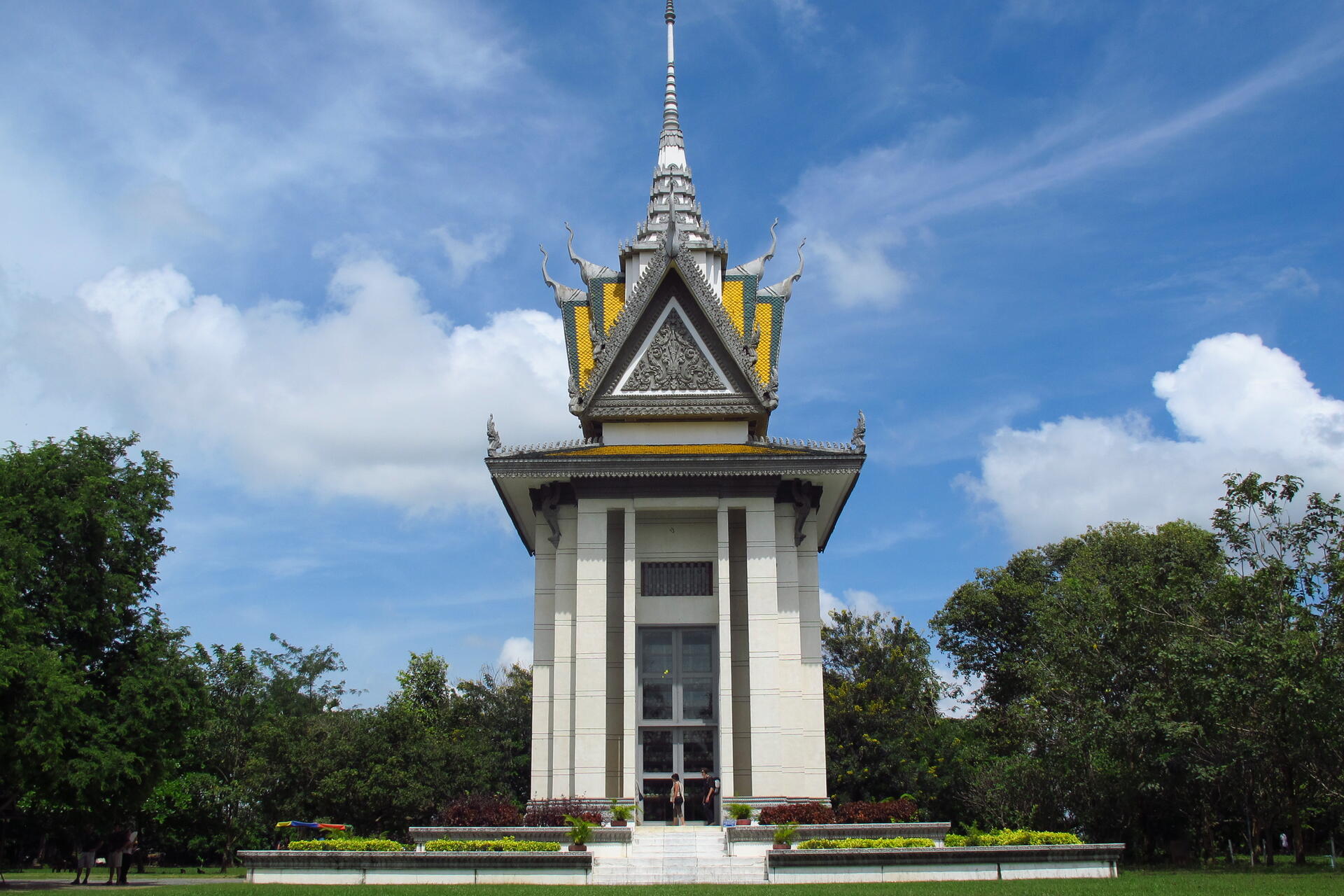
© Timgray200, CC BY-SA 3.0 Resized from original. (This derivative is under the same CC BY-SA license.)