World Heritage Identification Number: 837
World Heritage since: 1997
Category: Cultural Heritage
WHE Type: Historic Cities & Urban Areas
Transboundary Heritage: No
Endangered Heritage: No
Country: 🇲🇦 Morocco
Continent: Africa
UNESCO World Region: Arab States
Map
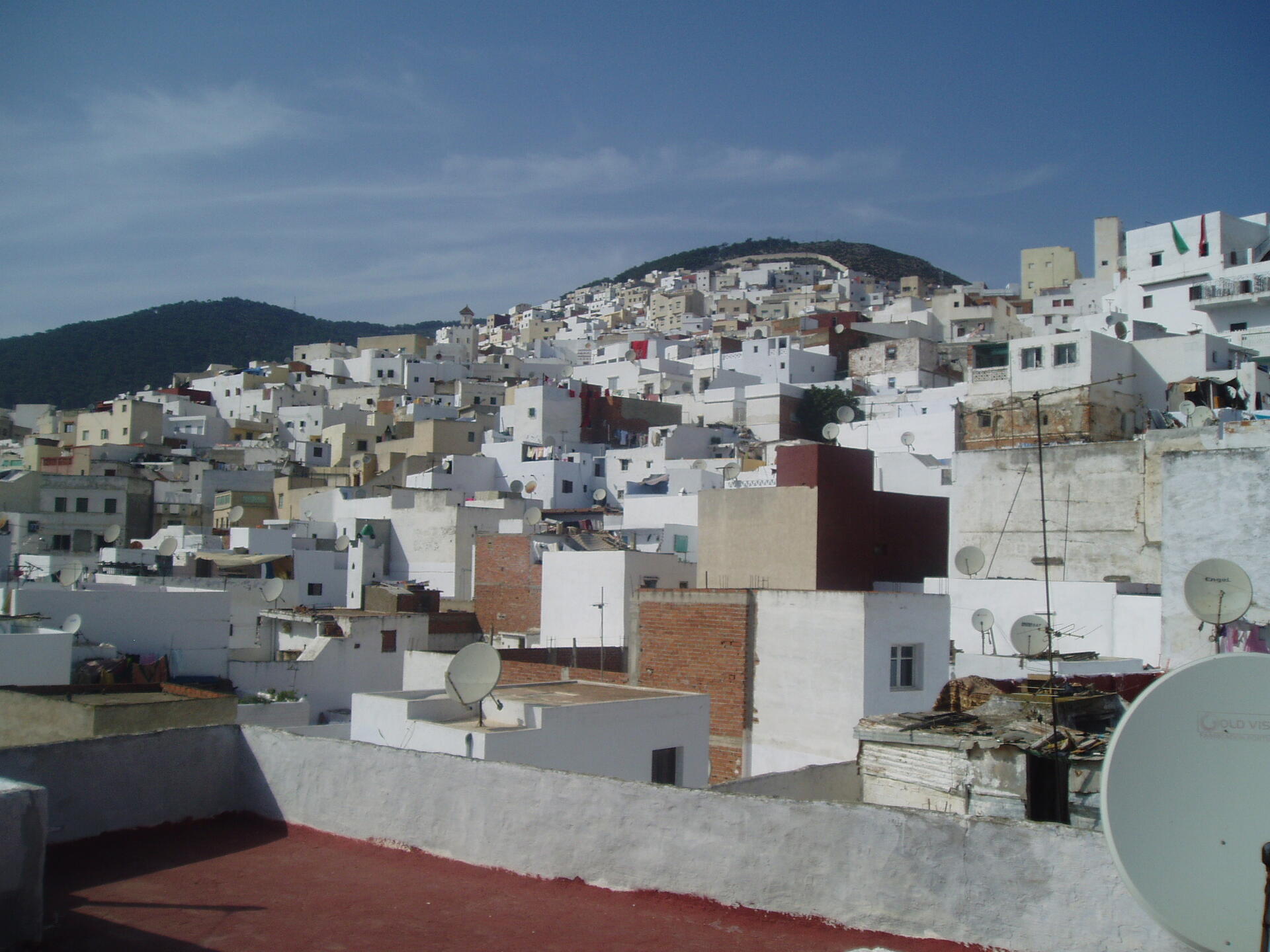
The Medina of Tétouan: A Blend of Islamic and Andalusian Architecture
The Medina of Tétouan, formerly known as Titawin, is a captivating urban center located in northern Morocco. Situated along the Martil Valley, this medieval city serves as one of the two significant ports of Morocco on the Mediterranean Sea, just a few miles south of the Strait of Gibraltar, and approximately 60 kilometers east-southeast of Tangier. With a population of over 380,000 inhabitants according to the 2014 Moroccan census, the Medina of Tétouan forms part of the administrative division Tanger-Tetouan-Al Hoceima.
More to come…UNESCO Description of the World Heritage Site
Tétouan was of particular importance in the Islamic period, from the 8th century onwards, since it served as the main point of contact between Morocco and Andalusia. After the Reconquest, the town was rebuilt by Andalusian refugees who had been expelled by the Spanish. This is well illustrated by its art and architecture, which reveal clear Andalusian influence. Although one of the smallest of the Moroccan medinas, Tétouan is unquestionably the most complete and it has been largely untouched by subsequent outside influences.
UNESCO Justification of the World Heritage Site
Criterion (ii): The Medina of Tétouan bears witness to the considerable influences of Andalusian civilization towards the end of the medieval period of Muslim Occident. This influence is illustrated in developments in architecture, monumental arts and town-planning.
Criterion (iv): The Medina of Tétouan constitutes an outstanding example of a fortified Mediterranean coastal town, built against a North Moroccan mountain landscape. It testifies to the antiquity of the settlement, and during the Islamic period it gained considerable importance as the only connection between the Iberian Peninsula and the interior of Morocco. Its expansion from the beginning of the 17th century continued until the end of the 18th century and is reflected in its fortifications, architecture, synthesis of Moroccan and Andalusian cultures and its urban fabric.
Criterion (v): The strategic position of the Medina of Tétouan opposite the Straits of Gibraltar played an important role as the point of contact and of transition between two civilizations (Spanish and Arab) and two continents (Europe and North Africa).
Encyclopedia Record: Tétouan
Tétouan is a city in northern Morocco. It lies along the Martil Valley and is one of the two major ports of Morocco on the Mediterranean Sea, a few miles south of the Strait of Gibraltar, and about 60 kilometres (37 mi) E.S.E. of Tangier. In the 2014 Moroccan census, the city recorded a population of 380,787 inhabitants. It is part of the administrative division Tanger-Tetouan-Al Hoceima.Additional Site Details
Area: 6.5 hectares
Number of Components: 1
(iv) — Outstanding example of a type of building or landscape
(v) — Outstanding example of traditional human settlement
Coordinates: 35.57083 , -5.36667
Image
© Anassbarnichou2, CC BY-SA 3.0 Resized from original. (This derivative is under the same CC BY-SA license.)