World Heritage Identification Number: 1345
World Heritage since: 2010
Category: Cultural Heritage
WHE Type: Religious Sites & Sacred Architecture
Transboundary Heritage: No
Endangered Heritage: No
Country: 🇮🇷 Iran (Islamic Republic of)
Continent: Asia
UNESCO World Region: Asia and the Pacific
Map
Sheikh Safi al-din Khānegāh and Shrine Ensemble in Ardabil: A Rare Ensemble of Medieval Islamic Architecture
The Sheikh Safi al-din Khānegāh and Shrine Ensemble in Ardabil, Iran, is a unique and significant example of medieval Islamic architecture. This complex, built between the 16th and 18th centuries, serves as a spiritual retreat center in the Sufi tradition and has been recognized as a UNESCO World Heritage Site since 2010.
More to come…UNESCO Description of the World Heritage Site
Built between the beginning of the 16th century and the end of the 18th century, this place of spiritual retreat in the Sufi tradition uses Iranian traditional architectural forms to maximize use of available space to accommodate a variety of functions (including a library, a mosque, a school, mausolea, a cistern, a hospital, kitchens, a bakery, and some offices). It incorporates a route to reach the shrine of the Sheikh divided into seven segments, which mirror the seven stages of Sufi mysticism, separated by eight gates, which represent the eight attitudes of Sufism. The ensemble includes well-preserved and richly ornamented facades and interiors, with a remarkable collection of antique artefacts. It constitutes a rare ensemble of elements of medieval Islamic architecture.
UNESCO Justification of the World Heritage Site
Criterion (i): The conception of the entire ensemble layout, the proportions of the internal and external spaces and of the buildings, their design and refined decoration, together with the climax created by the sequenced path to Sheikh Safi al-Din’s shrine, all combined, have concurred to create a unique complex in which aesthetics and spirituality are in a harmonious dialogue.
Criterion (ii): The architectural spaces and features of the nominated property have integrated influences of the Ilkhānid and Timurid periods with the religious message of Sufism and the taste for exquisite ornamentation and interior spaciousness, thus giving rise to fresh architectural and artistic forms.
Criterion (iv): The Sheikh Safi al-Din ensemble is a prototype and an outstanding example of a 16th century religious complex, combined with social, charitable, cultural, and educational functions, which contains all the significant elements that since came to characterize Safavid architecture and became a prototype for other khānegāh and shrines.
Encyclopedia Record: Sheikh Safi al-Din Khānegāh and Shrine Ensemble
Sheikh Safi al-Din Khānegāh and Shrine Ensemble is a Sufi khānegāh and shrine complex that contains the tomb of Sheikh Safi-ad-Din Ardabili. It is located in the city of Ardabil, in the province of Ardabil, Iran. In 2010, the religious funerary complex was added to the UNESCO World Heritage List. The mausoleum was added to the Iran National Heritage List on 6 January 1932 and is administered by the Cultural Heritage, Handicrafts and Tourism Organization of Iran.Additional Site Details
Area: 2.1353 hectares
Number of Components: 1
(ii) — Significant interchange of human values
(iv) — Outstanding example of a type of building or landscape
Coordinates: 38.2486111111 , 48.2913888889
Image
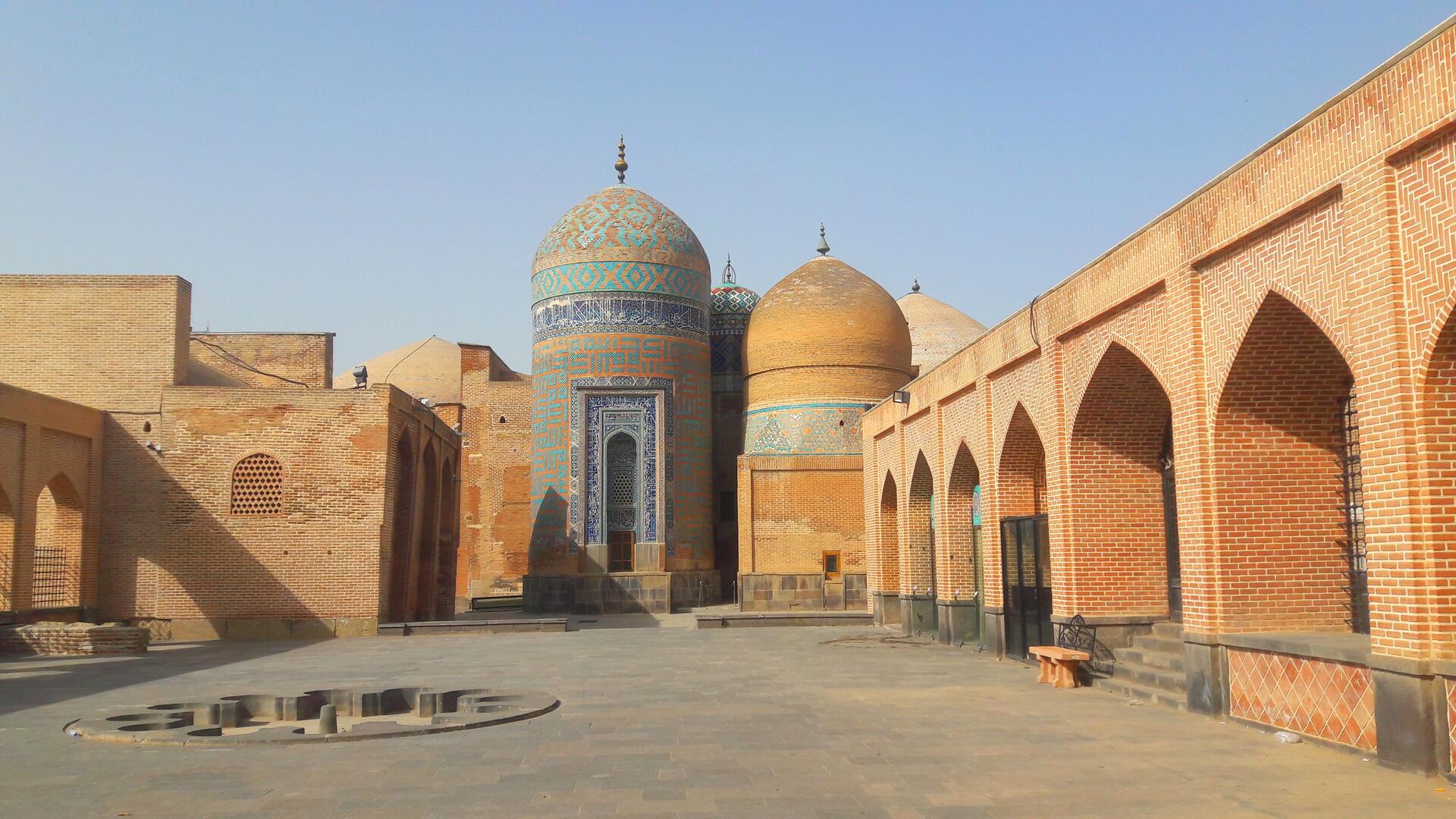
© MAF70, CC BY-SA 4.0 Resized from original. (This derivative is under the same CC BY-SA license.)