World Heritage Identification Number: 1252
World Heritage since: 2013
Category: Natural Heritage
WHE Type: Protected Areas & National Parks
Transboundary Heritage: No
Endangered Heritage: No
Country: 🇹🇯 Tajikistan
Continent: Asia
UNESCO World Region: Asia and the Pacific
Map
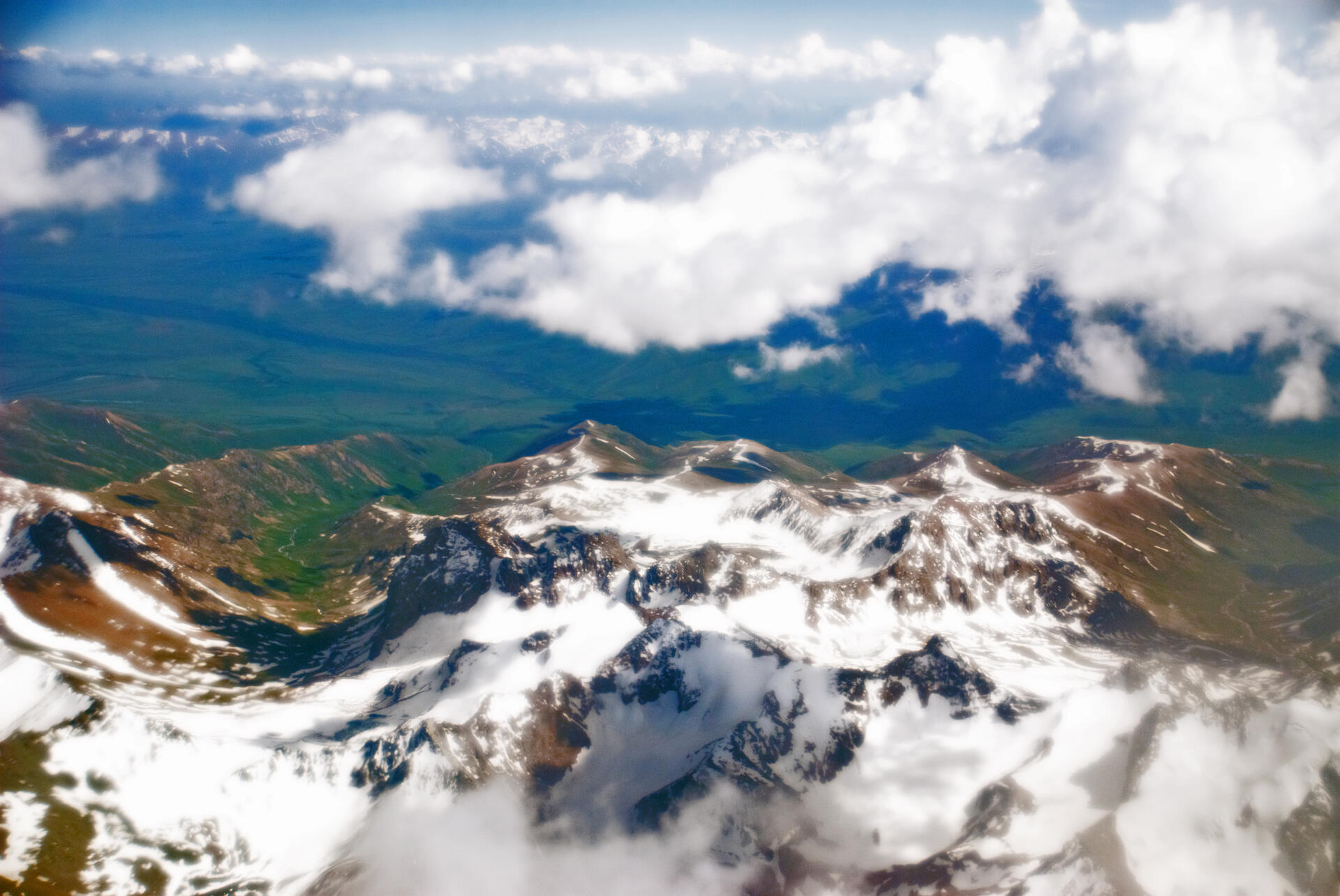
Exploring the Majestic Landscape of Tajik National Park (Mountains of the Pamirs)
The Tajik National Park, nestled within the heart of the Pamir Mountains in eastern Tajikistan, stands as a testament to the breathtaking beauty and geological complexity of Central Asia. Inscribed as a UNESCO World Heritage Site in 2013, this vast protected area encompasses more than 2.5 million hectares, making it one of the largest national parks in the world.
More to come…UNESCO Description of the World Heritage Site
Tajikistan National Park covers more than 2.5 million hectares in the east of the country, at the centre of the so-called “Pamir Knot”, a meeting point of the highest mountain ranges on the Eurasian continent. It consists of high plateaux in the east and, to the west, rugged peaks, some of them over 7,000 meters high, and features extreme seasonal variations of temperature. The longest valley glacier outside the Polar region is located among the 1,085 glaciers inventoried in the site, which also numbers 170 rivers and more than 400 lakes. Rich flora species of both the south-western and central Asian floristic regions grow in the Park which shelters nationally rare and threatened birds and mammals (Marco Polo Argali sheep, Snow Leopards and Siberian Ibex and more). Subject to frequent strong earthquakes, the Park is sparsely inhabited, and virtually unaffected by agriculture and permanent human settlements. It offers a unique opportunity for the study of plate tectonics and subduction phenomena.
UNESCO Justification of the World Heritage Site
Criterion (vii): Tajik National Park is one of the largest high mountain protected areas in the Palearctic Realm. The Fedchenko Glacier, the largest valley glacier of the Eurasian Continent and the world’s longest outside of the Polar Regions, is unique and a spectacular example at the global level. The visual combination of some of the deepest gorges in the world, surrounded by rugged glaciated peaks, as well as the alpine desert and lakes of the Pamir high plateaux adds up to an alpine wilderness of exceptional natural beauty. Lake Sarez and Lake Karakul are superlative natural phenomena. Lake Sarez, impounded behind the highest natural dam in the world, is of great geomorphic interest. Lake Karakul is likely to be the highest large lake of meteoric origin.
Criterion (viii): The Pamir Mountains are a major centre of glaciation on the Eurasian continent and Tajik National Park illustrates within one protected area an outstanding juxtaposition of many high mountains, valley glaciers, and deep river gorges alongside the cold continental desert environment of the high Pamir Plateau landforms. An outstanding landform feature of the property’s geologically dynamic terrain is Lake Sarez. It was created by an earthquake-generated landslide of an estimated six billion tonnes of material and is possibly the youngest deep water alpine lake in the world. It is of international scientific and geomorphological hazard significance because of the on-going geological processes influencing its stability, and the sort of lacustrine ecosystem which will develop over time. Tajik National Park furthermore offers a unique opportunity for the study of plate tectonics and continental subduction phenomena thereby contributing to our fundamental understanding of earth building processes.
Encyclopedia Record: Tajik National Park
Tajik National Park is a national park and nature reserve in eastern Tajikistan. It was established in 1992 and expanded in 2001 to include parts of the Pamir Mountains, the third-highest mountain system in the world. The park covers 26,116.74 square kilometres (10,083.73 sq mi) or a little over 18 percent of Tajikistan's total area.Additional Site Details
Area: 2,611,674 hectares
Number of Components: 1
(viii) — Outstanding example representing major earth stages
Coordinates: 38.765 , 72.3052777778
IUCN World Heritage Outlook
The 2025 Conservation Outlook on Tajik National Park (Mountains of the Pamirs) reports the following assessment:
Source: International Union for Conservation of Nature (IUCN) · View assessment
World Heritage Research
Discover scientific research and academic studies that deepen our understanding of Tajik National Park (Mountains of the Pamirs) from its history and significance to its conservation, management, and contemporary challenges.
-
Perestroika to Parkland: The Evolution of Land Protection in the Pamir Mountains of Tajikistan
Tajik National Park, located in the Pamir Mountains of Tajikistan, has evolved from a Soviet-era depopulated landscape to a UNESCO World Heritage Site, reflecting complex socio-political and environmental transformations. The study reveals that post-perestroika migration in the 1980s allowed Tajik farmers and Kirghiz pastoralists to resettle the region, which was already rich in biodiversity due to decades of restricted human activity. This period marked a turning point for conservation efforts, culminating in the establishment of Tajik National Park in 1992 and its designation as a World Heritage Site in 2013. The research combines field and archival data to trace the global diffusion of protected areas, analyze the biophysical properties of the Pamirs, and assess their potential for UNESCO Biosphere Reserve status. The findings highlight the region's suitability for transboundary conservation, aligning with the Man and the Biosphere model.
Cunha, S. F. (2018). Perestroika to Parkland: The Evolution of Land Protection in the Pamir Mountains of Tajikistan. Mountains: Physical, Human-Environmental, and Sociocultural Dynamics, 228–242. https://doi.org/10.4324/9781315158914-20
View Publication Record | Read Publication -
Perestroika to Parkland: The Evolution of Land Protection in the Pamir Mountains of Tajikistan
Tajik National Park, located in the Pamir Mountains of Tajikistan, has undergone significant transformation from a depopulated landscape during Stalin's era to a thriving protected area. The study highlights that the park's establishment in 1992 and its subsequent designation as a UNESCO World Heritage Site in 2013 were driven by a combination of natural resilience and human advocacy. The research, based on field and archival data, traces the evolution of land protection from Soviet restrictions to post-perestroika migration and conservation efforts. It also identifies the park's potential for transboundary conservation as a UNESCO Biosphere Reserve, aligning with the Man and the Biosphere model.
Cunha, S. F. (2016). Perestroika to Parkland: The Evolution of Land Protection in the Pamir Mountains of Tajikistan. Annals of the American Association of Geographers, 107(2), 465–479. https://doi.org/10.1080/24694452.2016.1248551
View Publication Record | Read Publication -
Community based conservation and management of mountain ungulates in Tajikistan
Mountain ungulate populations in Tajikistan, including Marco Polo argali, Tajik markhor, and Bukhara urial, face significant threats from poaching and habitat degradation despite state-imposed hunting restrictions. A community-based conservation project initiated in 2008 has shown promise in reversing these declines by engaging former poachers and local communities to manage wildlife sustainably. This approach, supported by NGOs and international organizations, has led to the creation of private conservancies and community initiatives that focus on protection, monitoring, and sustainable use while fostering policy dialogue for long-term conservation. The project highlights the potential for collaborative management to mitigate unsustainable practices and support both biodiversity conservation and local development.
Michel, S. (2010). Community based conservation and management of mountain ungulates in Tajikistan. Galemys, Spanish Journal of Mammalogy, 22(NE), 469–481. https://doi.org/10.7325/galemys.2010.ne.a29
View Publication Record | Read Publication