World Heritage Identification Number: 1766
World Heritage since: 2026
Category: Cultural Heritage
WHE Type: Buildings & Architectural Ensembles
Transboundary Heritage: No
Endangered Heritage: No
Country: 🇺🇿 Uzbekistan
Continent: Asia
UNESCO World Region: Asia and the Pacific
Map
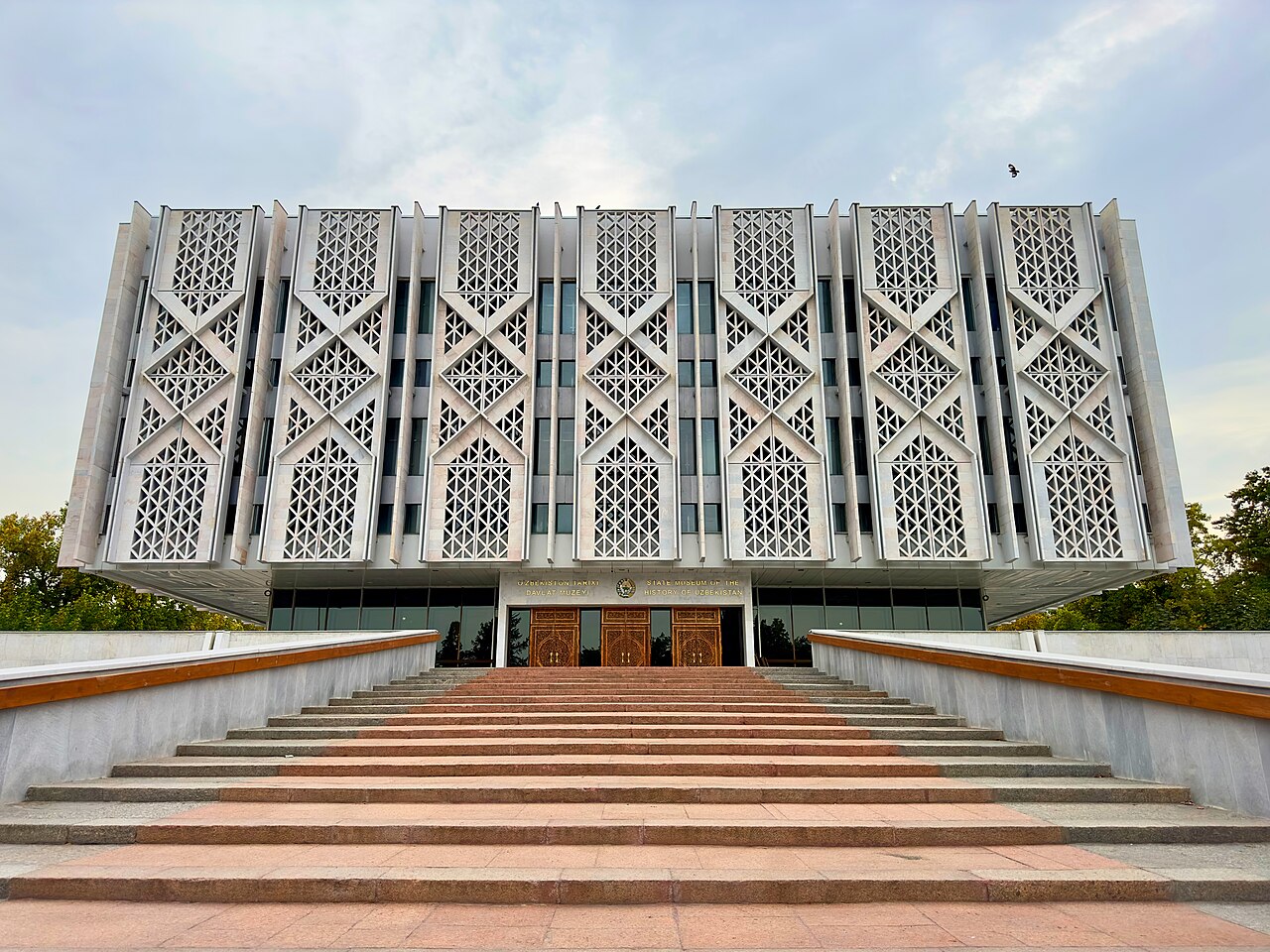
Tashkent Modernist Architecture: A Blend of Modernity and Tradition in Central Asia
Tashkent Modernist Architecture, inscribed as a UNESCO World Heritage Site in 2026, presents a unique blend of modernist design principles and local cultural influences in the heart of Central Asia. This architectural ensemble, spanning from the 1960s to the early 1990s, offers a significant representation of the post-earthquake reconstruction and transformation of Tashkent.
More to come…UNESCO Description of the World Heritage Site
The property embodies a representative ensemble of ten modernist buildings and urban complexes constructed between the 1960s and early 1990s, a formative period in the reconstruction and transformation of Tashkent following the 1966 earthquake. The series includes museums, exhibition halls, hotels, residential ensembles, cultural institutions, and scientific or infrastructural facilities, reflecting the broad functional spectrum of late‑Soviet architectural production. Nine out of ten component parts are situated along the newly planned urban axes of the reconstructed city centre, as defined in successive masterplans that reshaped Tashkent into a modern socialist metropolis. Together, they articulate the city’s principal public spaces and demonstrate the integration of modernist planning principles with local climatic, seismic, and cultural conditions. Collectively, the serial property illustrates a distinct phase of architectural modernism characterised by industrialised construction, seismic‑resilient engineering, and the adaptation of standardised systems to regional materials, traditions, and environmental constraints.Encyclopedia Record: Tashkent
Tashkent, also known as Toshkent, is the capital and largest city of Uzbekistan. It is the most populous city in Central Asia, with a population of more than 3.1 million people as of July 1, 2025. It is located in northeastern Uzbekistan. Tashkent's history stretches back centuries as part of the ancient Silk Road, the network of trade routes that connected the Eastern world and the Western world. The city has long been a crossroads of Cultures, goods and ideas.Additional Site Details
Area: 62.588 hectares
Number of Components: 10
Coordinates: 41.3026833333 , 69.2672222223