World Heritage Identification Number: 687
World Heritage since: 1994
Category: Cultural Heritage
WHE Type: Infrastructure & Industry
Transboundary Heritage: No
Endangered Heritage: No
Country: 🇩🇪 Germany
Continent: Europe
UNESCO World Region: Europe and North America
Map
The Exceptional Preservation of Völklingen Ironworks: A Testimony to Ferrous Metallurgy and the Industrial Revolution
The Völklingen Ironworks, situated in the German town of Völklingen in Saarland, stands as one of the world's most significant surviving monuments of the Industrial Revolution. This former blast-furnace complex, spanning approximately seven hectares, is the only fully preserved example of an integrated ironworks in Western Europe and North America that was constructed, equipped, and maintained throughout the 19th and 20th centuries.
In 1882, the Völklingen Ironworks commenced pig iron production, marking the beginning of more than a century of continuous industrial activity. The site's significance lies not only in its historical value but also in its exceptional preservation, which offers a tangible link to the past and provides valuable insights into the development of ferrous metallurgy.
The ironworks comprises the major installations required for integrated pig-iron production, including blast furnaces, a coking plant, ore-handling facilities, gas purification systems, blowing engines, workshops, and other ancillary structures. Many of these facilities remain remarkably intact, demonstrating the engineering achievements of the industrial age. Because comparable ironworks were typically modernized, dismantled, or demolished during the 20th century, Völklingen represents an exceptionally rare survival of a complete industrial complex.
Throughout its history, the Völklingen Ironworks was renowned for its technological innovation. Continuous improvements to the blast furnaces, coking plant, gas purification systems, and raw-material handling equipment increased productivity while demonstrating the rapid advances in industrial engineering during the late nineteenth and early twentieth centuries. The remarkable survival of these installations enables visitors and researchers to trace the evolution of ironmaking technology in exceptional detail.
One of the defining characteristics of the Völklingen Ironworks is its integrated design. All major stages of pig-iron production—from the handling of raw materials to blast-furnace operation and associated processing—were carried out within a single industrial complex. This organization improved efficiency and facilitated close control of the manufacturing process. However, changing economic conditions eventually rendered the plant uncompetitive, and the last blast furnace was shut down in 1986, bringing more than a century of iron production to an end.
Since its closure, the Völklingen Ironworks has undergone a transformation from an active industrial site to a museum and cultural attraction. Today, visitors can explore the extensive industrial complex and gain firsthand insight into the technologies, working conditions, and daily lives of the people who sustained one of Europe's most important ironworks. The site serves as a powerful reminder of the impact of the Industrial Revolution on society and the environment, inspiring reflection on our industrial heritage and its lasting legacies.
In recognition of its exceptional preservation and its outstanding testimony to the history of ferrous metallurgy and industrialization, the Völklingen Ironworks was inscribed on the UNESCO World Heritage List in 1994. It also serves as an Anchor Point of the European Route of Industrial Heritage (ERIH), underscoring its importance in interpreting Europe's industrial past.
Beyond its importance as an industrial monument, the Völklingen Ironworks has become a vibrant cultural and educational center. In addition to preserving its historic machinery and buildings, the site hosts international art exhibitions, concerts, festivals, and scientific displays that explore the relationship between industry, technology, society, and the environment. This combination of heritage conservation and contemporary cultural programming has transformed the former ironworks into one of Europe's leading industrial heritage destinations.
Today, the Völklingen Ironworks remains one of the finest preserved industrial monuments in the world. Its remarkable integrity provides an unparalleled opportunity to understand the technological innovations that shaped modern industry and transformed society during the Industrial Revolution. As both a UNESCO World Heritage Site and an ERIH Anchor Point, it continues to educate and inspire visitors while preserving an irreplaceable chapter of Europe's industrial heritage.
UNESCO Description of the World Heritage Site
The ironworks, which cover some 6 ha, dominate the city of Völklingen. Although they have recently gone out of production, they are the only intact example, in the whole of western Europe and North America, of an integrated ironworks that was built and equipped in the 19th and 20th centuries and has remained intact.
UNESCO Justification of the World Heritage Site
Criterion (ii): Several important technological innovations in the production of pig-iron were developed or first applied successfully on an industrial scale at Völklingen Ironworks and are now in universal use throughout the world.
Criterion (iv): The Völklingen Ironworks is an outstanding example of an integrated pig-iron production plant of the type, which dominated this industry in the 19th and early 20th centuries.
Encyclopedia Record: Völklingen Ironworks
The Völklingen Ironworks is a former blast-furnace complex located in the German town of Völklingen, Saarland. Pig iron production occurred at the site from 1882 through 1986. As one of the only intact ironworks surviving from the 19th and early-20th centuries in Europe and North America, it was declared a UNESCO World Heritage Site in 1994 because of its exceptional preservation and its testimony to ferrous metallurgy and the Industrial Revolution. In addition, the site is an anchor point of the European Route of Industrial Heritage (ERIH).Additional Site Details
Area: 7.46 hectares
Number of Components: 1
(iv) — Outstanding example of a type of building or landscape
Coordinates: 49.2487222222 , 6.8442222222
Image
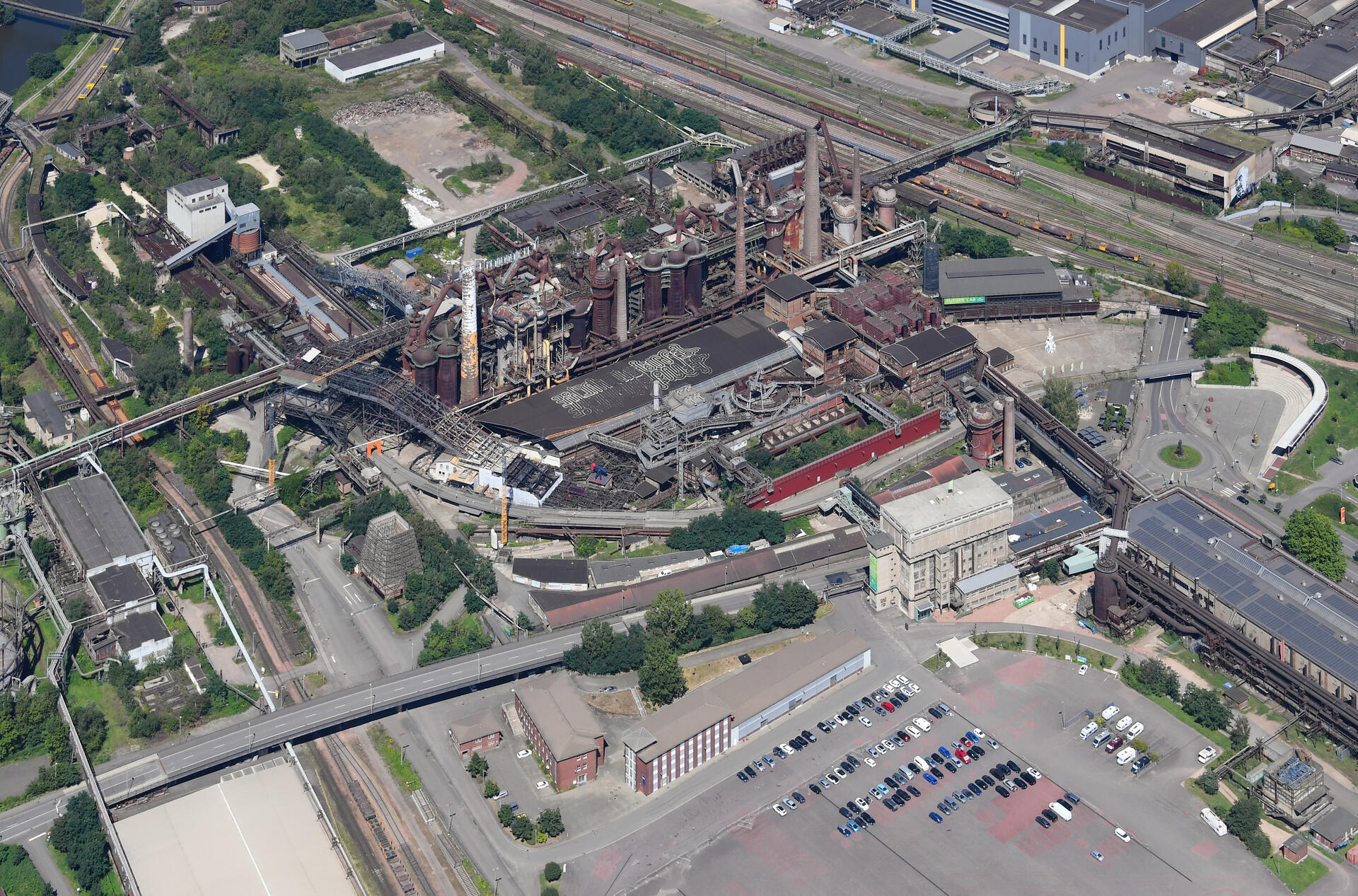
© Carsten Steger, CC BY-SA 4.0 Resized from original. (This derivative is under the same CC BY-SA license.)