World Heritage Identification Number: 484
World Heritage since: 1988
Category: Cultural Heritage
WHE Type: Archaeological Sites
Transboundary Heritage: No
Endangered Heritage: No
Country: 🇹🇷 Türkiye
Continent: Asia
UNESCO World Region: Europe and North America
Map
Xanthos-Letoon: A Blend of Lycian Traditions and Hellenic Influence
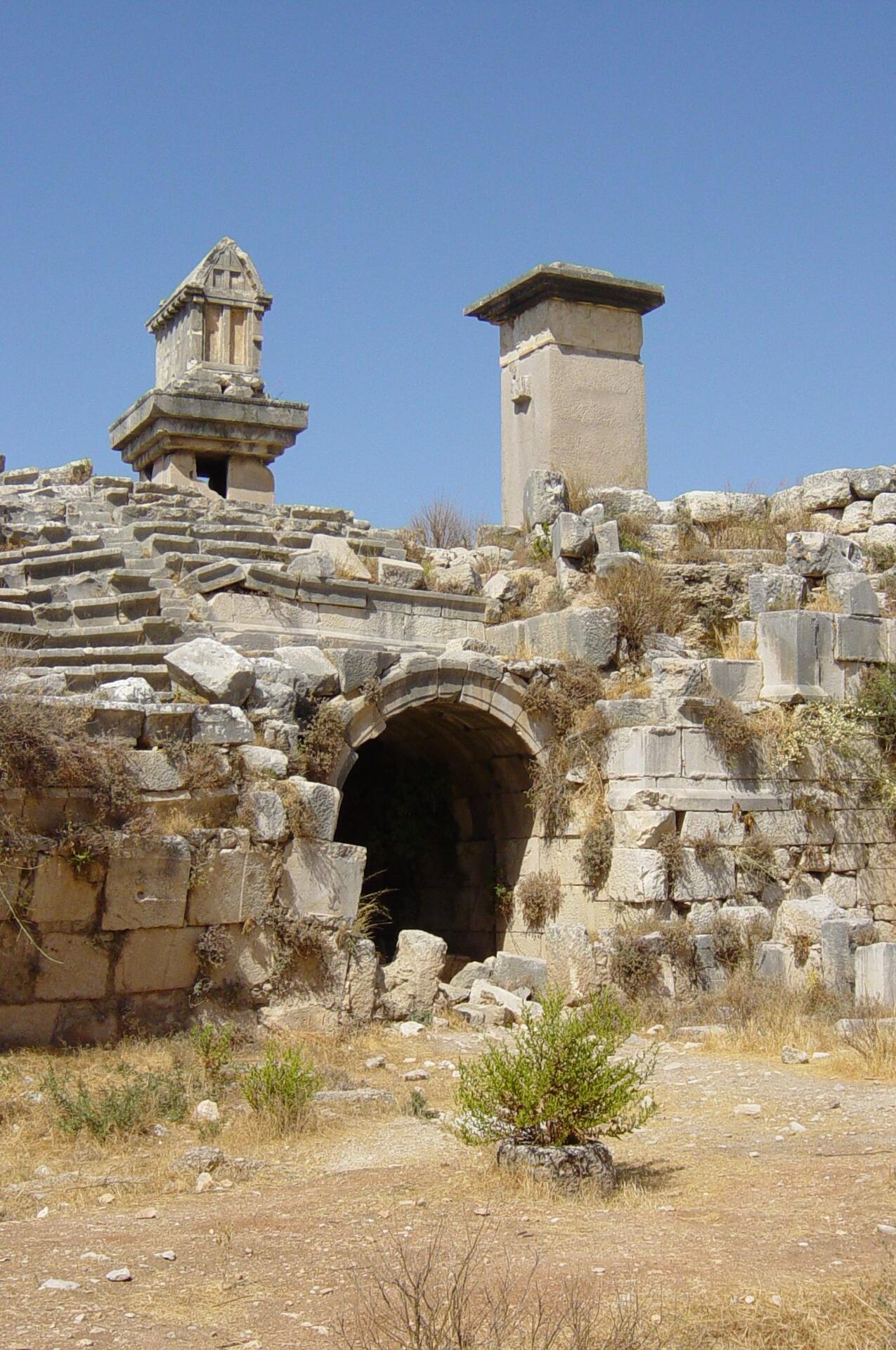
Xanthos-Letoon, a UNESCO World Heritage Site since 1988, is a fascinating archaeological complex that offers a unique insight into the rich history and culture of the ancient Lycian civilization. Situated in the Antalya Province of modern-day Turkey, this site serves as a testament to the harmonious fusion of indigenous Lycian traditions and Hellenic influences, particularly evident in its funerary art.
More to come…UNESCO Description of the World Heritage Site
This site, which was the capital of Lycia, illustrates the blending of Lycian traditions and Hellenic influence, especially in its funerary art. The epigraphic inscriptions are crucial for our understanding of the history of the Lycian people and their Indo-European language.
UNESCO Justification of the World Heritage Site
Criterion (ii): Xanthos-Letoon directly influenced the architecture of the principal ancient cities of Lycia such as Patara, Pınara, and Myra, as well as the neighboring provinces. The Halicarnassus Mausoleum, which was ranked as one of the Seven Wonders of the Ancient World, is directly influenced by Xanthos’ Nereid Monument.
Criterion (iii): Xanthos-Letoon bears exceptional testimony to the Lycian civilization, both through the many inscriptions found at the two sites and through the remarkable funerary monuments preserved within the property. The longest and most important texts in the Lycian language were found in Xanthos-Letoon. The inscriptions, most of which were carved in rock or on huge monoliths, are considered exceptional evidence of this unique and long-forgotten Indo-European language. The rock art tombs, pillar tombs and pillar-mounted sarcophagi represent a novel type of funerary architecture. The rich series of Lycian tombs in Xanthos and Letoon enable us to fully understand the successive acculturation phenomena that took place in Lycia from the 6th century onwards.
Encyclopedia Record: Xanthos
Xanthos or Xanthus, also referred to by scholars as Arna, its Lycian name, was an ancient city near the present-day village of Kınık, in Antalya Province, Turkey. The ruins are located on a hill on the left bank of the River Xanthos. The number and quality of the surviving tombs at Xanthos are a notable feature of the site, which, together with nearby Letoon, was declared to be a UNESCO World Heritage Site in 1988.Additional Site Details
Area: 126.4 hectares
Number of Components: 3
(iii) — Unique or exceptional testimony to a cultural tradition
Coordinates: 36.335 , 29.32028