World Heritage Identification Number: 904
World Heritage since: 1999
Category: Cultural Heritage
WHE Type: Religious Sites & Sacred Architecture
Transboundary Heritage: No
Endangered Heritage: No
Country: 🇷🇴 Romania
Continent: Europe
UNESCO World Region: Europe and North America
Map
The Wooden Churches of Maramureş: A Unique Vernacular Expression of Cultural Landscape
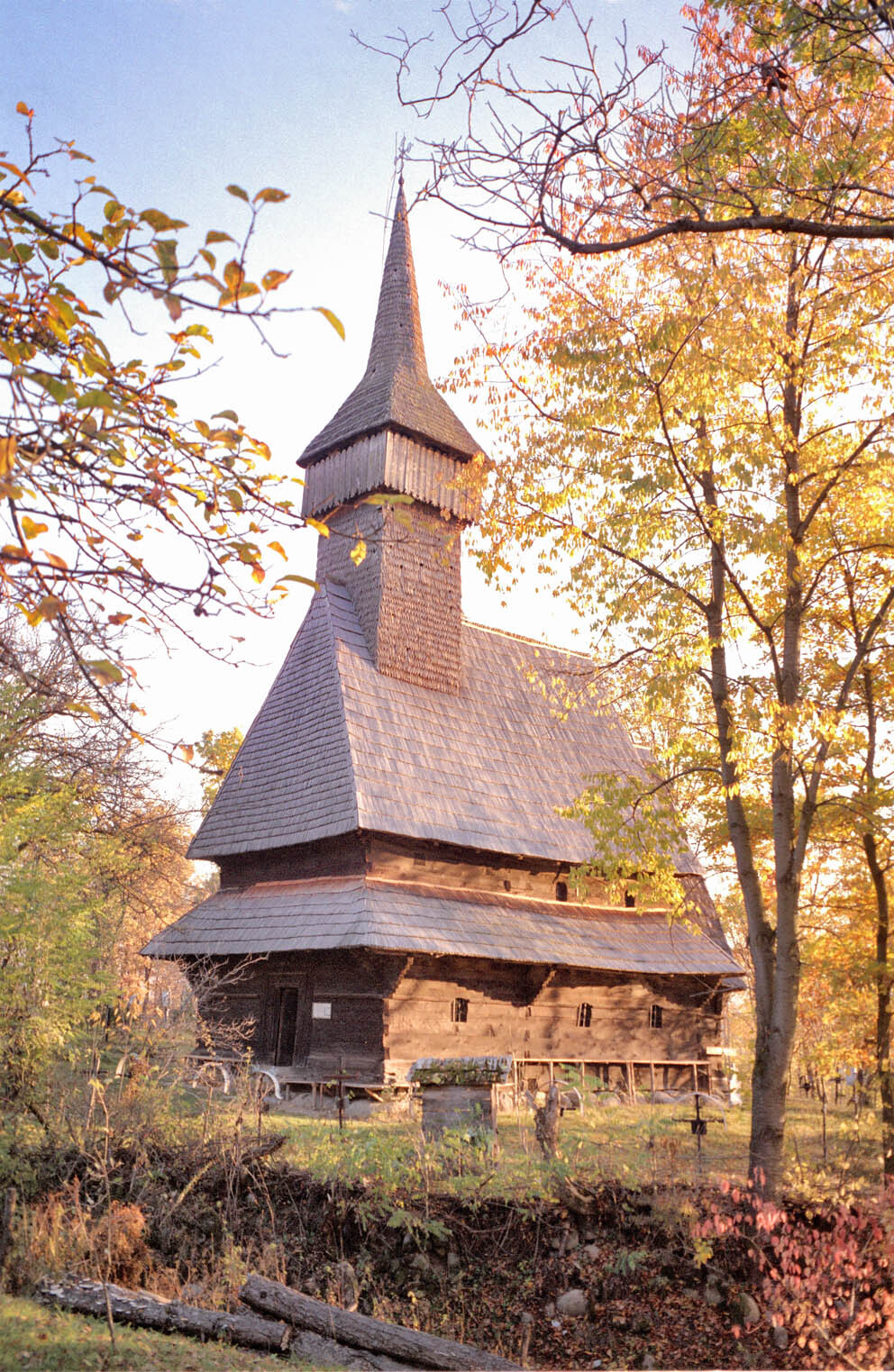
The Wooden Churches of Maramureş, inscribed as a UNESCO World Heritage Site in 1999, represent a remarkable collection of Orthodox and occasionally Greek-Catholic churches located in the Maramureș region of northern Transylvania, Romania. The UNESCO designation specifically includes eight of these historic wooden churches (Bârsana, Budeşti, Deseşti, Ieud, Plopiş, Poienile Izei, Rogoz, and Şurdeşti), though the region is home to many more. These churches are distinguished by their unique architectural solutions, varying in design and craftsmanship, reflecting the rich cultural heritage of this mountainous area.
The wooden churches share common characteristics that set them apart from other religious structures. They are predominantly high timber constructions, featuring tall, slim steepled wooden towers at the western end of the building. These towers, often single- or double-roofed, are crowned with shingles, contributing to the churches' distinctive appearance. This architectural style is a testament to the ingenuity and skill of the local craftsmen whose techniques have been passed down through generations.
One of the most striking features of these churches is their distinct vertical orientation. This architectural choice generally reflects a regional aesthetic preference and the desire for the structures to stand out in the landscape, rather than being dictated by a lack of flat ground. The height also helped assert the presence of the Orthodox faith during periods of prohibition by the ruling Catholic Austro-Hungarian Empire against building durable stone churches. This design created an impressive visual impact, making the churches stand out against the backdrop of the mountains.
The eight UNESCO-listed churches were primarily constructed between the 17th and 18th centuries, although some like the Church of Ieud (Holy Paraclete) date back to the early 17th century. Each church bears the imprint of its time and place, reflecting the regional influences and traditions of the period in which it was built. For instance, some later churches exhibit Baroque stylistic elements, while earlier examples maintain simpler, traditional forms.
Despite their age, many of these churches remain in excellent condition, thanks to the meticulous maintenance efforts of the local communities. The churches serve not just as places of worship but also as focal points for community gatherings and celebrations. Their significance extends beyond religious symbolism, playing a crucial role in preserving the cultural identity of the Maramureș region.
In addition to their architectural and historical value, the Wooden Churches of Maramureş offer visitors a glimpse into the daily life of rural Romanian communities. The churches are often surrounded by picturesque villages, where traditional crafts like woodworking, pottery, and weaving are still practiced. Visitors can immerse themselves in the local culture, sampling traditional foods, attending folk festivals, and learning about the region's history and folklore.
Altogether, the Wooden Churches of Maramureş are a testament to the rich cultural heritage of northern Romania. These churches, with their unique architecture and deep roots in local tradition, provide a captivating insight into the lives and beliefs of the people who built them. As a UNESCO World Heritage Site, they stand as a reminder of the importance of preserving our shared cultural heritage for future generations.
UNESCO Description of the World Heritage Site
These eight churches are outstanding examples of a range of architectural solutions from different periods and areas. They show the variety of designs and craftsmanship adopted in these narrow, high, timber constructions with their characteristic tall, slim clock towers at the western end of the building, either single- or double-roofed and covered by shingles. As such, they are a particular vernacular expression of the cultural landscape of this mountainous area of northern Romania.
UNESCO Justification of the World Heritage Site
Criterion (iv): The Maramures wooden churches are outstanding examples of vernacular religious wooden architecture resulting from the interchange of Orthodox religious traditions with Gothic influences in a specific vernacular interpretation of timber construction traditions, showing a high level of artistic maturity and craft skills.
Encyclopedia Record: Wooden churches of Maramureș
The wooden churches of Maramureș in the Maramureș region of northern Transylvania are a group of almost one hundred Orthodox churches, and occasionally Greek-Catholic ones, of different architectural solutions from different periods and areas. The Maramureș churches are high timber constructions with characteristic tall, slim bell towers at the western end of the building. They are a particular vernacular expression of the cultural landscape of this mountainous area of northern Romania.Additional Site Details
Area: Not available
Number of Components: 8
Coordinates: 47.82083333 , 24.05583333
World Heritage Research
Discover scientific research and academic studies that deepen our understanding of Wooden Churches of Maramureş from its history and significance to its conservation, management, and contemporary challenges.
-
The “Gutâi-Maramureș” UNESCO Geopark Project Development and Heritage Values-Based Sustainable Tourism in the Gutâi Volcanic Zone, East Carpathians (Romania)
The Gutâi-Maramureș region, part of Romania's East Carpathians, holds significant geological and cultural heritage values that can sustainably support tourism. The proposed UNESCO Global Geopark project identifies key assets such as internationally recognized geosites, historic mining sites for precious metals, protected natural areas (including Natura 2000 sites), and five UNESCO-listed wooden churches. A SWOT analysis was conducted to define the optimal geopark territory, strengthen brand identity, and guide sustainable tourism development. The study combines geological synthesis, heritage site inventories, biodiversity assessments, and cultural documentation to inform geoeducation and geotourism strategies, leveraging local engagement and prior experiences in the region.
Kovacs, M., Szakács, A., Andrășanu, A., & Denuț, I. (2025). The “Gutâi-Maramureș” UNESCO Geopark Project Development and Heritage Values-Based Sustainable Tourism in the Gutâi Volcanic Zone, East Carpathians (Romania). Land, 14(4), 726. https://doi.org/10.3390/land14040726
View Publication Record | Read Publication -
Scanning, modelling and dissemination of the interior appearance of wooden historic churches in the Maramures region of Romania
A study demonstrates that modern laser scanning technologies can effectively capture the interior appearance of historic wooden churches in Maramureş, Romania, even under challenging lighting conditions. By developing a specialized scanning methodology and selecting appropriate equipment parameters, researchers successfully documented four 17th- and 18th-century churches, preserving their culturally significant interiors despite environmental degradation risks. The approach proved robust for future heritage documentation projects, offering a scalable solution for structures facing similar preservation challenges.
Żyła, K., Kęsik, J., Korga, S., Miłosz, M., & Rybak, K. (2024). Scanning, modelling and dissemination of the interior appearance of wooden historic churches in the Maramures region of Romania. Digital Applications in Archaeology and Cultural Heritage, 34, e00351. https://doi.org/10.1016/j.daach.2024.e00351
View Publication Record | Read Publication -
Churches and Monasteries in Northern Transylvania in Planning Documents and in Tourism Development Projects Financed by European Funds
Over 40 churches and monasteries in Northern Transylvania have been renovated, and more than 80 promoted through European-funded projects, integrating them into cultural or religious tourism routes. This study reveals that regional development strategies prioritize the preservation and promotion of these heritage sites, leveraging EU funds to enhance their tourism potential. The research analyzed county policies and projects financed by REGIO and INTERREG programs, highlighting the inclusion of Maramureș’s wooden churches and Satu Mare’s medieval churches in thematic routes. Additionally, Romania’s National Recovery and Resilience Plan further emphasizes the creation of more cultural tourism routes, adding significant value to the region’s heritage-based tourism.
Drăgan, M. (2024). Churches and Monasteries in Northern Transylvania in Planning Documents and in Tourism Development Projects Financed by European Funds. Studia Universitatis Babeș-Bolyai Geographia, 69(1), 71–87. https://doi.org/10.24193/subbgeogr.2024.1.05
View Publication Record | Read Publication -
Searching for Signs of an Old Wooden Church in Breb,Maramureş
Researchers uncovered potential remnants of a 400-year-old wooden church near Breb, Maramureş, using ground-penetrating radar and aerial surveys. The study, conducted in the Copăciş area, revealed subsurface features that may correspond to the lost structure's foundation. This non-invasive approach provided a 3D reconstruction of the site, offering new insights into the preservation and archaeology of wooden churches—a rare but significant component of UNESCO World Heritage Sites like those in Maramureş. The findings highlight the effectiveness of advanced geophysical techniques in identifying and documenting historical structures without physical excavation.
Valentin, D. D., & Cristian, R. L. (2023). Searching for Signs of an Old Wooden Church in Breb,Maramureş. 2023 12th International Workshop on Advanced Ground Penetrating Radar (IWAGPR), 1–4. https://doi.org/10.1109/iwagpr57138.2023.10329234
View Publication Record | Read Publication -
Identifying Ways in Which Rural Tourism Can Preserve Traditional Maramureș Architecture
Rural tourism in Maramureș, Romania, can play a pivotal role in preserving traditional architecture, including iconic wooden churches. A study found that leveraging tourism to highlight the cultural and natural heritage of the region could mitigate threats posed by societal changes. Researchers used an online survey targeting young people, followed by decision tree analysis with SAS Enterprise Miner, to assess perceptions of traditional elements like wooden gates and houses. The findings suggest that rural tourism, when strategically integrated, can foster awareness and appreciation among younger generations, potentially safeguarding Maramureș's unique architectural legacy.
Simion, S., & Moisuc, D.-A. (2023). IDENTIFYING WAYS IN WHICH RURAL TOURISM CAN PRESERVE TRADITIONAL MARAMUREȘ ARCHITECTURE. Revista de Turism - Studii Și Cercetări În Turism, (36). https://doi.org/10.4316/rdt.36.98
View Publication Record | Read Publication -
Cuhea as the example of structural churches în Moldova și Transilvania
A unique group of stone churches, preserving the construction techniques and architectural forms of wooden buildings, has been identified in Maramureș, Romania. These structures, exemplified by those in Cuhea village, feature short naves and elongated altars akin to Romanesque basilicas, along with distinctive crown transpositions from beams into walls. The study reveals that these churches originated in the forested Carpathian region, where Eastern Orthodox and Western Catholic influences merged with local folk methods, spreading eastward and westward along the mountains. Similar structures are rare in historical Moldova, with only a few examples found in Cotnari, Iași, and Lipceni. The research highlights the cultural and architectural significance of these churches as a bridge between Eastern and Western Christianity.
NESTEROV, T. (2022). Cuhea as the example of structural churches în Moldova și Transilvania. Arta, 31(1), 31–36. https://doi.org/10.52603/arta.2022.31-1.04
View Publication Record | Read Publication -
Narratives of vernacular habitat in Maramureș
A delicate balance between living space, nature, and community is essential for preserving the harmony within vernacular habitats. This study highlights how local communities in Maramureș, Romania, sustain their traditional ways of life through the use of locally sourced materials, such as clay, wood, stone, wool, or hemp, while integrating contemporary solutions without compromising cultural heritage. The research focuses on two case studies: Maria Zapca, a weaver from Săpânța, and Daniel Leș, a potter from Baia Sprie, demonstrating how local crafts and material culture, including UNESCO-listed wooden churches, contribute to the region's identity and heritage preservation. The study underscores the importance of encouraging villagers to find value in their local environment to counteract migration trends.
Clițan, A. C. (2022). Narratives of vernacular habitat in Maramureș. International Journal of Energy Production and Management, 7(4), 373–387. https://doi.org/10.2495/eq-v7-n4-373-387
View Publication Record | Read Publication