World Heritage Identification Number: 1751
World Heritage since: 2026
Category: Natural Heritage
WHE Type: Protected Areas & National Parks
Transboundary Heritage: No
Endangered Heritage: No
Country: 🇺🇸 United States of America
Continent: Americas
UNESCO World Region: Europe and North America
Map
A Glimpse into the Okefenokee National Wildlife Refuge: A Biodiverse Peatland Haven
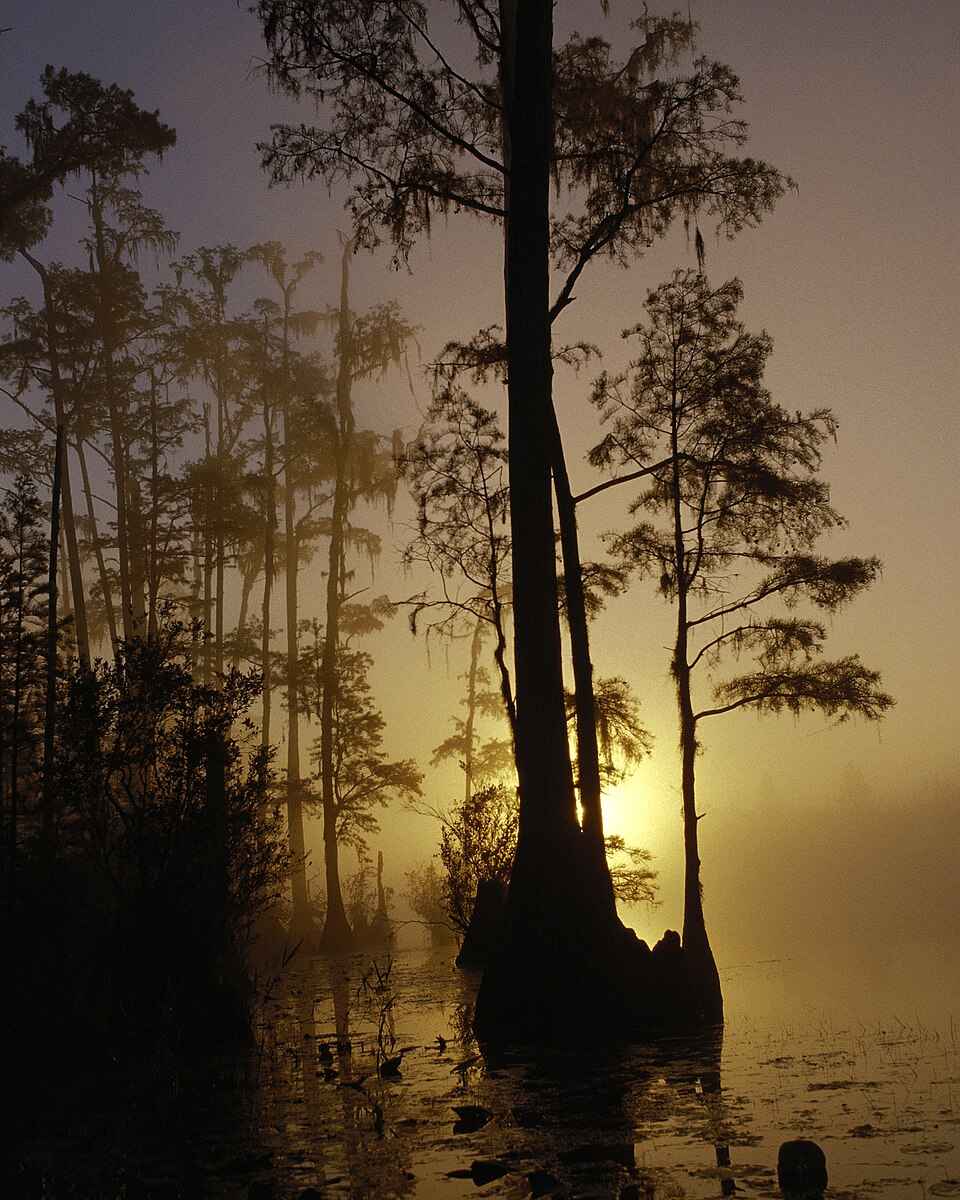
The Okefenokee National Wildlife Refuge, nestled in the southeastern corner of Georgia and northeastern Florida in the United States, stands as a testament to the intricate balance between nature's elements. Inscribed as a UNESCO World Heritage Site in 2026, this expansive approximately 407,000-acre (1,648 km²) sanctuary serves as a vital protector of the Okefenokee Swamp, the world's largest lowland freshwater peatland within the subtropical zone.
The swamp's evocative name is commonly translated as "Land of the Trembling Earth," a reference to the unique and unsettling sensation of walking across floating peat mats, which can gently shake and ripple beneath your feet. The Okefenokee is also situated in an area of great historical, cultural, and spiritual significance for the Muscogee (Creek) Nation and other Indigenous peoples who inhabited the region before colonization and their forced removal.
Okefenokee's unique geography is shaped by the dynamic interplay of water, fire, vegetation, and wildlife. This delicate dance results in a breathtaking landscape characterized by wetlands, savannas, and forests. The area's distinctive topography is a product of recurring fire and rainfall cycles that drive peat formation, influence vegetation structure, and foster extraordinary biodiversity.
The Okefenokee National Wildlife Refuge boasts an impressive array of native flora, with at least 856 distinct plant species recorded within the World Heritage property. Among these are concentrations of plant species endemic to the region, contributing to the site's significance as part of the North American Coastal Plain global biodiversity hotspot.
In addition to its rich botanical offerings, the refuge is home to a diverse menagerie of fauna. More than 48 mammal species, 238 bird species, 39 fish species, and 90 reptile and amphibian species are supported by the World Heritage property. The refuge plays a crucial role in providing essential habitats for migratory birds, threatened species, and a substantial population of American alligators.
One of the most notable features of the Okefenokee National Wildlife Refuge is its extensive peat deposits. These valuable reserves serve as an important archive of palaeo-environmental history, offering insights into the region's past climates and ecosystems. Moreover, the peat deposits function as critical carbon storage, helping remove and retain atmospheric carbon over long periods.
Another remarkable aspect of the Okefenokee National Wildlife Refuge is the presence of significant areas of endangered Longleaf Pine (Pinus palustris) savanna. Regrettably, less than 3 percent of these habitats remain, making the refuge's preservation efforts all the more vital. The Longleaf Pine savanna supports a high concentration of plant species endemic to the region, further enhancing the area's biodiversity value.
Beyond its biological uniqueness, the Okefenokee serves a vital hydrological role for the region. The swamp acts as a massive natural reservoir and functions as the primary headwaters for two distinct rivers: the Suwannee River, which flows southwest into the Gulf of Mexico, and the St. Marys River, which flows east into the Atlantic Ocean. This makes the refuge not just a localized wetland, but a critical freshwater engine for the entire coastal plain.
Established in 1937 by President Franklin D. Roosevelt, the Okefenokee National Wildlife Refuge safeguards a majority of the approximately 438,000-acre (1,770 km²) Okefenokee Swamp. The refuge's administrative offices are situated in Folkston, Georgia. This vast expanse of protected wilderness offers visitors a chance to immerse themselves in the splendor of one of the most intact ecosystems within the North American Coastal Plain.
The 2026 UNESCO World Heritage designation also marks a major milestone following years of conservation advocacy. For decades, environmentalists, scientists, and local communities fought to protect the swamp from external industrial threats, including proposed heavy mineral strip mining along the adjacent Trail Ridge. Achieving World Heritage status provides international recognition of the refuge's outstanding universal value and strengthens the case for its long-term protection, helping safeguard this irreplaceable ecosystem against future commercial exploitation.
Today, the Okefenokee National Wildlife Refuge stands as a beacon of conservation, protecting a remarkable tapestry of life, history, and natural beauty. Its designation as a UNESCO World Heritage Site under criteria (ix) and (x) underscores the importance of preserving this unique and irreplaceable ecosystem for future generations to appreciate and learn from.
UNESCO Description of the World Heritage Site
The property, located in southeastern Georgia and northeastern Florida, protects the Okefenokee Swamp, the largest lowland freshwater peatland in the subtropical zone worldwide and one of the largest and most intact ecosystems within the North American Coastal Plain global biodiversity hotspot. The property comprises a diverse mosaic of wetlands, savannas, and forests shaped by the ongoing interaction of water, fire, vegetation, and wildlife, with alternating fire and rainfall processes driving peat formation, vegetation structure, and biodiversity. The site also contains significant areas of endangered Longleaf Pine (Pinus palustris) savanna, of which less than 3% remains, supporting high concentrations of plant species endemic to the region. Its extensive peat deposits provide an important archive of palaeo-environmental history and critical carbon storage. The property supports exceptional biodiversity, including at least 856 plant species, 48 mammal species, 238 bird species, 39 fish species, and 90 reptile and amphibian species, and provides important habitat for migratory birds, threatened species, and a significant population of American alligators.Encyclopedia Record: Okefenokee National Wildlife Refuge
The Okefenokee National Wildlife Refuge is a 402,000‑acre (1,627 km2) National Wildlife Refuge located in Charlton, Ware, and Clinch Counties of Georgia, and Baker County in Florida, United States. The refuge is administered from offices in Folkston, Georgia. The refuge was established in 1937 to protect a majority of the 438,000 acres (1,770 km2) in the Okefenokee Swamp. The name "Okefenokee", often translated as "land of trembling earth", is likely derived from Hitchiti oki fanôːki.Additional Site Details
Area: 164,565.5 hectares
Number of Components: 1
(x) — Contains most important habitats for biodiversity
Coordinates: 30.798889 , -82.305
Image
US Fish and Wildlife Service, Public domain