
World Heritage Identification Number: 1809
World Heritage since: 2026
Category: Cultural Heritage
WHE Type: Archaeological Sites
Transboundary Heritage: No
Endangered Heritage: Yes
Country: 🇵🇸 State of Palestine
Continent: Asia
UNESCO World Region: Arab States
Map
Sebastia: A Historical City in the State of Palestine
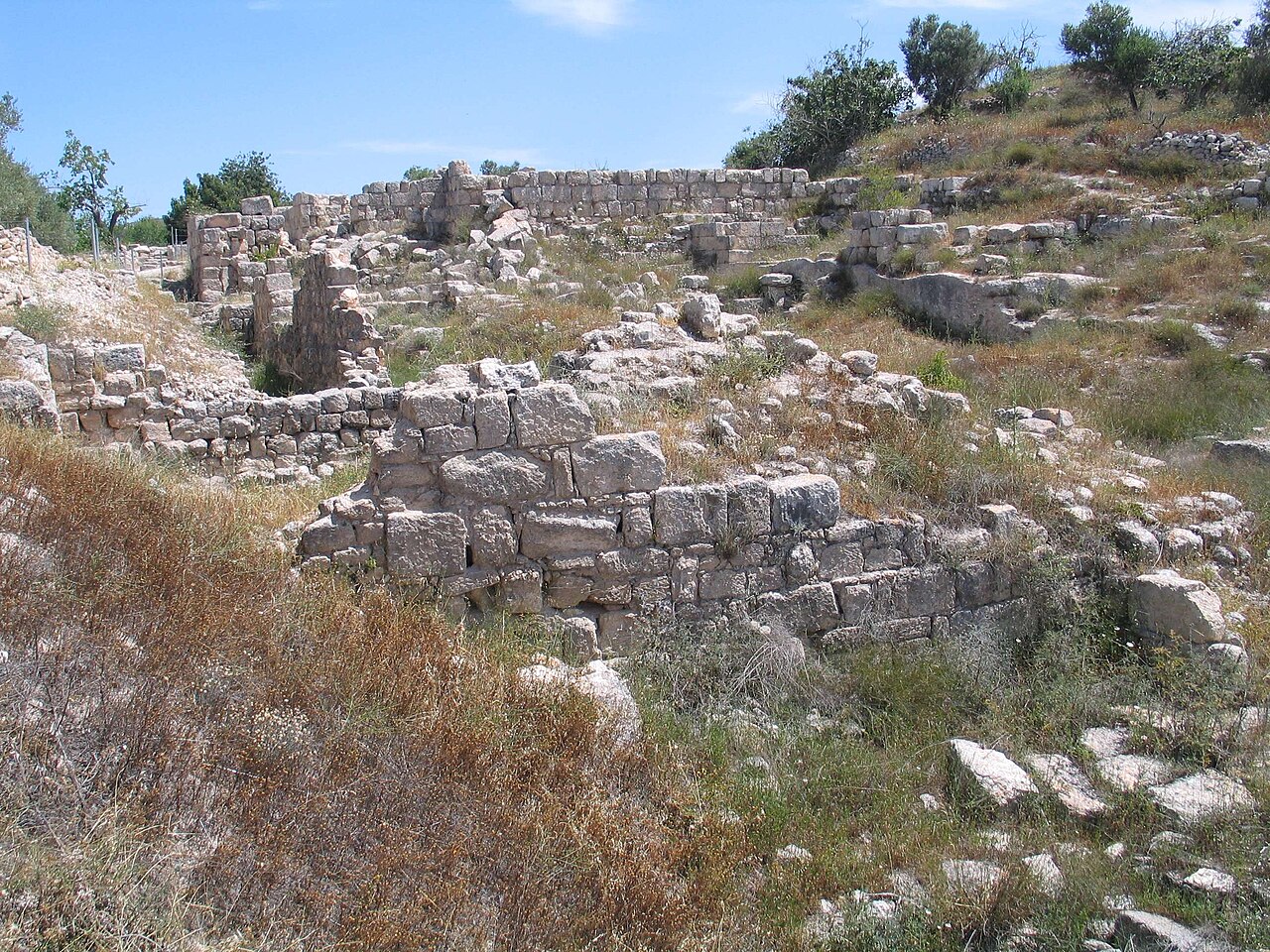
Sebastia (Arabic: سبسطيا), officially known as Samaria-Sebaste, is a significant historical city located in the Nablus Governorate of the State of Palestine. Inscribed as a UNESCO World Heritage Site in 2026, this ancient city offers a rich tapestry of history, culture, and archaeological treasures that attract visitors from around the world.
More to come…UNESCO Justification of the World Heritage Site
Criterion (iii): The visible coexistence, within a single archaeological site, and the exceptional legibility of material traces left by the successive civilisations that occupied this place from the Iron Age, through the Hellenistic and Roman periods, to the Byzantine period, as well as later additions from the Crusader era, makes Sebastia stand out within the Levant region. With its multi-layered character and multi-period evidence, the property represents a coherent ensemble that testifies to the principal historical phases of the settlement of the site. Unlike many continuously inhabited cities where successive urban development has obscured earlier remains, Sebastia preserves relatively direct archaeological traces of its major periods of development which allows for a clear reading of successive political, religious, and urban systems that remain physically interconnected.
Encyclopedia Record: Sebastia, Nablus
Sebastia is a Palestinian village of about 3,205 inhabitants, located in the Nablus Governorate of the State of Palestine, some 12 kilometers northwest of the city of Nablus.Additional Site Details
Area: 79 hectares
Number of Components: 1
Coordinates: 32.276339 , 35.188875
World Heritage Research
Discover scientific research and academic studies that deepen our understanding of Sebastia from its history and significance to its conservation, management, and contemporary challenges.
-
Archaeology, power, and professional responsibility: weaponising heritage at Sebastia (OPT)
Israeli governmental and settler interventions have weaponized archaeology at Sebastia, transforming it from a scientific practice into a political tool for territorial control and ideological legitimation. The study identifies three strategies: establishing a permanent Israeli presence, constructing a historical narrative centered on Jewish antiquity while marginalizing Palestinian dimensions, and using this narrative to justify annexation. Framed within crypto-colonialism, the research highlights how heritage management in Sebastia positions Israel as a 'civilizing' guardian of Western values against a constructed Eastern other. In contrast, Palestinian-led initiatives offer alternative models rooted in community custodianship and shared stewardship. The article calls for ethical engagement that recognizes heritage as a field of political responsibility and potential for decolonized practice.
Shiff, C. (2026). Archaeology, power, and professional responsibility: weaponising heritage at Sebastia (OPT). International Journal of Heritage Studies, 32(5), 645–663. https://doi.org/10.1080/13527258.2026.2619191
View Publication Record | Read Publication -
The Weaponization of Archaeology
Archaeology at Tell Sebastia, a multilayered site with deep historical significance, has been weaponized in the Israel–Palestine conflict. Israeli authorities and settler groups have reshaped its narrative to emphasize Jewish biblical heritage through new excavations, land confiscation, and restricted Palestinian access, illustrating the intersection of heritage, power, and structural violence within settler colonialism. The study, based on interviews with ten Sebastia residents, reveals how these actions exacerbate cultural displacement and political control in a contested region.
Al-Houdalieh, S. H. (2026). The Weaponization of Archaeology. Heritage, Memory and Conflict Journal, 6(1), 227–238. https://doi.org/10.5117/hmc2026.1.012.alho
View Publication Record | Read Publication -
Towards Decreasing Encroachments on Conserved Historic Buildings, Users Participation as an Approach: The Case of Youth Center- Sebastia
Encroachments on conserved historic buildings, such as unsystematic interventions and vandalism, can be significantly reduced by involving users in the conservation process. This study identifies three key approaches to user participation—social-benefits, economic-benefits, and emotional-needs—that effectively mitigate harmful practices. Using the Youth Center in Sebastia, Palestine, as a case study, researchers analyzed the causes and manifestations of encroachments, such as neglect and vandalism, which often arise from exclusionary conservation efforts. The findings underscore that integrating user participation through targeted approaches can preserve both the historic value and visual integrity of buildings, offering a practical solution to long-standing challenges in heritage conservation.
Itma, M., & Zawawi, Z. (2024). Towards Decreasing Encroachments on Conserved Historic Buildings, Users Participation as an Approach: The Case of Youth Center- Sebastia. Journal of Sustainable Architecture and Civil Engineering, 35(2), 168–181. https://doi.org/10.5755/j01.sace.35.2.33657
View Publication Record | Read Publication -
La difficile mise en œuvre de la patrimonialisation dans la ville de Naplouse (Territoires palestiniens occupés)
Despite Nablus' rich historical heritage, spanning from Roman antiquity to Mamluk and Ottoman influences, its patrimonialization process faces significant challenges that hinder its potential inclusion on the UNESCO World Heritage List. The study identifies key obstacles including land pressure competing with urban development, insufficient resources and regulatory frameworks for heritage protection, and political priorities that marginalize heritage conservation efforts. While Hebron's old town has recently been listed, Nablus struggles due to these systemic issues, revealing the complex interplay between occupation, governance, and cultural preservation in the occupied Palestinian territories.
Bosredon, P., Grégoris, M.-T., & Bergery, E. (2019). La difficile mise en œuvre de la patrimonialisation dans la ville de Naplouse (Territoires palestiniens occupés). Territoire En Mouvement, 41. https://doi.org/10.4000/tem.5087
View Publication Record | Read Publication
