World Heritage Identification Number: 1742
World Heritage since: 2026
Category: Natural Heritage
WHE Type: Protected Areas & National Parks
Transboundary Heritage: No
Endangered Heritage: No
Country: 🇯🇴 Jordan
Continent: Asia
UNESCO World Region: Arab States
Map
Aqaba Marine Reserve: A Unique Tropical Coral Reef System
The Aqaba Marine Reserve (AMR), situated in the Aqaba Governorate of Jordan, is a testament to the rich marine biodiversity found within the Red Sea. Established in 1997, this 2.8 square kilometer nature reserve has been instrumental in preserving and showcasing the unique marine ecosystems it harbors.
More to come…UNESCO Description of the World Heritage Site
The property, located at the northernmost tip of the Red Sea, comprises a mosaic of coral reefs, seagrass beds, and mesophotic reefs that sustain diverse marine life and ecological processes. Recognized as the world’s northernmost tropical coral reef system, the property is notable for its thermally resilient corals, which have adapted over the last 10,000 years to marine heatwaves, high salinity, and elevated summer temperatures. The reserve safeguards important marine genetic resources and supports exceptional biodiversity, including more than 150 species of hard coral, over 500 species of fish, and 1,000 species of molluscs. Its coral endemism is globally significant, supporting approximately 61% of all Red Sea endemic hard coral species, while more than 80 fish species are endemic to the Red Sea or Gulf of Aqaba.UNESCO Justification of the World Heritage Site
Criterion (ix): Eco-evolutionary processes over the last 10,000 years have facilitated the adaptation of coral populations and associated benthic assemblages to hostile climate conditions including marine heatwaves, high salinity, and recurring elevated summer extreme temperatures with limited bleaching and rapid recovery, to the degree possible, in the long term. The thermally resilient corals and other benthic invertebrates in the Gulf of Aqaba have high survival and recovery rates to acute and chronic thermal stress, making the area a critical research site and important genetic repository for understanding climate change-related resilience and restoration. The maintenance of trophic interactions and functional ecology representative of the northern Red Sea’s extreme conditions contributes to the evolutionary processes maintained in situ. Habitats such as seagrass meadows stabilise sediments, sequester carbon, and serve as nurseries for juvenile species.
Criterion (x): The benthic and mesophotic ecosystems of the AMR are home to over 150 species of hard coral (of which 40 are assessed as globally threatened at the time of inscription), in addition to over 500 species of fish and 1000 species of molluscs. The property’s coral endemism is globally significant, supporting approximately 61% of all Red Sea endemic hard coral species. Over 80% of all fish species in AMR are associated with benthic habitats with over 80 species endemic to the Red Sea or Gulf of Aqaba.
Encyclopedia Record: Aqaba Marine Reserve
Aqaba Marine Reserve is a nature reserve located in the Aqaba Governorate, Jordan, established in 1997, covers an area of 2.8 square kilometers. This reserve is considered a habitat for important marine life, such as seagrass. It is known for its distinctive fish diversity and coral diversity. The marine park has numerous recorded waterbirds, especially gulls, terns, and skuas.Additional Site Details
Area: 701 hectares
Number of Components: 1
(x) — Contains most important habitats for biodiversity
Coordinates: 29.42972 , 34.97556
Image
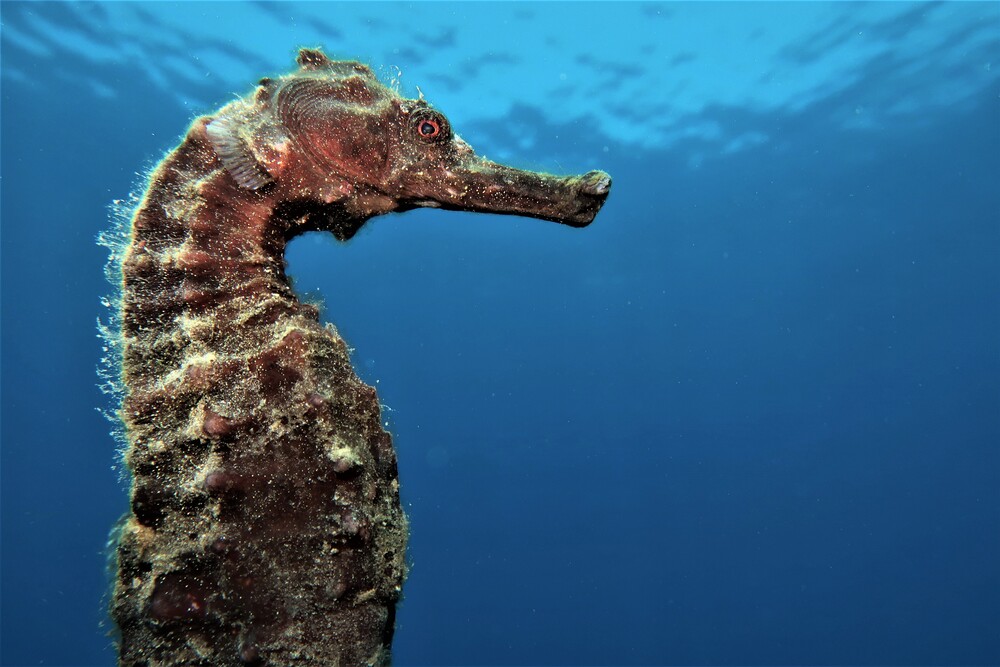
© ASEZA/AMR. Used with permission.
World Heritage Research
Discover scientific research and academic studies that deepen our understanding of Aqaba Marine Reserve from its history and significance to its conservation, management, and contemporary challenges.
-
Gulf of Aqaba as a thermal refuge: Insights from four years of intensifying marine heatwaves
Despite intensifying marine heatwaves (MHWs) threatening coral reefs globally, the Gulf of Aqaba (GoA) in the Northern Red Sea has emerged as a thermal refuge for corals. A four-year study tracking coral-algae symbiosis in Stylophora pistillata and Pocillopora damicornis revealed their resilience during moderate to severe MHWs, including an unprecedented 113-day event in 2024 with record temperatures (32.6°C) and Degree Heating Weeks (30). Unlike other reefs, these corals persisted without bleaching or photosynthetic impairment, maintaining stable energy reserves. While Porites spp. showed metabolic tolerance, Cyphastrea spp. exhibited temporary symbiont reduction but recovered by January 2025. The study highlights the GoA's status as a climate refuge for corals, though emerging shallow bleaching suggests its limits may be approaching. These findings underscore the urgent need for regional conservation efforts to protect this critical ecosystem.
Kochman, N.-R., & Fine, M. (2025). Gulf of Aqaba as a thermal refuge: Insights from four years of intensifying marine heatwaves. Science of the Total Environment, 1000, 180463. https://doi.org/10.1016/j.scitotenv.2025.180463
View Publication Record | Read Publication -
The Effects of Local Aquatic Activities on Coral Cover in the Jordanian Gulf of Aqaba
A study on the Aqaba Marine Reserve revealed that while recreational marine activities such as diving and snorkeling do not significantly impact coral cover up to 10 meters depth, illegal fishing activities are strongly correlated with reduced coral cover in shallow zones. The research used line transect methods to measure coral cover across 13 diving sites, analyzing their proximity to human disturbances through linear regression. Notably, sites with higher fishing activity exhibited significantly lower coral cover, except at depths between 21-30 meters. This suggests that while recreational activities may have localized effects, illegal fishing poses a more substantial threat to coral health in the Jordanian Gulf of Aqaba.
Attum, O., Tawaha, M., Giuffre, Z., Eid, E., & Awali, A. (2024). The Effects of Local Aquatic Activities on Coral Cover in the Jordanian Gulf of Aqaba. Turkish Journal of Bioscience and Collections, 8(1), 1–7. https://doi.org/10.26650/tjbc.1305161
View Publication Record | Read Publication -
Minimum soak times of Baited Remote Underwater Video needed to assess the status of a coral reef fish community in the northern Gulf of Aqaba
A study assessing the coral reef fish community in the Aqaba Marine Reserve, Jordan, prior to its redesignation as a protected area in 2020, reveals significant overfishing. Using baited remote underwater video (BRUV), researchers found that the reserve lacked large predators and commercially valuable species like Carcharhinidae, Haemulidae, Lutjanidae, or Scombridae, indicating severe depletion before protection measures were implemented. The study determined optimal soak times for BRUV—150 minutes for overall species richness and 60 minutes for commercially valuable families—to ensure accurate assessments. This research provides a baseline to evaluate potential recovery of the fish community under enhanced management and reduced fishing pressure.
Attum, O., Al Tawaha, M., Sieg, L., & Eid, E. (2023). Minimum soak times of Baited Remote Underwater Video needed to assess the status of a coral reef fish community in the northern Gulf of Aqaba. Zoology in the Middle East, 69(2), 112–122. https://doi.org/10.1080/09397140.2023.2203977
View Publication Record | Read Publication -
Inferring the health of coral reefs on the Egyptian coast of the Gulf of Aqaba for three branching-coral species
Coral growth rates in the Aqaba Marine Reserve vary significantly by species, location, and environmental conditions. Acropora humilis exhibited the highest growth rate, followed by Stylophora pistillata and Pocillopora damicornis. Dahab showed the greatest coral proliferation, while Taba had the least. Seasonal analysis revealed peak growth in spring, with salinity positively correlated to growth rates, whereas pH, phosphate (PO4-P), and silicate (SiO4-Si) showed negative correlations. These findings highlight the critical role of localized environmental factors in shaping coral reef health, offering key insights for targeted conservation strategies to enhance resilience against climate change and human-induced stressors.
Bashar, M. A. E., El-Tabakh, M. A. M., Salem, E.-S. S., Abo-Taleb, H. A., Shaban, W. M., Zeina, A. F., Abdel-Gaid, S. E., Alabssawy, A. N., Farrag, D. M. G., Attallah, M. A., & Gabr, M. Kh. (2023). Inferring the health of coral reefs on the Egyptian coast of the Gulf of Aqaba for three branching-coral species. Egyptian Journal of Basic and Applied Sciences, 10(1), 861–874. https://doi.org/10.1080/2314808x.2023.2283266
View Publication Record | Read Publication -
Herbivorous Reef Fishes of South Sinai Marine Protected Areas (Gulf of Aqaba, Egypt): Influence of Fisheries Management and Protection Status
No-take fishery reserves are the most effective in maintaining the richness, body size, and biomass of herbivorous reef fishes, with total biomass 4.3 times higher than in heavily fished areas. The study, conducted across 30 reef sites in the Gulf of Aqaba, Egypt, revealed that heavily fished reefs had a skewed size structure, with smaller individuals (less than 20 cm) dominating and larger species (> 35 cm) accounting for less than 1% of biomass. In contrast, no-take zones exhibited a more balanced size distribution, with large-bodied target species contributing significantly to biomass. Only two regions—Ras Mohammed and Sharm El-Sheikh (unfished) and Nabq (moderately fished)—met the global mean herbivorous fish biomass target. These findings underscore the critical role of strong fisheries management in preventing overfishing and preserving coral reef health.
El-Haddad et al., K. M. (2022). Herbivorous Reef Fishes of South Sinai Marine Protected Areas (Gulf of Aqaba, Egypt): Influence of Fisheries Management and Protection Status. Egyptian Journal of Aquatic Biology and Fisheries, 26(5), 681–705. https://doi.org/10.21608/ejabf.2022.264541
View Publication Record | Read Publication -
Nutrient History Affects the Response and Resilience of the Tropical Seagrass Halophila stipulacea to Further Enrichment in Its Native Habitat
Aqaba Marine Reserve's tropical seagrass, Halophila stipulacea, exhibits contrasting responses to nutrient enrichment based on its historical exposure to eutrophication. While populations from oligotrophic South Beach (SB) showed signs of stress—such as reduced biomass, leaf area index (LAI), and internodal distances—those from eutrophic North Beach (NB) thrived with additional nutrients during an unusually warm summer. The study highlights the species' resilience but underscores that prior nutrient exposure significantly influences its response to further enrichment. Key indicators for detecting stress in H. stipulacea include carbohydrate reserves, LAI, internodal length, and apical shoot occurrence. This research emphasizes the importance of monitoring these traits to mitigate impacts on seagrass ecosystems under changing environmental conditions.
Helber, S. B., Winters, G., Stuhr, M., Belshe, E. F., Bröhl, S., Schmid, M., Reuter, H., & Teichberg, M. (2021). Nutrient History Affects the Response and Resilience of the Tropical Seagrass Halophila stipulacea to Further Enrichment in Its Native Habitat. Frontiers in Plant Science, 12. https://doi.org/10.3389/fpls.2021.678341
View Publication Record | Read Publication -
Growth attributes and biochemical composition of Padina pavonica (L.) from the Red Sea, in response to seasonal alterations of Tabuk, Saudi Arabia
A study of the brown marine alga Padina pavonica in the Aqaba Marine Reserve, Red Sea, reveals that July is the optimal month for harvesting due to peak levels of proteins, carbohydrates, lipids, and other nutrients. This phase corresponds with the algae's vegetative growth, marking it as a promising resource for food and industrial applications. Conversely, January shows heightened stress responses, indicated by increased antioxidant enzyme activity and proline accumulation. The research highlights the potential of P. pavonica under the pristine conditions of the Gulf of Aqaba, emphasizing the need for sustainable harvesting methods to maximize its benefits.
Ansari, A. A., & Ghanem, S. M. (2019). Growth attributes and biochemical composition of Padina pavonica (L.) from the Red Sea, in response to seasonal alterations of Tabuk, Saudi Arabia. Egyptian Journal of Aquatic Research, 45(2), 139–144. https://doi.org/10.1016/j.ejar.2019.05.001
View Publication Record | Read Publication