World Heritage Identification Number: 1761
World Heritage since: 2026
Category: Cultural Heritage
WHE Type: Religious Sites & Sacred Architecture
Transboundary Heritage: No
Endangered Heritage: No
Country: 🇹🇭 Thailand
Continent: Asia
UNESCO World Region: Asia and the Pacific
Map
A Historical and Cultural Gem: Wat Phra Mahathat Woramahawihan, Nakhon Si Thammarat
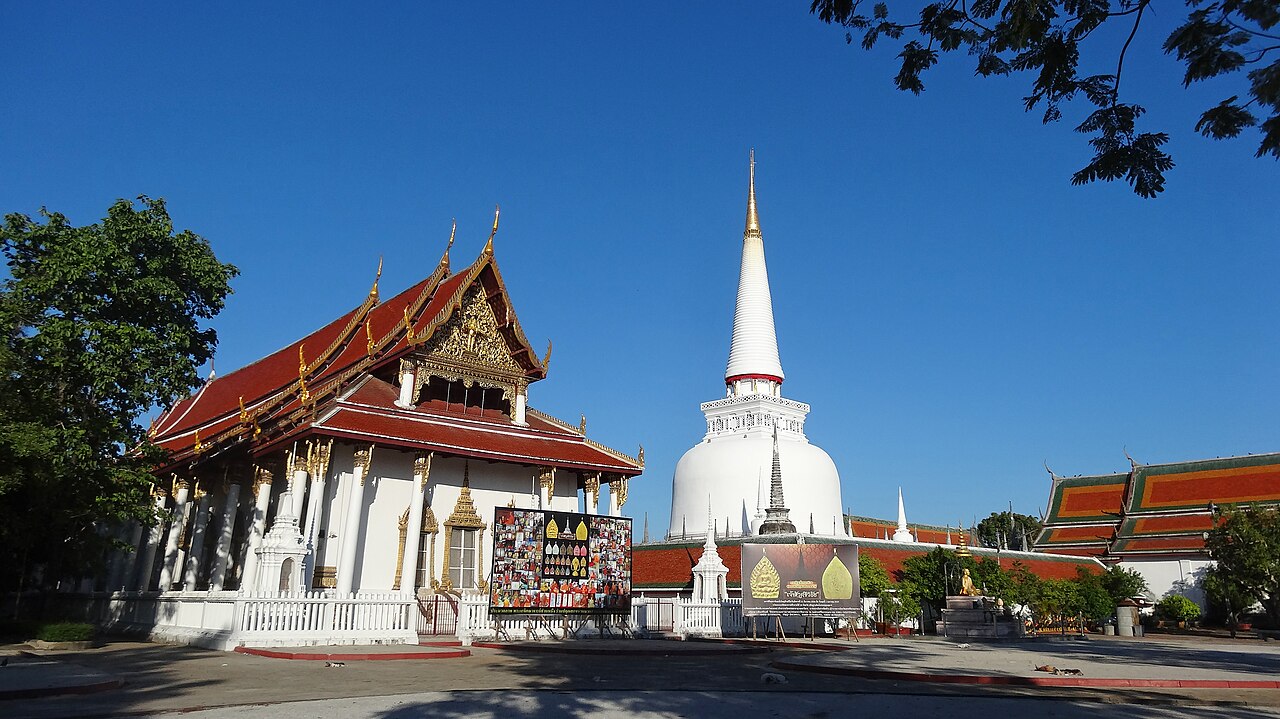
Wat Phra Mahathat Woramahawihan, often referred to simply as Phra Mahathat monastery, stands as a testament to the rich cultural heritage and historical significance of Nakhon Si Thammarat Province in southern Thailand. This ancient temple, inscribed as a UNESCO World Heritage Site in 2026, has served as a major regional Buddhist center since its establishment in the 8th century.
More to come…UNESCO Description of the World Heritage Site
Wat Phra Mahathat Woramahawihan (or Phra Mahathat monastery), located in Nakhon Si Thammarat Province in Peninsular Thailand on a narrow ridge between the Pacific and Indian oceans, has served as a major regional Buddhist centre since its founding in the 8th century. Benefiting from the transoceanic trade networks, the monastery was influenced by various religious and architectural traditions including Brahmanism, Hinduism, Mahayana Buddhism and Theravada Buddhism from northeastern India, central Java, Sri Lanka and the Mon region of southern Myanmar. These influences have been integrated into its religious buildings, rituals and cultural traditions. Its distinctive artistic and architectural expressions have exerted a wide-ranging and enduring influence throughout Thailand and across Southeast Asia. The religious and local traditions have continued at the monastery for more than 1,500 years, including the Nakhon Si Thammarat chronicle tradition, the annual cloth-wrapping ceremony for the Great Reliquary and the Nora dance drama.Encyclopedia Record: Wat Phra Mahathat
Wat Phra Mahathat Woramahawihan is the main Buddhist temple (wat) of Nakhon Si Thammarat Province in southern Thailand, a crucial trade crossroad between the Indian and Pacific Oceans. Founded in the 8th century, where a Hindu shrine once stood around 5th–8th centuries, the monastery has been a regional religious centre ever since. The main stupa of the temple, Phra Borommathat Chedi, was built by King Sri Dhammasokaraja in the early-13th century to establish a symbol for the Theravada Buddhism sect in the region. The temple houses a relic of Gautama Buddha since 291. The religious and local traditions have continued at the monastery for more than 1,500 years, including the Nakhon Si Thammarat chronicle tradition, the annual cloth-wrapping ceremony for the Great Reliquary and the Menora dance drama.Additional Site Details
Area: 5.356 hectares
Number of Components: 1
(vi) — Directly associated with events or living traditions
Coordinates: 8.411475 , 99.966217